Skip to Content Facebook Feature Image

Atlas Energy Solutions Expands AI-Enabled Digital Transformation of Oilfield Logistics with Kodiak-Powered Driverless Trucks

Business

Atlas Energy Solutions Expands AI-Enabled Digital Transformation of Oilfield Logistics with Kodiak-Powered Driverless Trucks
Business

Business

Atlas Energy Solutions Expands AI-Enabled Digital Transformation of Oilfield Logistics with Kodiak-Powered Driverless Trucks

2026-07-31 19:01 Last Updated At:19:20

AUSTIN, Texas--(BUSINESS WIRE)--Jul 31, 2026--

Atlas Energy Solutions Inc. (NYSE: AESI) (“Atlas”), a leading energy solutions provider, today announced an expansion of its autonomous truck operations in the Permian Basin, advancing its commitment to unlocking energy by digitally transforming oilfield logistics.

This press release features multimedia. View the full release here: https://www.businesswire.com/news/home/20260731504868/en/

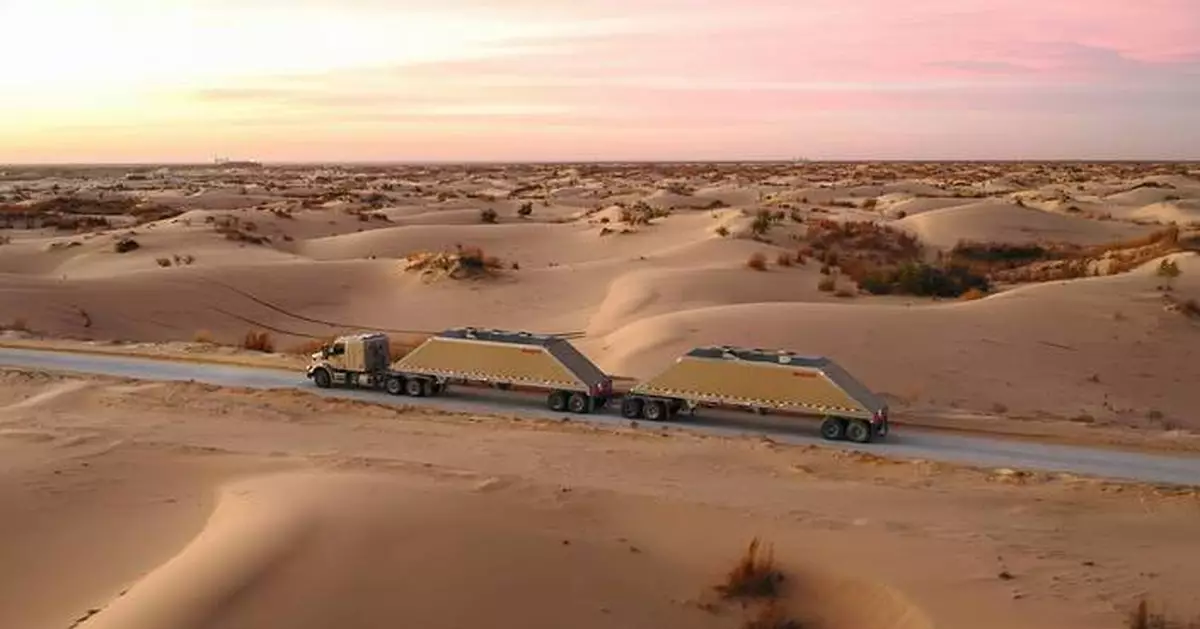
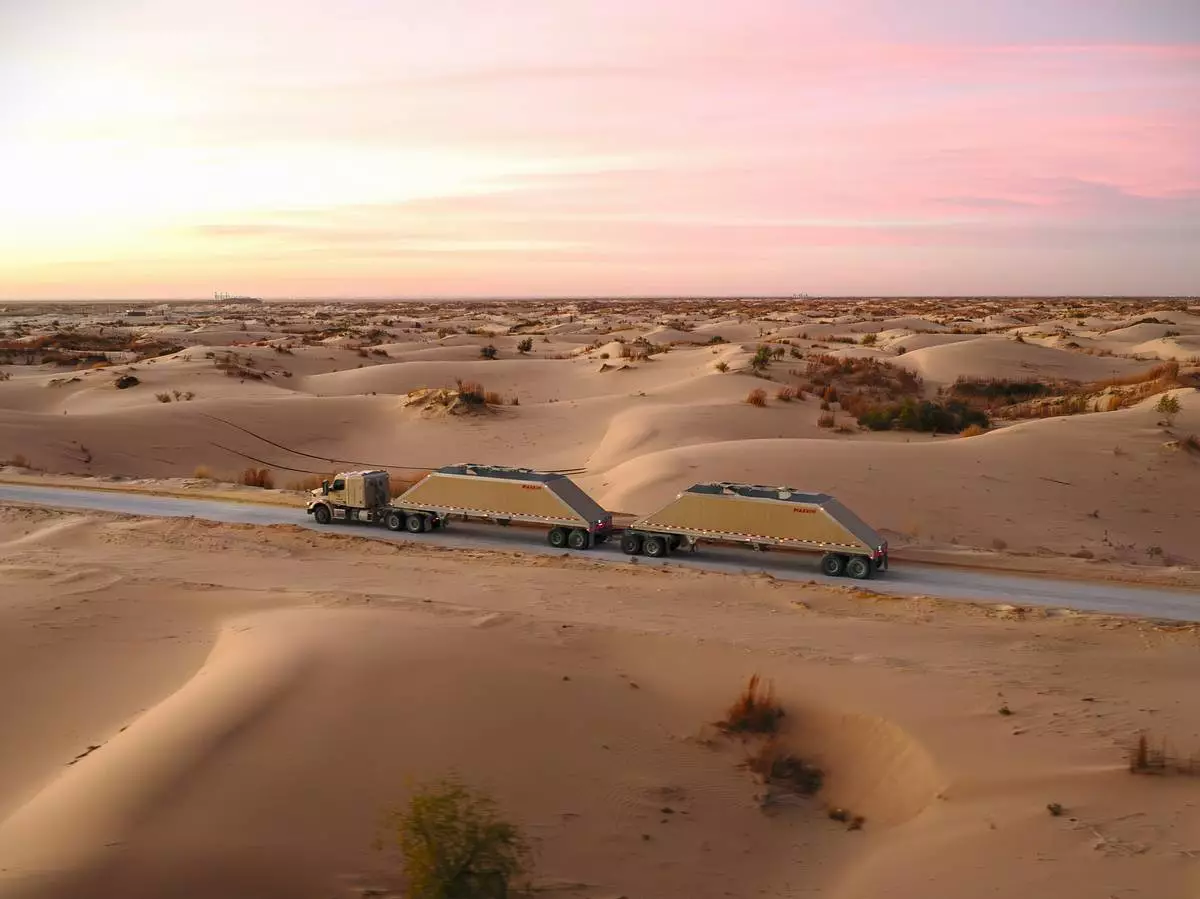
Working with Kodiak AI, Inc. (“Kodiak”) (Nasdaq: KDK), a leading provider of Physical AI-powered autonomous driving technology, Atlas is expanding its driverless proppant delivery program to a second simultaneous load-out point along its 42-mile Dune Express sand conveyor system. This additional load-out point expands the reach of autonomous deliveries and increases Atlas’s responsiveness to growing customer demand.

In addition, Atlas and Kodiak have agreed to a delivery timetable that will expand Atlas’s Kodiak-enabled fleet from 28 driverless trucks operating as of March 31, 2026, to 100 autonomous delivery trucks by mid-2027. The companies also expect to have the fleet operating on public roads by early 2027, subject to regulatory and operational milestones, dramatically expanding the reach of the Atlas autonomous fleet.

“This partnership with Kodiak is a critical part of the Atlas strategy to transform oilfield sand logistics through innovation,” said John Turner, CEO and President of Atlas Energy Solutions. “Our mission is to seek critical energy infrastructure with inefficiencies, then engineer solutions that improve efficiency, reduce risk and enhance our customers’ operational success.”

Atlas helps oil and gas producers overcome complex operational and technical challenges by providing high-quality proppant critical to well completions. By integrating mining and transportation automation with advanced last-mile logistics management, Atlas accelerates and simplifies access to critical oil and natural gas resources while reducing operational complexity, risk and cost.

Atlas is now concurrently operating driverless trucks at load-out sites located in Texas and New Mexico. Trucks equipped with the AI-enabled Kodiak Driver, Kodiak’s autonomous driving system, now have expanded reach and service area to haul sand to well sites across the Permian, one of the world’s most prolific oil and gas basins. Previously, Atlas’s driverless trucks operated from one load-out point at a time. With autonomous operations now running from two distinct locations, approximately 90 minutes apart, Atlas can serve customers across a larger geographic area simultaneously.

Atlas’s autonomous program has scaled steadily since its initial driverless deployments in 2024. As of March 31, 2026, Atlas operated 28 driverless trucks across 15 distinct routes, which together have carried approximately 7,000 loads and hauled more than 450,000 tons of sand. The fleet also completed over 23,500 driverless hours of operation in the first quarter of 2026. On July 20, Kodiak-powered trucks delivered 176 loads of sand in a single day, an all-time daily high across 18 months of driverless deployments with Atlas in the Permian Basin.

“Together, Atlas and Kodiak have deployed the world's largest fleet of driverless big-rig trucks,” said Don Burnette, Founder and CEO, Kodiak. “We've demonstrated that autonomous trucking is delivering meaningful results today. Our expanding partnership, which now covers two unique locations, is creating a blueprint for how autonomy can transform logistics by improving efficiency, increasing productivity, and delivering lasting value for customers at commercial scale.”

Earlier this year, Kodiak and Atlas collaborated to introduce advanced capabilities making it possible for one autonomous truck to haul three connected trailers simultaneously. This milestone marks the first ever autonomous triple-trailer trucking operation, with a combined loaded weight of more than 135 tons. Kodiak and Atlas expect to operate Atlas trucks on public roads by 2027, dramatically expanding the reach of Atlas’s autonomous fleet.

Images Download

About Atlas Energy Solutions

Atlas Energy Solutions Inc. (NYSE: AESI) is a leading energy solutions provider, unlocking energy that powers the world’s critical infrastructure. For companies requiring power where grid utilities are unavailable, Atlas can help customers overcome the schedule and capital expense barriers that hinder project and operational success. For oil & gas producers, Atlas helps companies overcome disruptive operational and technical challenges to maximize oilfield completions and operations. From large scale private grid power systems to the world’s most advanced frac sand delivery networks, Atlas delivers the engineering, technology and turnkey project execution expertise that turns energy constraints into advantages.

About Kodiak AI, Inc.

Kodiak AI, Inc. was founded in 2018 and is a leading provider of AI-powered autonomous vehicle technology designed to help tackle some of the toughest driving jobs. Kodiak’s driverless solution addresses the critical problem of safely transporting goods in the face of unprecedented supply chain challenges. Kodiak’s vision is to become the trusted world leader in autonomous ground transportation, and the company is committed to a safer and more efficient future through the commercialization of driverless technology at scale. To that end, Kodiak developed the Kodiak Driver, a virtual driver that combines advanced AI-powered software with modular, vehicle-agnostic hardware. The Kodiak Driver is not just an idea. It is operating without anyone in the cab today. Kodiak serves customers in the long-haul trucking, industrial trucking, and defense industries. In 2024, Kodiak became the first company to deploy customer-owned and -operated driverless trucks in commercial service. For more information, visit https://kodiak.ai/investors. The Kodiak press kit, including videos and images, is available here.

Forward-Looking Statements

This press release includes forward-looking statements within the meaning of the federal securities laws. Forward-looking statements may be identified by the use of words such as “anticipate,” “believe,” “continue,” “could,” “estimate,” “expect,” “intend,” “may,” “plan,” “potential,” “project,” “seek,” “should,” “will,” “would” and similar expressions that predict or indicate future events or trends or that are not statements of historical matters, though the absence of these words does not mean a statement is not forward-looking. These forward-looking statements include, but are not limited to, statements regarding Atlas’s integration of and reliance on Kodiak-powered driverless trucks, the planned expansion of Atlas’s autonomous fleet, expectations related to the benefits, performance and reliability of autonomous trucking in Atlas’s operations, and Atlas’s broader strategy to re-engineer oilfield logistics. These statements are based on various assumptions and on the current expectations of Atlas’s management and are not predictions of actual performance. Actual events and circumstances are difficult or impossible to predict and may differ from assumptions, and many are beyond Atlas’s control. These forward-looking statements are subject to a number of risks and uncertainties, including changes in business, market, financial, political and legal conditions; the rapid evolution of autonomous vehicle technology and any flaws, errors or misuse of that technology; risks related to Atlas’s dependence on Kodiak and other third parties; the timing of expected business milestones; competition; and other factors discussed or referenced in our filings made from time to time with the U.S. Securities and Exchange Commission (the “SEC”), including those discussed under the heading “Risk Factors” in our Annual Report on Form 10-K, filed with the SEC on February 24, 2026, our Quarterly Report on Form 10-Q, filed with the SEC on May 5, 2026, and any subsequently filed Quarterly Reports on Form 10-Q and Current Reports on Form 8-K. Readers are cautioned not to place undue reliance on forward-looking statements, which speak only as of the date hereof. Factors or events that could cause our actual results to differ may emerge from time to time, and it is not possible for us to predict all of them. We undertake no obligation to publicly update or revise any forward-looking statement, whether as a result of new information, future development or otherwise, except as may be required by law.
Atlas Energy Solutions Expands AI-Enabled Digital Transformation of Oilfield Logistics with Kodiak-Powered Driverless Trucks


Atlas Energy Solutions Expands AI-Enabled Digital Transformation of Oilfield Logistics with Kodiak-Powered Driverless Trucks
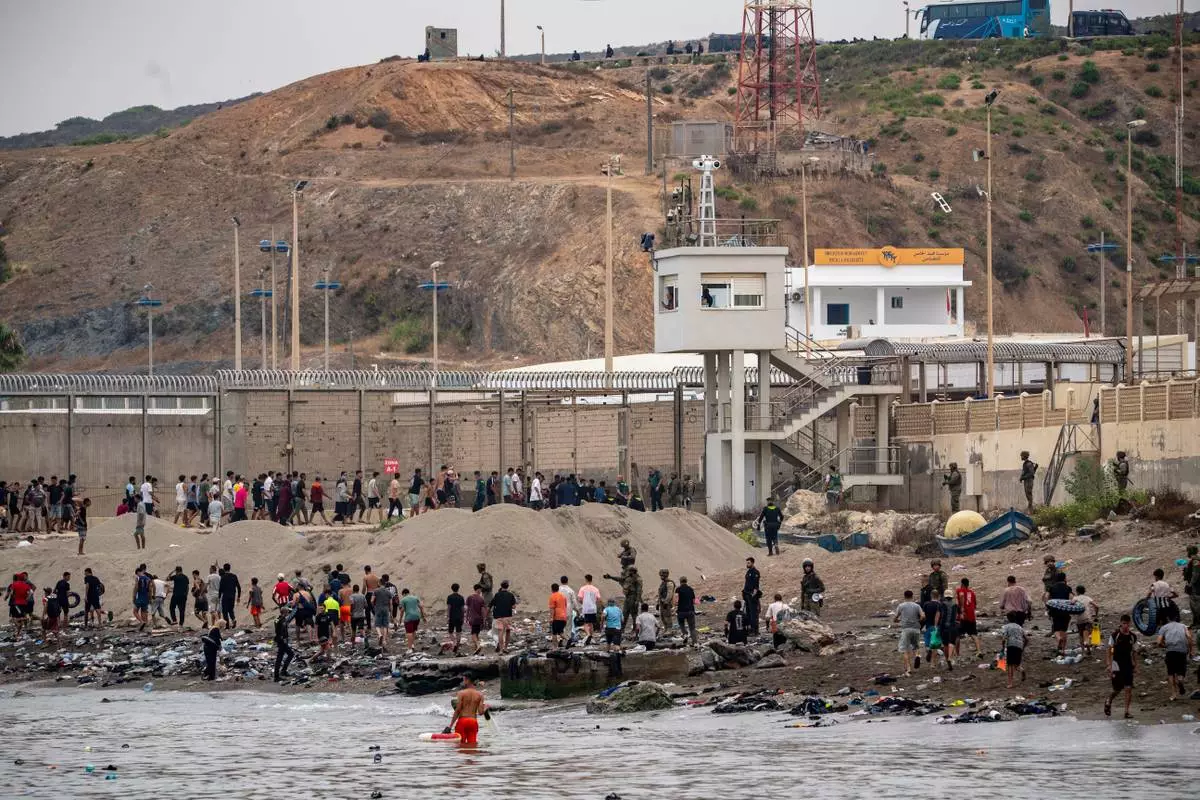
CEUTA, Spain (AP) — At least 18 migrants have died trying to reach the Spanish territory of Ceuta after thousands of people breached the frontier with Morocco and poured in.

The border crisis boiled over Thursday and continued on Friday ahead of Spain's Prime Minister's visit to the exclave, with security forces clashing with migrants on the Moroccan side of the border.

Live footage of the border showed hundreds of migrants gathered on a hill overlooking Ceuta being dispersed with tear gas by Moroccan forces, while others continued to swim to the Spanish territory.

At the same time, large groups of migrants walked back from Ceuta toward Morocco to return home.

Rachid Sbihi, who leads a local workers association representing Civil Guard officers, called the situation a “serious humanitarian crisis," saying thousands of migrants, including unaccompanied children, were left sleeping in parks and on sidewalks, while others roamed the streets aimlessly.

“People are still entering. The reinforcements, including Spanish military troops, that have arrived are only helping the injured and other humanitarian efforts,” he said. "It’s chaotic.”

Among the 18 who died, many drowned, Sbihi said, but some were also killed in a stampede to cross the breakwater fence at Tarajal beach, an urban beach near a border checkpoint with Morocco.

Ahmed Karim, a 33-year old Moroccan, said he had crossed into Ceuta because of the lack of jobs in his country.

“Many people want to go to Europe, America, but they don’t have the opportunity,” Karim said.

On Friday morning, the waters near the border fence were littered with buoys, shoes and other belongings left behind.

Moroccan police deployed additional personnel, used water cannons and fired warning shots into the air to prevent migrants from crossing into Ceuta, according to rights groups in Morocco.

“Despite the heavy police presence, people crossed through the waterway, while the land border remained closed,” said Achraf Maimouni, a human rights activist in Fnideq, the Moroccan city bordering Ceuta.

Migrants arrested at the border were taken farther into Morocco, away from Ceuta, “but people are still coming,” he said.

Morocco’s ambassador to Spain expressed hope that those who crossed from Morocco into the Spanish exclave would return. Karima Benyaich described the situation in Ceuta as difficult, saying it had unfolded against Morocco’s wishes.

“We have always prioritized legal, orderly and safe migration for all,” she said. Benyaich did not comment on what prompted the migrants to cross into Ceuta.

But authorities in both Ceuta and Madrid linked it to a recent decision by Spain's Supreme Court that ruled migrants arriving by sea could not be summarily deported, unlike those who cross by land or climb the border fence.

Spain is a main point of arrival into Europe for migrants seeking better economic opportunities or an escape from violence in their home countries.

To reach Ceuta, located on the northern African coast, migrants often swim from the Moroccan town of Fnideq, covering about 3 miles (5 kilometers) to reach Spanish territory. Others attempt the crossing from the nearby town of Belyounech, where the distance is shorter.

Spanish Prime Minister Pedro Sánchez is expected to visit Ceuta on Friday after local authorities asked Madrid to deploy the army.

Sánchez has bucked the anti-migration trend that has gained ground across Europe and in the U.S.. While the Trump administration and other European countries have tightened their borders and stepped up deportations, Spain earlier this year moved to give residency and work permits to hundreds of thousands of migrants already living in the country without permission.

Sánchez, a Socialist, argued that it would be good for the economy and the demographics of an aging Spain. Migrants who entered irregularly after January 1, 2026, were not included.

But his critics have jumped the opportunity granted them by the endless reels of young Moroccans streaming into Ceuta to attack his policy, saying it encouraged more migrants to come to Spain.

“Sánchez allows Spain to be invaded through Ceuta,” Spanish conservative politician Isabel Díaz Ayuso wrote on X.

The chaos had ripple effects abroad as well. Premier Giorgia Meloni threatened to suspend Italy’s open-border Schengen agreement with Spain “to defend our borders and ensure the safety of our citizens,” even though Italy doesn’t share a border with Spain and is also a main entry point for tens of thousands of migrants crossing the Mediterranean from North Africa each year.

French Interior Minister Laurent Nunez said France would also strengthen border checks with Spain, writing on X that he had activated the Rapid Intervention Border Force.

“This crisis in Ceuta has nothing to do with the regularization of migrants adopted by the Government of Spain, as is being falsely claimed by some," the Spanish government said in a statement late Thursday after Meloni's announcement. It also summoned Italy’s ambassador in Madrid.

“This crisis stems from an interpretation of a Supreme Court’s decision, according to which people who swim illegally across the border cannot be returned," the Spanish government said. The decision has been exploited by smugglers who take advantage of vulnerable migrants, it added.

Some activists in Morocco expressed doubt that the ruling was behind the surge, arguing most migrants would have been unaware of such legal decisions.

Migrants from Morocco also attempted to cross into Melilla, Spain’s other territory at the tip of North Africa.

There was widespread chaos in Bni Nsar, the Moroccan town bordering the Spanish territory, where migrants clashed with police, throwing rocks and setting police vehicles ablaze, according to local media and rights groups. They reported injuries among security forces and the arrest of dozens of people attempting to cross.

Omar Naji of the local branch of the Moroccan Association of Human Rights told the AP that the crossing attempts into Melilla appeared to be linked to the situation in Ceuta.

Like Ceuta, Melilla is a Spanish autonomous city on the North African coast. Many Moroccans consider both cities to be occupied territory.

Juan Jesús Vivas, the head of Ceuta’s regional government, had warned earlier this week that migrant reception centers were overwhelmed as arrivals by sea had steadily been increasing before the chaos erupted Thursday.

Spain’s Interior Ministry would not confirm the number of migrants who had made it to Ceuta but said it would publish its next migration report on Monday.

Spanish media, citing unnamed government and security sources, estimated between 30,000 and 49,000 migrants had crossed in the past 24 hours. A member of Spain's civil guard who spoke on condition of anonymity because he was not authorized to release figures to the media said that 49,000 people were estimated to crossed. That's more than half of Ceuta's nearly 84,000 population.

Sbihi, of the civil guard workers association, said it was difficult to know exact numbers but believed tens of thousands of migrants had made it through.

Ceuta has been a Spanish possession since 1580. Its mixed population of Christians and Muslims, Spanish and Moroccan residents and day workers, lives in relative harmony.

——

Naishadham reported from Madrid, Brito from Barcelona, Spain. AP journalists Joseph Wilson in Barcelona, Spain, Akram Oubachir in Casablanca, Morocco, and Antonio Sempere in Ceuta, Spain, contributed.

Migrants return to Morocco from the Spanish enclave of Ceuta, Friday, July 31, 2026. (AP Photo/Antonio Sempere)

Migrants return to Morocco from the Spanish enclave of Ceuta, Friday, July 31, 2026. (AP Photo/Antonio Sempere)

Migrants return to Morocco from the Spanish enclave of Ceuta, Friday, July 31, 2026. (AP Photo/Antonio Sempere)

Migrants return to Morocco from the Spanish enclave of Ceuta, Friday, July 31, 2026. (AP Photo/Antonio Sempere)

Unaccompanied minors who crossed into Spain from Morocco spend the night on the streets in the Spanish enclave of Ceuta, Friday, July 31, 2026. (AP Photo/Antonio Sempere)

Unaccompanied minors who crossed into Spain from Morocco spend the night on the streets in the Spanish enclave of Ceuta, Friday, July 31, 2026. (AP Photo/Antonio Sempere)

Migrants spend the night on the streets after crossing from Morocco into the Spanish enclave of Ceuta, Friday, July 31, 2026. (AP Photo/Antonio Sempere)

Migrants spend the night on the streets after crossing from Morocco into the Spanish enclave of Ceuta, Friday, July 31, 2026. (AP Photo/Antonio Sempere)

Migrants spend the night on the streets after crossing from Morocco into the Spanish enclave of Ceuta, Friday, July 31, 2026. (AP Photo/Antonio Sempere)

Migrants spend the night on the streets after crossing from Morocco into the Spanish enclave of Ceuta, Friday, July 31, 2026. (AP Photo/Antonio Sempere)

Migrants try to cross from Morocco into the Spanish enclave of Ceuta, Friday, July 31, 2026. (AP Photo/Antonio Sempere)

Migrants try to cross from Morocco into the Spanish enclave of Ceuta, Friday, July 31, 2026. (AP Photo/Antonio Sempere)

Recommended Articles