NEW YORK (AP) — The Trump Administration has announced an overhaul to the rules governing a critical piece of Civil Rights-era legislation, most notably a reduction in the number of banks that will need to fully comply with the law.
The Office of the Comptroller of the Currency and the Federal Deposit Insurance Corporation on Friday jointly announced the proposed changes to the Community Reinvestment Act, a law that requires regulators to document how well banks do in lending to low-to-middle income neighborhoods. It would be the first major revision of the law’s rules and regulations in nearly three decades.
Under the proposed revisions, bank examiners would put more weight on the lending banks do in certain communities and geographies, and less on how many branches they open or how much in deposits they take in from a local community.
The number of banks that would need to comply with the law would be reduced as well. The definition of a small bank will increase from banks with under $412 million in assets to banks with $1 billion in assets. Banks between $1 billion and $10 billion in assets will now be classified as an intermediate bank.
This would reduce the number of banks who need to comply with parts of the CRA by 800 banks. Only 86 banks, or roughly 3% of all institutions, would be subject to the full extent of CRA under the new regulations.
Another change that is likely to be fought over relates to how banks give money to community development groups. Under the CRA, banks can donate money to local organizations that do poverty or low-income housing work in their communities to show they are providing resources to a local community. The new regulations could narrow the groups and programs that banks could donate to in order to meet those obligations.
In a summary of the changes, the bank regulators said these changes would ensure community development grants “are not diverted to activist causes or consumed by excessive operating costs.” Banks would also need to collect more detailed information on who gets their community grants, including addresses, which would give more transparency to who is receiving grants from banks.
That change could negatively impact groups like the National Community Reinvestment Coalition, an umbrella group for community development groups that often receive money from banks under the CRA. The new rules discourage banks making grants to national organizations and instead focus their grants on local groups.
Jesse Van Tol, the CEO of NCRC, said that it was “unfortunate” that the bank regulators were politicizing grant making under the CRA.
“CRA was created to work for low-to-middle income people. A lot of these changes are going to discourage banks from making grants, particularly in rural areas, where I expect there will be significant drops in activity,” Van Tol said.
The proposal announced Friday by the OCC and FDIC did not include the other major bank regulator, the Federal Reserve. Banking groups had been pushing for a joint proposal from all three regulators, to make sure all three were aligned on the same requirements under the CRA.
The CRA was passed in 1977 to combat redlining, a practice whereby banks would discriminate against the poor and minorities by choosing not to lend or open branches in minority-majority neighborhoods or in poor neighborhoods.
The law is complex, requiring banks to document how they do business in the cities and areas they operate in. Banks must sit for regular examinations to see whether they are complying with the law. A bad CRA examination could restrict a bank’s ability to open new branches or merge with another bank or have other consequences. The data collected through CRA is also used by the Department of Justice in redlining cases.
The last major revision of the CRA’s regulations happened in 1995, and there have been repeated attempts by administrations of both parties to update the rules to reflect how banking and financial services have changed in the past 30 years. But those revisions have repeatedly failed, either due to opposition from other regulators, the banks, or community groups, or have been blocked by courts. The Biden administration tried its own revisions of the CRA rules but those changes were blocked by courts in Texas.
The proposed rules will now go out for a 60-day comment period where they will be finalized after banks, community groups and other parties have a chance to weigh in on the changes.
FILE - The Federal Deposit Insurance Corporation seal is shown outside its headquarters, March 14, 2023. (AP Photo/Manuel Balce Ceneta, File)
FILE - The official seal of the Office of the Comptroller of the Currency is seen on an office building in Washington, Feb. 13, 2026. (AP Photo/Cliff Owen, File)
NEW YORK (AP) — The U.S. stock market is swinging between gains and losses on Friday, as Wall Street's wildJuly remains rocky. Amazon is leaping, but Apple is sinking, and rising oil prices are adding to worries about inflation already squeezing the bond market.
The S&P 500 rose 0.6% after veering between an earlier gain of 0.7% and drop of 0.5%. The Dow Jones Industrial Average was up 282 points, or 0.5%, as of 1:44 p.m. Eastern time, and the Nasdaq composite was 0.8% higher after briefly losing all of an early 1.3% jump.
The market initially seemed to be heading for healthy gains as Amazon leaped 14.9% after reporting much stronger profit for the latest quarter than analysts expected. Its profit more than tripled from a year earlier, thanks in part to an acceleration of growth in its cloud computing business.
Analysts said that could be a signal Amazon’s huge investments in artificial-intelligence technology are paying off, and Amazon increased its forecast for how much it will spend on investments this year.
The stock reaction was similar to what Microsoft got a day before, when it soared to its best day in nearly 18 years on signals that its AI investments may also be yielding higher profits.
Worries have been high on Wall Street that companies pouring billions of dollars into AI data centers may not get enough profit and productivity to make all the investments worth it. That weighed on the broad U.S. stock market, causing its sharp swings throughout July, along with worries that stock prices shot too high for companies selling the processors and computer memory that such “hyperscalers” are scrambling to buy.
Chipmakers swung sharply again on Friday. Micron Technology, for example, went from an early jump of 6.4% to a loss of 2.5%.
More firmly on the losing end of Wall Street was Apple, which dropped 9.6% despite reporting stronger profit for the latest quarter than expected. Its forecast for growth in the current quarter fell short of expectations, which executives pinned on a supply crunch in components getting vacuumed up in the AI boom.
Also pressuring stocks was another rise in oil prices as uncertainty continues about when the war with Iran will allow crude to flow freely again from the Middle East.
The price for a barrel of Brent crude rose 1.4% to $88.06 after careening between $72 and $102 earlier in July.
Higher oil prices have pushed the cost for a gallon of regular gasoline to an average of nearly $4.11 across the United States, up from $3.85 a month ago, according to AAA. More expensive oil also puts upward pressure on prices for virtually every product that rides on a ship, plane or truck before it gets to a customer.
The worries about inflation sent yields in the bond market even higher.
The yield on the 10-year Treasury jumped to 4.74% from 4.68% late Thursday and from just 3.97% before the war with Iran sent oil prices shooting higher. That's a notable move for the bond market, and the yield moves higher when investors' expectations for inflation, economic growth and other factors in upcoming years are rising.
The leap has already sent the average long-term U.S. mortgage rate to its highest level in a year.
Longer-term yields jumped on Wednesday after the Federal Reserve's chair, Kevin Warsh, promised again to get inflation back down to 2% but did not say how he plans to get it there. The Fed voted again to keep its main interest rate steady on Wednesday, even though inflation continues to remain well above 2%.
Higher interest rates could keep a lid on inflation, but they could also slow the economy and undercut prices for stocks and other investments. President Donald Trump, who nominated Warsh to lead the Fed, has lobbied for lower interest rates instead of higher.
Warsh has clearly told financial markets that he does not want to give hints about what the Fed will do with interest rates, saying he wants to get direct, “unfiltered” messages from them rather than echoes back of what the Fed has suggested.
But “without clarifying why action was or wasn’t taken already, it’s hard to see how statements about being committed to hitting its inflation target aren’t just a bluff,” according to Brian Jacobsen, chief economic strategist at Annex Wealth Management.
“The Fed is facing a growing credibility problem,” economists at Bank of America wrote in a report. Unless data comes in showing less pressure on inflation in the interim, “it is imperative for the Fed to pass the September test by hiking rates and delivering an internally consistent narrative.”
In stock markets abroad, the swings were even wilder for chip stocks.
Seoul’s Kospi index soared 17.9% for its best day in history. The index is dominated by two tech giants, Samsung Electronics and SK Hynix, which both surged at least 26.8% on Friday.
The Kospi, though, still lost 22% in July despite Friday’s historic move. That’s after it more than doubled in the first six months of the year.
AP Business Writers Chan Ho-him and Elaine Kurtenbach contributed to this report.
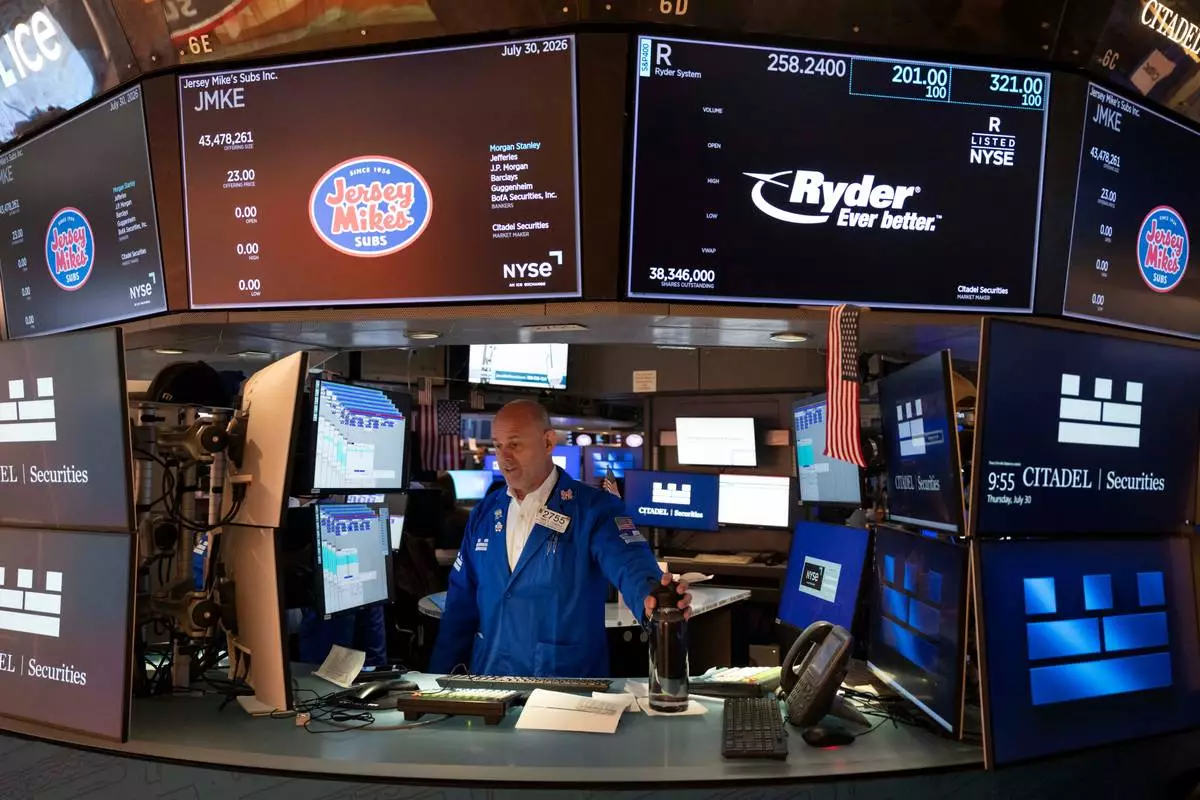
Specialist Mark Fitzgerald works on the floor of the New York Stock Exchange, Thursday, July 30, 2026, in New York. (AP Photo/Yuki Iwamura)

An employee walks past near the screen showing the SK Hynix stock price at a dealing room of Hana Bank in Seoul, South Korea, Friday, July 31, 2026. (AP Photo/Lee Jin-man)

A dealer walks past near the screen showing the Korea Composite Stock Price Index (KOSPI) at a dealing room of Hana Bank in Seoul, South Korea, Friday, July 31, 2026. (AP Photo/Lee Jin-man)
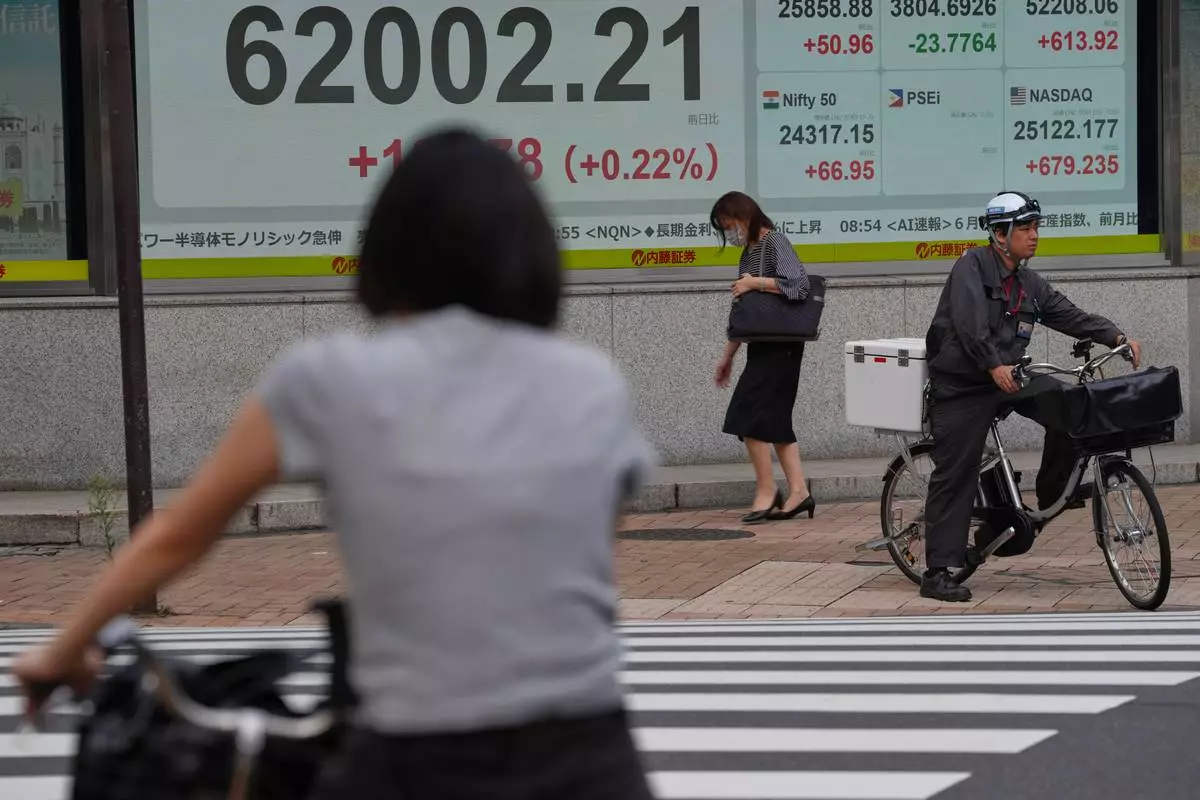
People wait to cross a street near an electronic board showing Japan's Nikkei index at a securities firm Friday, July 31, 2026. (AP Photo/Eugene Hoshiko)

A person walks past an electronic board showing Japan's Nikkei index at a securities firm Friday, July 31, 2026. (AP Photo/Eugene Hoshiko)
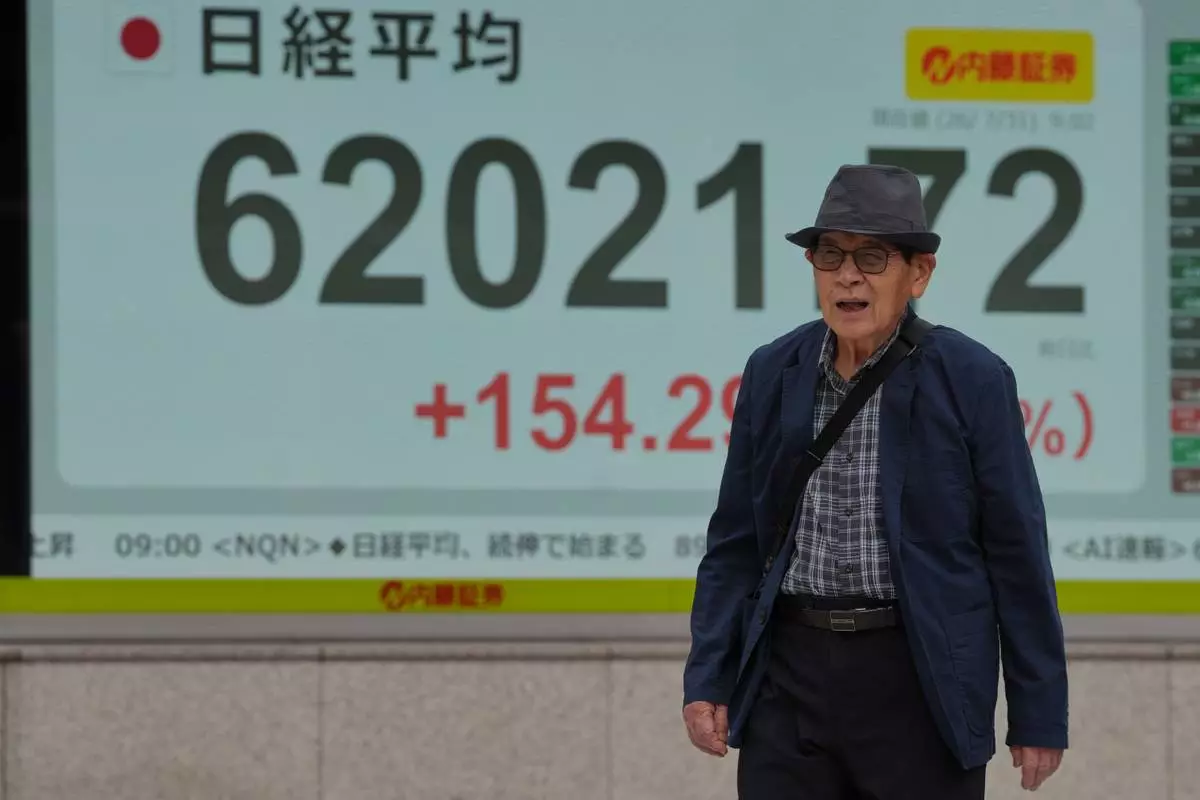
A person walks past an electronic board showing Japan's Nikkei index at a securities firm Friday, July 31, 2026. (AP Photo/Eugene Hoshiko)
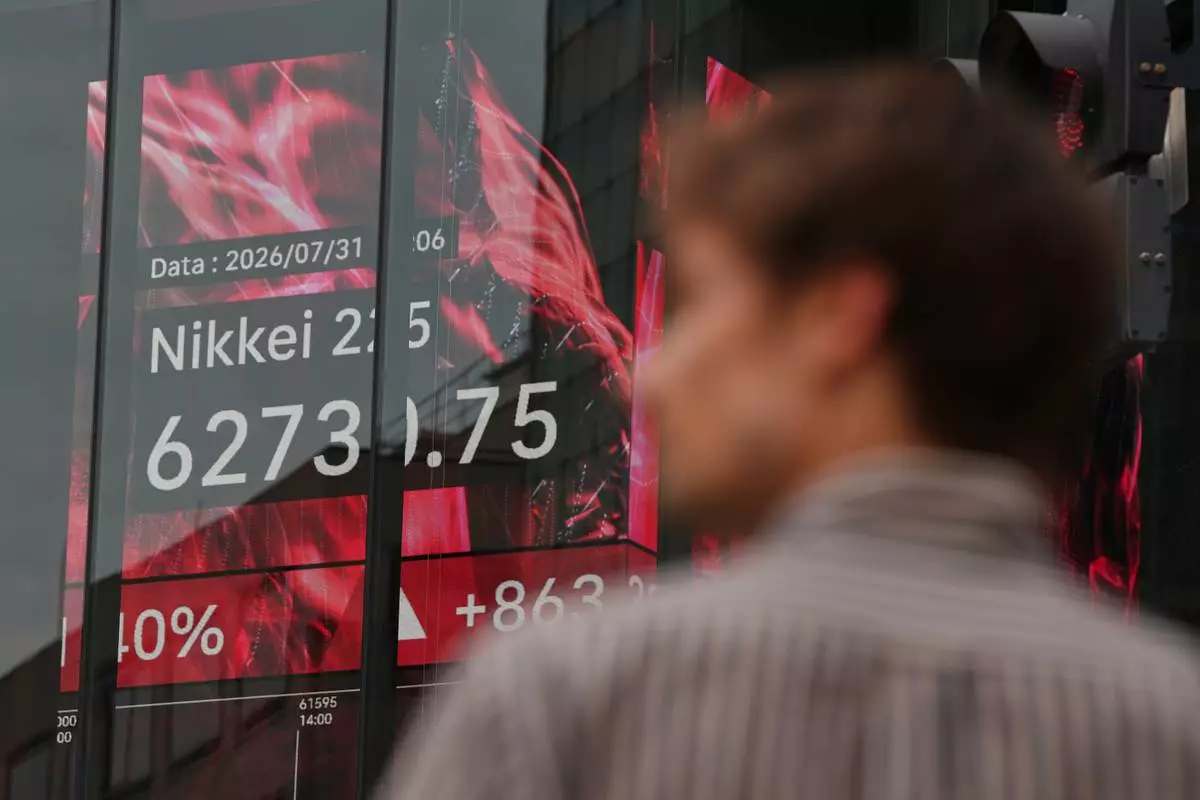
A person stands near an electronic board showing Japan's Nikkei index at a securities firm Friday, July 31, 2026. (AP Photo/Eugene Hoshiko)
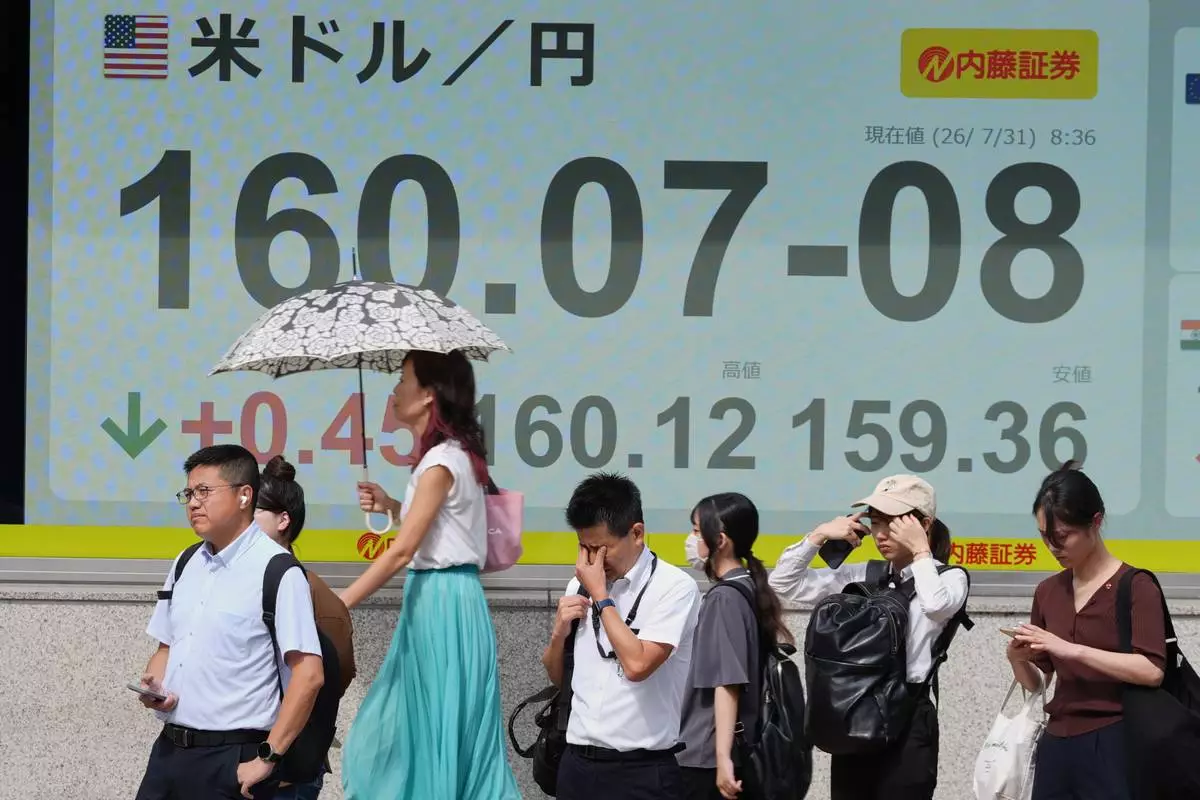
People stand in front of the electronic board showing Japanese Yen and U.S. Dollar exchange rate at a securities firm Friday, July 31, 2026. (AP Photo/Eugene Hoshiko)

FILE - A Microsoft logo is seen on a screen as people listen at an event at Microsoft headquarters, May 20, 2024, in Redmond, Wash. (AP Photo/Lindsey Wasson, File)
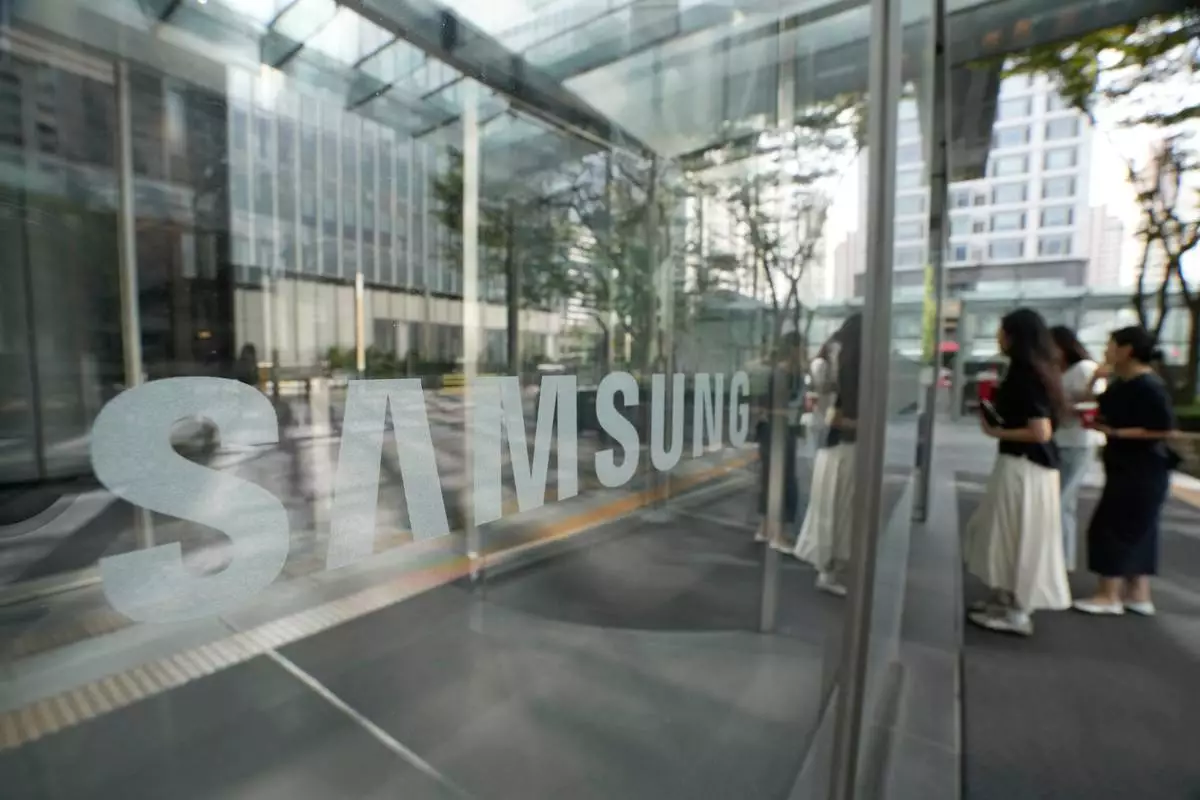
The logo of the Samsung Electronics Co. is seen at its office in Seoul, South Korea, Thursday, July 30, 2026. (AP Photo/Ahn Young-joon)

A currency trader talks on the phone at the foreign exchange dealing room of the Hana Bank headquarters in Seoul, South Korea, Thursday, July 30, 2026. (AP Photo/Ahn Young-joon)