JACKSONVILLE, Fla. (AP) — As if two-way player Travis Hunter doesn't already have enough on his plate.
The week before the Jacksonville Jaguars opened training camp, Hunter was photographed wearing a police vest posing with Sheriff T.K. Waters and members of the Jacksonville Fire Rescue Department. It had the look of a ride-along, though Hunter wasn't saying.
“I was just out there just having fun with Sheriff T.K.,” Hunter said Friday.
Hunter, the Heisman Trophy winner out of Colorado whom the Jaguars made the No. 2 pick in last year's draft, has enough to keep him occupied in training camp. Hunter is returning from injury, his rookie year ending two months into the season when he tore knee ligaments during noncontact drills.
In seven games, he played 324 snaps at receiver and 162 snaps at cornerback. The plan to use him on both sides of the ball has not changed, especially after the Jaguars shored up the core of their secondary by re-signing Montaric “Buster” Brown in March.
Hunter has been wearing a teal jersey for offense in three days of camp, with a white bib and his No. 12 he can slip on when he plays in the secondary.
“How do we balance his reps here, knowing that we’re trying to ease him in, but he also at some point needs to get double the amount that a normal player gets,” coach Liam Coen said. “And so what does that ramp-up look like? We have it all kind of mapped out ... on every single practice schedule, his reps are highlighted in here — where he’s in, what plays he’s in, where he’s at on the field. We’ve been extremely intentional about it.”
Hunter, who had surgery Nov. 11 to repair the lateral collateral ligament in his right knee, was limited during offseason workouts. But he used that time to build up some 10 pounds of muscle in his upper body and managed to get even faster.
He was clocked running at 22.6 mph at the team's facility last week.
“I was a small guy coming in. Everybody was like, ’Gain weight, gain weight,’” Hunter said. “I was scared at first. I'm like: ‘Dang, I’ve never played at this weight. I'm going to feel heavy, not going to be able to do what I do.' Training and being able to put those months in — not just on the grass but in the weight room — just putting in extra work, it made me feel lighter on my feet when I finally touched the grass.”
He looked like he was flying on grass when he ran the 22.6 mph — no pads, no one around him, not in a game — but it was another indication all was well.
“I'm trying to hit 23 now,” Hunter said. “That's the next goal.”
The Jaguars could use the production considering how much they gave up in a trade to get the second pick in 2025 — their No. 5 pick last year and No. 1 pick this year. They won nine of their last 10 games last year after Hunter was injured to win the AFC South.
For his part, Hunter feels like last year never happened in terms of his health.
“I put nine months in, so it doesn’t feel like I’m coming off an injury,” he said. "Just get the rust off right now. I’ve been gone for nine months, not able to be out here with my teammates for nine months, so finally being able to hit the grass, knock the rust off and just continue to click with the quarterbacks and click with the defense.”
Defensive coordinator Anthony Campanile said Hunter is getting back into the flow, and the added muscle in his upper body is noticeable.
“You never want to see anybody get injured, but I think he really put his best foot forward in the weight room as he was recovering from a lower-body injury,” Campanile said. “He just looks really physical in the team work and in the individual period. So he's done a good job.”
And now it's all football, though the Engine 36 B-Shift crew said in its Facebook post for Hunter to let them know when he was ready for a ride-along.
“We promise, it's just as hot as training camp,” the post said.
AP NFL: https://apnews.com/hub/nfl

Jacksonville Jaguars wide receiver and cornerback Travis Hunter (12) during practice at the team's NFL football training camp, Wednesday, July 29, 2026, in Jacksonville, Fla. (AP Photo/Kelly Jordan)

Jacksonville Jaguars wide receiver and cornerback Travis Hunter (12) warms-up during practice at the team's NFL football training camp, Thursday, July 30, 2026, in Jacksonville, Fla. (AP Photo/Kelly Jordan)

Jacksonville Jaguars wide receiver and cornerback Travis Hunter (12) particpates in drills during practice at the team's NFL football training camp, Thursday, July 30, 2026, in Jacksonville, Fla. (AP Photo/Kelly Jordan)
PUERTO MORELOS, Mexico (AP) — Swaths of seaweed are blanketing the beaches and coastlines of the Caribbean and Gulf of Mexico, suffocating shorelines and snuffing out marine life while spooking visitors in areas that depend heavily on tourism.
Some 27 million metric tons of self-sustaining sargassum have been recorded in the Atlantic, Caribbean and Gulf of Mexico in July, according to a report released Friday by the University of South Florida’s Optical Oceanography Lab.
The prickly seaweed covers miles of coastline, releasing a foul smell as it rots onshore.
This year marks the first time that scientists have observed sargassum growing in large quantities in areas including the Caribbean and Gulf of Mexico, instead of being swept into those areas by ocean currents.
The algae usually reproduces asexually as it travels from Western Africa, said Brian Barnes, a marine scientist and research assistant professor at the University of South Florida. “None of this is normal,” he said. “Every year is a little bit of a new story.”
The Great Atlantic Sargassum Belt has been growing since 2011, dumping an increasing amount of seaweed along coastlines in the Caribbean and Gulf of Mexico. Experts have said that agricultural runoff, warming waters and changes in wind, current and rain could be factors.
The sargassum that began reproducing in the region earlier than usual this year stems from a record 40 million metric tons reported last year.
“The 2025 bloom was so big it never really left,” Barnes said. “It was enough to start a new bloom locally.”
Sargassum levels in the Caribbean reached record levels in June, while the amount present in the Gulf hit 5 million metric tons in June, nearly double last year’s record, according to the University of South Florida.
Scientists expect 2026 to be the second largest amount of sargassum recorded in the Atlantic, Caribbean and Gulf of Mexico, noting that June alone saw 34 million metric tons, which was only 10% lower than the year-earlier period.
Mexico said Thursday it plans to invest $115 million to tackle the blooming algae, which poses an environmental and economic threat. The government estimates that up to 9,000 tons reach its Caribbean coastline on the worst days. Given current resources, Mexico says it can only gather 1,200 tons of sargassum a day.
On a recent evening, Alan Vázquez closed the restaurant where he works as a waiter in the popular tourist town of Playa del Carmen because there were no customers. He had resisted closing for several hours, hoping he would receive a tip and salvage the day, but vast quantities of decomposing sargassum are turning the famed turquoise waters black, driving away tourists.
“It’s sad that such a beautiful and lively place...has ended up like this,” Vázquez said.
He fears suffering the same fate as four of his colleagues who were laid off two months ago due to a drop in tourism that has devastated hotels and businesses in the state of Quintana Roo, one of Mexico’s tourism gems, where sales fell 30% in the first half of the year, according to estimates from local businesses.
In Puerto Rico, sargassum blankets the waters around popular tourist areas, including La Parguera.
“I don’t recall ever having that much concentration in so many places at once,” said Waldemar Quiles, the U.S. territory’s natural resources secretary.
Much of the record sargassum reported last year ended up along Puerto Rico’s coastline, prompting the governor to declare a state of emergency.
It surpassed the previous record set in 2022 with a peak of some 22 million metric tons.
“It’s not a one-off event anymore,” said Emmanuel Maldonado González, an environmental sociologist at East Carolina University. “It’s becoming a growing hazard.”
Patches of sargassum in open waters provide a healthy breeding ground for wildlife, including turtles, fish and seabirds, and can be “a bit of an oasis of life in the middle of the ocean,” Barnes said.
But once it’s closer to shore, it reduces oxygen in the water, smothers mangrove roots and blocks sunlight from reaching coral and sea grass.
Once it washes ashore it can prevent newly hatched sea turtles from reaching the ocean, while the heavy machinery used to remove it from beaches risk destroying fragile turtle nests, scientists say.
“The coastlines are not built for this,” Barnes said.
In the U.S. Virgin Islands, people are walking up to 25 feet (seven meters) on mats of seaweed before even reaching the water, according to Amy Dempsey, an environmental consultant.
“This is by far the worst I’ve seen it in the last five years,” she said. “We are getting slammed in the Virgin Islands.”
The smell of rotten eggs permeates communities where large piles of decaying sargassum emit ammonia and hydrogen sulfide.
“The effects of these gases on people can be severe,” warns the U.S. Environmental Protection Agency, noting it can cause nausea, headaches and lung irritation.
Officials on the French Caribbean island of Martinique recently opened a shelter to temporarily house those affected by the toxic gases after residents protested.
So far this year, crews in Martinique have collected more than 11,500 tons of sargassum — including 638 tons in four days alone this month — according to government data. Sea barriers catch some of the seaweed, while crews on shore collect the remainder by hand, storing and processing it for composting and bioenergy production.
Researchers at the University of South Florida and the U.S. National Oceanic and Atmospheric Administration used artificial intelligence and found that from 2003 to 2022, macroalgae blooms increased by more than 13% per year in the tropical Atlantic and Western Pacific.
Overall, the blooms reached 16.9 million square miles (43.8 million square kilometers), according to a study published earlier this year.
Associated Press reporter María Verza in Mexico City contributed.
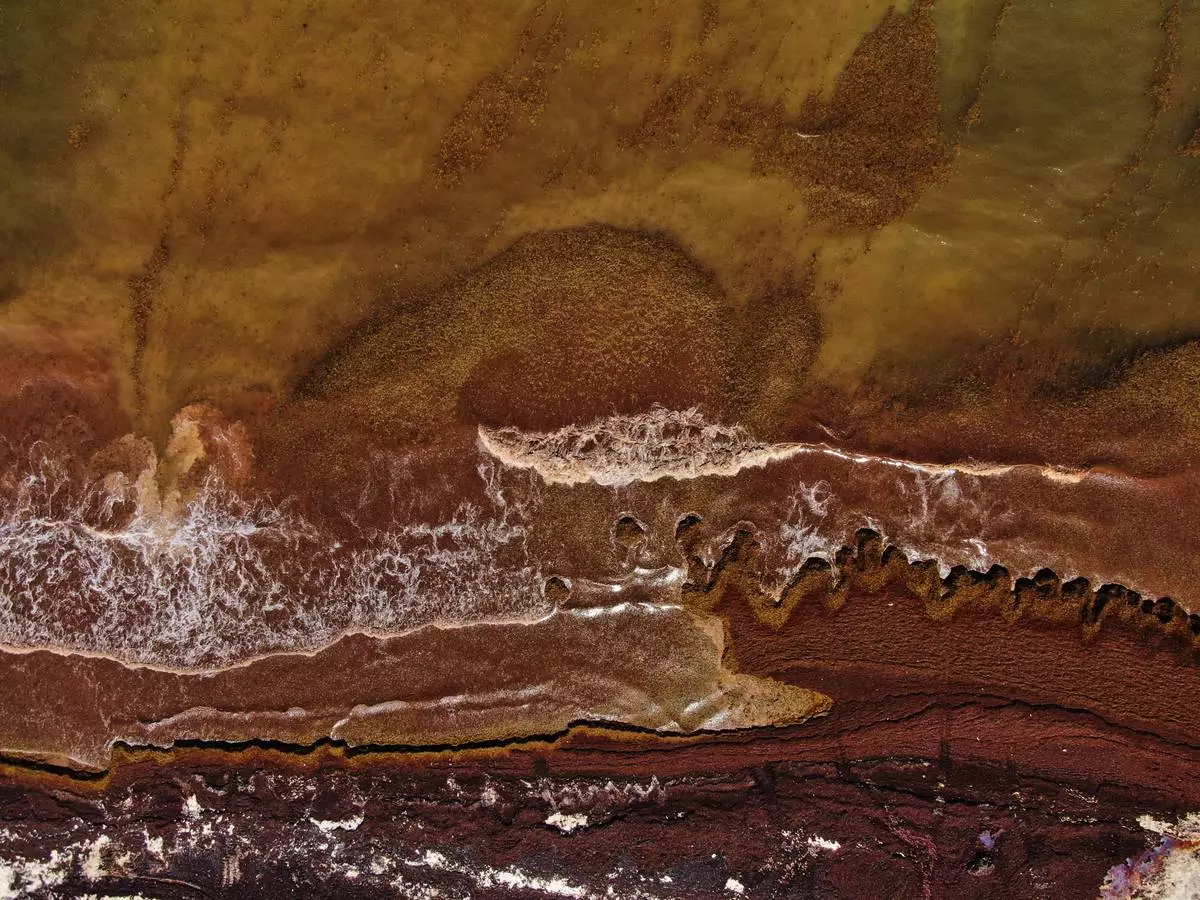
Sargassum covers the coast of Tulum, Mexico, Thursday, July 30, 2026. (AP Photo/Fernando Llano)
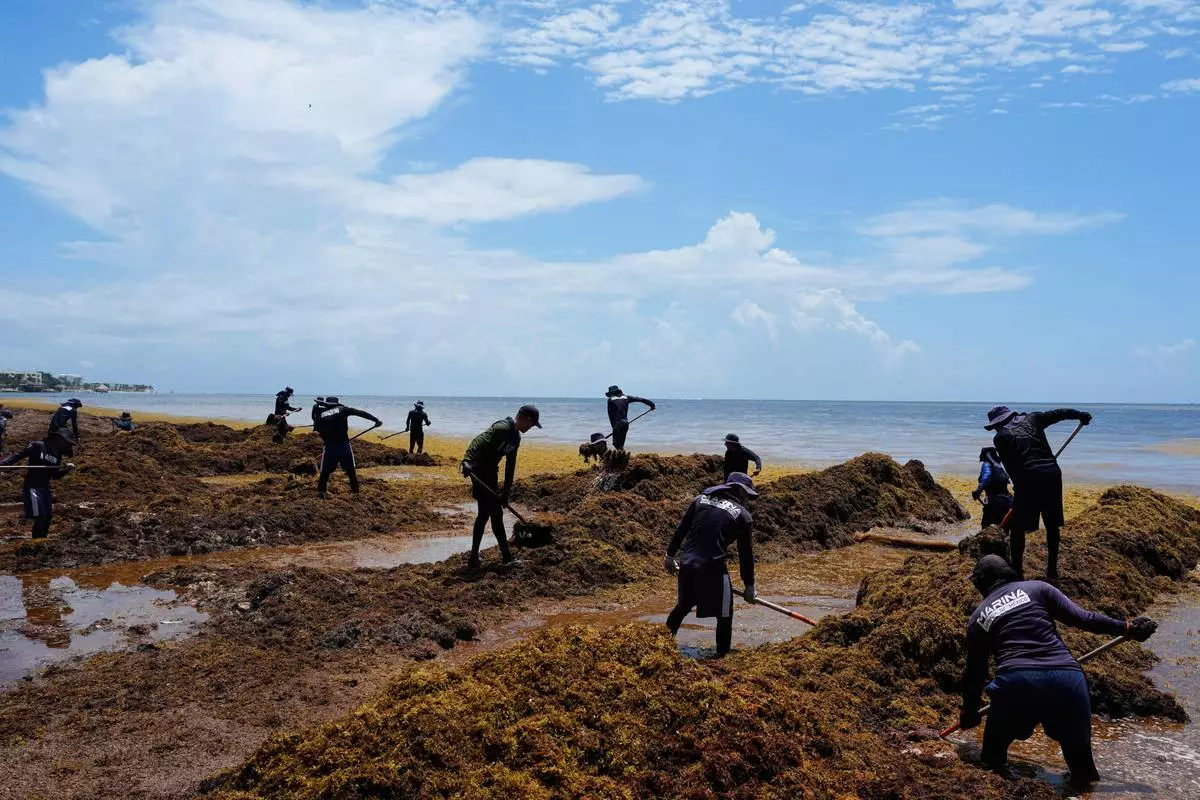
Members of Mexican Navy remove sargassum along the shore of Puerto Morelos, Mexico, Thursday, July 30, 2026. (AP Photo/Fernando Llano)
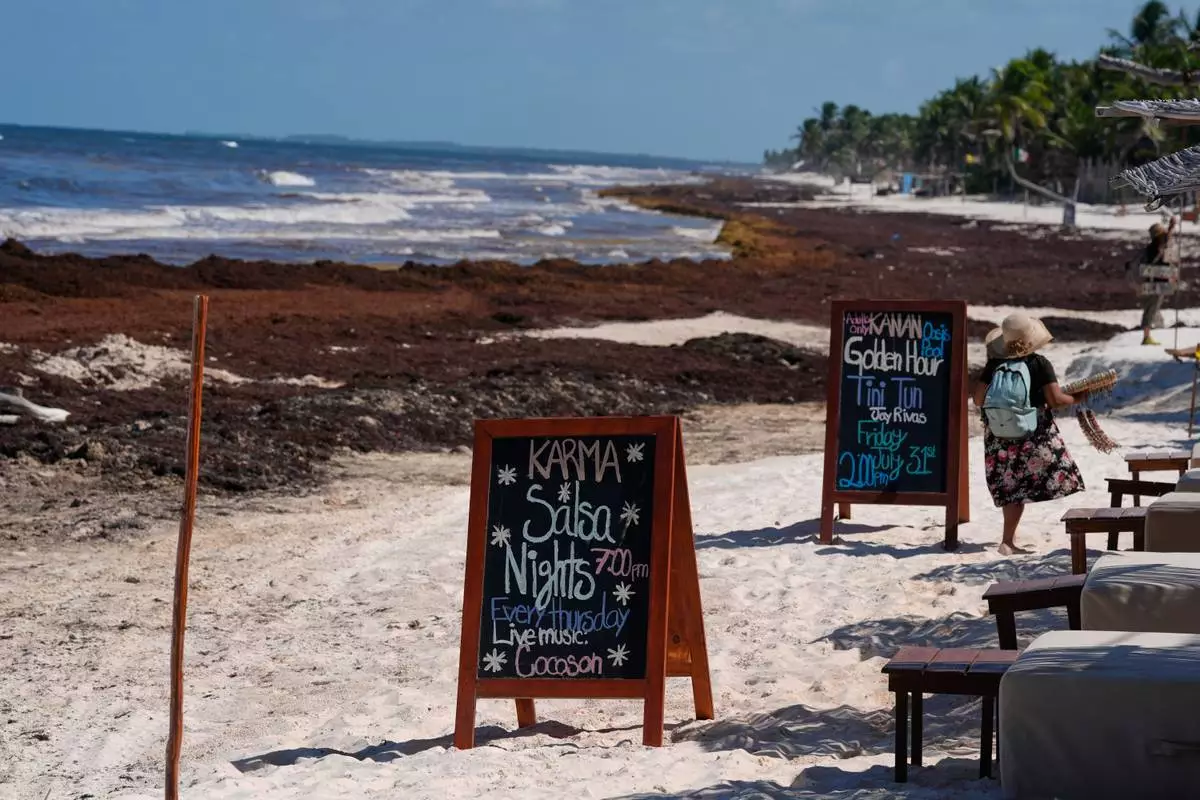
Promotional boards are displayed near to a beach covered with sargassum in Tulum, Mexico, Thursday, July 30, 2026. (AP Photo/Fernando Llano)
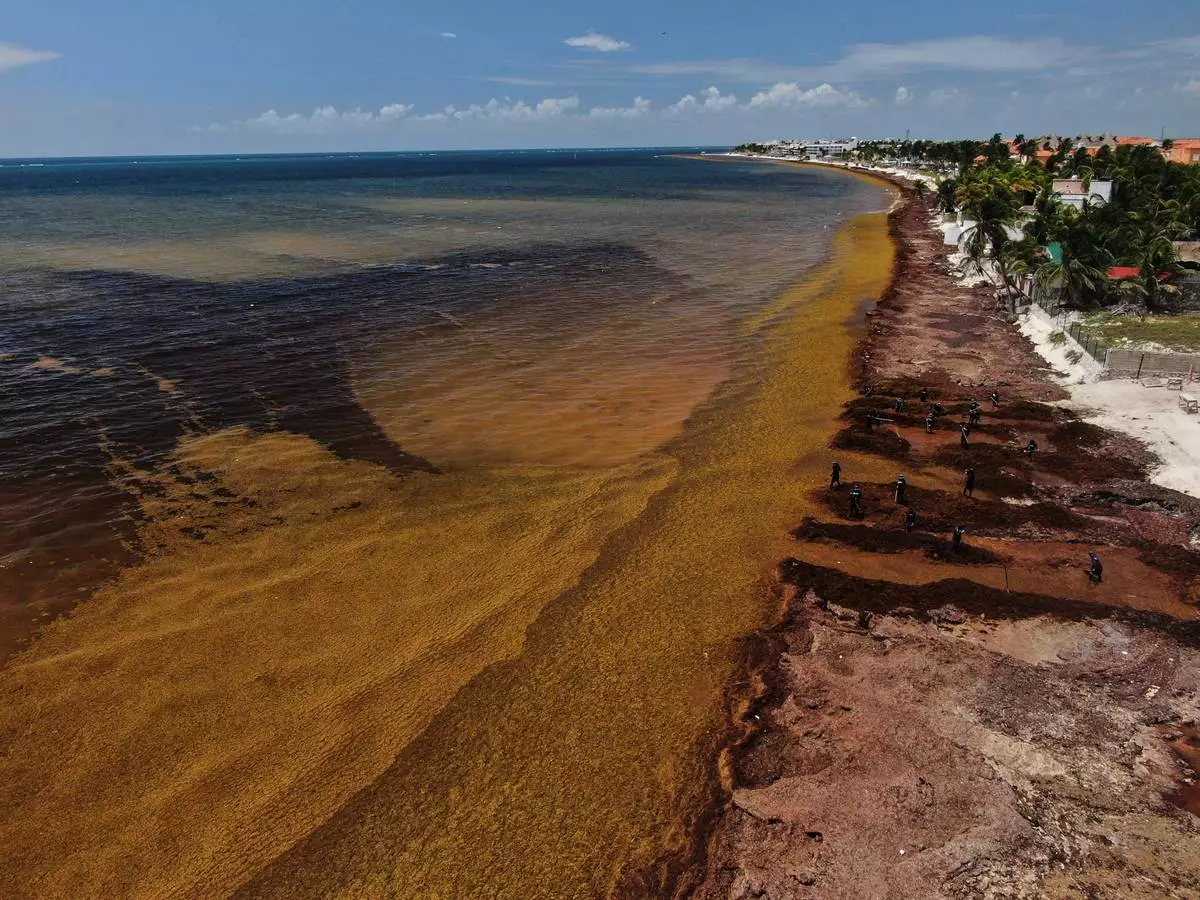
Members of the Mexican Navy remove sargassum that accumulated along the shore of Puerto Morelos, Mexico, Thursday, July 30, 2026. (AP Photo/Fernando Llano)
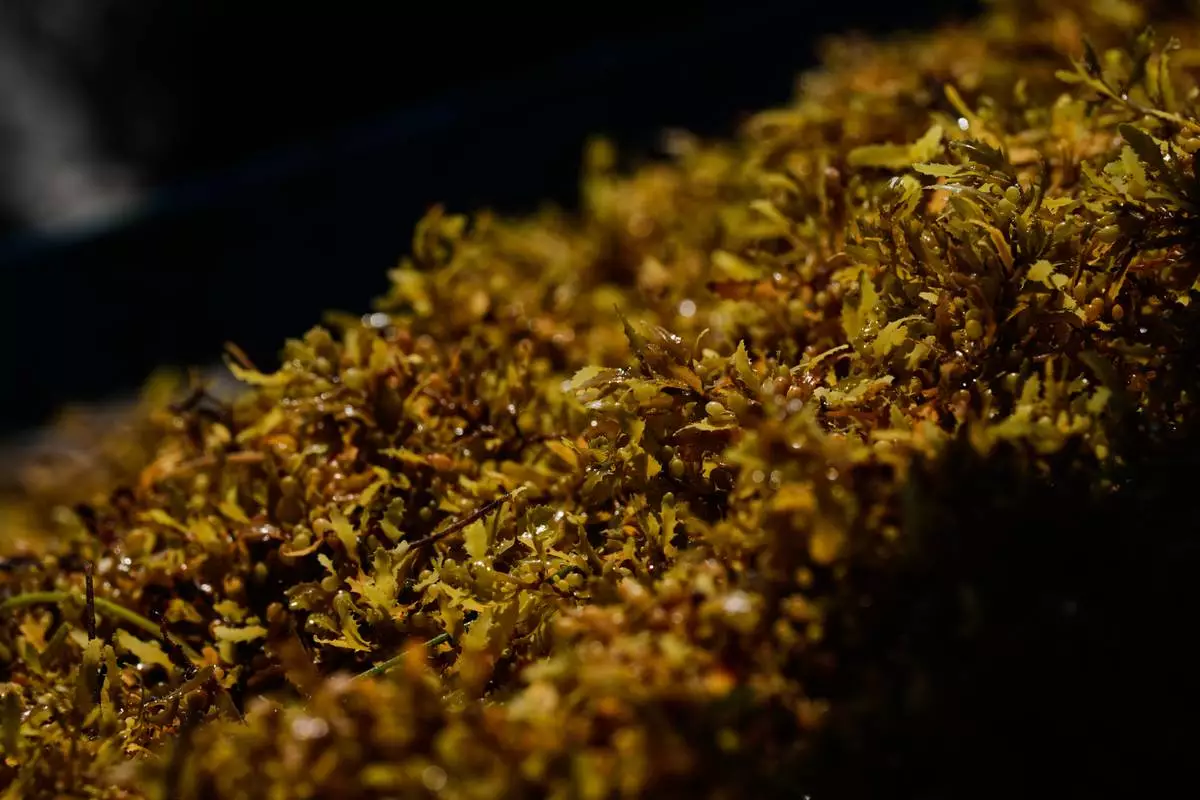
Sargassum gathers in the water off the coast of Tulum, Mexico, Thursday, July 30, 2026. (AP Photo/Fernando Llano)
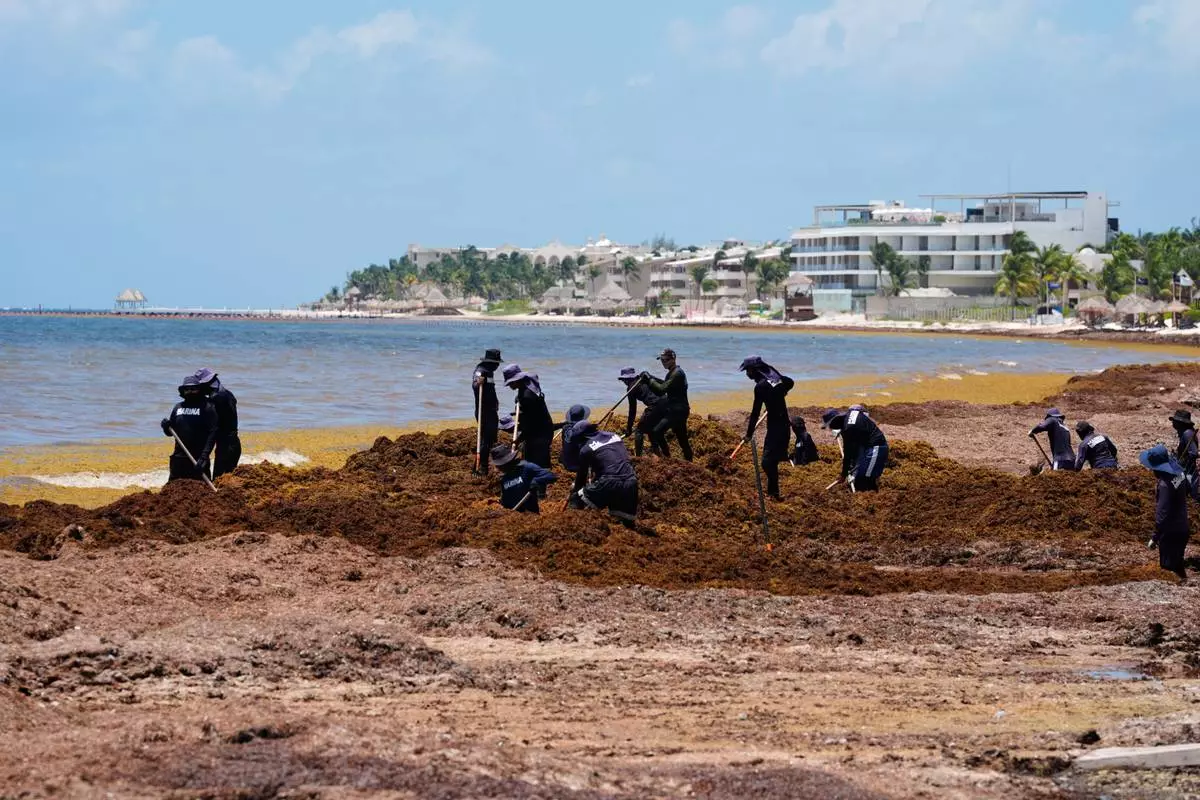
Members of Mexican Navy remove sargassum along the shore of Puerto Morelos, Mexico, Thursday, July 30, 2026. (AP Photo/Fernando Llano)
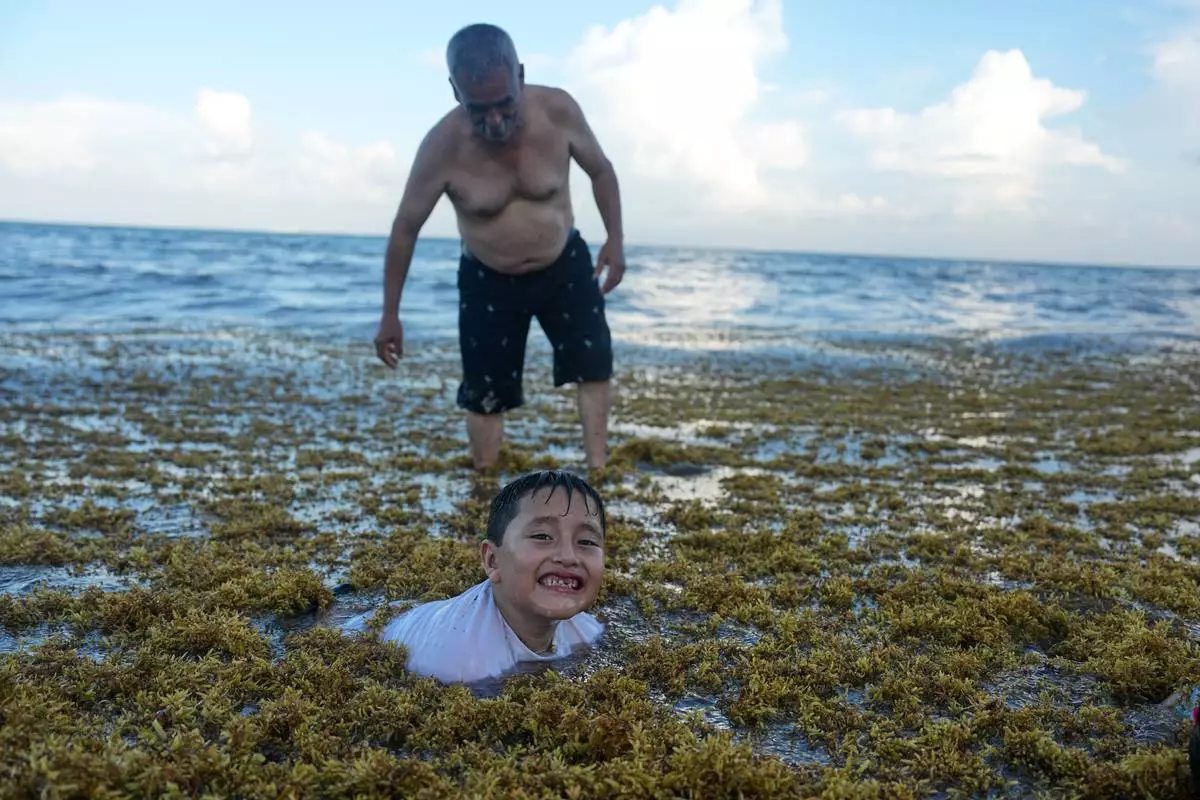
Antonio Garcia watches over his grandson along a shore blanketed with sargassum at Pelicanos beach in Playa del Carmen, Mexico, Wednesday, July 29, 2026. (AP Photo/Fernando Llano)
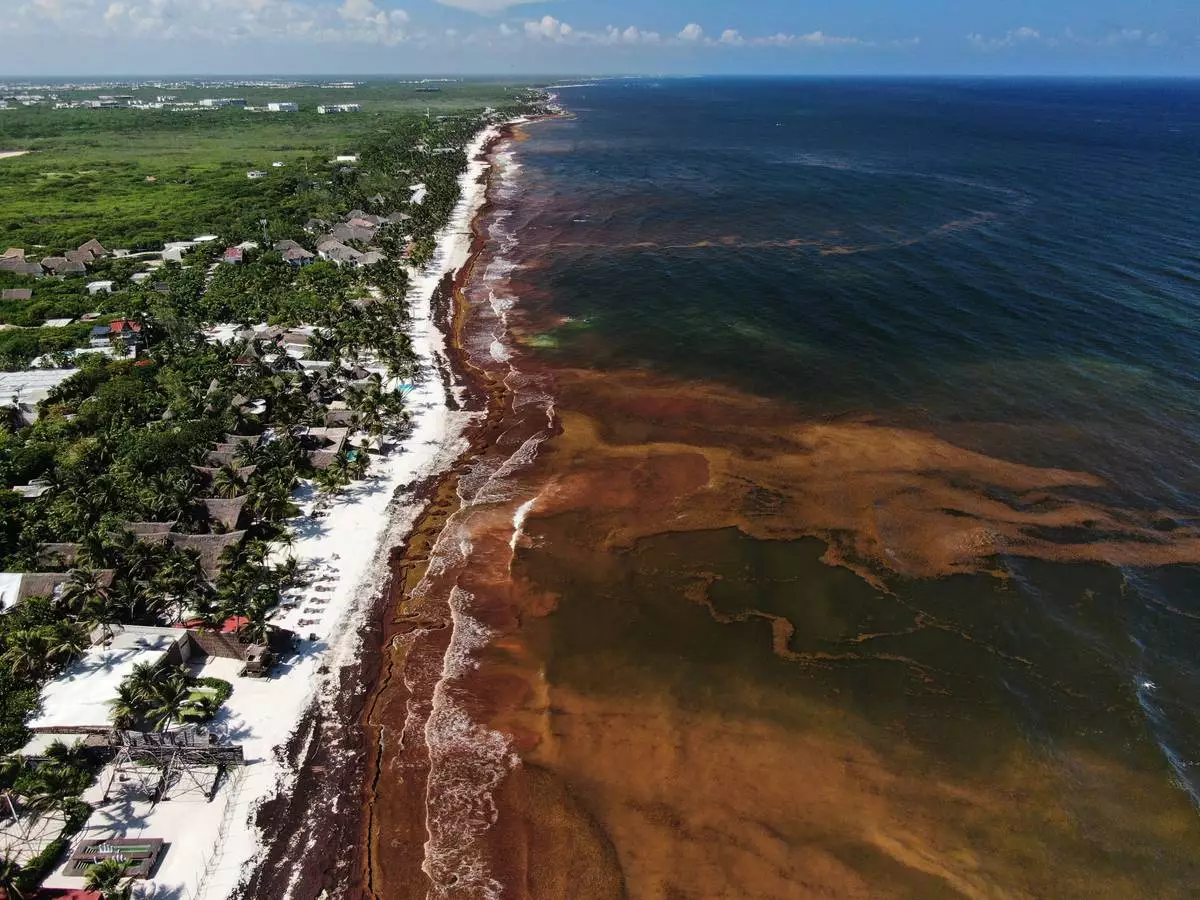
Sargassum gathers in the water off the coast of Tulum, Mexico, Thursday, July 30, 2026. (AP Photo/Fernando Llano)