Heavy-to-torrential rain has been hitting many parts of China since Thursday, with some areas recording downpours and waterlogging.
The National Meteorological Center continued to issue a blue alert for severe convective weather and a yellow alert for heavy rainfall at 6:00 on Saturday.
Northeast China's Heilongjiang Province was lashed by heavy rain on Thursday, with some areas experiencing torrential downpours.
Local meteorological authorities predict that the heavy rainfall will continue to spread over the next two days, and townships in the province may experience more periods of torrential downpours.
Northwest China's Gansu Province was hit by torrential rain and issued a red alert for meteorological risks of geological disasters and a red alter for flash floods on Friday morning.
Starting at 11:00 on Friday, the provincial department of water resources upgraded the flood prevention emergency response in Longnan County, as well as the cities of Tianshui and Pingliang from Level IV to Level II.
From 8:00 Thursday to 8:00 Friday, heavy-to-torrential rain occurred in many regions of southwest China's Sichuan Province.
The downpours also triggered a geological disaster in a village in Guangyuan City, damaging several houses.
The meteorological observatory of Mianyang City in the province on Friday issued a yellow alert for heavy rain, which has caused flooding and temporarily disrupted traffic.
At 18:00 on Friday, China's Ministry of Water Resources and the China Meteorological Administration jointly issued a red alert for flash floods, warning of heightened disaster risks across multiple regions of the country.
Earlier that day, at 15:00, The Office of the State Flood Control and Drought Relief Headquarters and the Ministry of Emergency Management activated a Level IV emergency response for flood control in Shanxi, Heilongjiang, Shaanxi and Qinghai provinces.
China has a four-tier, color-coded weather warning system, with red representing the most severe warning, followed by orange, yellow and blue. The emergency response system and flood-control emergency response system also have four tiers, with Level I being the most severe.

Heavy rain hits many parts of China
The World Trade Organization (WTO) released the latest data on Friday which showed that global merchandise trade growth exceeded expectations in the first quarter of 2026, as surging trade in electronic components related to artificial intelligence (AI) offset the negative impact of the Middle East conflict.
According to the data, the seasonally adjusted volume of world merchandise trade rose by 1.9 percent quarter on quarter and 3.2 percent year on year in the first quarter of this year.
In value terms, global merchandise trade increased by 2 percent from the previous quarter and by 11 percent from the same quarter of 2025.
The year-on-year growth rate recorded in the first quarter of 2026 is particularly noteworthy, given that trade growth in the first quarter of 2025 had been largely driven by front-loading of imports in North America ahead of expected tariff hikes.
The robust trade in AI-related electronic components more than offset the adverse effects of the outbreak of the war in the Middle East, including disruptions to shipments through the Strait of Hormuz and slower GDP growth in net fuel-importing countries due to higher energy prices.
While no specific data are available on global trade volumes of AI-enabling products, their U.S. dollar-denominated trade value surged by over 40 percent year on year in the first quarter.
The conflict has severely hit merchandise trade in the Middle East. The region's seasonally adjusted export and import volumes dropped by 9.7 percent and 11.9 percent year on year, respectively, in the first quarter, and even sharper declines are expected for the second quarter.
At the same time, AI-related investment spending lifted trade volumes in Asia during the first quarter. Asia's seasonally adjusted exports and imports were up 12.9 percent and 14.6 percent year on year, respectively. Much of Asia's trade expansion came from intra-regional circulation of AI-enabling goods.
In North America, first-quarter exports rose by 7.0 percent year on year, while imports fell by 10.7 percent year on year.
The WTO expects that the next quarter's trade data will more fully reflect the disruptions to shipments through the Strait of Hormuz.
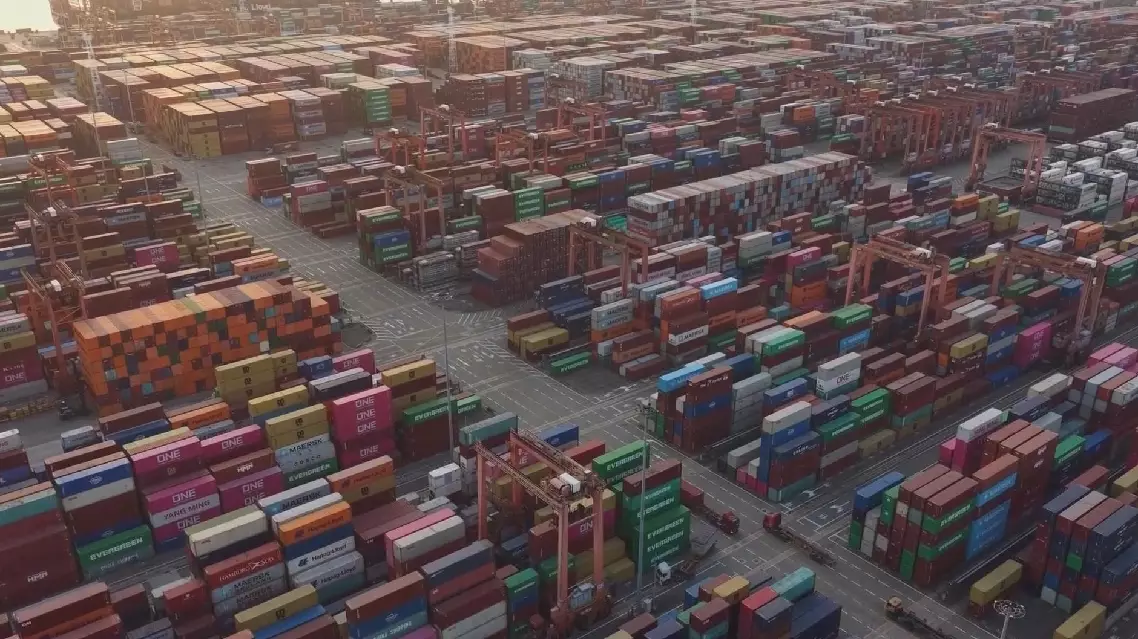
WTO says global goods trade growth exceeds expectations in Q1