Speaker of the Czech Republic's Chamber of Deputies Tomio Okamura recently highlighted the rise of China's auto industry, welcoming Chinese investors to create more value and provide high‑quality jobs in his country.
At the invitation of Zhao Leji, chairman of China's National People's Congress Standing Committee, Okamura paid a visit to China from July 20 to 24. During the visit, Okamura and a 20-member business delegation toured Chinese auto plants.
In an interview with China Global Television Network (CGTN), Okamura said China's auto industry has gained growing influence in recent years, with more brands recognized in the global market. He described the competitiveness of Chinese automakers as "respectable".
"China's automobile manufacturing industry has made a tremendous leap forward. Just ten years ago, we hadn't heard of any Chinese car brands. Now, Chinese manufacturers can offer high-level products that compete with the world's largest and most prestigious manufacturers. China is rising at a remarkable pace. The production processes and the technological sophistication inside the vehicles amazed me. All the world's automakers must take the competitiveness coming from China seriously. The competitiveness demonstrated by Chinese car companies is enough to command the respect of everyone who witnesses it firsthand," he said.
Criticizing Europe's automobile restrictions as "a battle of ideologies," Okamura said the Czech Republic would draw lessons from neighboring EU states to foster a favorable business environment for Chinese investors.
"As for the various restrictions on automobiles in Europe, they are absurd and ideological, all dreamed up by the European Union. I am worried about this, because then it is no longer a matter of competition, but a battle of ideologies, and that is never a good sign for business and entrepreneurship. We see that many EU countries around us, as well as countries in Western Europe, continue to attract investment from Chinese companies and create a favorable business environment in their own countries, so that foreign investors are willing to come and able to profit," Okamura said.
"The Czech Republic must think seriously about this reality. I firmly believe that we should create a normal competitive environment, so that the business climate makes foreign investors willing to invest in the Czech Republic. Our new government certainly welcomes investment from China. We want this kind of investment, especially investment that creates more value and provides high-quality jobs, and we will definitely welcome Chinese investors," he said.
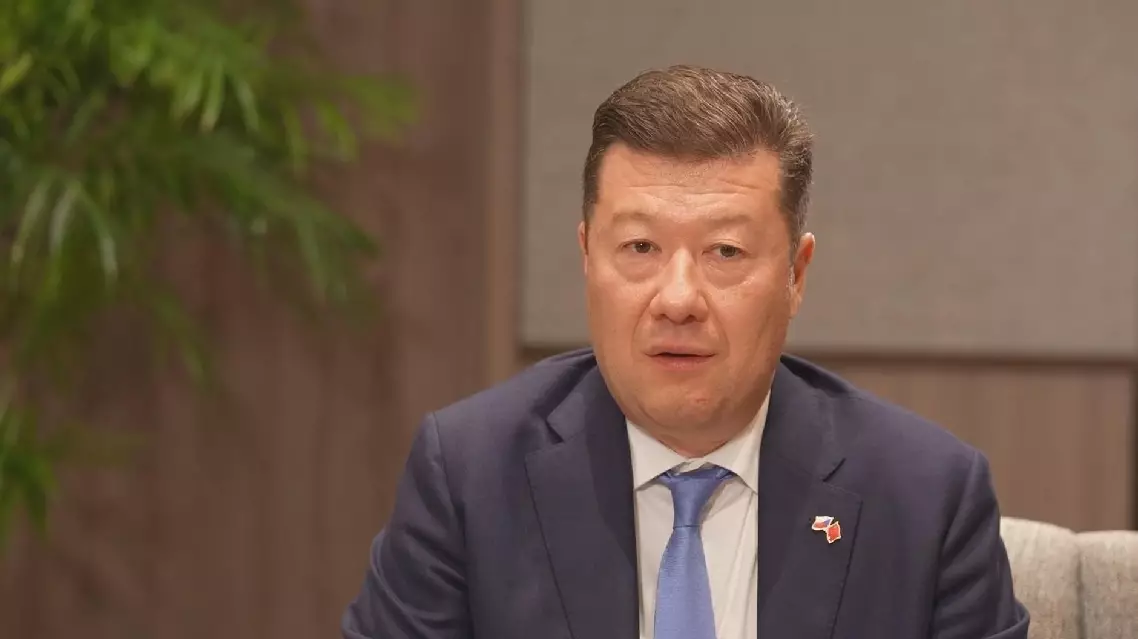
Czech speaker hails China's auto rise, urges favorable climate for investors
North China's Inner Mongolia Autonomous Region is welcoming a growing number of foreign tourists this summer, as destinations across the region have rolled out innovative desert activities and immersive cultural experiences to enrich inbound travel offerings.
In Ordos, a city famed for its vast desert landscapes, the Xiangshawan scenic area has launched a creative summer lineup combining desert sightseeing, water-based cooling activities and indoor ice skating.
Visitors can enjoy classic desert adventures such as camel rides and dune bashing, while also cooling off with water play and even ice skating in the heart of the desert.
The unique combination has been well received by international visitors.
"The facilities here are great. I'm from the Republic of Korea, and I'm really enjoying my time," said Lee Hong-deok, a tourist.
According to the scenic area's management, Xiangshawan has received 16,000 foreign tourists since July 1, marking a 176 percent year-on-year increase. Most overseas visitors come from the Republic of Korea, Thailand, Malaysia and Singapore.
The strong growth is supported by targeted measures from local authorities to boost connectivity and upgrade cultural and tourism products.
"We have opened seven direct flight routes to countries and regions including the Republic of Korea, Thailand, Malaysia and Vietnam. We have also rolled out more than 10 signature cultural and tourism products, such as desert space capsules and distinctive Mongolian yurts, and distributed over 3 million yuan in vouchers. These efforts have effectively driven the upgrading of the entire industrial chain, covering catering, accommodation, cultural and creative products, intangible cultural heritage and leisure services," said local tourism official Hou Le.
Beyond desert destinations, the border port city of Erenhot has become a popular stop for foreign travelers journeying eastward, offering a taste of traditional Chinese culture and local urban life.
Visitors can sample local delicacies, take in city scenery and participate in hands-on cultural activities there. Calligraphy, shadow puppetry, weaving and sugar figure making are among the most sought-after experiences.
"This is my first time trying sugar painting. The works are so exquisite. They are both visually appealing and edible," said a visitor from Mongolia.
"I used to mostly pass through here on my way to Hohhot, Beijing and other destinations. This time, I got to truly explore Erenhot. It's been such a delightful surprise," said another tourist from Mongolia.
Across Inner Mongolia, destinations are increasingly focusing on night performances, specialty dining, and intangible cultural heritage experiences. These efforts are steering inbound tourism away from single-purpose sightseeing toward deeper, more immersive engagement, and sustaining the vitality of cultural and tourism consumption.
Official statistics show that in the first half of 2026, Inner Mongolia received 1.0978 million inbound tourists, up 11.90 percent year on year. Total tourism spending from inbound visitors reached 5.501 billion yuan (about 815 million U.S. dollars), a 16.07 percent increase compared with the same period last year.
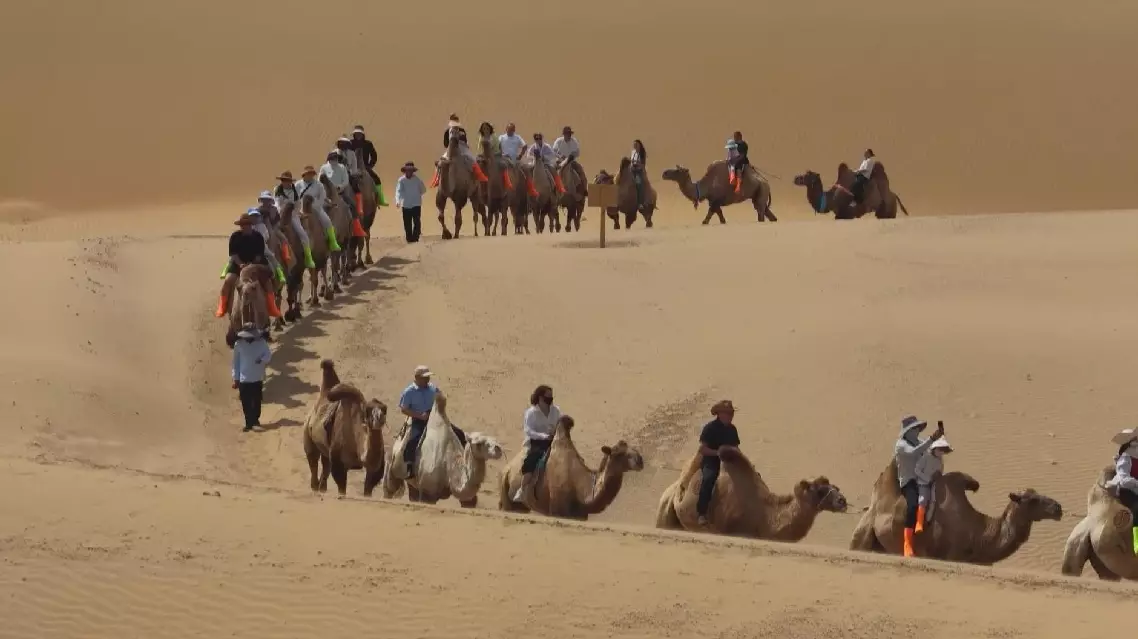
Foreign travelers drawn to diverse desert and cultural experiences in Inner Mongolia