JOHANNESBURG (AP) — A court case opened Monday challenging South Africa’s controversial new law that allows the government to seize private land, which has been at the heart of strained relations with the administration of U.S. President Donald Trump.
The Expropriation Act was signed into law by President Cyril Ramaphosa last year as part of the government's efforts to address the effects of land dispossession and economic inequality through decades of white minority rule in South Africa that ended in 1994.
Trump has said the law will be used to target white farmers for land seizures and has cited it as a reason why the U.S. has withdrawn all financial aid to South Africa and imposed high trade tariffs on the country. The government denies this, and says the law will be aimed at making unused land productive.
The Democratic Alliance, a political party which is now part of the country’s unity government, has joined with lobby groups to challenge the law in the Western Cape High Court. Lawyers for the groups argued Monday that the law violates the South African Constitution's protections of private property and prohibitions of expropriation of land without compensation.
Proceedings in the case are scheduled to run through the end of the week, but is unclear how long judges will take to deliver a ruling, which could take weeks or months.
The law allows the South African government to expropriate land from private parties if it’s in the public interest, and it allows for expropriation without compensation if negotiations for a reasonable settlement have failed. The government says the law does not allow land to be taken arbitrarily.
Others parties to the case include the Institute for Race Relations, which argues the law does not adequately protect land owners' property rights and the Afrikaner lobby group AfriForum.
Afrikaner farmers are descended from Dutch and other European colonial settlers who first came to the country more than 300 years ago. The Trump administration has offered asylum to Afrikaners who claim persecution.
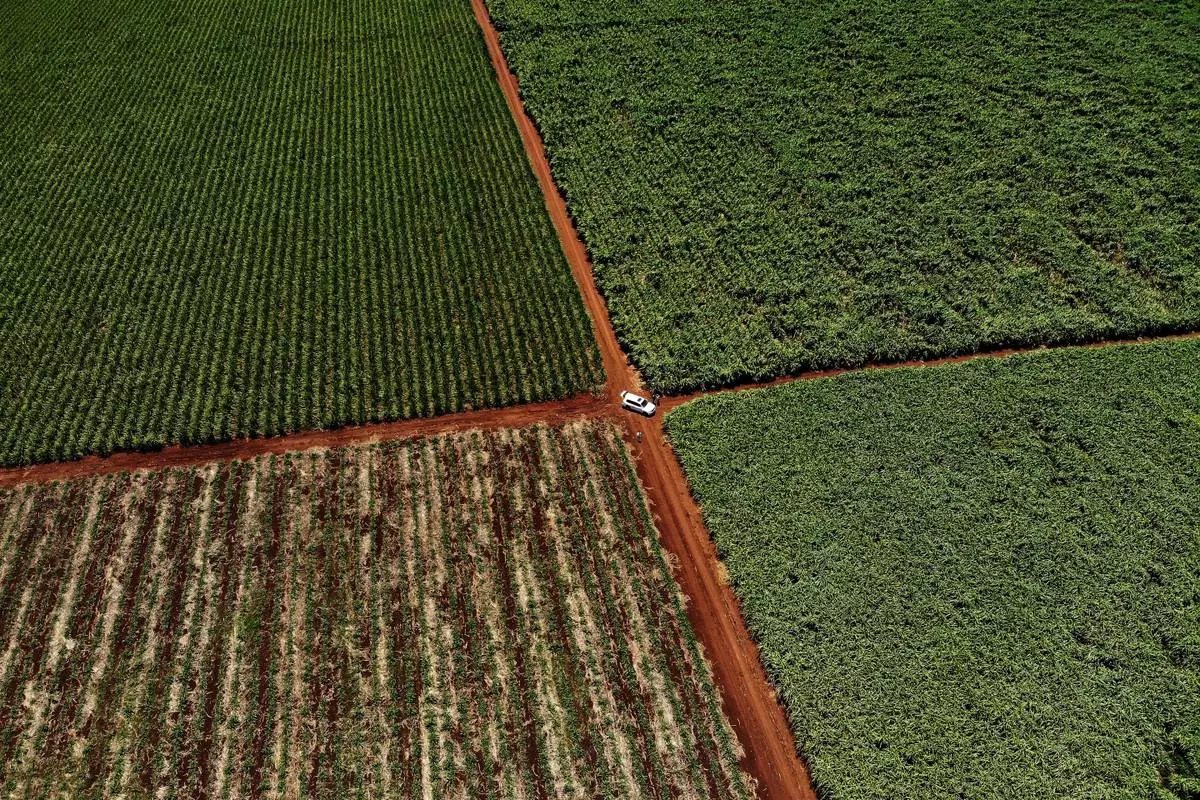
FILE - Farm workers harvest sugar cane on the property of Charles Senekal near the South African town of Mkuze, Kwazulu-Natal, Nov. 30, 2018. (AP Photo/Jerome Delay, File)
WASHINGTON (AP) — Two Republican senators who threatened to block acting Attorney General Todd Blanche's bid to lead the Justice Department said Monday that they will vote to advance his nomination, ending an impasse over plans to create a fund to compensate allies of President Donald Trump.
The statement from Republican Sens. John Cornyn and Thom Tillis came after Blanche issued an order late Sunday formally rescinding the $1.8 billion “Anti-Weaponization Fund” to compensate people who believe they were unfairly prosecuted by the Justice Department.
Cornyn and Tillis, whose votes Blanche needs to advance through the Senate Judiciary Committee on Tuesday, had said they would not endorse his nomination without written confirmation that the fund is dead.
“We want to express our gratitude to Mr. Blanche and his staff for working with us on this, and we look forward to voting to advance his nomination out of the Senate Judiciary Committee soon," Cornyn and Tillis, who are not returning to the Senate next year, said in a statement.
Blanche said at a June hearing that the Justice Department would not move forward with the fund as he faced bipartisan outrage over the possibility that violent rioters who attacked police at the U.S. Capitol on Jan. 6, 2021, could be considered for payments. But skeptical lawmakers said they were concerned that it could be revived without a commitment in writing, especially because Trump has continued to defend the idea.
In a statement accompanying the order Sunday, the Justice Department said that “although the Acting Attorney General has repeatedly advised Congress through testimony, including under oath, as well as in written responses, that the Fund is not moving forward, and the Department has repeatedly represented to district courts that the Fund is not moving forward, today’s Order officially rescinds the May 18, 2026 Order.”
Since the settlement of the president's lawsuit against the IRS was announced, “No Members were appointed; no funds were transferred; no process for receiving claims was established; no claims were paid,” the order says. “This order establishes, beyond any doubt, that there is no Fund.”
The document released by Blanche on Sunday night also limits the scope of another provision of the settlement that provided broad immunity for Trump and members of his family from tax audits.
The deal clarifies that the tax audit immunity agreement “applies by its terms only retroactively” to claims open at the time of the settlement and does not protect the president from examination of future tax filings.
Cornyn, who lost reelection this year after Trump endorsed his primary opponent, and Tillis, who is retiring when his term ends in January, have blocked Blanche's nomination as many of their GOP colleagues have criticized the fund.
The Judiciary Committee postponed a vote on Blanche’s nomination that had been scheduled for Thursday morning after Tillis and Cornyn said they needed more from the administration before they could provide the necessary votes.
The two senators have repeatedly said the Justice Department seemed interested in reaching an agreement, but the White House wouldn’t budge even to aid the confirmation of Trump’s loyal former personal attorney, who has aggressively pursued the administration’s priorities as acting attorney general.
“I think as far as Blanche and the Department of Justice, we were pretty much on the same page,” Cornyn said Thursday. “But then when the president got wind of it, he wasn’t willing to go along with it.”
Blanche, who served as Trump’s defense lawyer in his criminal cases, entered the Justice Department last year as deputy attorney general. He was elevated to the top post after Pam Bondi was fired in April by Trump, who was frustrated by her failure to successfully prosecute his political enemies.
Though Blanche insisted he wasn’t auditioning for the permanent job, he has moved aggressively to pursue the Trump administration’s agenda and accelerate investigations into the president’s perceived foes.
The two sides have been negotiating for weeks, but Trump has said repeatedly during the talks that he thinks the fund should go forward and threatened to move forward with it if Blanche was not confirmed.
After the Thursday vote was delayed, Trump said in a social media post that he might pull Blanche’s nomination and resubmit it after Cornyn and Tillis leave office next year.
On Sunday evening, Trump said that people who had faced charges from the Jan. 6, 2021, attack on the Capitol and could have benefited from the fund had “their lives destroyed.”
“This would be a reimbursement for the pain that they suffered,” Trump said. “A lot of people like it.”
On Friday, Trump’s attorneys notified a court they would appeal a judge’s scathing ruling that characterized the settlement of the president’s lawsuit against the IRS as an improper exercise in self-dealing. The judge in her order last month referred one of Trump’s attorneys for potential disciplinary action and criticized Blanche’s involvement in the settlement, given his prior representation of Trump.
Blanche has said he disagrees “with the judge’s insinuations” about him. Justice Department lawyers had previously written in court papers that the fund was not moving forward but they refused a judge’s request to have Blanche and other administration officials file a declaration under penalty of perjury that the administration would not take any further action to create the fund.
The Justice Department said the court’s demands were “unnecessary.”
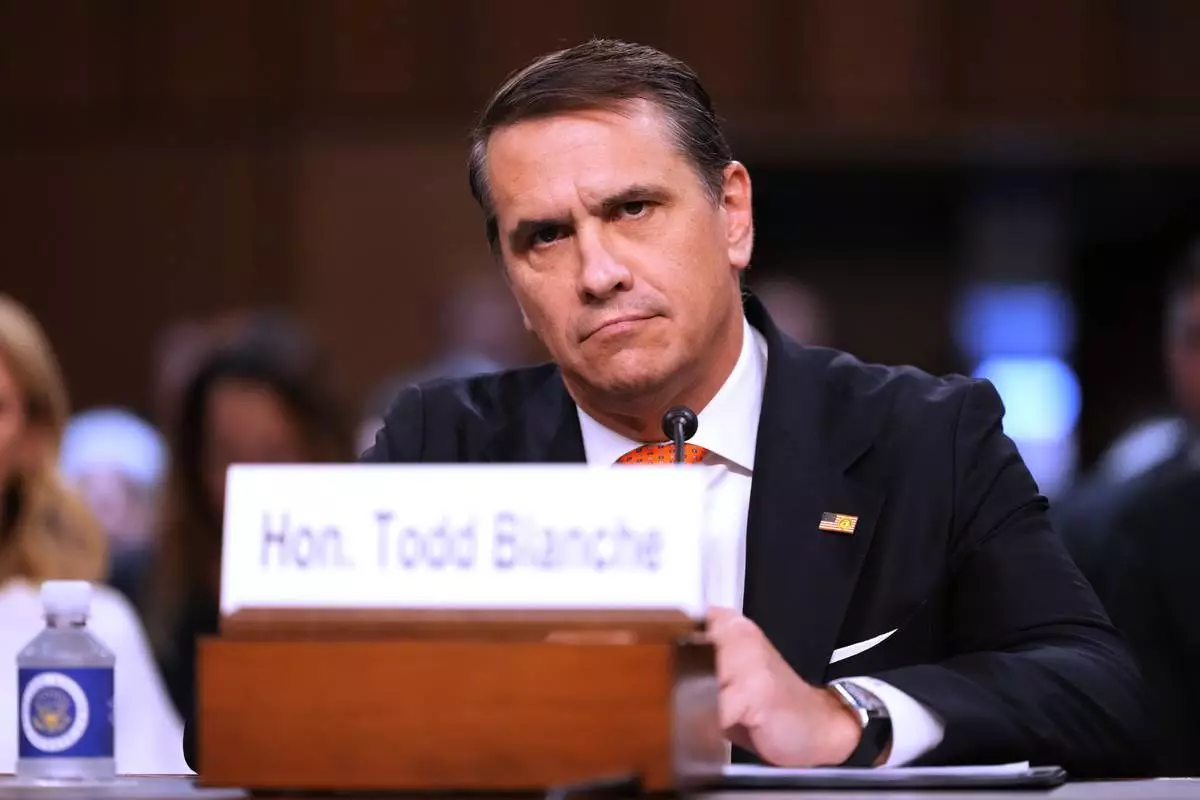
FILE - Acting Attorney General Todd Blanche appears before the Senate Judiciary Committee on Capitol Hill in Washington, July 15, 2026. (AP Photo/Mark Schiefelbein, File)