Chinese President Xi Jinping has called for accelerated efforts to achieve high-level self-reliance and strength in science and technology, and leverage sci-tech innovation to underpin and drive Chinese modernization.
Xi, also general secretary of the Communist Party of China (CPC) Central Committee, has made a series of major decisions and plans since the beginning of this year, with 2026 marking the start of the 15th Five-Year Plan period (2026-2030).
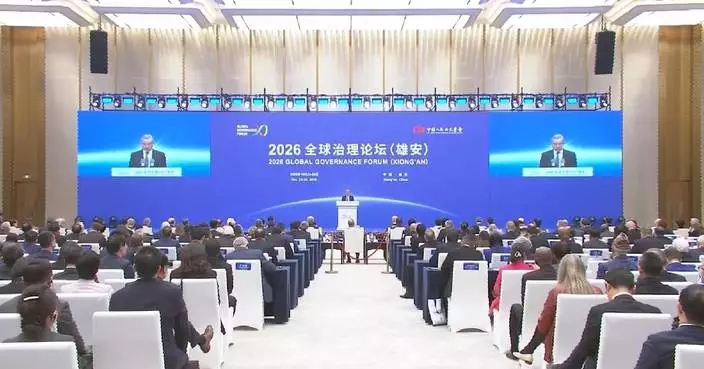
The 2026 World AI Conference (WAIC) and High-Level Meeting on Global AI Governance was held in Shanghai from July 17 to 20.
Addressing the opening ceremony of the event, Xi said that the new round of technological revolution and industrial transformation is advancing at a faster pace, and the world has entered an unprecedented period of active innovation on AI technologies.
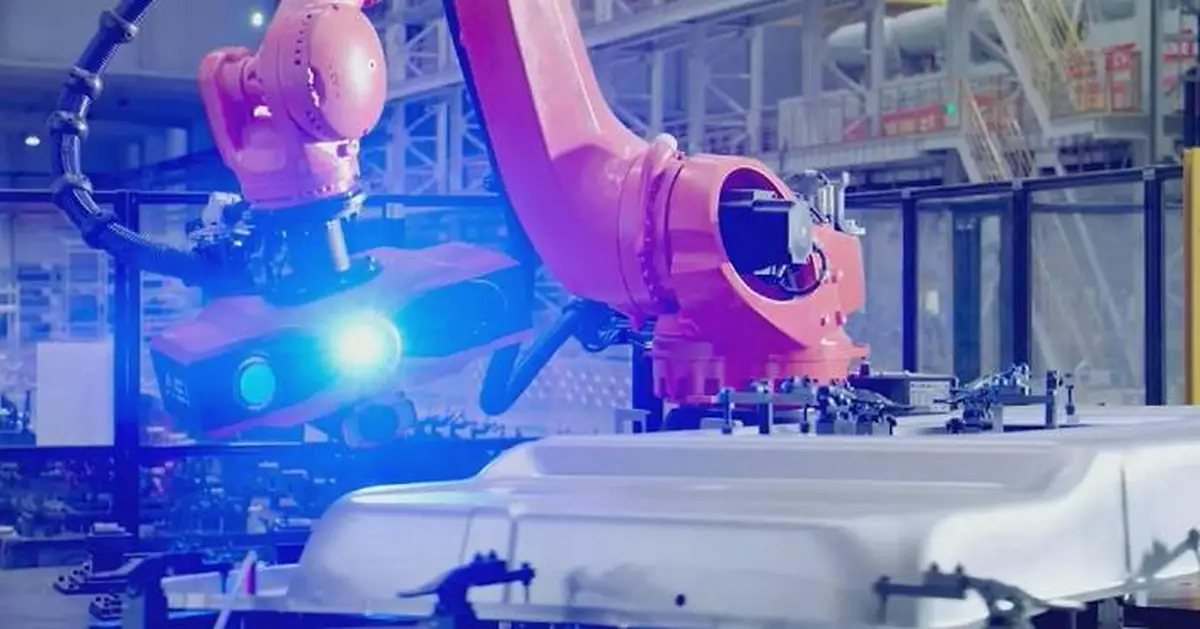
"In recent years, China has embraced AI with open arms. We have promoted interplay between an efficient market and a well-functioning government, strengthened AI innovation, actively advanced the AI Plus Initiative, and built a healthy ecosystem for all entities to thrive in together. The core smart economy industries are worth at least 1 trillion yuan (about 150 billion U.S. dollars). Intelligent Manufacturing in China has become another shining hallmark of Chinese modernization," Xi said.
Presiding over a group study session of the Political Bureau of the CPC Central Committee at the beginning of the year, Xi urged efforts to leverage the country's comparative advantages, pursue progress while maintaining stability, and promote continuous breakthroughs in the development of industries of the future.
When visiting a national information technology innovation park in Beijing E-Town in February, Xi viewed displays showcasing sci-tech achievements in fields such as artificial intelligence and robotics.
He stressed that sci-tech self-reliance and strength is the "key" in China's efforts to build a great modern socialist country.
Two months later, Xi attended a symposium on advancing basic research in Shanghai on April 30, and delivered an important speech.
He called for greater efforts and more concrete measures to strengthen basic research, enhance China's capacity for original innovation and further consolidate the foundation for building the country's strength in science and technology.
Qiao Yu, a professor at Shanghai Artificial Intelligence Laboratory, was among eight representatives to update the meeting on progress in strengthening basic research and share insights and suggestions.
"The general secretary's speech is a strategic deployment that addresses both immediate needs and long-term goals. In the short term, the focus is on addressing weakness. In the medium term, the goal is to foster new quality productive forces, and secure a leading position in industries of the future. In the long term, we need to lay a solid foundation and build China's strengths in science and technology through robust basic research," Qiao said.
On July 8, a meeting was held in Beijing, bringing together the national science and technology award conference, the general assemblies of the members of the Chinese Academy of Sciences (CAS) and the Chinese Academy of Engineering (CAE), and the 11th national congress of the China Association for Science and Technology.
Xi presented the country's top sci-tech award and delivered an important speech at the meeting.
He emphasized the need to promote the deep integration of sci-tech innovation with industrial innovation, opening up channels for accelerating the transformation of sci-tech achievements into real productive forces.
"The broad masses of scientific and technological workers are an important force in building a great modern socialist country. I hope all of you will carry forward the fine tradition of serving the nation and benefiting the people, and make new contributions to building China into a strong country in science and technology," Xi said.
China has made progress in sci-tech innovation and development so far this year, from reusable rocket technology to optical quantum information technology.
In space, China successfully launched the Long March-10B carrier rocket at the Hainan commercial spacecraft launch site in south China's Hainan Province, achieving its first-ever controlled recovery of a carrier rocket's first stage.
In the deep sea, the full-ocean-depth autonomous and remotely operated vehicle (ARV) named Haidou-1 and the deep-sea manned submersible Fendouzhe (Striver) carried out a successful joint operation at a depth of 7,700 meters.
At the quantum scales, Chinese scientists have developed a programmable quantum computing prototype called "Jiuzhang 4.0" that has set a new world record for optical quantum information technology.
On the biomedical front, China's National Medical Products Administration (NMPA) has approved the innovative product registration application for an implantable Brain Computer Interface (BCI) hand motor function compensation system, marking the market launch of this BCI medical device. It is also the world's first invasive BCI medical device to enter the clinical application stage.
Xi calls for advancing Chinese modernization through sci-tech innovation