FNIDEQ, Morocco (AP) — Mothers, fathers, brothers, sisters and friends gather along the Moroccan side of the border with the Spanish territory of Ceuta, scanning for familiar faces.
Each returning migrant is met with the question: Have you seen my son? My daughter? My brother?
Click to Gallery
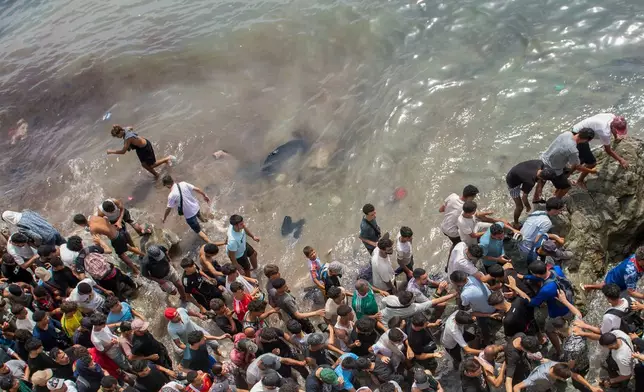
People walk on a beach as they attempt to cross from the Moroccan northern town of Fnideq to the Spanish enclave of Ceuta, Friday, July 31, 2026. (AP Photo)
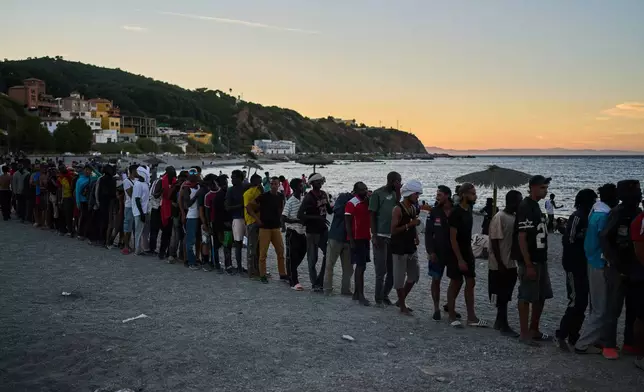
Migrants who crossed from Morocco into Spain line up for food distribution on a beach in the Spanish enclave of Ceuta, Monday, Aug. 3, 2026. (AP Photo/Bernat Armangue)
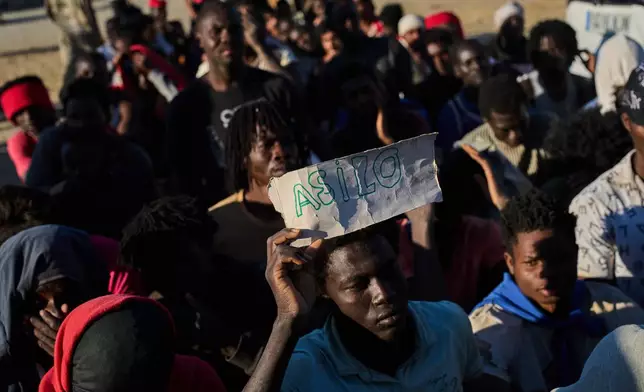
A migrant who crossed from Morocco into Spain holds a sign reading, in Spanish, "asylum" as he lines up for food distribution on a beach in the Spanish enclave of Ceuta, Monday, Aug. 3, 2026. (AP Photo/Bernat Armangue)
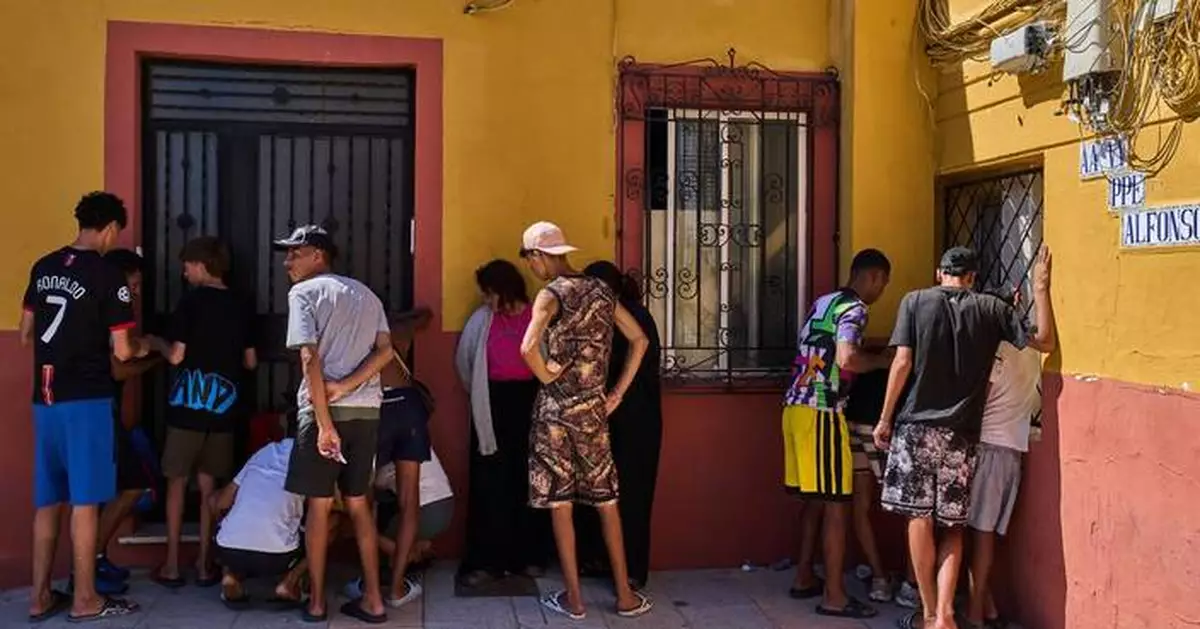
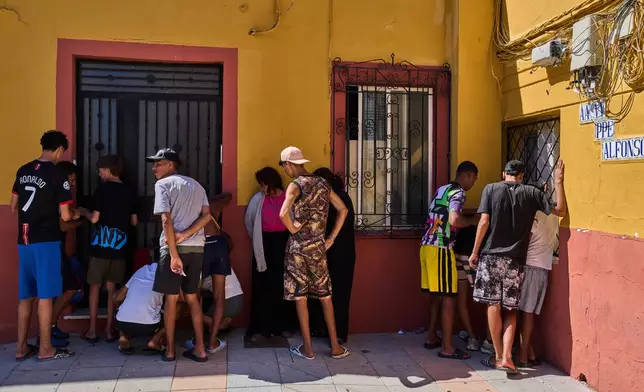
Migrants, some of them unaccompanied minors, who crossed from Morocco into Spain, write down their contact information to give to a neighborhood association in the Spanish enclave of Ceuta, Tuesday, Aug. 4, 2026. (AP Photo/Bernat Armangue)
Authorities say all but a few thousand of the 72,000 migrants who crossed into Ceuta in recent days have since returned to Morocco. Some families were relieved to welcome them home. Others were disappointed that the migration attempt failed.
Other families still wait desperately for news.
The surge to Ceuta was largely driven by poverty and fueled by online rumors that the border was open, triggering a crisis resonating across Europe. More than 80 people died on both sides of the border, according to authorities, as people swam or climbed fences in the attempt.
Nearly all of the migrants who survived were expelled by Spanish authorities or returned voluntarily after seeing they were unwelcome. Many of those who made it back borrowed phones from strangers to reassure anxious relatives because they had lost or abandoned their phones in the journey.
As the first migrants trickled back to Morocco, an Associated Press reporter watched families hold up printed photographs of missing relatives, stopping returnees one by one in hopes that someone might recognize a face.
The migrants studied each picture, offering what reassurance they could, often saying only that they hoped the missing person was safe.
“I have been looking for my son for five days now,” said Ibtissam Chari, whose son Rayan crossed with friends after hearing that the border had opened. “He called me when he arrived, and since then I haven’t heard anything from him."
Another woman stood silently facing the border. She said she has heard nothing from her 12-year-old son, who crossed into Ceuta with his older brother. Only the older one has returned.
“I have nothing else to do but come here and wait,” said the woman, who spoke on condition of anonymity to protect her children. “I spend all my days here. I will come back tomorrow again.”
An estimated 1,000 of the few thousand migrants estimated to remain in Ceuta are minors. Spanish security forces are not authorized by law to expel them, and their fate is uncertain.
It remains unclear whether all of the dead have been found or returned to Morocco. Local newspapers and a source at the morgue in Tetouan, the largest Moroccan city near Ceuta, said the facility had received more than a dozen bodies. Journalists were not allowed to enter. The source spoke on condition of anonymity because they were not authorized to speak to journalists.
Meanwhile, Moroccan authorities have welded shut the small opening in the border fence that had been opened to allow many returning migrants to re-enter the country.
Facebook groups that had circulated videos showing where to swim and tracking Spanish and Moroccan patrols have now taken on a different purpose. Families post photos there of missing relatives, hoping someone has seen them.
“If anyone has seen this girl in Ceuta or Castillejos, please let us know. Her family is going crazy,” one user, Hiba Nakaax, wrote in the Facebook group Fnideq Bab Sebta.
Migration has long been woven into the aspirations of many young Moroccans. Poverty and youth unemployment remain high, particularly in inland regions that have not shared in the economic gains seen along parts of the coast.
For many, Europe represents the possibility of work, stability and a different future. Last year’s youth-led Gen Z protests in Morocco reflected growing frustration over inequality and the quality of public services.
Some parents knew their children intended to make the journey.
After returning from Ceuta, 26-year-old Othmane El Merzoug was barefoot and hungry and desperate to communicate with his family. He asked to borrowed an AP reporter’s phone to call his father in the Moroccan city of Salé.
“Dad, I’ve returned from Ceuta. They didn’t allow me to stay,” he said over speakerphone. His father promised to send money to get him home.
A traumatized 17-year-old from Taounate, Mohamed Chakor, also asked to borrow a phone to call his father, who asked for help in finding other ways to reach Europe.
Majd Semlali in Fnideq, Morocco, contributed to this report.
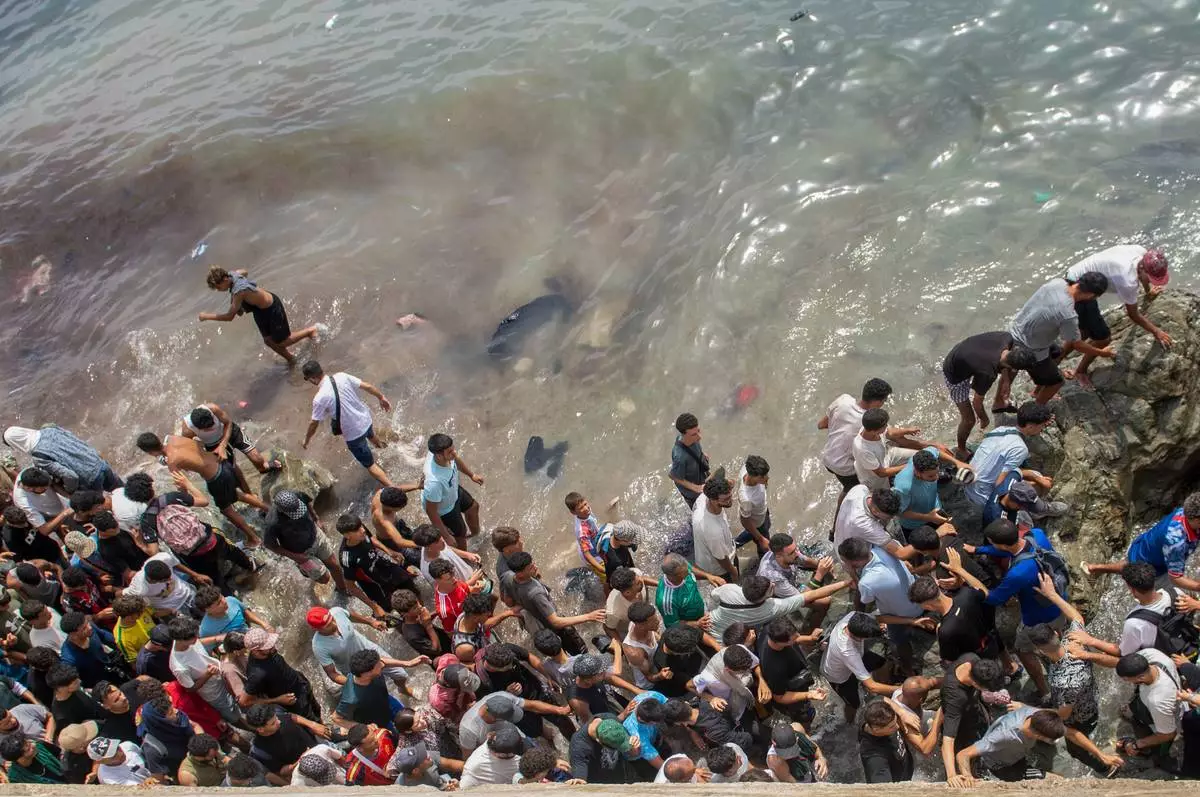
People walk on a beach as they attempt to cross from the Moroccan northern town of Fnideq to the Spanish enclave of Ceuta, Friday, July 31, 2026. (AP Photo)
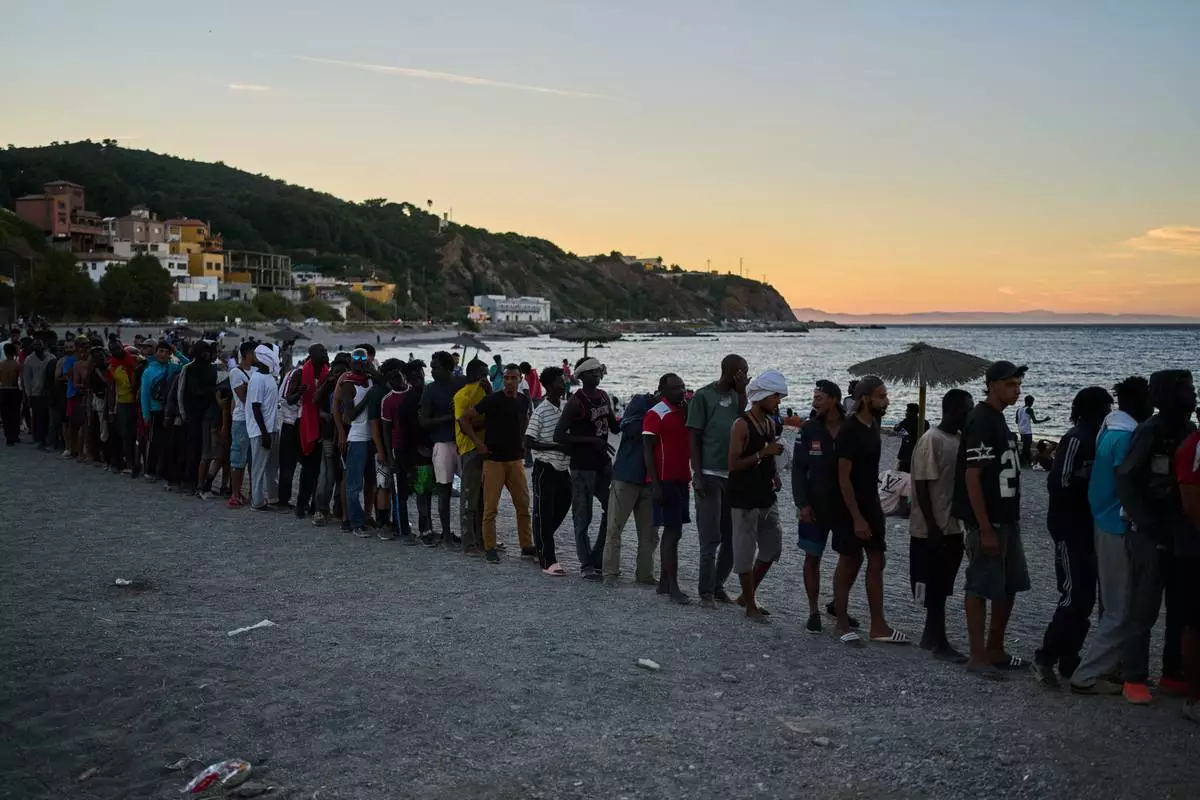
Migrants who crossed from Morocco into Spain line up for food distribution on a beach in the Spanish enclave of Ceuta, Monday, Aug. 3, 2026. (AP Photo/Bernat Armangue)
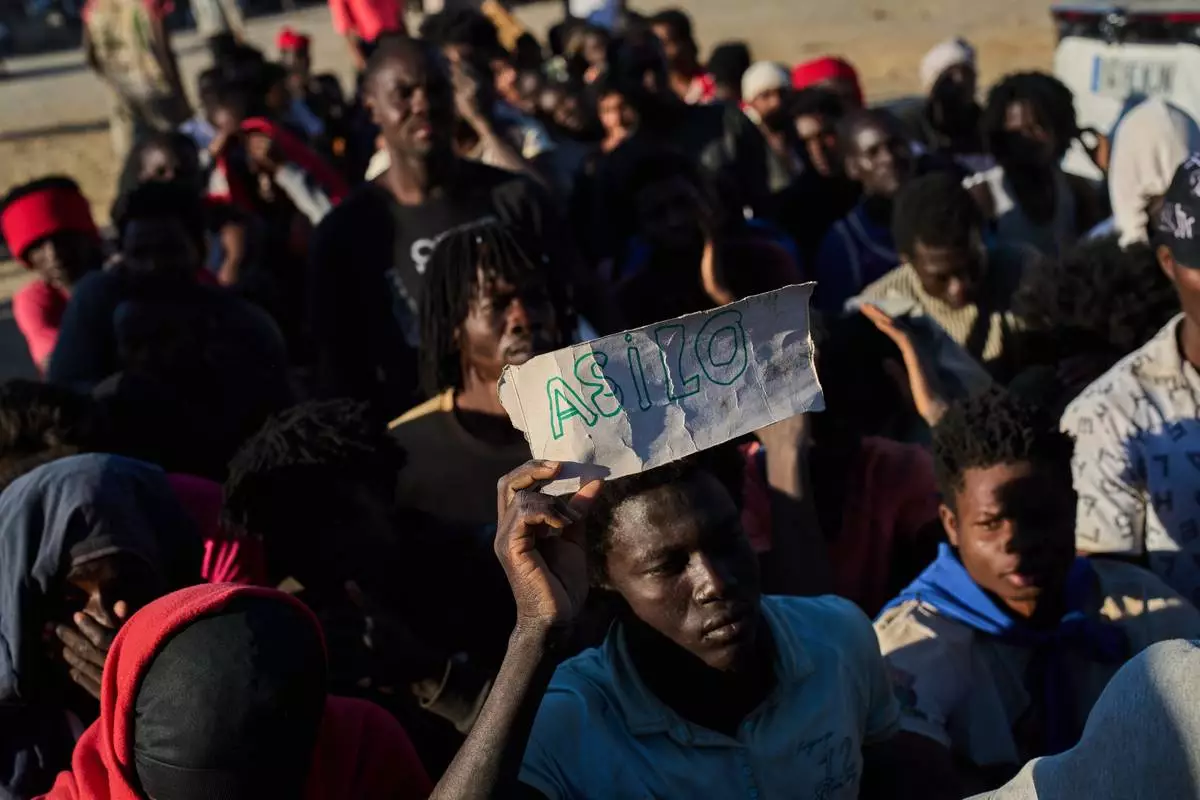
A migrant who crossed from Morocco into Spain holds a sign reading, in Spanish, "asylum" as he lines up for food distribution on a beach in the Spanish enclave of Ceuta, Monday, Aug. 3, 2026. (AP Photo/Bernat Armangue)
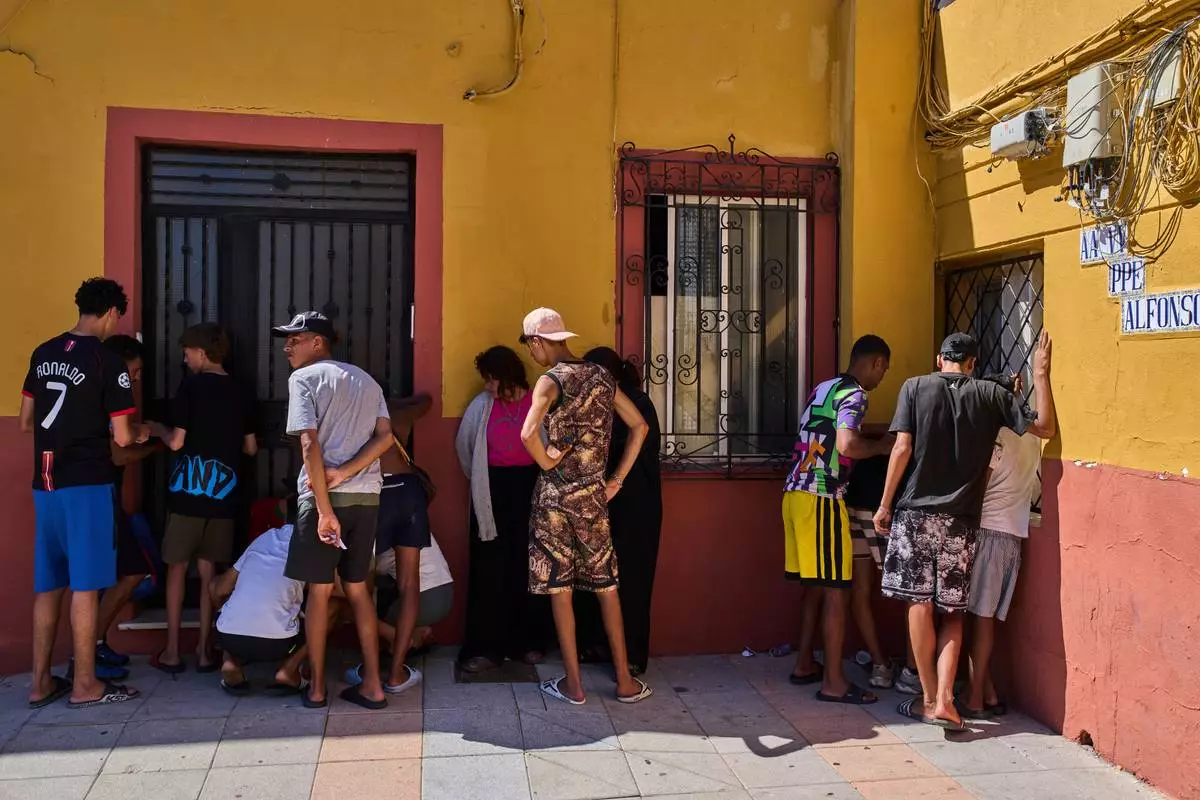
Migrants, some of them unaccompanied minors, who crossed from Morocco into Spain, write down their contact information to give to a neighborhood association in the Spanish enclave of Ceuta, Tuesday, Aug. 4, 2026. (AP Photo/Bernat Armangue)
KYIV, Ukraine (AP) — Russian attacks on Kyiv and its surrounding region killed 17 people and wounded dozens, President Volodymyr Zelenskyy said Wednesday, as Ukraine’s depleted air defenses failed to stop any of Moscow’s incoming missiles overnight.
The barrage, which lasted about two hours, was the latest in a series of large-scale Russian missile strikes that have become almost routine this summer. Moscow is exploiting Ukraine’s critical shortage of interceptors for the U.S.-made Patriot systems, the sole air defense weapon in its arsenal able to shoot down ballistic missiles.
Zelenskyy has pleaded with other countries, especially the U.S., to send more of the ammunition made scarcer by the Iran war. Failing that, he wants to make Patriot ammunition in Ukraine or win permission from Elon Musk to use his Starlink satellite communications system to guide strikes inside Russia that can hit its missile launchers.
It's unclear how many interceptors Ukraine has left. Zelenskyy said after a Russian aerial attack Friday night that air defenses shot down only one ballistic missile “solely because there are no missiles for the Patriots.” Supplies of air defense missiles for Ukraine in the first half of this year fell to one-third of the 2025 level, Zelenskyy said.
“Ballistic interceptors are what could have saved the lives of those killed today,” Zelenskyy said Wednesday on social media. “It is very important for our partners to understand that delays in supplying them, or a reluctance to hand over anti-ballistic systems, lead directly to such horrific casualties and destruction.”
The targets hit in the barrage included a brewery, a warehouse for construction material, and a mail sorting office that had nothing to do with the war, Zelenskyy said. But Russia's Defense Ministry said the businesses had military ties.
Thursday was set as an official day of mourning for the 17 people killed, said Tymur Tkachenko, head of Kyiv's regional military administration. In addition to the dead, at least 44 people were injured.
With U.S.-led peace efforts apparently stalled, Ukraine has stepped up its deep strikes on key Russian targets such as oil refineries to try to compel Russian President Vladimir Putin to negotiate. Zelenskyy has accepted an unconditional ceasefire demanded by U.S. President Donald Trump but Putin has refused.
In its latest attack on facilities for Russia’s biggest online retailer Wildberries, Ukrainian drones hit a warehouse in the Tula region south of Moscow, the company and the region’s governor said.
Ukraine has struck over a dozen Wildberries facilities in under three weeks, saying the company provides goods that can be used by the military. Kyiv is also keen to unsettle the Russian public with high-profile attacks.
The Russian Defense Ministry said its forces downed 475 Ukrainian drones overnight over 16 Russian regions, as well as in illegally annexed Crimea and the waters of the Sea of Azov and the Black Sea.
Russia fired 24 ballistic missiles, four other missiles identified as either hypersonic Zircon or supersonic Onik cruise missiles, and 115 drones, many of them jet-powered and harder to stop due to their speed, Ukrainian authorities said.
The Russian Defense Ministry said it struck transport, logistics and distribution centers involved in war-related activity, four of which were in Kyiv.
“The enemy is attacking everything indiscriminately — retail warehouses, food storage facilities, logistics hubs, enterprises, building materials warehouses,” Zelenskyy adviser Serhii Beskrestnov, said on Facebook.
It was not immediately possible to independently reconcile the different Russian and Ukrainian accounts of the military value of the targets.
Kyiv warehouse worker Mykhailo Hukov said an air raid warning that included a ballistic missile threat sounded just after midnight.
“So everyone started running,” he told The Associated Press. “I turned everyone around so they wouldn’t go back inside for their backpacks.”
In an underground shelter minutes later, they heard “very loud explosions.”
Ukraine’s largest private postal operator, Nova Poshta, said a Russian cluster munition destroyed one of its sorting centers in Kyiv.
The Russian Defense Ministry said the center was “storing and distributing dual-use goods, including those used in the production of long- and medium-range uncrewed aerial vehicles, as well as robotic systems and electronic warfare systems.” It claimed that two other logistics centers in the Kyiv region stored drones or components for drones.
Separately, Russia said its forces hit three bulk carriers on the Black Sea south of Odesa that it claimed were transporting Ukrainian weapons and military equipment. Ukrainian officials didn't comment on that claim.
Ivan Braga, a 46-year-old truck driver from Moldova who was in Kyiv during the attack, said he and a colleague ran from their vehicle when it was struck by shrapnel in a blast wave.
“We didn’t even have time to grab our documents or anything else,” Braga told AP. “I couldn’t believe it. I’d already been in Kyiv and had heard explosions before, but nothing like today.”
One of the companies that came under heavy fire was Epicentr, one of Ukraine’s largest retail and construction chains. It said in a statement on Facebook that “in minutes, Russian missiles destroyed what the company had built over decades.” One employee was killed and three others were wounded.
According to the Russian Defense Ministry, the Epicenter logistics center handled order processing, sorting, storing, and delivery of dual-use goods and components for drone production.
AP reporters Illia Novikov, Volodymyr Yurchuk and Dan Bashakov in Kyiv contributed.
Follow the AP’s coverage of the war in Ukraine at https://apnews.com/hub/russia-ukraine
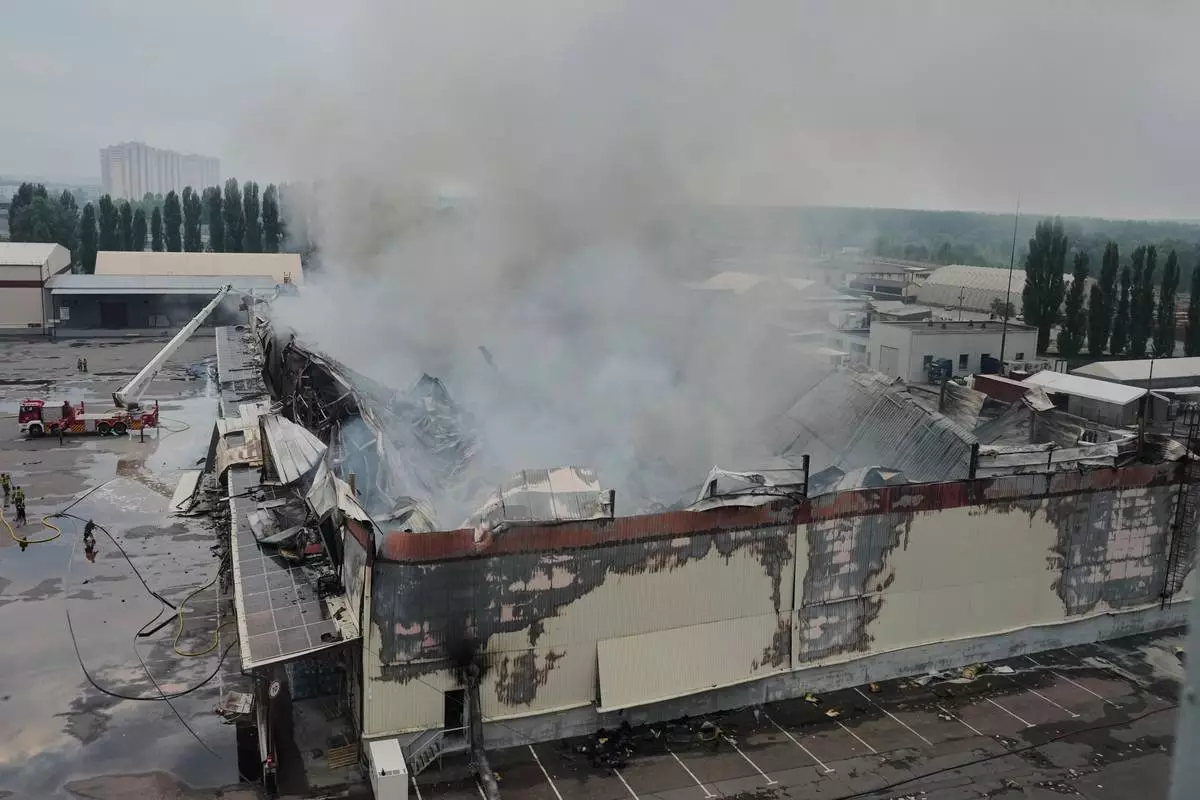
Firefighters put out a fire after Russian missiles hit a food warehouse near Kyiv, Ukraine, Wednesday, Aug. 5, 2026. (AP Photo/Efrem Lukatsky)
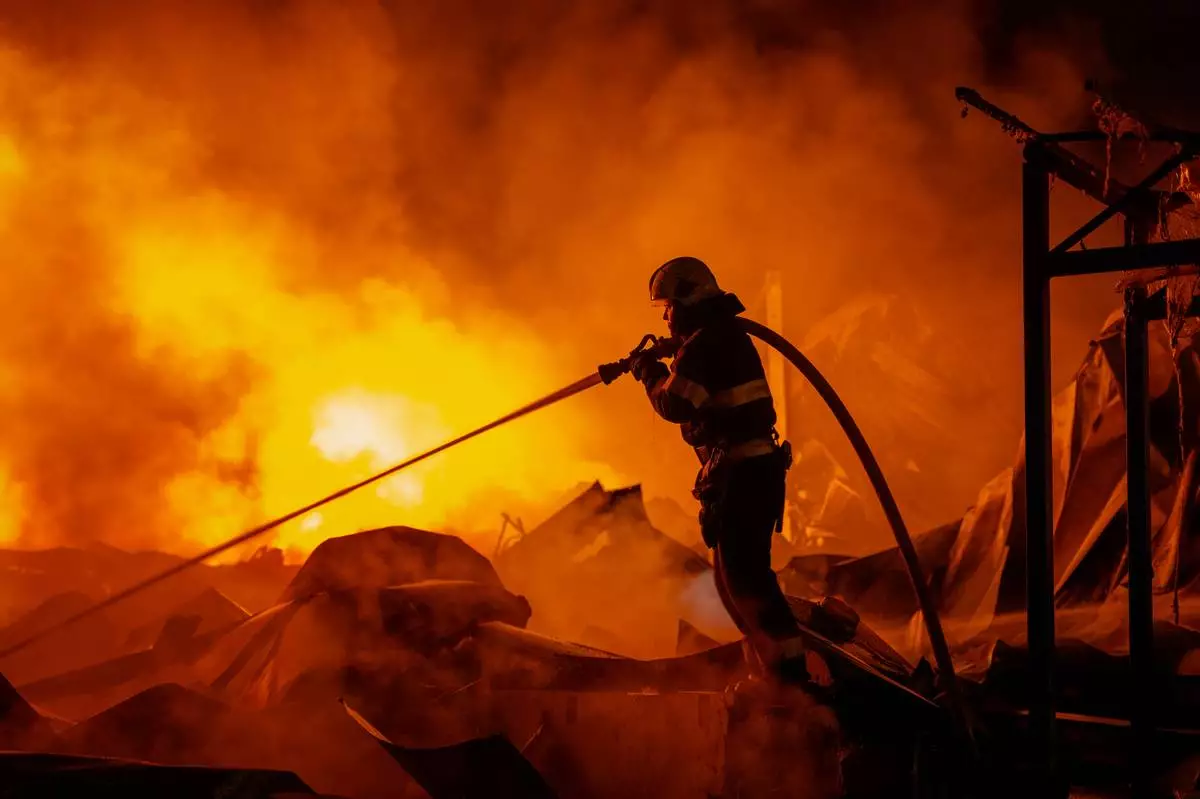
Firefighters put out a fire after Russian missiles hit a warehouse in Kyiv, Ukraine, Wednesday, Aug. 5, 2026. (AP Photo/Dan Bashakov)
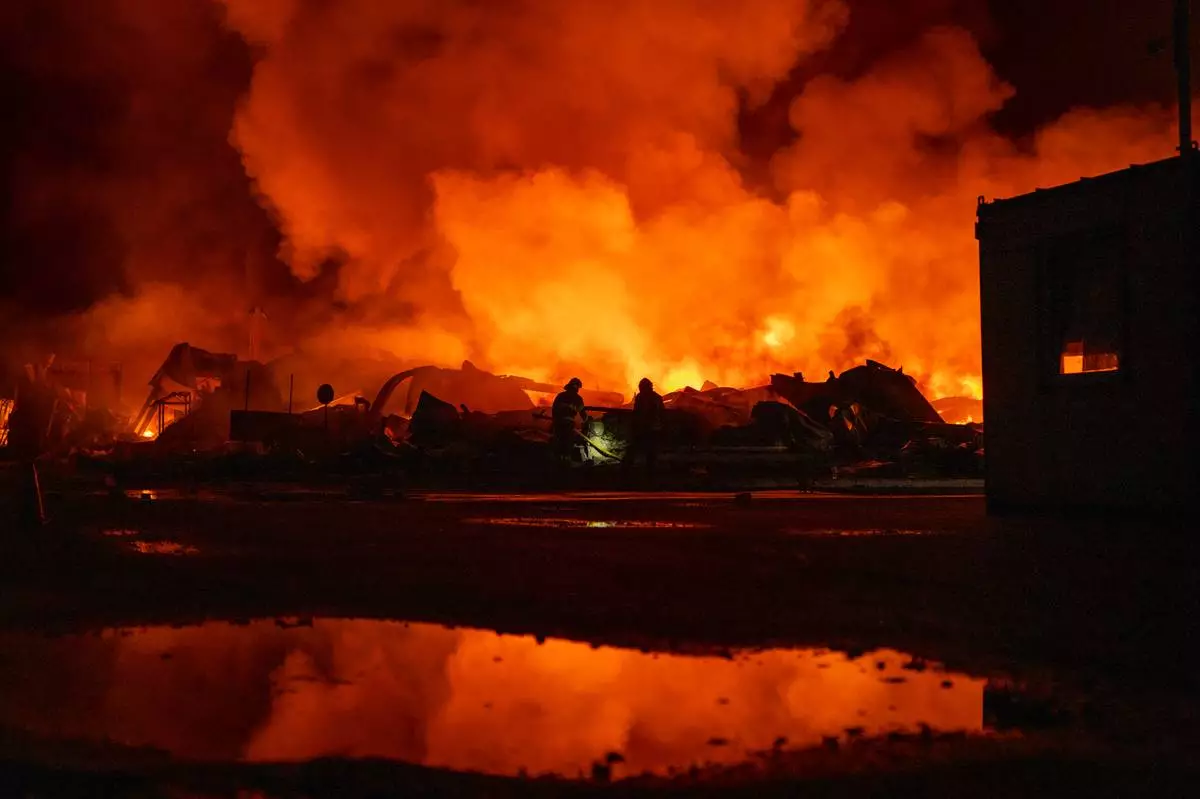
Firefighters put out a fire after Russian missiles hit a warehouse in Kyiv, Ukraine, Wednesday, Aug. 5, 2026. (AP Photo/Dan Bashakov)
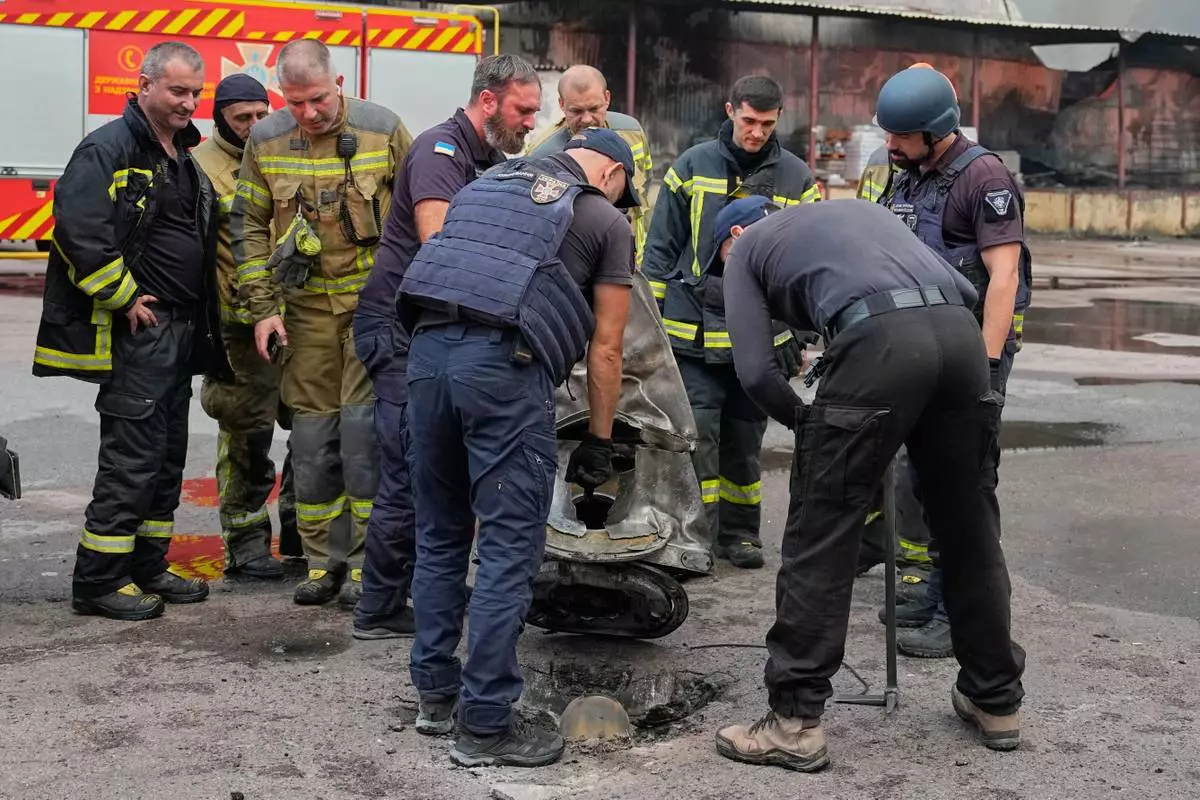
Firefighters examine a fragment of a Russian missile after air strikes at a food warehouse in Kyiv, Ukraine, Wednesday, Aug. 5, 2026. (AP Photo/Efrem Lukatsky)
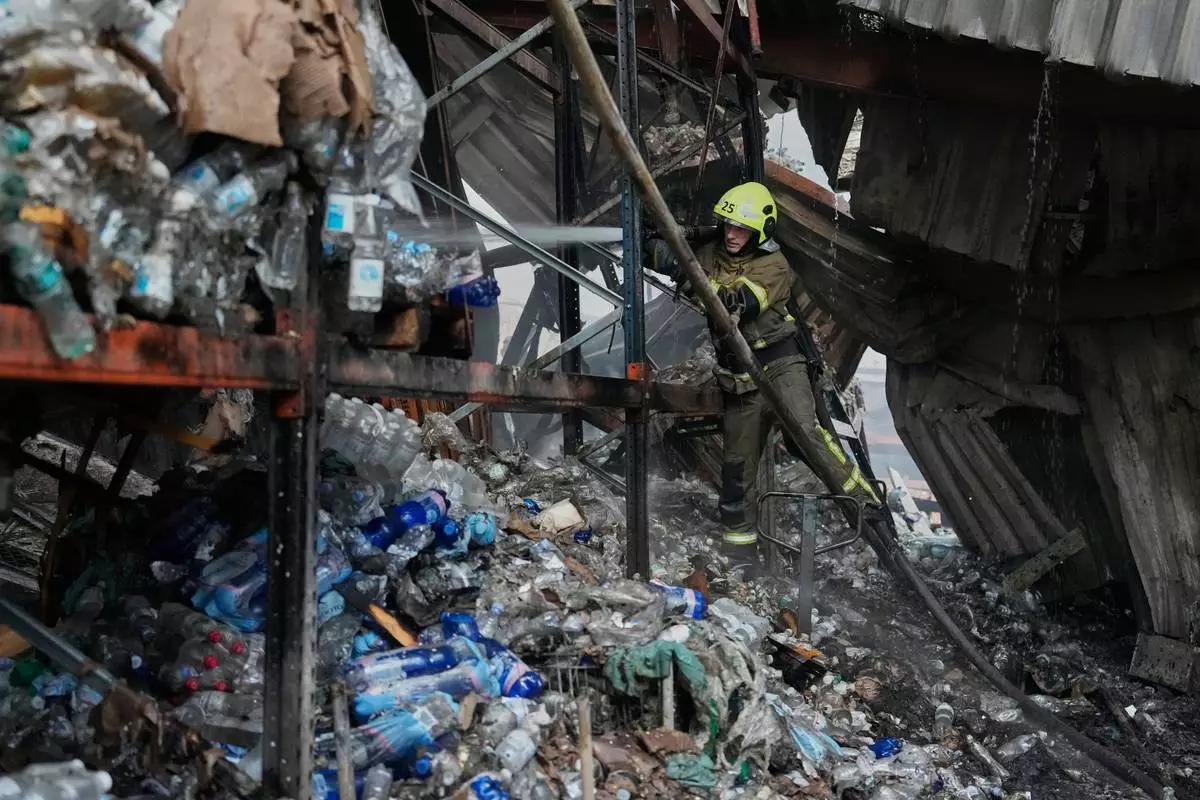
Firefighters put out a fire after Russian missiles hit a food warehouse near Kyiv, Ukraine, Wednesday, Aug. 5, 2026. (AP Photo/Efrem Lukatsky)
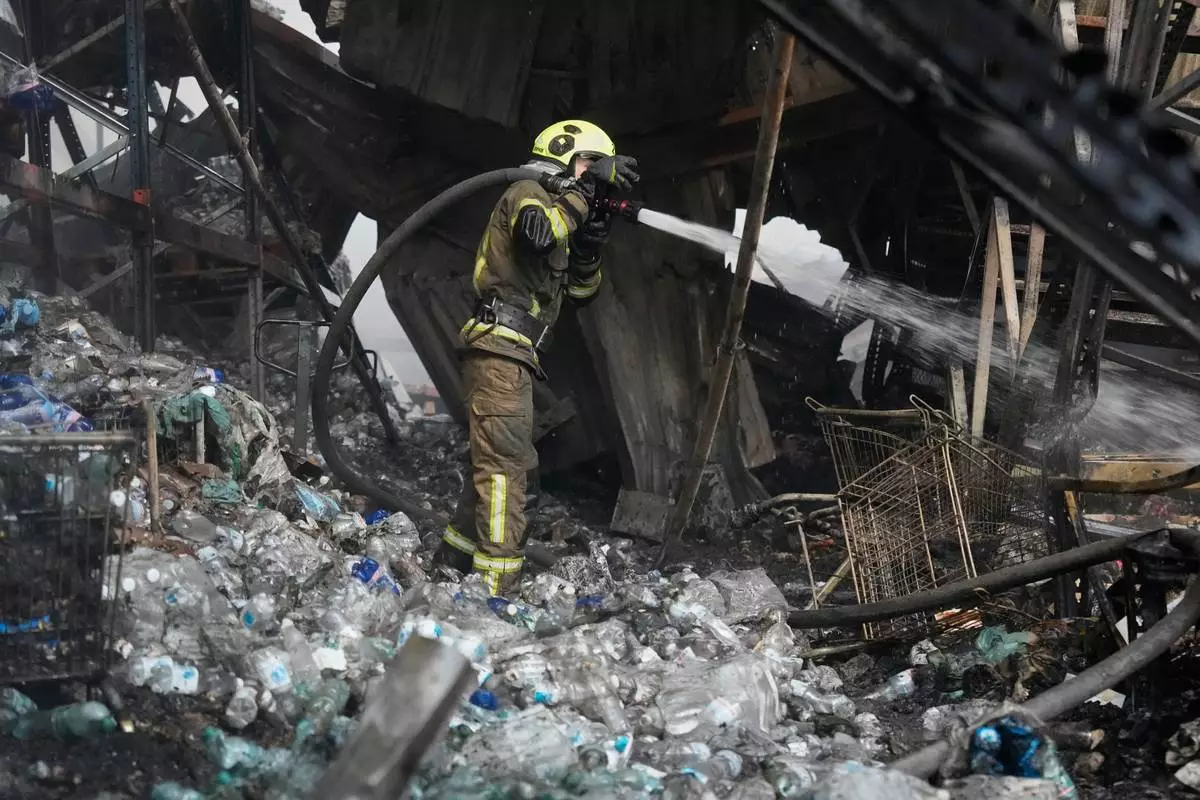
A firefighter puts out a fire after Russian missiles hit a food warehouse near Kyiv, Ukraine, Wednesday, Aug. 5, 2026. (AP Photo/Efrem Lukatsky)
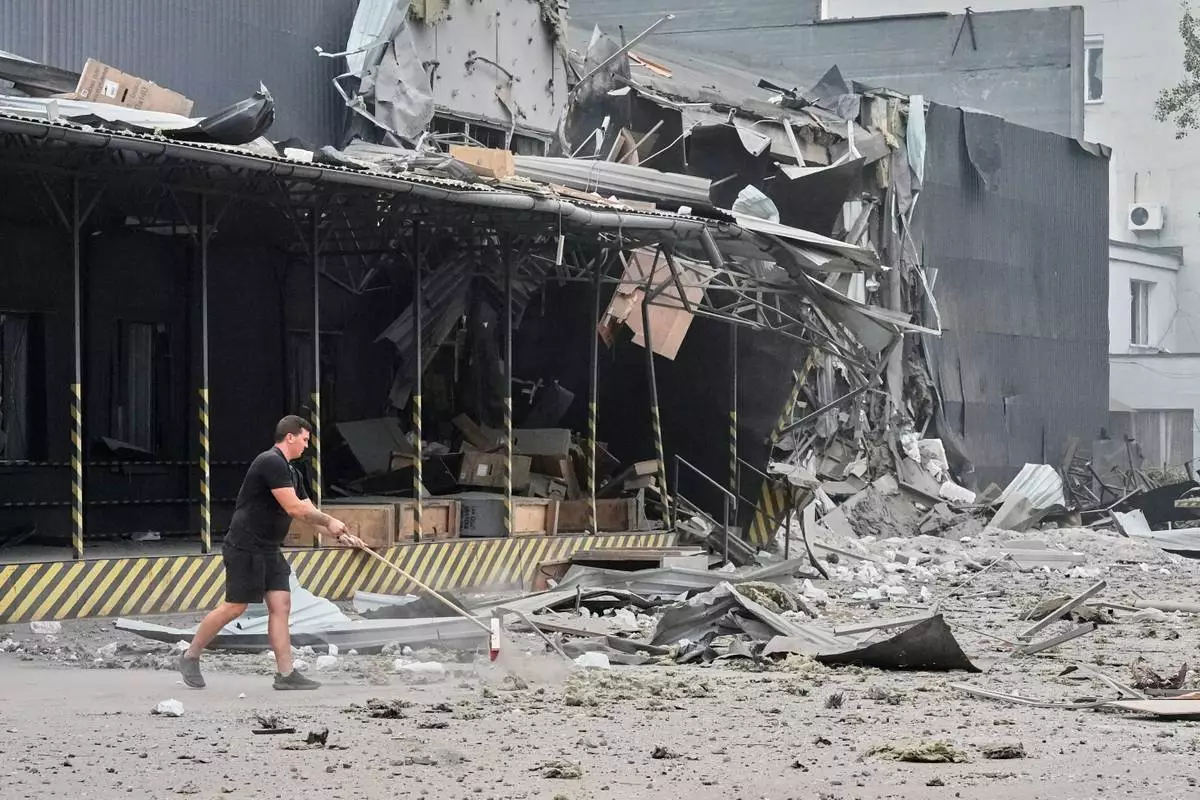
A postal worker clears the debris at the damaged Nova Poshta postal warehouse after Russian missiles strikes in Kyiv, Ukraine, Wednesday, Aug. 5, 2026. (AP Photo/Efrem Lukatsky)
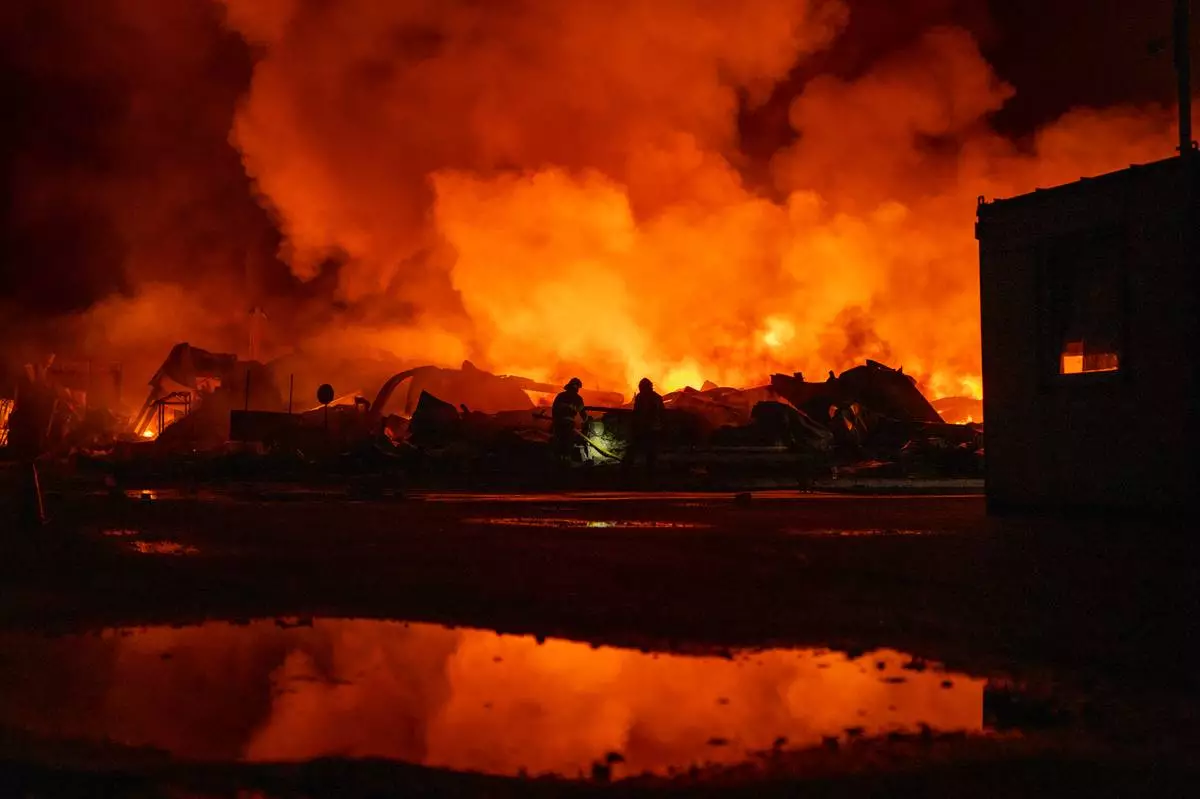
Firefighters put out a fire after Russian missiles hit a warehouse in Kyiv, Ukraine, Wednesday, Aug. 5, 2026. (AP Photo/Dan Bashakov)
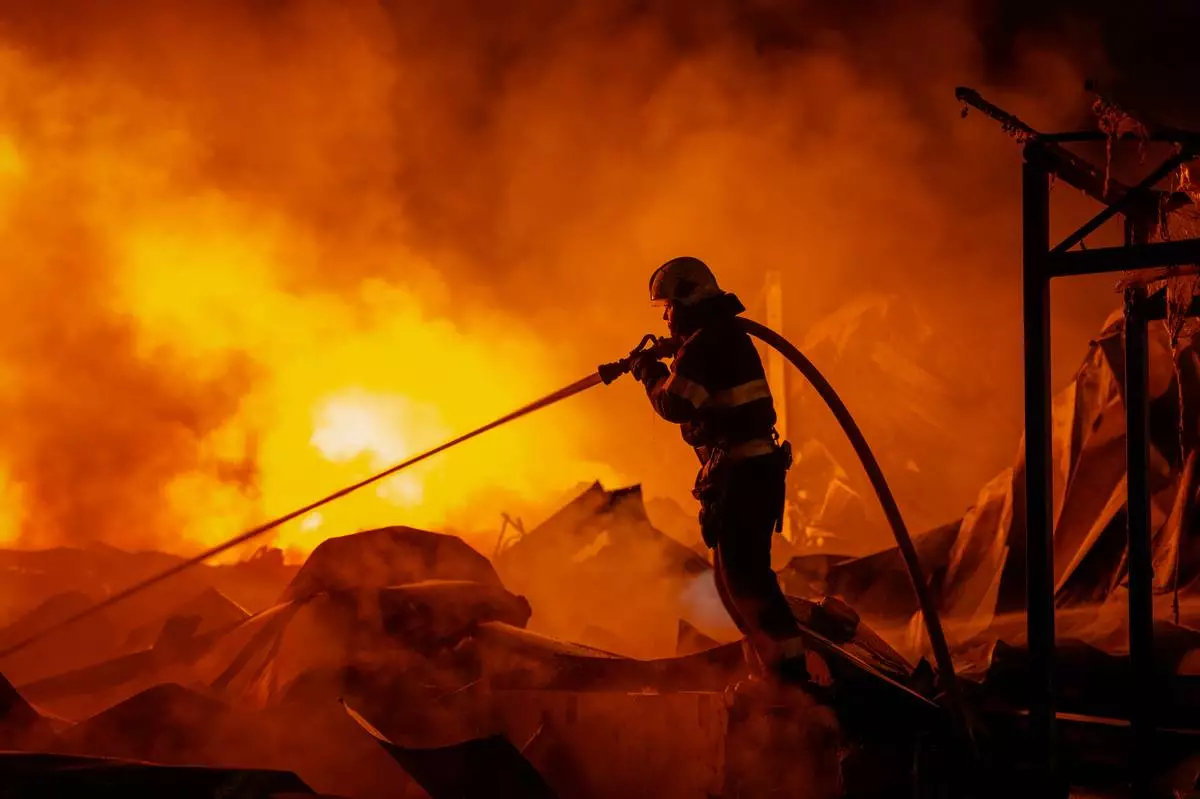
Firefighters put out a fire after Russian missiles hit a warehouse in Kyiv, Ukraine, Wednesday, Aug. 5, 2026. (AP Photo/Dan Bashakov)