KAWASAKI, Japan--(BUSINESS WIRE)--Aug 5, 2026--
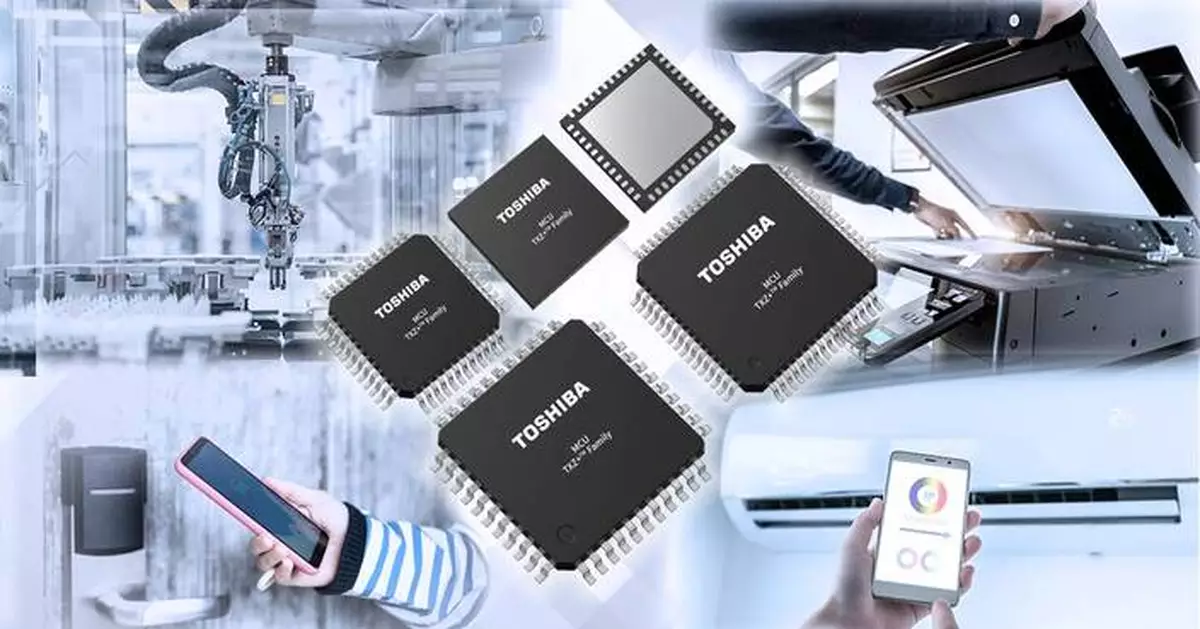
Toshiba Electronic Devices & Storage Corporation (“Toshiba”) has announced TXZ+™ Family Entry-Class M4V Group, standard microcontrollers [1] featuring an Arm® Cortex®-M4 core with a floating-point unit (FPU), that enhance security and data management in IoT devices and industrial equipment. Engineering samples are available.
This press release features multimedia. View the full release here: https://www.businesswire.com/news/home/20260805166440/en/
The widespread adoption of network connectivity and over-the-air updates in consumer and industrial equipment has improved convenience in respect of remote monitoring, control, maintenance and device updating, while underlining the importance of security measures against unauthorized access and program tampering. There is also growing demand for protection of software assets, management of configuration and log data, and stable system operation throughout the entire product lifecycle—from development through to end-of-life.
Toshiba has addressed these requirements by developing the M4V Group, which enhances security and data management functions while retaining the ease of use and versatility of its current standard microcontrollers. The new products have a multilayered security architecture [2] that combines access control, memory protection, and execution control functions, which improves overall system security against unauthorized access and program tampering.
The microcontrollers are built around an Arm® Cortex®‑M4 core with FPU and operate at frequencies up to 80MHz. They deliver the computational performance and real-time capability required for system control applications and support a wide range of control applications in consumer and industrial equipment.
As on-chip memory, they integrate 128KB of code flash memory, 64KB of data flash memory, and 32KB of RAM. The data flash memory can retain rewritable data such as configuration and log data, securing data management tailored to the operating conditions of the equipment. The products also support a supply voltage range of 2.7V to 5.5V and integrate a high-speed oscillator that is ±1% accurate, which help to reduce external components and improve design flexibility. The microcontrollers are also suitable for consumer and industrial equipment with 5V power supplies.
Essential peripheral functions for system control built into the microcontrollers include a 12-bit analog-to-digital converter (ADC), timers, a universal asynchronous receiver/transmitter (UART), a serial peripheral interface (SPI), an inter-integrated circuit (I²C [3] ), and direct memory access (DMA). They also integrate an advanced programmable motor control circuit 2 (A-PMD2 [4] ) that supports brushless DC motor control, providing flexibility for a wide range of application requirements and system configurations. On top of this, they also incorporate a serial memory interface (SMIF) for connection to external serial flash memory. They support direct access by mapping external memory into the address space and enable high-speed memory access with low CPU load through hardware control. This supports storage of large-volume data, log data, and firmware, contributing to efficient data management in IoT devices and OTA-enabled systems.
Toshiba supports device evaluation and development by providing a development environment in addition to engineering samples. It offers starter kits, sample software, common microcontroller software interface standard (CMSIS [5] )-compliant drivers, and support for major integrated development environments (IDEs), enabling smooth progress from initial evaluation to application development.
Toshiba will continue to expand its enablement resources and related documentation to support safe and flexible system design for customers, while further strengthening its lineup of microcontroller products to meet diverse market needs.
Applications
Features
Main Specifications
Follow the links below for more on the new products.
TMPM4V4FWUG
TMPM4V2FWDUG
TMPM4V2FWQG
TMPM4V1FWUG
Follow the link below for more on the M4V Group.
M4V Group
Follow the link below for more on Toshiba’s Microcontrollers.
Microcontrollers
* Arm and Cortex are registered trademarks of Arm Limited (or its subsidiaries) in the US and/or elsewhere.
* TXZ+™ is a trademark of Toshiba Electronic Devices & Storage Corporation.
* Other company names, product names, and service names may be trademarks of their respective companies.
* Information in this document, including product prices and specifications, content of services and contact information, is current on the date of the announcement but is subject to change without prior notice.
About Toshiba Electronic Devices & Storage Corporation
Toshiba Electronic Devices & Storage Corporation, a leading supplier of advanced semiconductor and storage solutions, draws on over half a century of experience and innovation to offer customers and business partners outstanding discrete semiconductors, system LSIs and HDD products.
Its 17,400 employees around the world share a determination to maximize product value, and to promote close collaboration with customers in the co-creation of value and new markets. The company looks forward to building and to contributing to a better future for people everywhere.
Find out more at https://toshiba.semicon-storage.com/ap-en/top.html
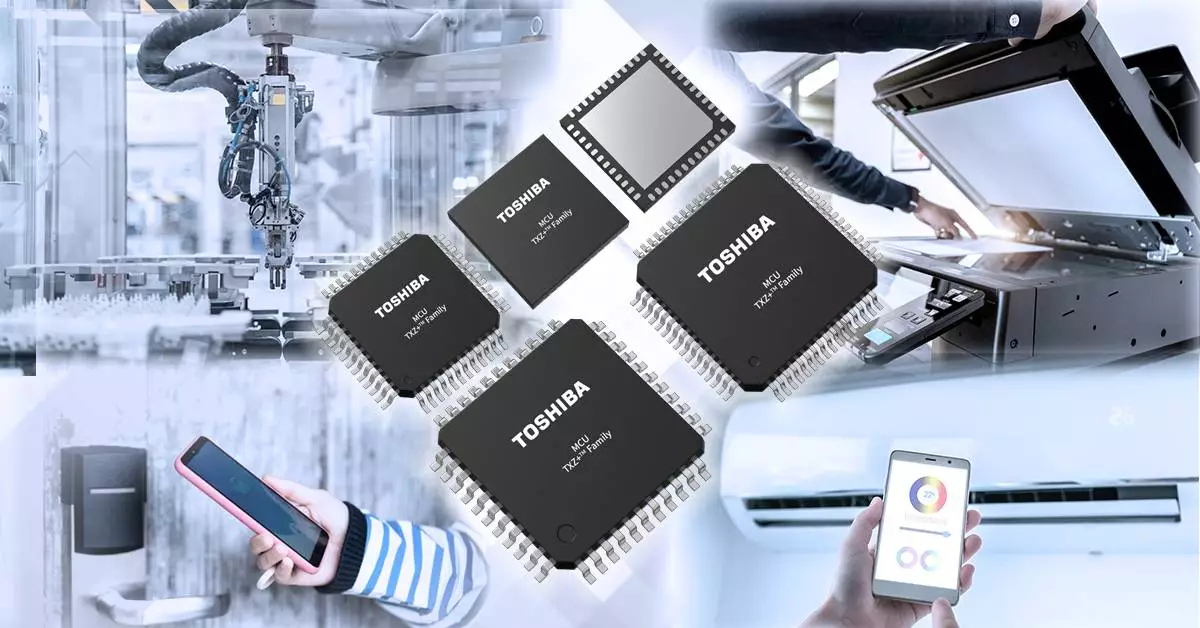
Toshiba: TXZ+™ Family Entry-Class M4V Group for IoT and industrial system control applications.
LONDON--(BUSINESS WIRE)--Aug 6, 2026--
The global tablet market entered an expected period of decline in Q2 2026, with shipments falling 10% year on year to 36 million units, according to the latest research from Omdia. For the first time in years, tablet shipments also defied the typical seasonal pattern of sequentially higher Q2 shipments driven by back-to-school demand.
This press release features multimedia. View the full release here: https://www.businesswire.com/news/home/20260806999460/en/
Global tablet market enters expected downturn
"The past quarter saw one of the steepest declines in the tablet market over the past two years," said Himani Mukka, Research Manager at Omdia. "While the slowdown was anticipated, the market had remained more resilient than expected in prior quarters. Tablets have become an integral part of many households, and in several consumer use cases, detachable tablets are increasingly replacing traditional PCs for everyday computing. Relative affordability, the growing availability of larger-screen models, and tablets’ established role in education and field-based commercial environments continue to support important pockets of demand despite the broader market weakness.”
Premium tablets become a greater focus amid supply constraints
“Looking ahead, vendors are unlikely to broadly prioritize the tablet category in the current component supply-constrained environment,” added Mukka. “Instead, they will focus their limited resources on flagship and premium models, further shifting their portfolios toward premium devices.”
Beyond hardware, tablet vendors will increasingly rely on services, refined AI strategies and use-cases and renewed go-to-market strategies to drive revenue and differentiate their offerings. Omdia’s forecast of market decline in the rest of 2026 reflects both constrained availability of lower-priced tablets and consumers delaying purchases in response to rising prices.
Apple retains market leadership as Lenovo posts strongest growth
In Q2 2026, Apple retained its leading position despite an 8% year-on-year decline in shipments, shipping 13.5 million iPads worldwide and capturing a 38% market share. The standard iPad accounted for the majority of shipments, with the Air and mini models contributing a smaller share of the total.
Samsung remained the second-largest vendor, shipping nearly 6 million tablets despite a 13% annual decline. As component supply constraints persist, the company is expected to dynamically adjust its product mix throughout the year, prioritizing higher-margin models to protect margins and profitability.
Among the leading vendors, Lenovo was the only company to record shipment growth, with volumes increasing 27% year on year. While part of the growth was driven by genuine end-user demand, it was also supported by channel sell-in ahead of anticipated price increases and major retail promotional events.
Xiaomi ranked fourth, shipping 2.8 million tablets and recording a relatively modest 7% year-on-year decline. Its performance continued to be supported by strong domestic demand alongside steady momentum across the rest of the Asia Pacific region.
Huawei rounded out the top five, shipping 2.7 million units, representing a 16% year-on-year decline during the quarter.
Chromebook shipments continue to decline as education demand softens
The Chromebook market recorded yet another decline in Q2 2026. With memory now accounting for a disproportionately large share of the bill of materials for budget and education-tier devices, Chromebooks have become one of the hardest-hit device categories in the current supply-constrained environment.
Lenovo maintained its leadership position, recording a comparatively modest 3% year-on-year decline in shipments to 1.76 million units. The decline was largely driven by the completion of the first phase of Japan's GIGA 2.0 School Program, for which Lenovo had been the primary supplier.
Acer moved into second place, shipping 1.18 million units despite a 4% year-on-year decline. Its resilient performance was supported by steady demand in North America and incremental share gains from HP in the region.
HP ranked second with 1.15 million units shipped, down 13% year on year, as relatively weaker institutional demand in the education segment continued to impact shipments.
Asus was the standout performer, with shipments growing 66% year on year to 749k units, more than doubling its market share from 8% to 16% in Q2 2026. The growth was driven by its role as a key supplier for GIGA 2.0, the US K–12 education refresh cycle, and back-to-school inventory stocking.
Dell recorded the second-steepest decline, with shipments falling 47% year on year to 465K units.
More broadly, the decline can be attributed to vendors deprioritizing the Chromebook category due to its relatively low profitability, as well as elevated shipments in Q2 2025, when education deployments were at their peak. Even pre-agreed Chromebook deployments have experienced delays this year, further weighing on shipment volumes.
ABOUT OMDIA
Omdia, part of TechTarget, Inc. d/b/a Informa TechTarget (Nasdaq: TTGT), is a technology research and advisory group. Our deep knowledge of tech markets grounded in real conversations with industry leaders and hundreds of thousands of data points, make our market intelligence our clients’ strategic advantage. From R&D to ROI, we identify the greatest opportunities and move the industry forward.
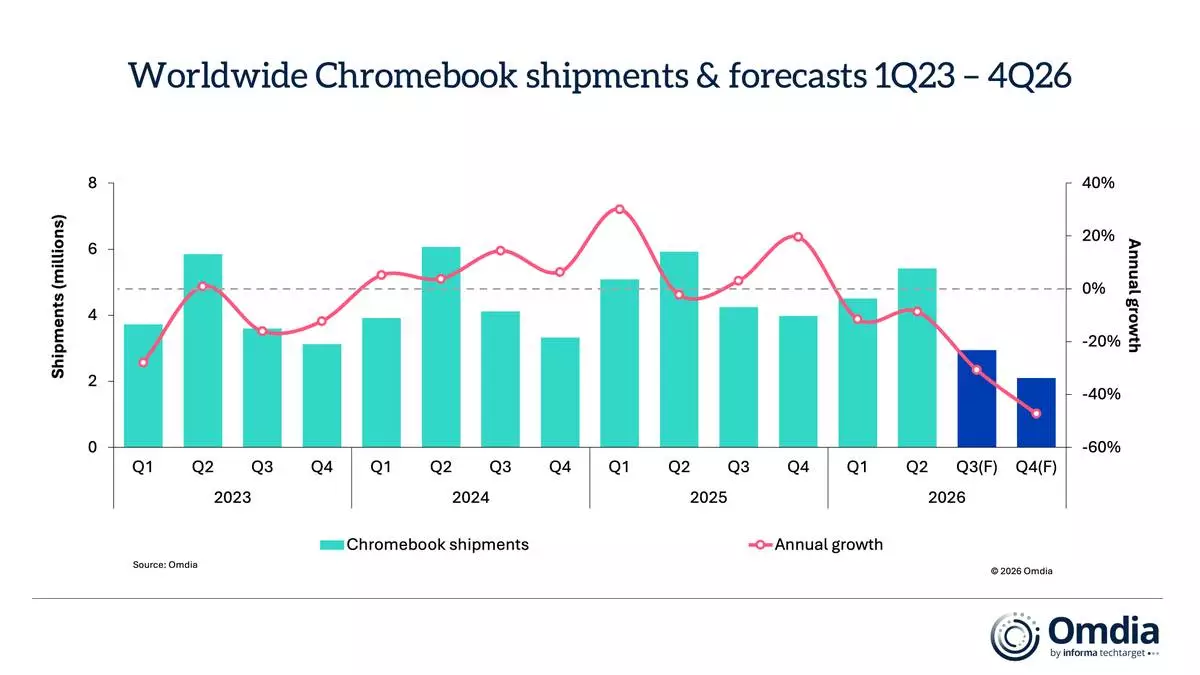
Worldwide Chromebook shipments & forecasts 1Q23 – 4Q26
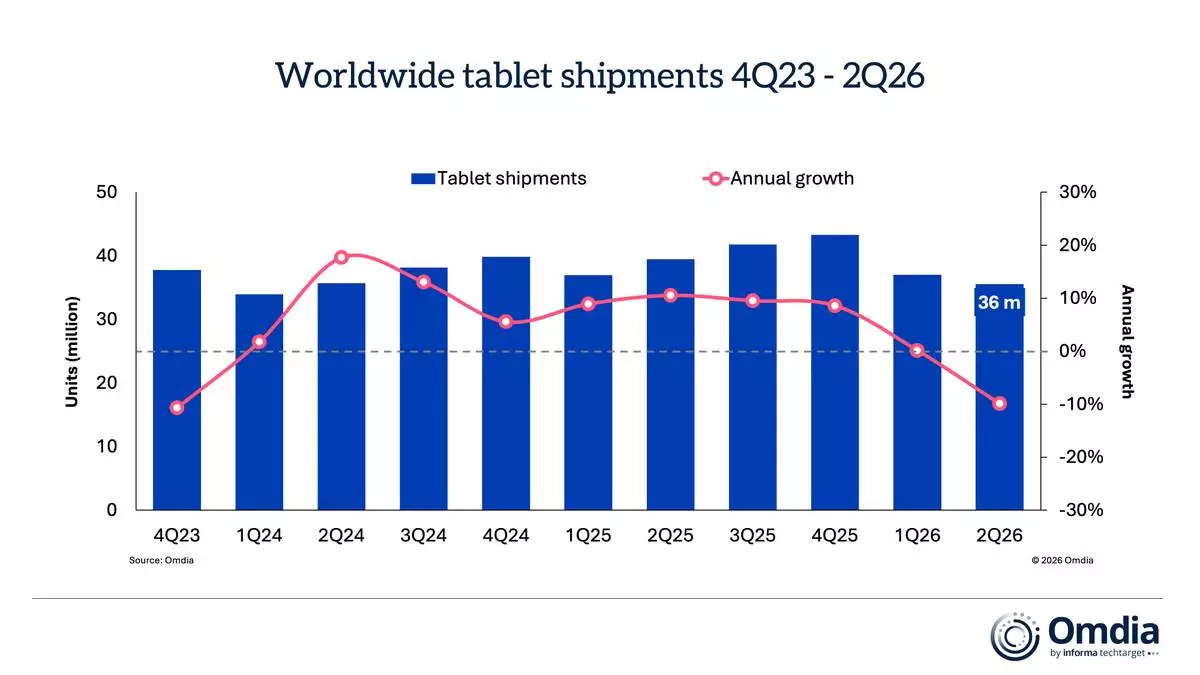
Worldwide tablet shipments 4Q23 - 2Q26