Britain's farmers have warned that extreme weather is putting growing pressure on the country's food security.
After a waterlogged winter, drought and extreme heat have hit crops across Britain, while conflict and disruption abroad are exposing the risks of relying on global food supply chains.
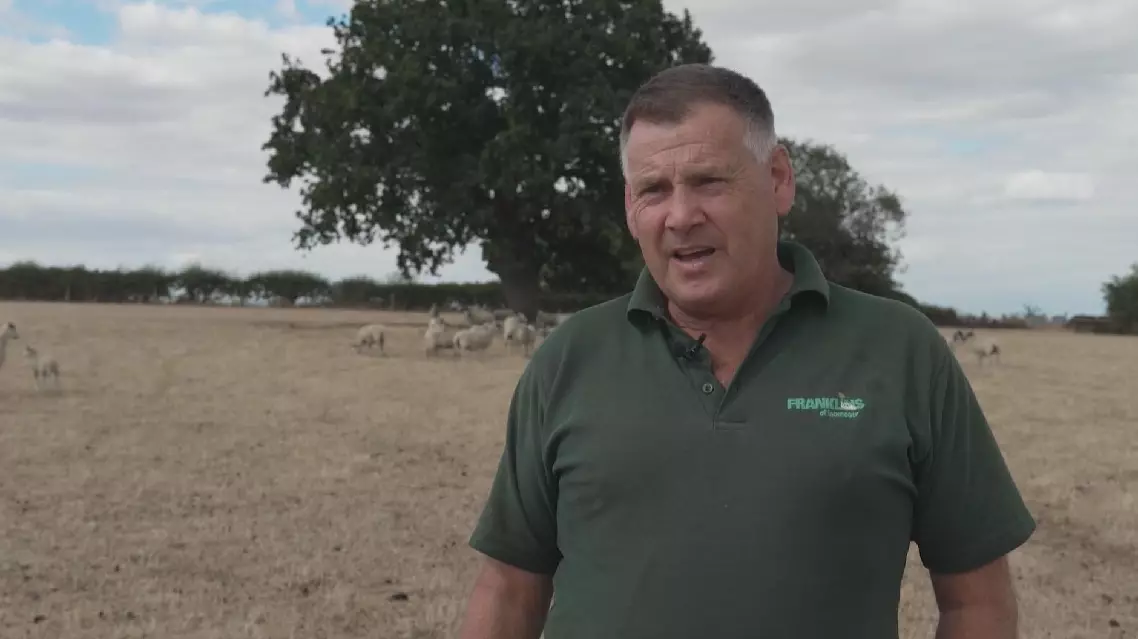
John Franklin farms 200 acres of land in Cambridgeshire and runs farm shop and cafe Franklins of Thorncote selling local produce. He said increasingly unpredictable weather is making farming much more difficult.
"Any time you get temperatures over 30 degrees in this temperate climate, our crops really fade away and basically die rather than ripen. And the same with the grass," said Franklin.
There's little left for Franklin's sheep to eat in these fields. Months of unusually dry weather have killed the grass they would normally graze on, forcing him to use feed saved for the winter.
"We get more of these extremes of climate. They seem to come more regularly," he said.
Researchers estimate this year's drought and extreme heat could cut Britain's crop harvest by as much as 2.5 million tons, costing farmers an estimated 520 million U.S. dollars. Analysis suggests it could also become Britain's worst cereal harvest since detailed records began in 1984. Britain produces around 58 percent of the food it consumes, importing the other 42 percent.
As extreme weather puts increasing pressure on harvests both at home and overseas, strengthening food security is becoming an increasingly urgent challenge. And climate isn't the only risk. Global conflict has already exposed the vulnerability of international supply chains.
"We're currently relying on other countries bringing in produce forward. But we're seeing through geopolitical and climate impacts, increased costs of energy, fuel, fertilizer, other countries focusing about feeding their own people, not exporting. And particularly as we've seen across Europe, those wildfires and lack of rainfall, we need to have a more strategic look at the risk we have and how do we build resilience into the future," said farmer Martin Lines, who is also CEO of Nature Friendly Farming Network.
For Lines, repeated poor harvests are also raising questions about whether farming remains economically viable -- this year he said his farm has lost a third of its income, with lower yields and some crops failing to meet market specifications.
"I'll be better off not doing anything which means less food next year. But this is on the back of five years in a row now. We've either been too wet, too cold, too dry," said Lines.
The challenge for Britain is how to protect its food supply from two increasingly interconnected risks -- a changing climate at home, and a more volatile world beyond its borders.
Extreme weather threatens UK's food security