Cycling tours along Beijing's Central Axis have emerged as a popular way for inbound tourists to explore the historic city, allowing international visitors to experience Chinese culture through local food and heritage sites.
When night falls over the ancient capital, Belgian tourist Lode Vandendriessche and his family set off on bicycles along Beijing's Central Axis for an unforgettable evening. Winding through the old city's narrow hutongs, the family sampled more than a dozen authentic local snacks, immersing themselves in the flavors and atmosphere of traditional Beijing.
"It was nice to drive around or cycle around Beijing areas where you normally wouldn't come, like the hutongs is pretty special. And then in addition, the diversity of food was very impressive," Lode Vandendriessche said.
This appetite for authentic, experiential travel is a growing trend among inbound visitors, according to local tour guides who serve international travelers.
"You can see many foreign visitors in pairs or groups all across the city's streets and alleyways, especially family travelers like them. They are quite eager to seek out interesting activities around the city," said Dou Junjie, a local tour guide.
The rising enthusiasm for immersive Beijing experiences aligns with official data showing robust growth in cross-border passenger traffic at the capital's ports this year.
Since the start of 2026, cross-border passenger flow at Beijing's ports has climbed steadily. As of Thursday, total inbound and outbound passenger volume had surpassed 13.6 million, including over 4.6 million foreign nationals, representing a 30 percent year-on-year increase. On August 2, daily cross-border passenger traffic exceeded 80,000, hitting a nearly six-year high for single-day volume at Beijing's ports.

Beijing's Central Axis cycling tours draw inbound tourists with immersive cultural experience
As Typhoon Dolphin approaches, east China's Zhejiang Province has turned to digital technologies and advanced equipment to boost early warning systems and ramp up emergency readiness.
Typhoon Dolphin, the 13th typhoon of 2026, is forecast to make landfall along the coast between Zhejiang and northern Fujian from Sunday afternoon to Monday morning.
Zhejiang raised its typhoon emergency response to Level I, the highest level, on Saturday night, according to the provincial flood control and drought relief headquarters.
To better handle the typhoon, the provincial water resources department has been using a digital twin platform to simulate potential rainstorm and flood paths by integrating rainfall and hydrological data.
The platform can automatically generate response plans, identifying evacuation zones and estimating the number of people to be relocated.
"After the Level I emergency response was activated, we have been assessing the flood risks in every river basin on an hourly basis. We rely on the digital twin system to monitor water levels and rainfall changes at over 10,000 hydrological stations across the province. It allows us to analyze fast and issue warnings timely," said Chen Zhigang, an investigator with the flood and drought disaster prevention division of the provincial water resources department.
The typhoon is expected to bring strong winds and abundant moisture and affect a wide area. It may move slowly after landfall, bringing prolonged heavy rainfall and posing high risks of extreme weather and severe damage.
"This typhoon is moving relatively slowly and may linger over our province longer than a typical storm. For us, the key tasks are monitoring, forecasting and early warning. We will keep tracking the evolving rainstorm situation and issue timely alerts to support personnel evacuation and subsequent defense efforts," said Chen.
In addition to the digital twin platform, a range of advanced equipment has been deployed across Zhejiang to strengthen its typhoon defense.
In Ningbo, intelligent inspection robot dogs are now patrolling water conservancy facilities around the clock, feeding back operational data in real time.
In Wenzhou, a fixed-wing communication drone with a six-meter wingspan has completed all testing and is on standby. In the event of road, power or network outages, the drone can take off vertically, stay airborne for up to five hours, and support simultaneous communication for up to 1,200 people in a single mission.
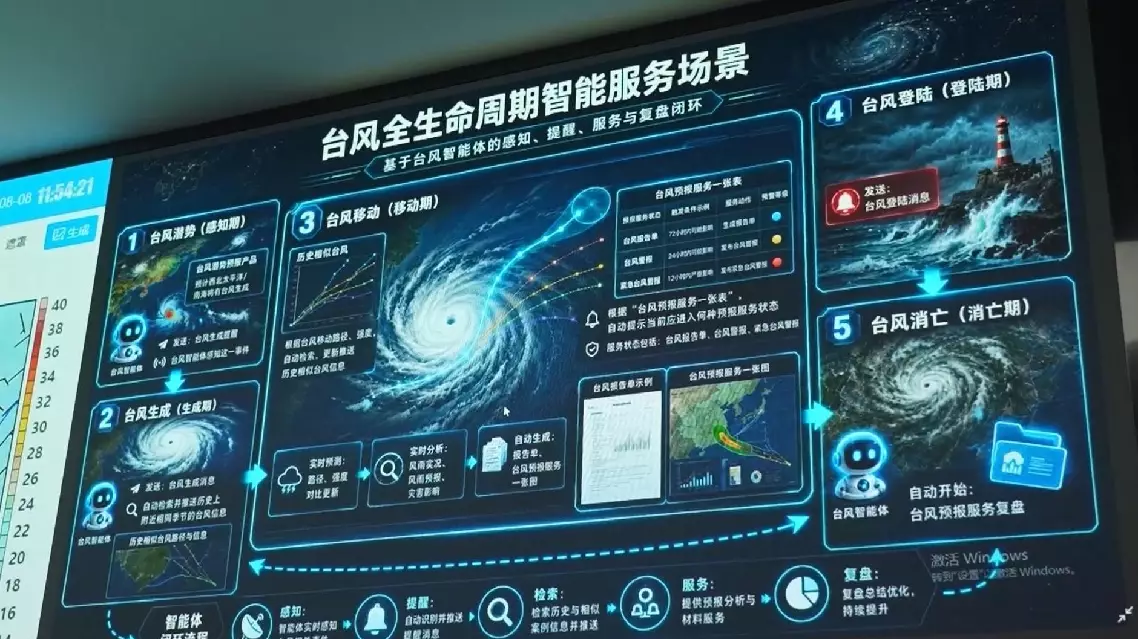
Zhejiang applies digital tech to strengthen Typhoon Dolphin defenses
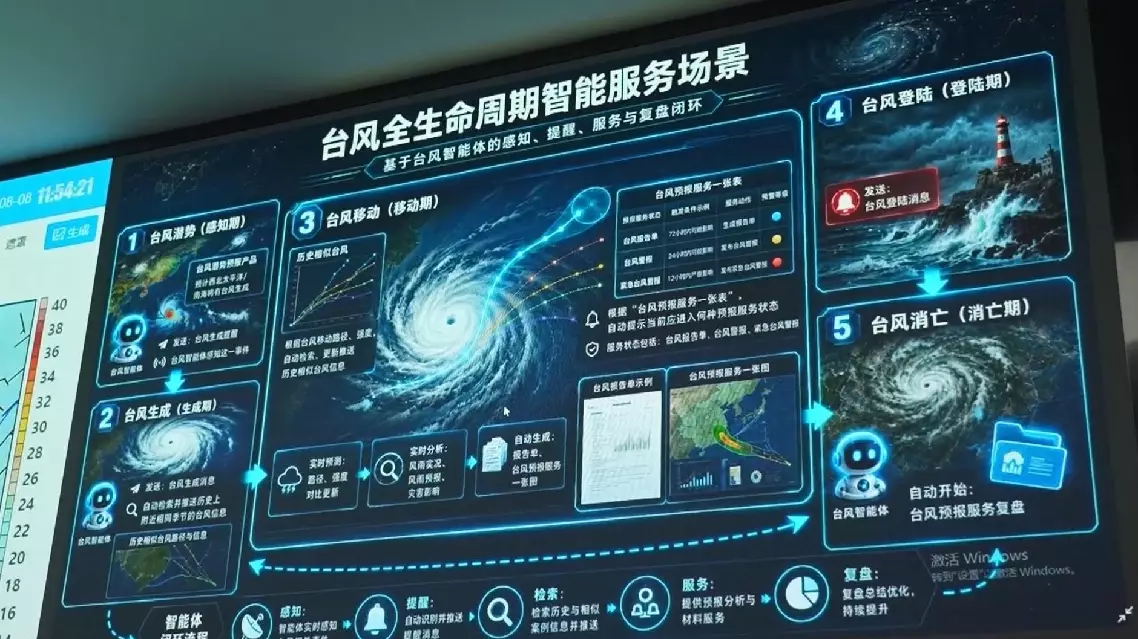
Zhejiang applies digital tech to strengthen Typhoon Dolphin defenses