The three astronauts on China's Shenzhou-23 mission performed a haul of experiments and interacted with a robotic assistant on the Tiangong space station over the past week as they were pressing ahead with scientific research and routine maintenance in orbit.
Last week, the three astronauts, namely Zhu Yangzhu, Zhang Zhiyuan, and Lai Ka-ying, not only made steady progress on various space science experiments but also meticulously maintained the space station complex and conducted routine health management activities.
Regarding space science experiments, the crew used an ultrasound diagnostic device to assist one another in performing ultrasound scans of areas such as the soleus muscle, quadriceps, and erector spinae, and conducted grip strength tests.
The data collected will be used for research related to a sensitive muscle group remodeling project.
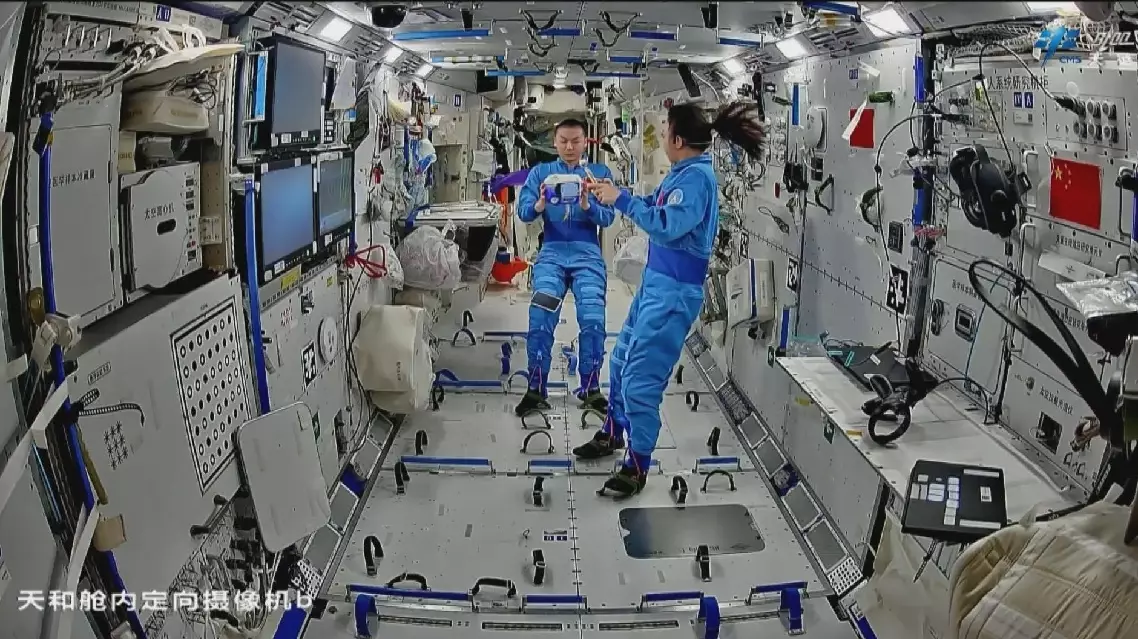
In the multi-person collaboration interface experiment, the astronauts wore standalone virtual reality headsets to conduct behavioral tests, including single-person perception experiments and two-person collaboration experiments.
The three astronauts also interacted with the robot "Xiaohang" to conduct touch-based interaction tests. The collected data will be used to optimize methods for planning robotic motion behavior during future in-orbit operations.
Additionally, research in two areas -- kinematic characteristics of astronauts during long-term spaceflight and dynamics of space treadmills under microgravity conditions -- was conducted in tandem.
In accordance with the experimental schedule for space microgravity physical science, the crew replaced the experimental samples in the fluid physics experiment cabinet, cleaned the samples in the containerless experiment chamber, performed maintenance on the electrodes of the shaft mechanism, and cleaned the window cover lenses.
Moreover, the crew carried out cleaning of the cabin environment and organized supplies.
Regarding health management, the crew completed medical checkups, including abdominal, cardiac, and vascular ultrasound scans, and actively engaged in in-orbit exercise to counteract the physiological effects of weightlessness.
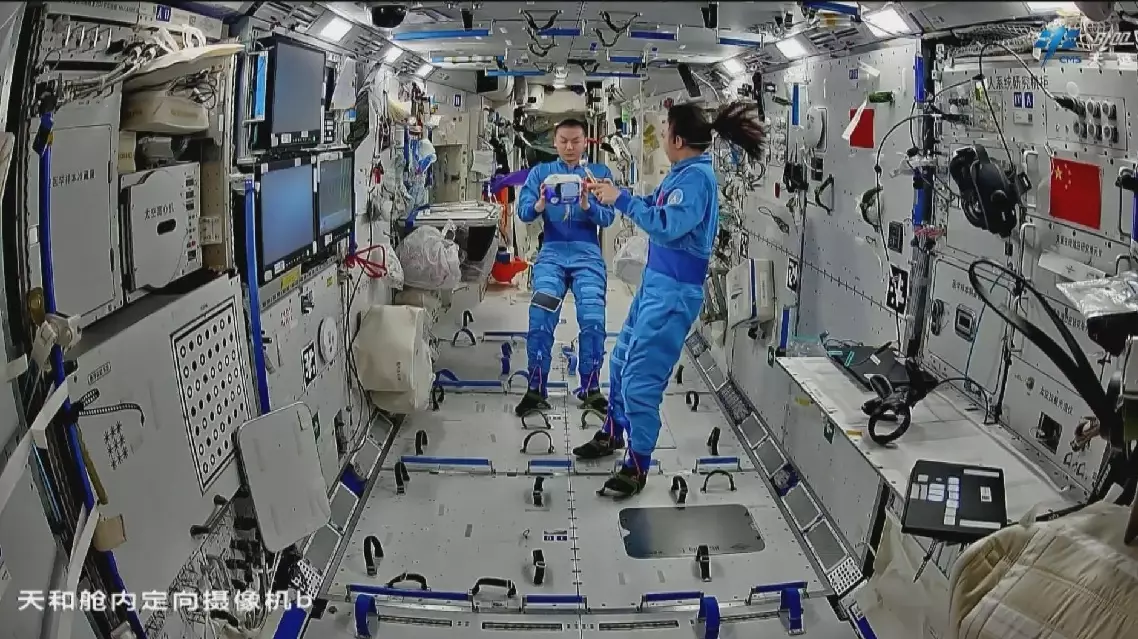
Shenzhou-23 crew advances space science experiments, interacts with robot assistant
Shenzhou-23 crew advances space science experiments, interacts with robot assistant
Thousands of torches blazed across the night sky in southwest China's Sichuan Province on Saturday as the Yi ethnic group celebrated its traditional Torch Festival, a centuries-old ritual believed to ward off pests, safeguard harvests, and usher in health and prosperity for the year ahead.
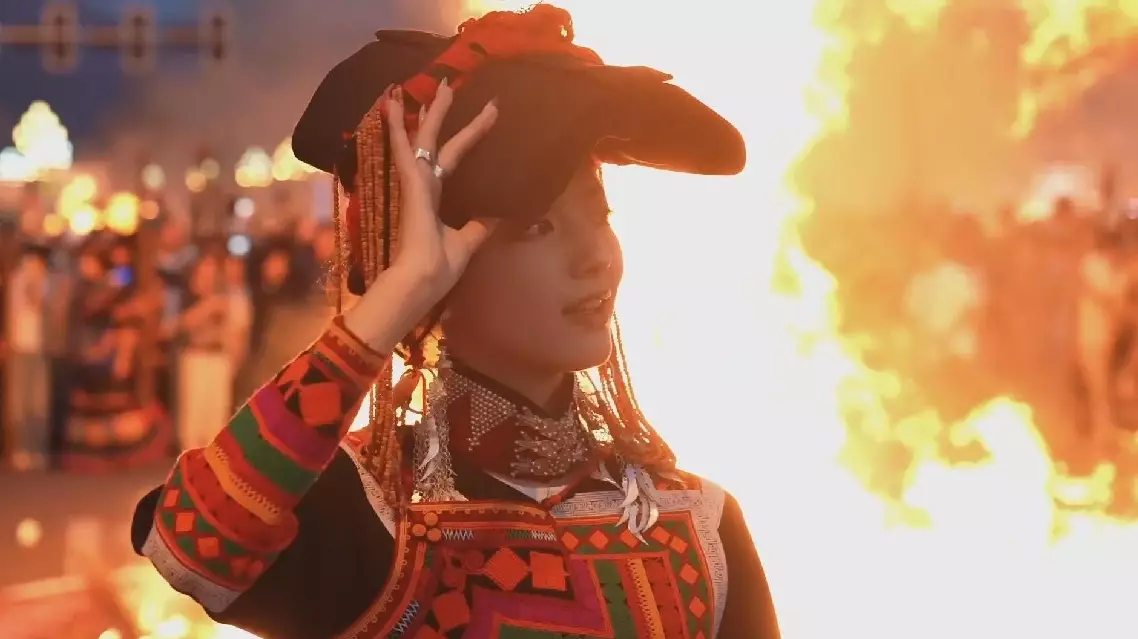
As the annual Yi Torch Festival arrived, Xichang, the capital of Liangshan Yi Autonomous Prefecture, lit up the night on Saturday. Eighty-six bonfires and tens of thousands of torches turned the city into a sea of fire and joy.
The lighting ceremony carried forward the thousand-year-old traditions of the Yi people. Thousands danced the Dati dance, torch parades filled the streets, and ancient folk customs came alive in a celebration of culture and heritage.
"What I like the most is like the people dancing around. Because even though you don't know these people, they kind of like become your family. It doesn't matter. It feels like you know them from like your whole life. I think this should become like a main thing to do in China," said Neolia Rodriguez, a foreign tourist.
But Liangshan's charm goes beyond the festival. With its unique plateau climate, the region enjoys an average summer temperature of only 21 degrees Celsius. Cool weather and stunning landscapes offer a perfect escape from the heat.
In Jiangzhou Town, local communities are turning their cultural and ecological resources into new opportunities. Rice fields have become stages for fashion shows featuring Yi embroidery. And traditional villages are attracting visitors through a blend of culture, tourism, and summer retreats.
"We planned the follow up operation before starting any construction. We train young locals to run catering, travel photography and tie dye handicraft experiences. Houses belonging to elderly residents are rented out and managed by the company, bringing about 30,000 yuan (about 4,446 U.S. dollars) of additional income per household," said Yang Hu, Deputy Mayor of Jiangzhou Town.
By making the Torch Festival a cultural symbol, Liangshan is integrating traditional customs, ecological tourism and rural development. Festival enthusiasm is becoming a lasting source of tourism growth and rural revitalization.
"We draw tourists with the festival. Local farmers become multi skilled new rural workers, earning income from tourism right where they live. We expect cultural tourism revenue from this Torch Festival to hit around 3 million yuan," said Liu Huajiang, Secretary of Party Committee of Jiangzhou Town.
"This is the first time that I got to come here and experience the torch festival, and you know all sorts of different kinds of E culture, and it's been a lot of fun. Since it's in the middle of August, and most places are really hot, coming here where it's all very cool was a nice change of pace, and definitely recommend," said Eddie O’Brien a foreign Tourist.
This summer celebration is a feast of Yi culture, and a vivid example of Liangshan's journey toward high-quality development. With blazing torches and refreshing mountains, this ancient Yi homeland is shining with new vitality in the modern era.
Torch festival ignites summer of culture, tourism in Sichuan