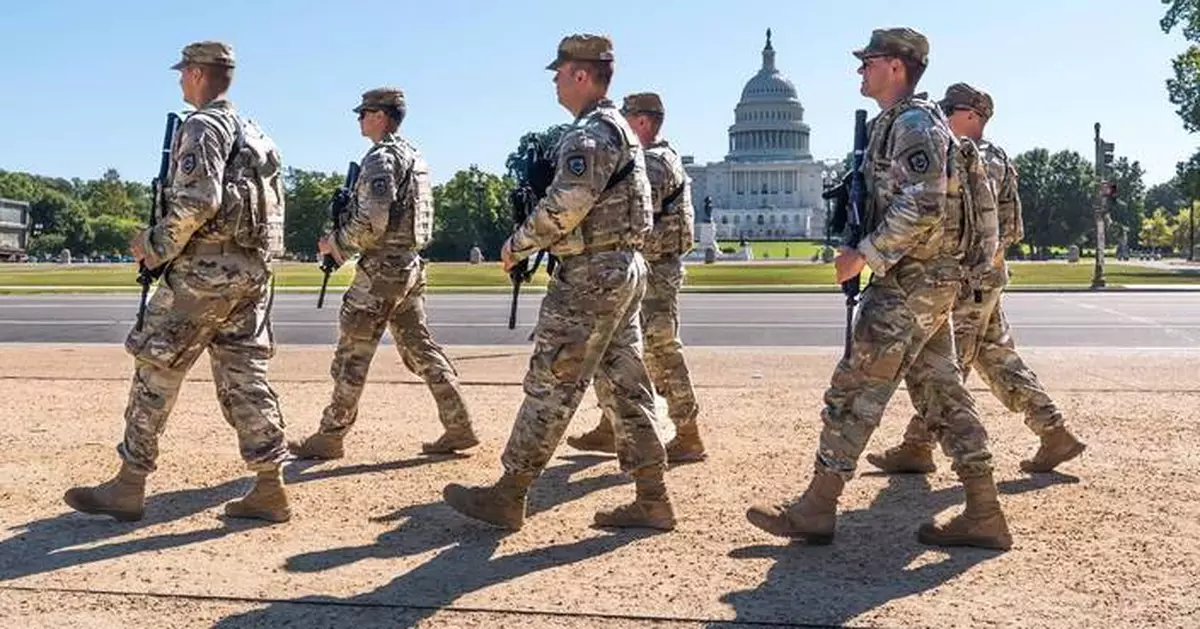
WASHINGTON (AP) — It’s been 12 months since President Donald Trump announced a crime emergency in Washington, pledging to make the city “safe and beautiful” and deploying the National Guard.
But a mission that seemed temporary has been extended through January 2029. Residents and a new cadre of local officials see in it an unacceptable attempt by the federal government to restrict the heavily Democratic city's autonomy and, a year in, still question why having troops on the streets of the nation's capital is necessary.
Click to Gallery
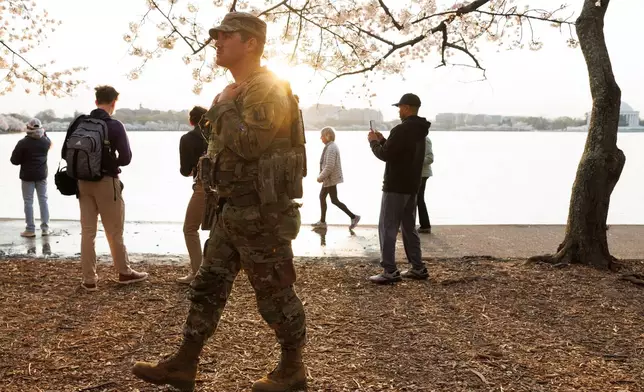
FILE - A member of the Mississippi National Guard walks among the cherry blossom trees along the tidal basin on the National Mall on Thursday, March 26, 2026, in Washington. (AP Photo/Tom Brenner, File)
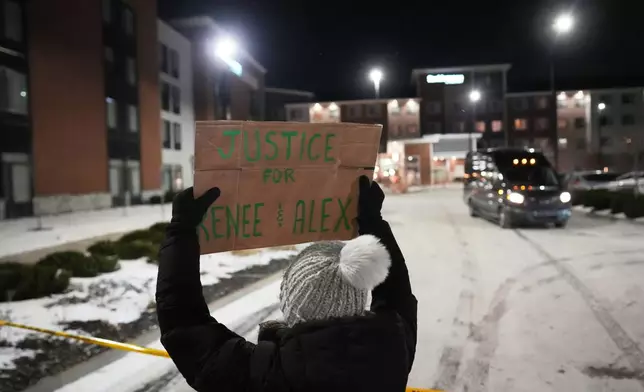
FILE - A demonstrator holds a sign reading "Justice for Renee & Alex" during a protest outside a SpringHill Suites and Residence Inn by Marriott hotels, Jan. 26, 2026, in Maple Grove, Minn. (AP Photo/Adam Gray, File)
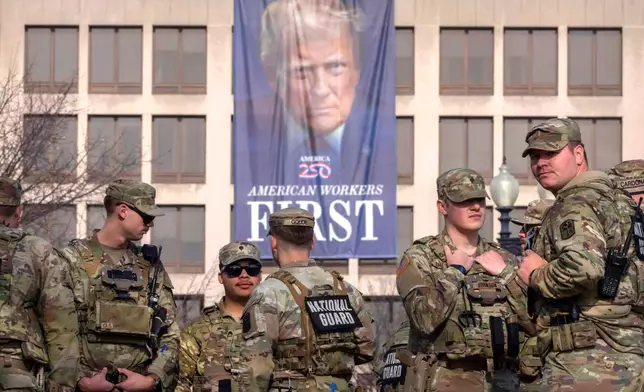
FILE - National Guard members gather near a large portrait of President Donald Trump on the Labor Department headquarters before the body of Metropolitan Police Department officer Terry Bennett is driven past the Capitol, Jan. 8, 2026, in Washington. (AP Photo/Mark Schiefelbein, File)
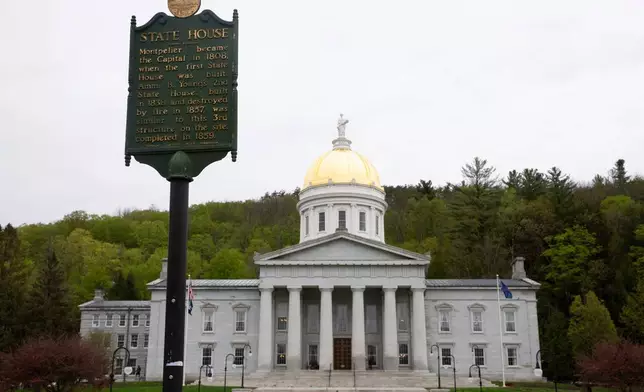
FILE - The Vermont state Capitol building is seen, May 8, 2025, in Montpelier, Vt. (AP Photo/Alex Driehaus, File)
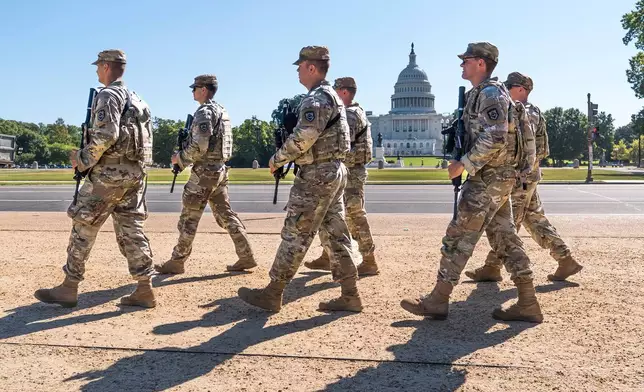
FILE - Armed National Guard soldiers from West Virginia patrol the Mall near the Capitol in Washington, as part of President Donald Trump's order to impose federal law enforcement in the nation's capital, Aug. 26, 2025. (AP Photo/J. Scott Applewhite, File)
“There’s a deep irony that here we are in the capital of the free world, and our president is treating it like a police state,” said Scott Michelman, legal director of the ACLU of the District of Columbia. “D.C. residents have lived with our National Guard troops in our neighborhoods for about a year, despite the absence of any genuine emergency and really any reason for them to be here.”
The continued deployment will be a major test for a new batch of political candidates expected to take office after the midterms this fall. Residents will look to them to push back on the Republican president's encroachment into the city's affairs — although they are limited in what they can do to counter it.
On Aug. 11, 2025, Trump announced that he was launching a federal law enforcement surge in Washington aimed at fighting crime. As of Aug. 4, more than 4,600 military personnel from D.C. and 24 states and territories were still deployed alongside unknown numbers of less visible federal law enforcement officers. Some are expected to be withdrawn toward the end of the summer.
Small groups of armed guard members have become a routine presence on the streets of Washington. They have supported arrest operations but are also seen patrolling tourist areas, such as along the Tidal Basin during the Cherry Blossom Festival and in neighborhoods such as Georgetown where violent crimes are rare. They have helped with medical emergencies, snow removal and beautification projects — initiatives that have received support from some residents.
Extending the deployment into 2029 will cost about $1.4 billion, according to a Defense Department estimate.
“President Trump has transformed D.C. from a crime-ridden city into a safe and beautiful haven for residents and visitors alike,” White House spokeswoman Abigail Jackson said in an email.
Figures posted to the U.S. attorney's office for the District of Columbia credit the surge with more than 13,000 arrests.
Crime, which was falling before the surge began, continues to drop. Metropolitan Police Department statistics show overall crime was down 20% through Aug. 7, compared with the same period in 2025. That includes a 32% drop in homicides, from 97 to 66.
But there’s a debate over how much of that success is owed to Trump’s mission or to yearslong local efforts to chip away at the crime rate.
What is certain is that locals feel the weight of the deployment and do not see a clear way to push back against it. National Guard deployments to other cities have been blocked by courts, and a lawsuit challenging the deployment is pending, but critics of the surge are not hopeful.
“The fact that we still have the National Guard walking our streets a year later with no end in sight is really demoralizing,” city council member Brianne K. Nadeau said.
Because Washington is a congressionally established federal district, Trump has much greater influence over the police and D.C. National Guard, which he controls directly, including its commander.
The Home Rule Act, passed in 1973, allows residents to vote for local leaders, including the mayor and council members. Congress has oversight over the local budget and review authority of all laws passed and the ability to summon district officials to the Capitol routinely to explain themselves. The D.C. delegate to Congress is a nonvoting position.
The city’s governmental structure under home rule made it easy for Trump to do what he has done, Nadeau said.
“There isn’t really any political liability for national leaders to mess with D.C. because nobody really cares,” outside of those directly impacted, she said.
The law enforcement surge played a major role in Democratic primary elections in June, which elevated candidates who have made Washington's autonomy and statehood top priorities.
Janeese Lewis George, a democratic socialist who in the overwhelmingly Democratic city is likely to be its next mayor, has already rankled Trump. He threatened to put the city under federal control if she wins.
Robert White Jr., another pro-statehood candidate, won the Democratic primary for the city's seat in Congress.
And while they are hamstrung by the city's status, both hope they have strategies that can help fight back against the president and the deployment.
White told The Associated Press he plans to build “an army of residents” and allies to target swing districts and work at “un-electing" people critical of the district and “electing those who do support D.C.”
The action is similar to one a former D.C. congressional delegate, Walter Fauntroy, successfully pursued in 1972, mobilizing Black voters and allies against a South Carolina Congress member who had long opposed D.C.'s independence.
“He didn't deploy that strategy a bunch of times, but it sent a signal to people to lay off of D.C.,” White said.
The city's outgoing mayor, Muriel Bowser, avoided the kind of biting rhetoric and personal attacks typical of other high-profile Democratic leaders, despite the unprecedented intervention into her city. A major part of that was to avoid raising Trump’s ire and threaten what independence the city has.
An emailed statement from Bowser's office said that despite challenges to its independence the city has progressed in achieving its goals. "The safety and well-being of everyone in our city remains our top priority and protecting home rule remains our North Star,” the statement said.
“We’re more than monuments and politics,” Bowser said in a 48-second video pinned to her X account.
She said the city is made up of more than 700,00 taxpaying Americans who serve in the military, run businesses and raise families and "we don’t have voting representation in Congress. We don’t control the D.C. National Guard, and we don’t have full access to full American democracy.”
Donna Powell, who is living part time in the city, said she and her husband walk and metro everywhere. “We’re already safe and beautiful,” she said. “We don’t need all these National Guard here.”
The money could be better spent “on healthcare and food for families that need it.”
The National Guard deployment has raised concerns among some over what the upcoming midterms and the 2028 presidential election will look like with troops on the streets.
“The last time this president was supposed to come out of power, Jan. 6 happened," said Alex Dodds, co-founder of FreeDC, an activist group that has protested the deployment by following and filming National Guard troops in quiet areas of the city far away from crime concerns. "Imagine if that happens again but this time he has 5,000 troops standing at the ready to be part of that situation. You know, that’s our worry.”
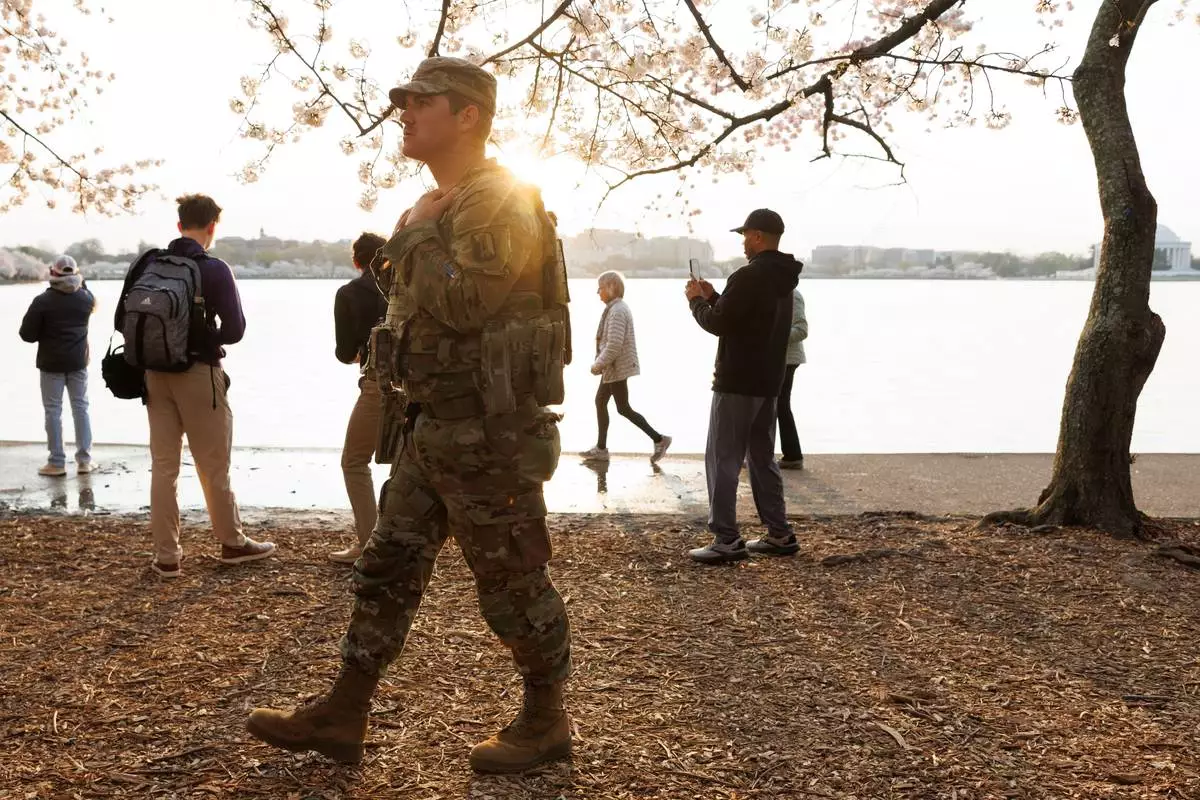
FILE - A member of the Mississippi National Guard walks among the cherry blossom trees along the tidal basin on the National Mall on Thursday, March 26, 2026, in Washington. (AP Photo/Tom Brenner, File)
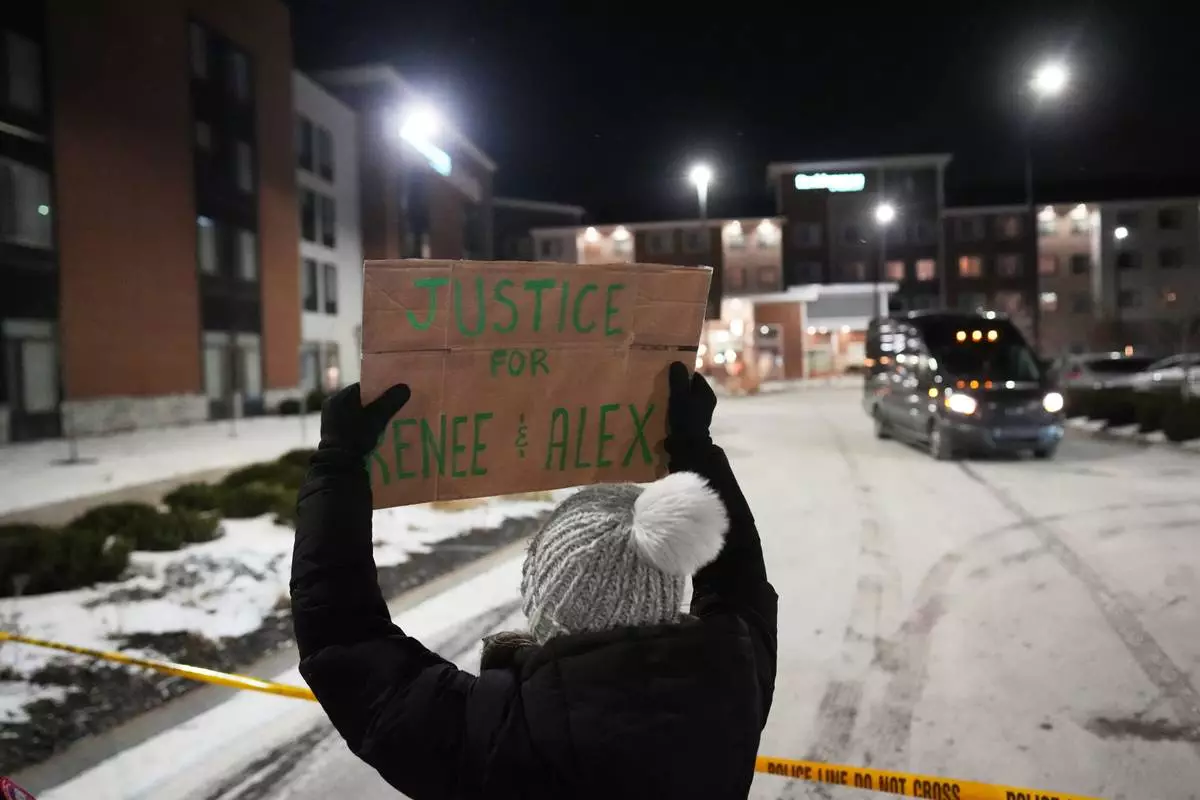
FILE - A demonstrator holds a sign reading "Justice for Renee & Alex" during a protest outside a SpringHill Suites and Residence Inn by Marriott hotels, Jan. 26, 2026, in Maple Grove, Minn. (AP Photo/Adam Gray, File)
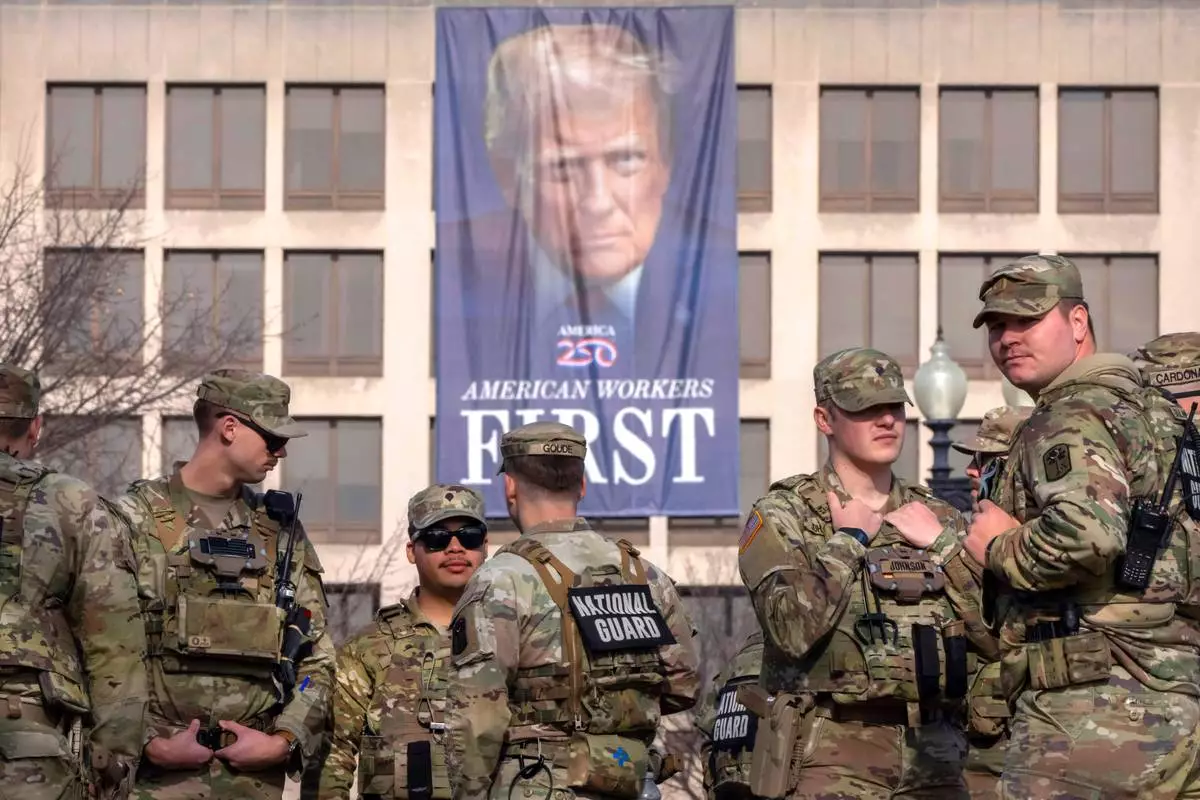
FILE - National Guard members gather near a large portrait of President Donald Trump on the Labor Department headquarters before the body of Metropolitan Police Department officer Terry Bennett is driven past the Capitol, Jan. 8, 2026, in Washington. (AP Photo/Mark Schiefelbein, File)
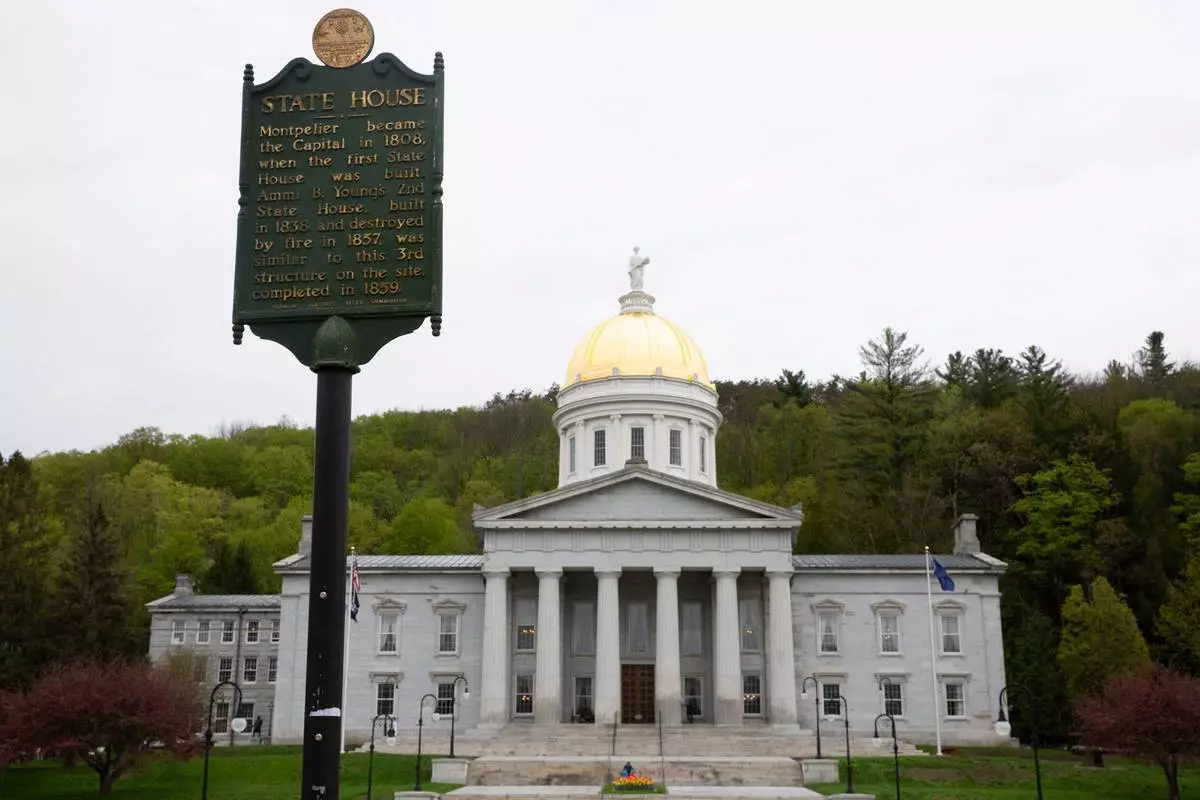
FILE - The Vermont state Capitol building is seen, May 8, 2025, in Montpelier, Vt. (AP Photo/Alex Driehaus, File)
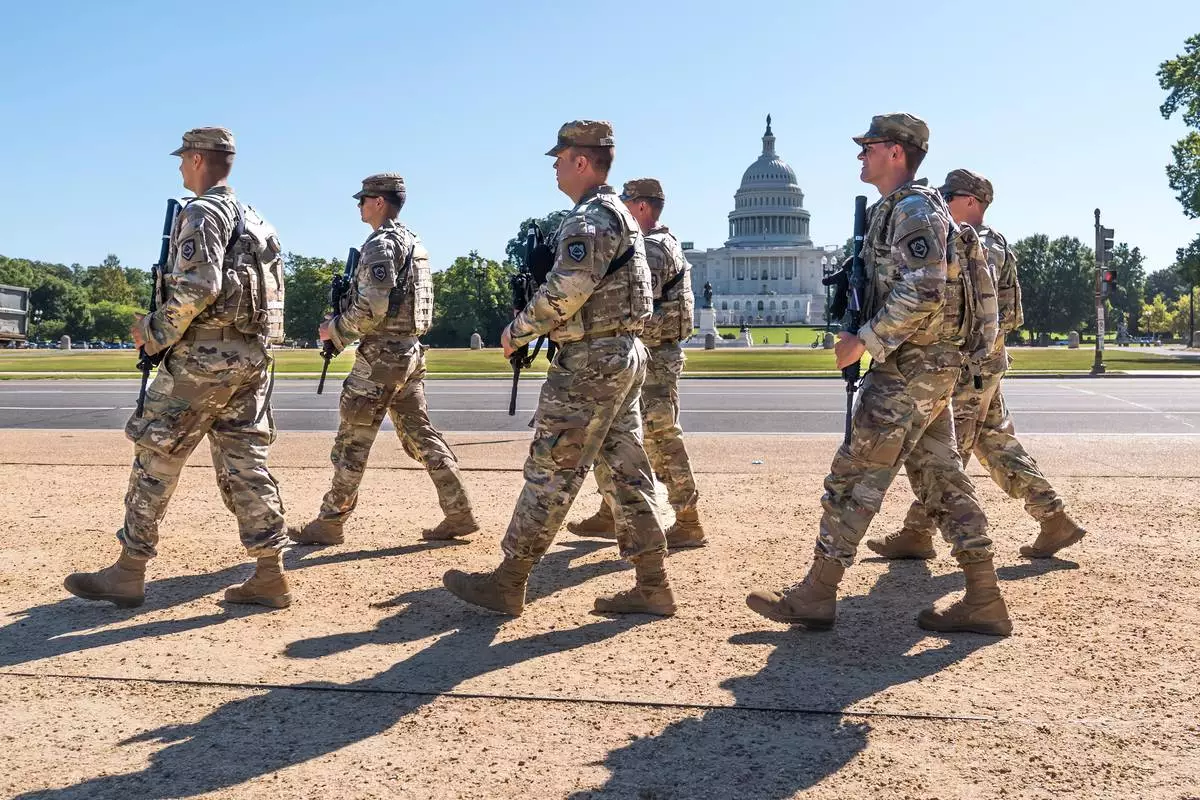
FILE - Armed National Guard soldiers from West Virginia patrol the Mall near the Capitol in Washington, as part of President Donald Trump's order to impose federal law enforcement in the nation's capital, Aug. 26, 2025. (AP Photo/J. Scott Applewhite, File)