A Colombian geologist has ruled out any direct link between the country's 7.5-magnitude earthquake on Monday and the June 24 earthquakes in Venezuela, saying the two calamities involved different tectonic plates despite both occurring in seismically active zones.
The death toll from the earthquake in western Colombia has risen to 188, with 1,677 others injured, the Colombian Association of Capital Cities, or Asocapitales, said Tuesday.
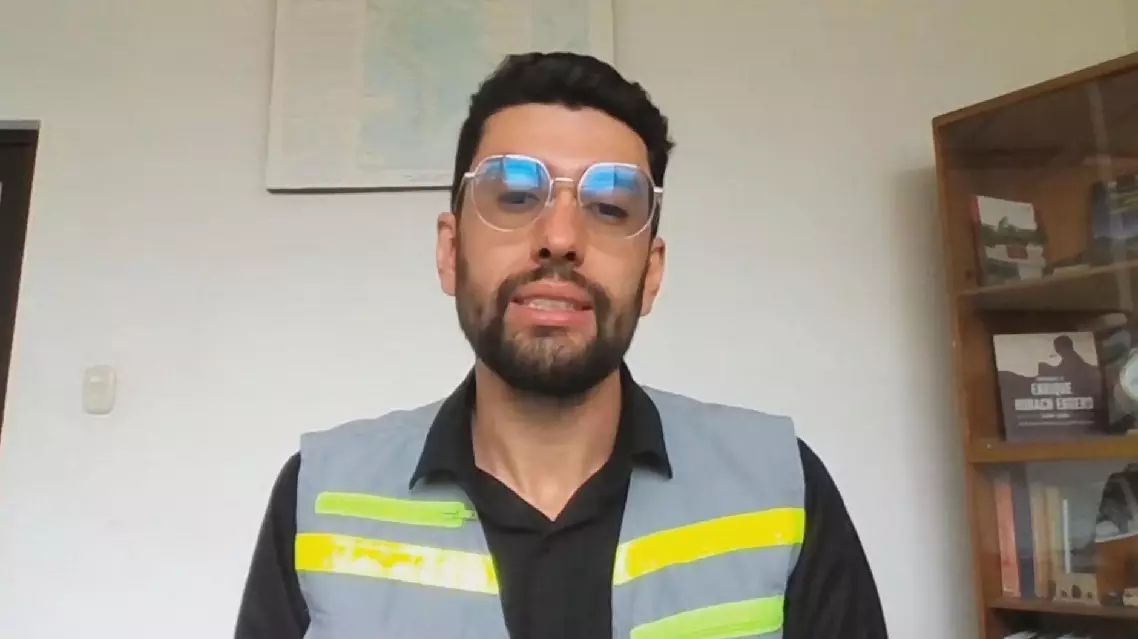
"Both Venezuela and Colombia are seismically active countries. Seismic activity in both countries involves interactions between tectonic plates. In the case of the earthquake that occurred in Venezuela [on June 24], its cause was the interaction between the Caribbean Plate and the South American Plate. In Colombia's strong earthquake, however, the involved plates are the Nazca Plate and the South American Plate. Their geological contexts are different. Although both earthquakes were indeed triggered by interactions between tectonic plates, the specific plates involved are different, and they also differ in the way they interact. Specifically, we cannot say that the earthquake in Venezuela triggered this strong earthquake in Colombia. The two earthquakes are not directly related," Freddy Tovar Belcara, coordinator of Colombia's National Seismological Network said in an interview on Tuesday.
Colombia declared a state of national disaster on Monday after the strongest earthquake ever recorded in the country.
"This strong earthquake is indeed one of the highest-magnitude earthquakes ever recorded in Colombia. In terms of the damage it caused, not only was its magnitude particularly high, but it also affected various parts of the country," said Belcara.
Belcara further explained that the earthquake's destructive power was amplified due to site effects.
In cities located in or near river valleys, where foundations are mostly built on unconsolidated sediments, seismic waves become amplified and resonate within the soil, prolonging the shaking and increasing its intensity.
"Here we need to understand site effects. This is why in some areas far from the epicenter, people felt exceptionally strong shaking—when normally the shaking should have been weaker. It depends on site effects and the specific local geological conditions. This involves not only soil factors and geological composition, but also the types of local infrastructure, such as buildings and structures. All of the above factors may cause the destructive power and shaking intensity of an earthquake to be significantly enhanced in certain areas, even stronger than the shaking near the epicenter itself," he added.
Geologist rules out direct link between strong earthquakes in Colombia, Venezuela