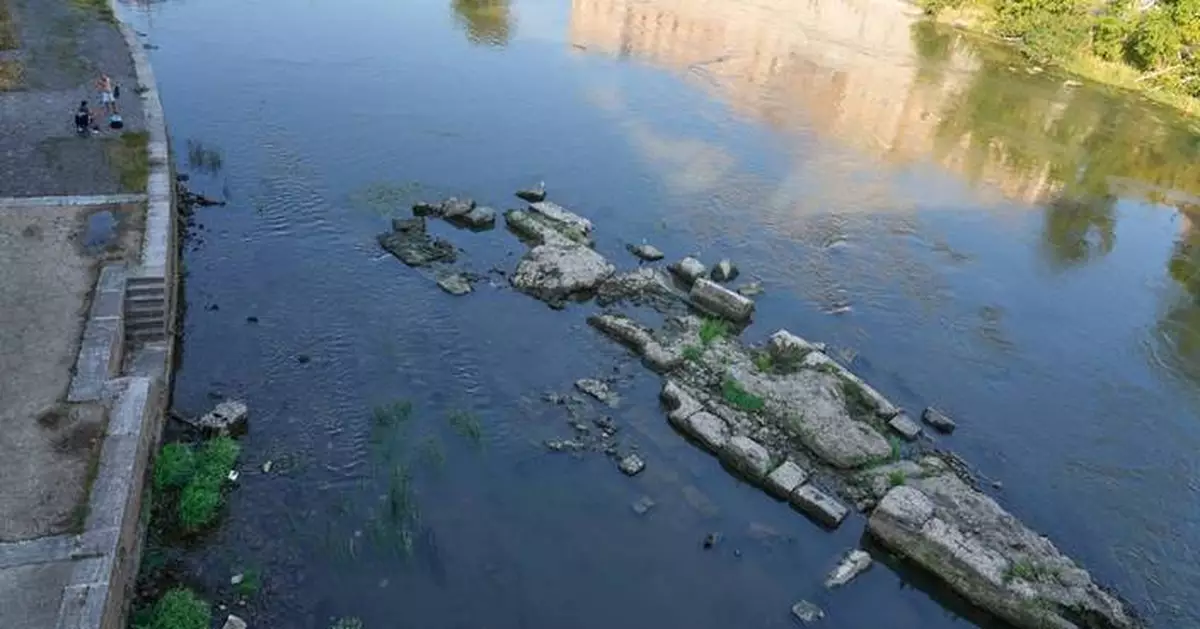
ROME (AP) — The remains of an ancient bridge have emerged in Rome’s Tiber River, near St. Peter’s Basilica, as weeks with virtually no rain caused water levels to plunge.
The bridge — known as Nero's Bridge, named for the former Roman emperor — once connected Rome’s city center with the Tiber’s right bank.
“Nero is the most famous person linked to this area, because precisely in Nero’s circus, where the Vatican is now located, the Apostle Peter was martyred,” said Antonella Bonini, an archaeologist at Rome’s cultural heritage superintendency.
“However, scholars consider the bridge to be older (than Nero’s era) — built by Caligula, Nero’s uncle,” she said, adding that it existed as early as 39 AD.
The Tiber’s flow has fallen below 80 cubic meters (2,825 cubic feet) per second, about half the historic average for the month of July, according to Giovanni Giganti, coordinator of the Rome civil protection service’s center for water management.
“We are facing a major water crisis. And it is a crisis that is also due to the fact that this winter we did have quite abundant rainfall, but then the dry periods ... were quite long,” Giganti said.
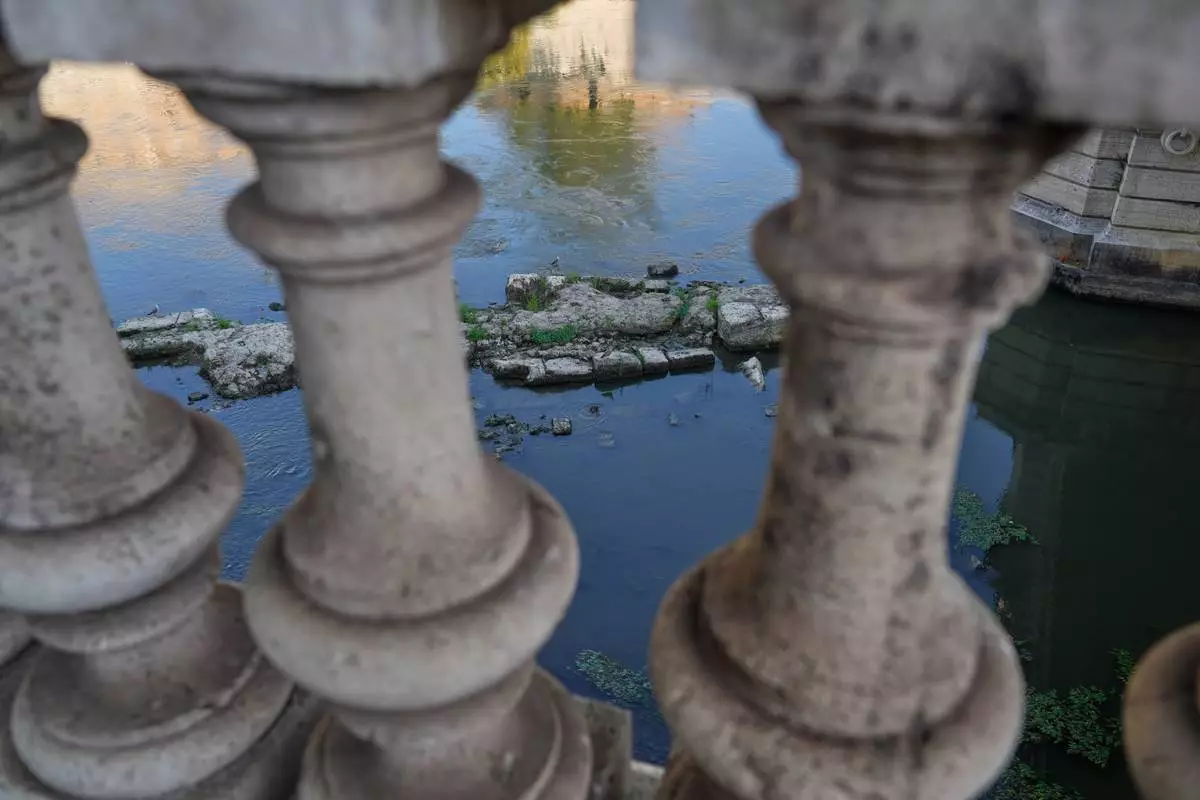
The ruins of the ancient Roman Neronian bridge, emerge from the riverbed of the Tiber river due to drought, in Rome, Thursday, Aug. 13, 2026. (AP Photo/Gregorio Borgia)
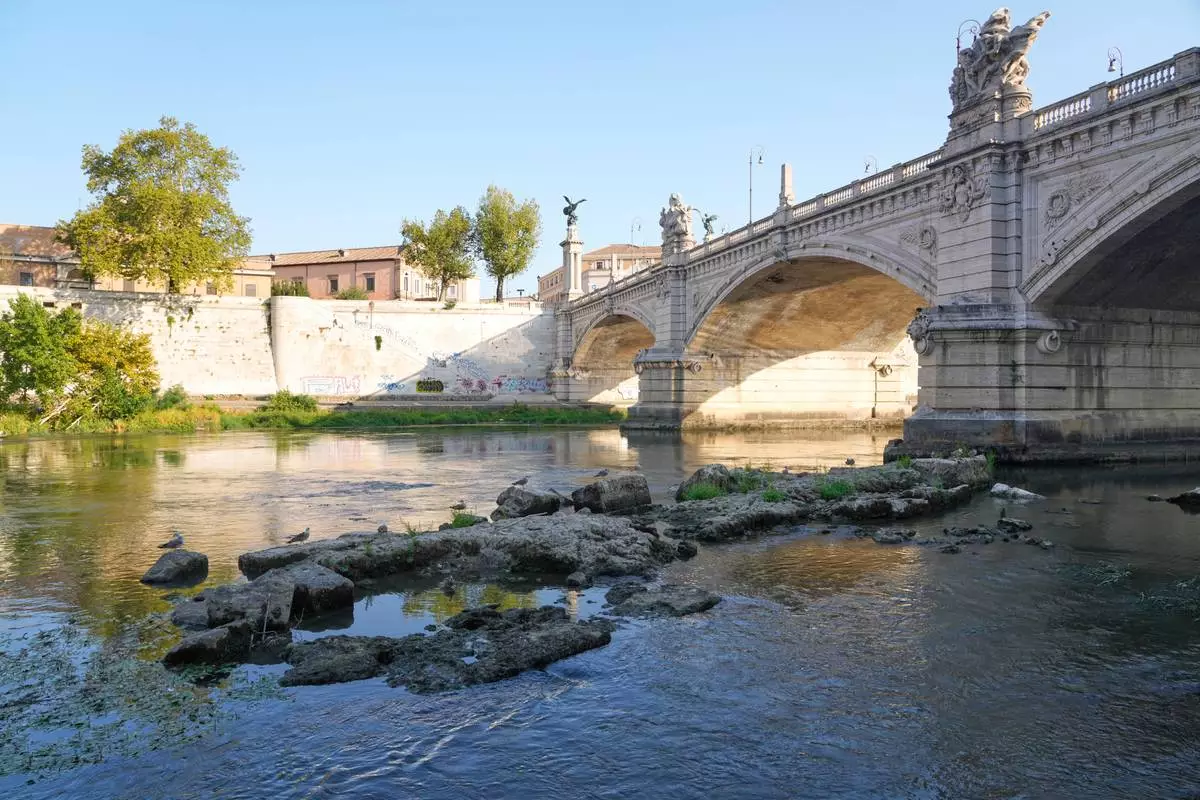
The ruins of the ancient Roman Neronian bridge, emerge from the riverbed of the Tiber river due to drought, in Rome, Thursday, Aug. 13, 2026. (AP Photo/Gregorio Borgia)
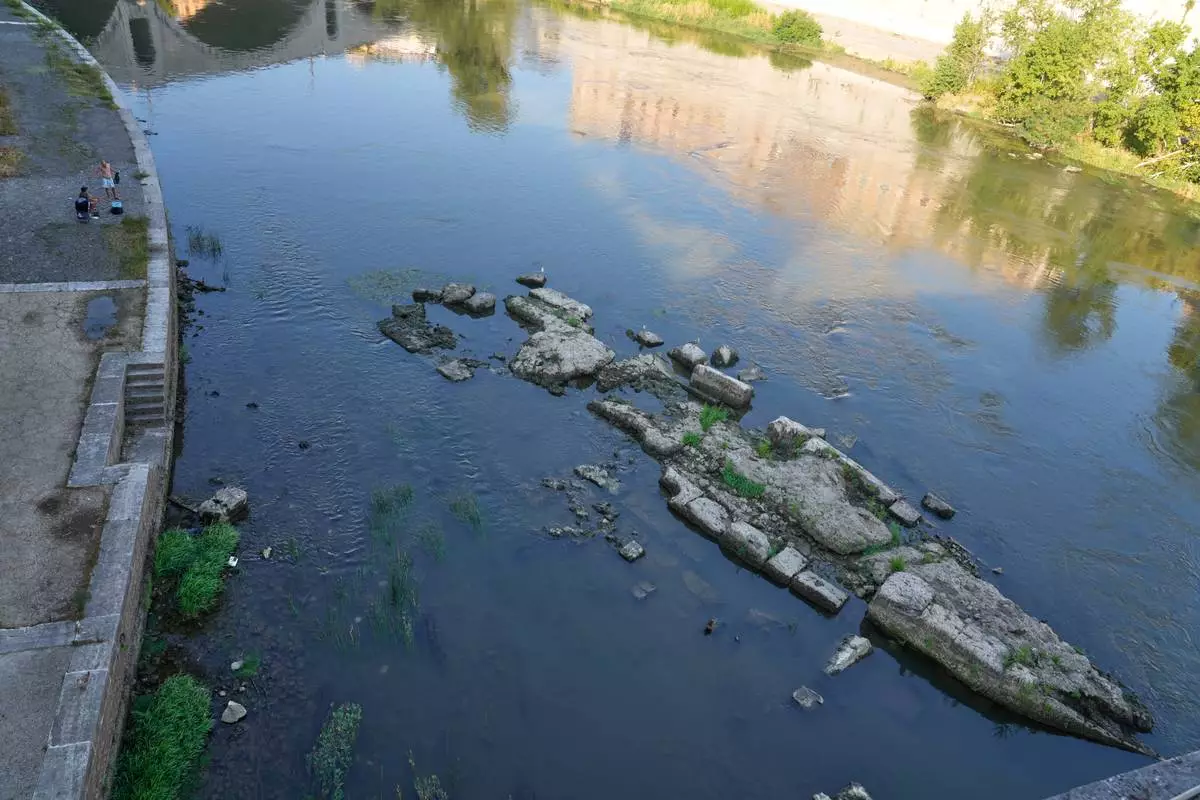
The ruins of the ancient Roman Neronian bridge, emerge from the riverbed of the Tiber river due to drought, in Rome, Thursday, Aug. 13, 2026. (AP Photo/Gregorio Borgia)
BEIRUT (AP) — A British company said Thursday it has been hired to salvage a grounded Russian shadow fleet tanker off Oman's coast and stop an oil spill that is threatening wildlife as it reaches the country's shoreline following its dramatic spread in recent weeks.
Satellite images have shown that oil from the tanker Caroline Bezengi has exponentially spread over hundreds of square kilometers during stormy weather, endangering a marine protected area. The region's “Khareef” monsoon season peaks in July and August.
Ambrey, a UK-based maritime risk and response company, said its personnel boarded the vessel with help from the Omani air force to assess its condition before stabilizing it.
The vessel has been grounded off Qabiliyah Island in southwestern Oman following an explosion of unclear cause in early June. Its cargo previously has been estimated at more than 800,000 barrels.
Satellite images also have shown that the tanker is increasingly submerged, and experts have warned of an unprecedented environmental disaster if the vessel sinks or breaks open and leaks its entire cargo.
“This is an extremely challenging situation, compounded by adverse weather conditions associated with the Khareef monsoon,” Ambrey's global response director Ed Wollaston said in a statement. The company did not immediately have any estimates of how long the salvage operation would take or cost.
Oman’s Environment Authority said Wednesday the oil spill has reached the shores of Ras Madrakah, more than 200 kilometers (more than 120 miles) north of Qabiliyah Island. Authorities said they estimated the spill could reach more than 100 kilometers further north, to Masirah Island.
Hanen Keskes, a campaigner for the environmental group Greenpeace, said it is “extremely concerning” that the oil has spread from an offshore spill to the shoreline where it can contaminate coastal sediments.
"It can make the cleanup significantly more complex than containment at sea,” she said. “Even after the slick has been contained and removed, the environmental impact can last for years."
The marine protected area of Qabiliyah Island includes coral reefs, seagrass meadows and endangered turtles, and offers breeding sites for migratory birds. The area is also home to the rare Arabian Sea humpback whale.
The remote area lacks infrastructure, making the salvage and containment more challenging and requiring more safety measures, Keskes said.
The 247-meter (899-foot) Caroline Bezengi is believed to be part of Russia’s “shadow fleet” and has been sanctioned by the British government and the European Union for carrying cargoes of Russian oil.
It had left the Black Sea port of Novorossiysk, in Russia, in May, according to geospatial data tracking company SynMax Maritime. The vessel’s owners are believed to be Shanghai-based. The vessel is unflagged, and it is not clear if it is insured.
It is only one of the environmental crises affecting the region. Off the coast of Iran in the Strait of Hormuz, Iranian authorities are cleaning up an oil spill off of Qeshm Island that has been attributed to the conflict between Iran and the United States.
Images distributed by Iran’s semi-official news agency ISNA show oil damage to the sandy beaches of Qeshm. It is not immediately clear what caused the spill.
Iran has said it should receive compensation for its efforts to contain the damage. But maritime tracking firm TankerTrackers.com posted satellite images on X saying it appears the spill was caused by an Iranian attack on a bulk container ship off of Oman. The spill drifted across the strait to Iran.
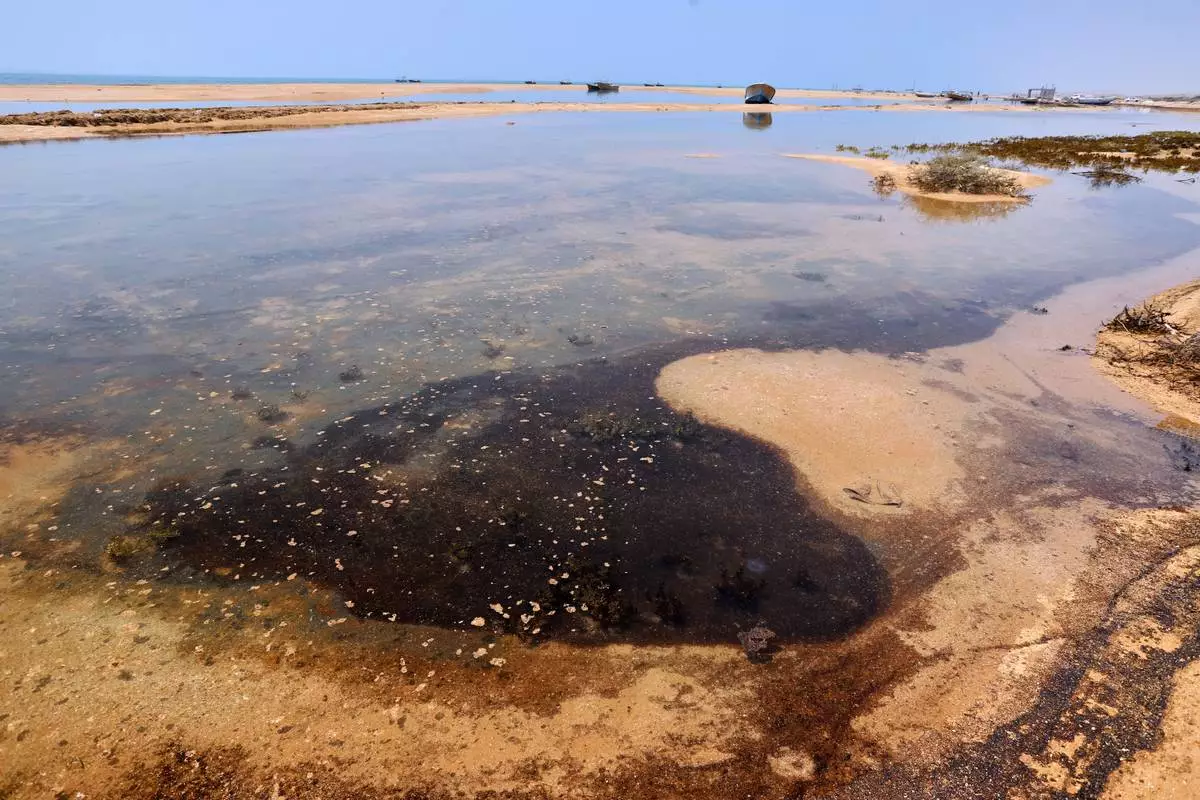
Dark oil residue collects in shallow coastal waters on Qeshm Island, Iran, Thursday, Aug. 13, 2026, amid ongoing wartime attacks on vessels and infrastructure in and around the Strait of Hormuz, though the spill's source has not been independently determined.(Amirhosein Khorgooi/ISNA via AP)