China's air logistics demonstrated strong resilience in the first half of 2026, with a notable growth rate despite a challenging international market, according to a recent report released by the China Federation of Logistics and Purchasing (CFLP).
In the first six months, China's air cargo and mail transport volume increased by six percent. International routes alone transported 2.32 million tons of cargo and mail, reflecting a strong year-on-year surge of 13.9 percent, significantly outpacing the industry average.
In the same period, Cross-border e-commerce remained a substantial driver of this growth, representing 60 to 70 percent of total cargo sources. However, growth in this area slowed due to tightening overseas policies. Conversely, high-end manufacturing sectors, particularly those related to AI hardware, emerged as new growth areas.
Meanwhile, data showed that exports of cloud computing equipment soared by 114.4 percent year on year, while semiconductor equipment exports rose by 91.5 percent. These developments propelled AI-related cargo transport volumes to increase by more than 130 percent, despite this category only comprising about seven percent of total air cargo volume. Notably, it contributed over 53.5 percent of the total air cargo value.
To accommodate the rising demand for high-value goods, China's air logistics sector expanded its capacity. A total of 92 new international air cargo routes were launched in the first half of the year, adding over 217 round-trip flights weekly and enhancing air trade connections between China and key global markets. Additionally, the cargo fleet was steadily growing, with major airlines accelerating deployments to bolster intercontinental long-haul capacity.
Experts said that, despite uncertainties in the global market, China's air logistics sector had shown remarkable robustness, transitioning smoothly from "scale expansion" to "structural optimization."
"On one hand, the ongoing enhancement of the international route network and the specialized upgrades of hub airports have solidified the industry's fundamentals. On the other hand, the significant rise in high-value-added goods, particularly in AI hardware, has successfully countered the operational cost pressures from increasing fuel prices, effectively reshaping the profitability framework of air freight," said Cui Zhongfu, chief economist of the CFLP.
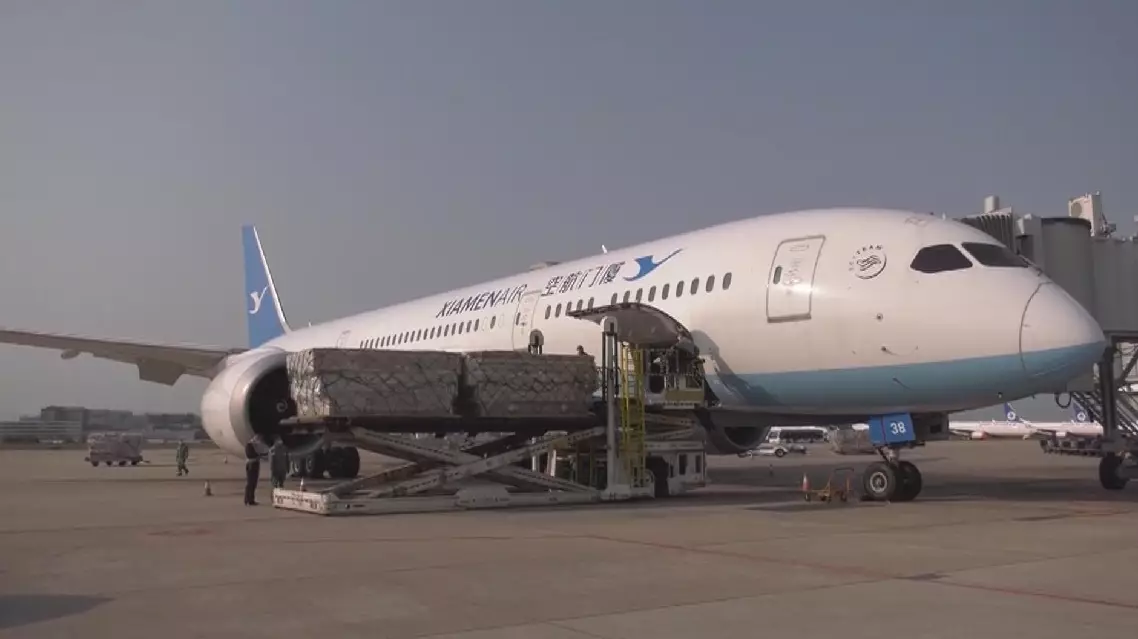
China's air transport volume up 6 percent in H1
China's air transport volume up 6 percent in H1
China's air transport volume up 6 percent in H1