Ukraine's civilian casualties rose to their highest monthly level since March 2022 in July, marking a new peak in this year's escalation of civilian harm, according to the UN Human Rights Monitoring Mission.
UN Associate Spokesperson Daniela Gross De Almeida said at a press briefing on Thursday that the mission's verified toll was likely to rise further as it continued to assess reported deaths and injuries.
"The UN Human Rights Monitoring Mission today said that more civilians were killed or injured in the country in July 2026 than in any month since March 2022, marking a new high in this year's escalation of civilian harm. The UN Human Rights Monitoring Mission verified that at least 437 civilians were killed and 2,610 injured in Ukraine in July, which is a 30 percent increase compared with the previous month and a 70 percent increase compared with July 2025. The actual figure is likely higher, as the Monitoring Mission continues to verify information," De Almeida said.
Long-range missiles and drones remained the leading cause of civilian casualties in July, accounting for 38 percent of the total, the mission said. Casualties from aerial bombardments rose 143 percent from June, while 17 children were killed and 166 injured, the highest monthly child-casualty toll since April 2022.
In the first seven months of 2026, the mission verified 12,477 civilian casualties in Ukraine, up 44 percent from the same period last year.

Ukraine civilian casualties climb to new high: UN
Critics have urged the Japanese government to face history squarely and shoulder the responsibility for the crimes of aggression on the occasion of the 81st anniversary of Japan's World War II surrender, which falls on Saturday this year.
They warn that the Japanese government's expanding military posture could push the country toward a new form of militarism.
Takakage Fujita, secretary-general of the Association for Inheriting and Propagating the Murayama Statement, said Japan has yet to properly address the harm caused by its wartime actions.
The civic group was formed to uphold the 1995 Murayama Statement, issued by then Prime Minister Tomiichi Murayama on the 50th anniversary of Japan's World War II surrender. The statement acknowledged Japan's colonial rule and aggression and expressed "deep remorse" and a "heartfelt apology" to its victims.
"During its war of aggression, Japan forcibly took large numbers of young Chinese and Koreans to this country to build dangerous projects like coal mines, bridges and dams, which led to massive deaths and casualties. But Japan owes them due apology and compensation to this day," Fujita said.
Fujita said the ruling Liberal Democratic Party has repeatedly sought to play down Japan's wartime criminal record, including in school education.
"At root, the LDP has consistently sought to cover up Japan's past wrongdoings, including forced labor and 'comfort women' issues, and the war of aggression itself. It has repeatedly tried to diminish these things in school education, and even remove them from textbooks. These subjects should be incorporated into textbooks again so Japan's younger generations could study history seriously. I believe that is our due responsibility," he said.
Akira Maeda, a law professor emeritus at Tokyo Zokei University, said successive Japanese governments have long evaded their responsibility for war crimes.
"To this day, Japan still has not truly shouldered its due responsibility. The government recognizes only the so-called 'moral responsibility' as it terms it, reducing it to an issue of monetary compensation in the hope that victims will accept it and leave it there. The real problem is that Japan has not acknowledged the truth even today, nor has it made a formal and unequivocal apology, or clarified the accountability. This remains the situation today," Maeda said.
Maeda associated these unresolved historical issues with what he described as a recent acceleration in Japan's defense and security policies under Prime Minister Sanae Takaichi.
"Although the policy of doubling defense spending as a share of GDP began under the Kishida administration, it is the Takaichi administration that has really put it into effect. There is also the push to develop the capability to strike enemy bases. The government calls this self-defense, but it is not. Takaichi is now advancing this agenda across the board. To sustain it, she is seeking to strengthen the legitimacy of state ideology and power by pushing to revise relevant laws, legislate anti-espionage law and tighten central control over national intelligence," he said.
Maeda also pointed to the cabinet's continued purchases of U.S. weapons and endeavor to strengthen Japan's domestic defense industry.
"While the Takaichi cabinet continues to buy U.S. weapons, it is also vigorously developing Japan's own military industry and enhancing the Self-Defense Forces' weaponry equipment buildup and military strength. They no longer try to conceal this policy but openly promote it. Japan is therefore becoming an increasingly militarized country step by step. I can only conclude that Japan is heading toward a new type of militarism. This is the Takaichi administration's fundamental problem," Maeda said.
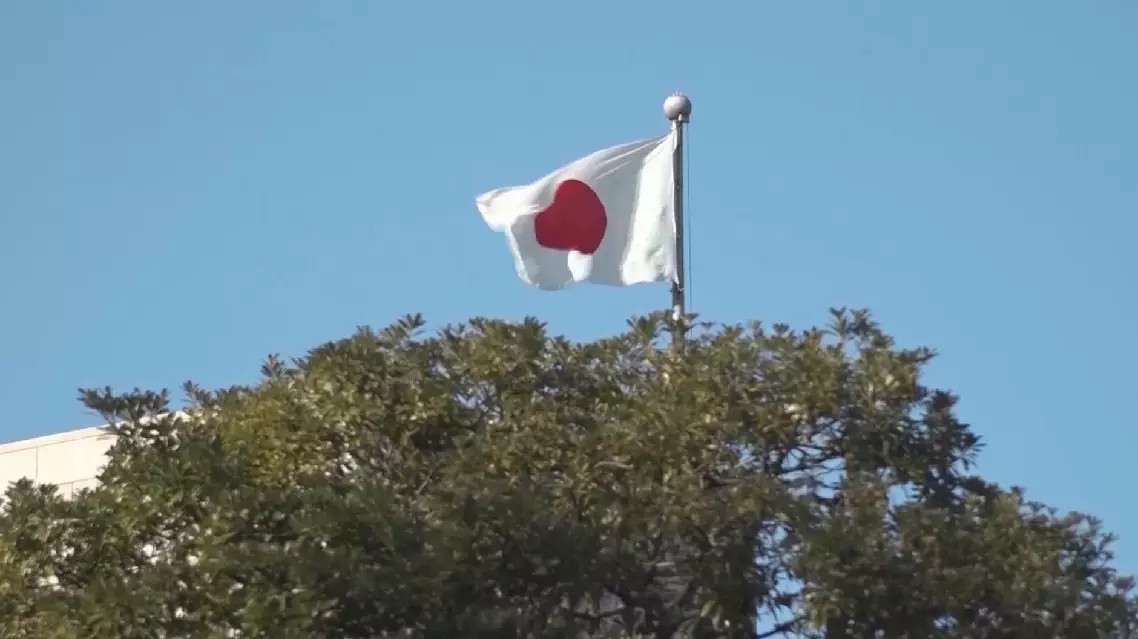
Japanese critics urge government to face history squarely