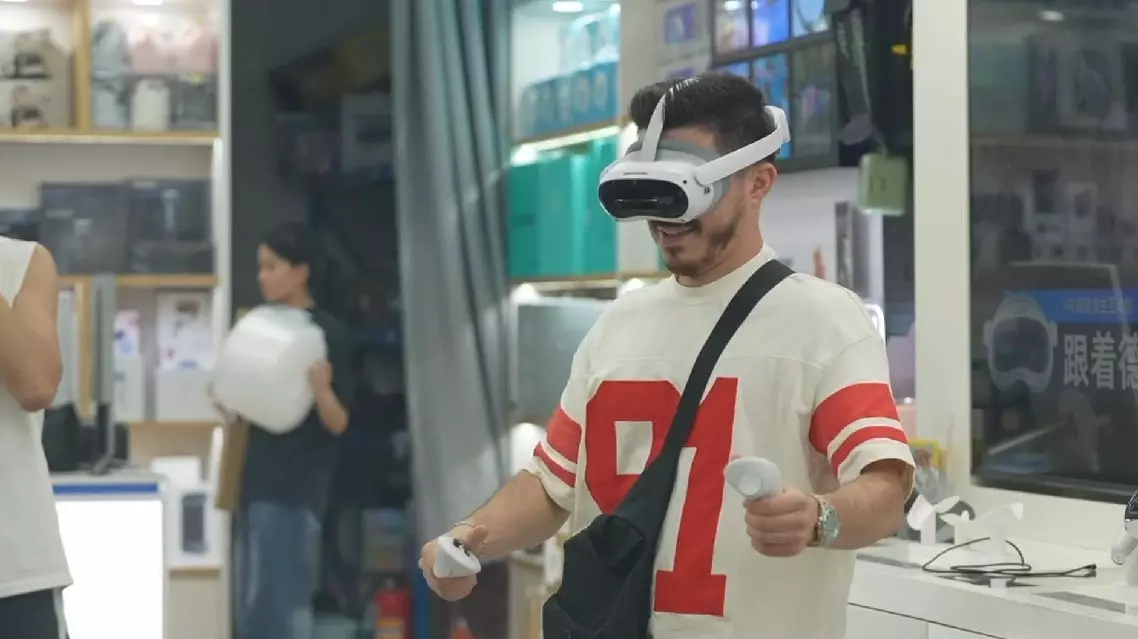
More overseas visitors are adding Shenzhen's Huaqiangbei electronics market to their itineraries as tech tourism is becoming China's newest inbound travel trend.
For a growing number of overseas visitors, one of Shenzhen's biggest attractions is Huaqiangbei. It's often described as the world's largest electronics marketplace, and it has become a destination where tourists, creators and small business owners come looking for China's latest consumer technologies.
"On TikTok, I browsed about interesting places to visit in Shenzhen, and it brought me here. AI plush. It's very new for me. I'm buying these to try," said Pallavi Koonjul, a visitor from Mauritius.
"To buy AI glasses, laptop and we want to watch rugby on a bigger TV because this TV is too small," said South African visitor Dylan Brummer.
And price is only part of the advantage of shopping at Huaqiangbei.
"I was surprised the price is more (better) than the Meta Ray-Bon's. Screen is better, translation is way better. When this gentleman was talking in Chinese, I could read exactly what he was saying. It was pretty cool," said Brummer.
For entrepreneurs and small businesses, Huaqiangbei is more than a marketplace. Within less than 1.5 square kilometers, manufacturers, component suppliers, software developers and distributors work side by side. That allows ideas to move from concept to prototype and from prototype to market in a matter of days.
"It's really quick for you to develop a product here. If you need a sample made, or go to a company that matches hardware with software, they might even work overnight to get this done for you, as long as you have the volume and the demand," said Zhang Guoping, founder and CEO of Shenzhen CHUPAD Electronic Technology Co., Ltd.
Zhang's company was among the first to launch dual-screen AI translators. Working closely with nearby software developers and hardware suppliers, his team continuously updates the product based on feedback from overseas customers, adding new features as market demand evolves.
Speed has helped Huaqiangbei become one of China's most internationally connected business districts. On average, nearly 8,000 overseas buyers from more than 180 countries and regions visit the market every day to source products or explore business opportunities.
"Design in the morning, prototype in the afternoon, mass production the next day and global shipment within a week. Such speed of Huaqiangbei is indeed representative of the Shenzhen Speed. This is because Huaqiangbei boasts a complete electronic information industry chain accumulated over 40 years, as well as advanced manufacturing and service sectors. The integration and synergy of these two driving forces have made such a remarkable achievement possible," said Xu Jiyue, deputy director of the Party and administrative office of Huaqiangbei Subdistrict.
As Shenzhen prepares to host this year's APEC meetings, Huaqiangbei is upgrading multilingual services, digital payment options and visitor facilities to better serve international guests.
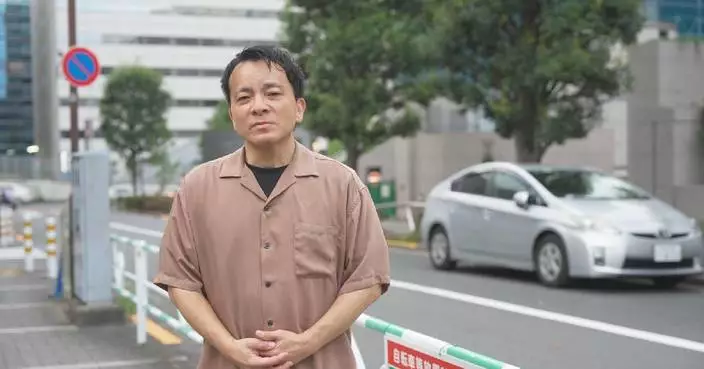
Technology becomes new tourist attraction in Shenzhen
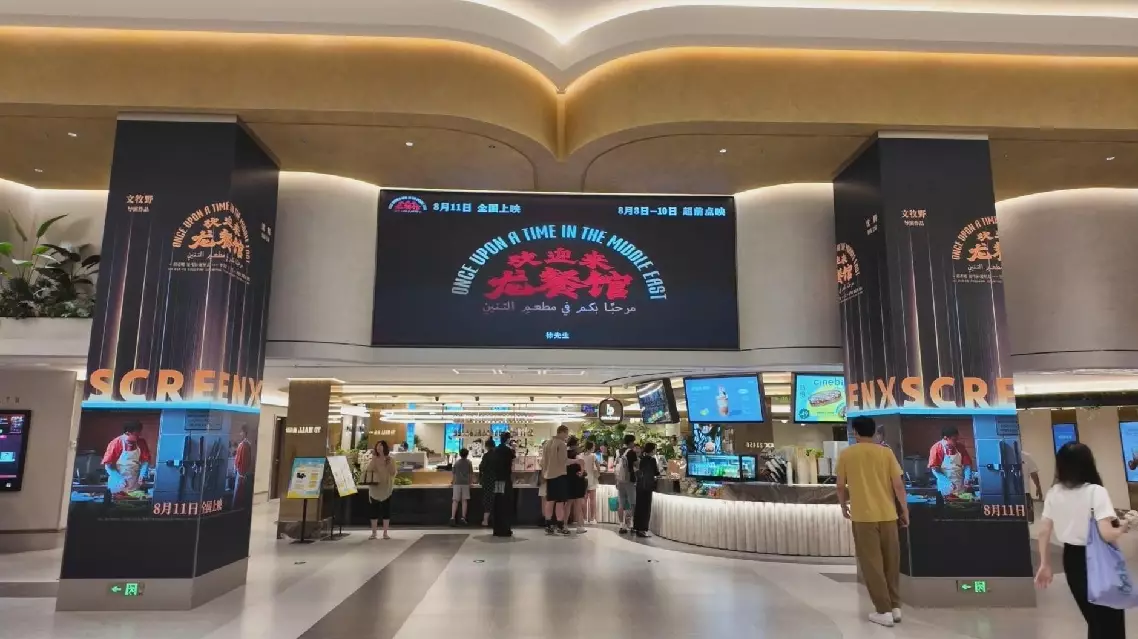
Breaking long-standing Western heroic narrative conventions in filmmaking, the trending Chinese anti-war film "Once Upon a Time in the Middle East", is reshaping global cinematic discourse on war and peace.
The summer blockbuster was released on Tuesday nationwide and had earned box office revenue of more than 536 million yuan (around 79.5 million U.S. dollars) as of 22:00 Friday.
The story centers on Xu Fu, a down-on-his-luck Chinese chef portrayed by celebrated comedian Shen Teng, who travels to the Middle East to settle his debts. There, he joins forces with a local restaurant manager to operate a bustling restaurant, bringing authentic Chinese culinary traditions to a war-torn foreign land.
As a distinct Chinese anti-war feature, "Once Upon a Time in the Middle East" abandons timeworn Western heroic storytelling. The film adopts the humble viewpoint of Xu Fu, an ordinary cook. Through his eyes as a neutral bystander, it portrays the struggles and sufferings of ordinary people trapped in conflict and uses food and everyday life to explore survival, compassion and the value of peace, rather than focusing on the battlefield.
Such a narrative perspective is quite pioneering among global anti-war film productions.
"It realistically reflects the turmoil of war. Therefore, we desire peace and oppose the suffering that wars of aggression inflict upon the people," a moviegoer praised.
Meanwhile, the blockbuster has garnered massive overseas anticipation prior to its international debut. Many global film enthusiasts agree that the production epitomizes a transformative shift in Chinese film industry, which is overhauling Hollywood's established narrative paradigms and reinterpreting the global narrative of war and peace at a higher level.
"Just imagine how this story would unfold if Hollywood were to film it. It would almost certainly follow the standard formula of superheroes, super-soldiers, or elite operatives swooping in, resolving the crisis in a flash, and then disappearing. What does the 'Once Upon a Time in the Middle East' offer? The idea that the best days are those spent sharing a meal together. Conversely, what drives people to fight instead of dining together? Anyone who has seen the film knows the answer. That is why some netizens have said that if this movie were to compete for a U.S. Oscar award, it would be a voice representing the Global South," said Zuo Heng, a researcher at the China Film Archive.
Many scholars also hold the view that war narratives on international screens have long revolved around contests of victory and military conquest, but "Once Upon a Time in the Middle East" does not stoke hatred nor glorify victory by force. Instead, it hides the key to peace amid the mundane routines of daily meals.
This vision of peace, rooted in the moderation and inclusiveness of Chinese civilization, blazes a new trail of expression for global anti-war films.
It constitutes an innovation in film creation and enables the world to see perceptions of peace different from those of the West.
"The film delivers an anti-war perspective that diverges from the Hollywood paradigm. It abandons Hollywood-style individualism, and quietly challenges the 'America First' mindset. 'Once Upon a Time in the Middle East' keeps exploring innovative approaches to shape contemporary Chinese discourse and narrative systems," said Sun Jiashan, a researcher with the Department of Chinese Culture Education and Research under the Central Institute of Socialism.
Chinese anti-war film offers new cinematic narrative on war and peace