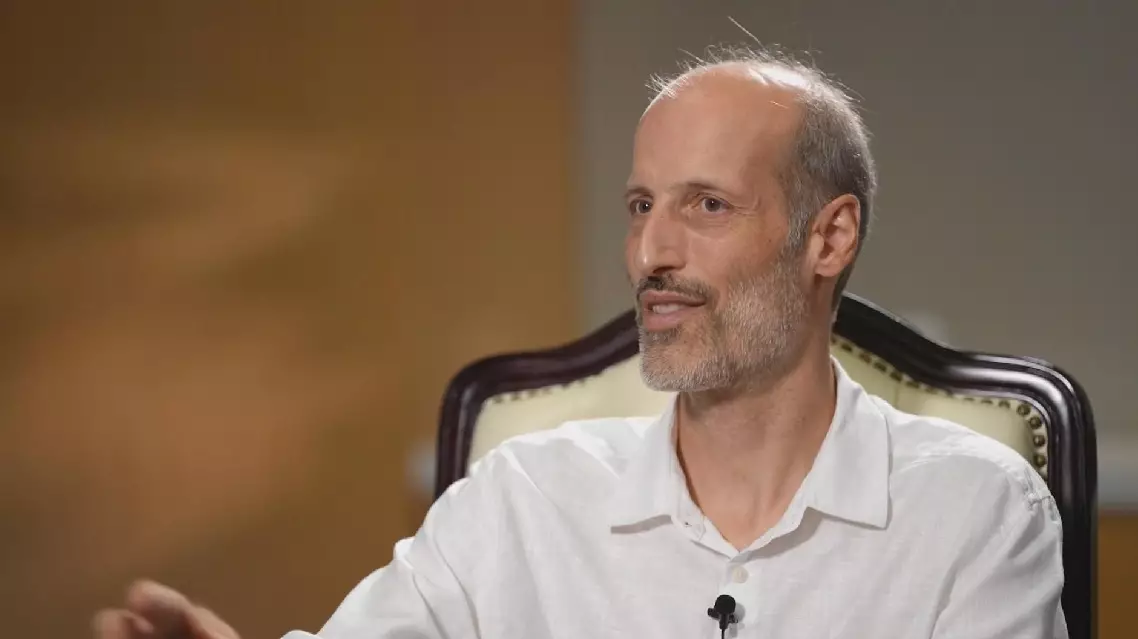
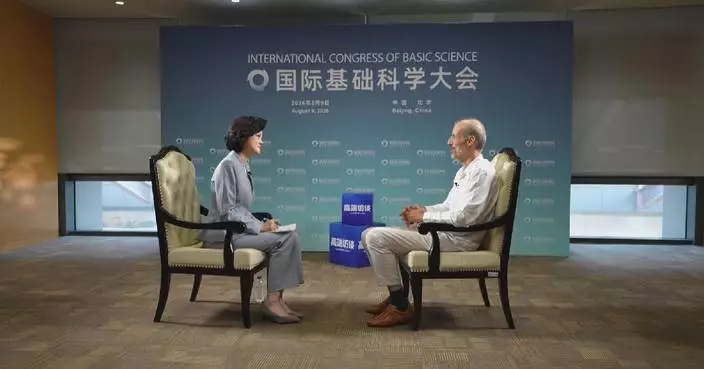
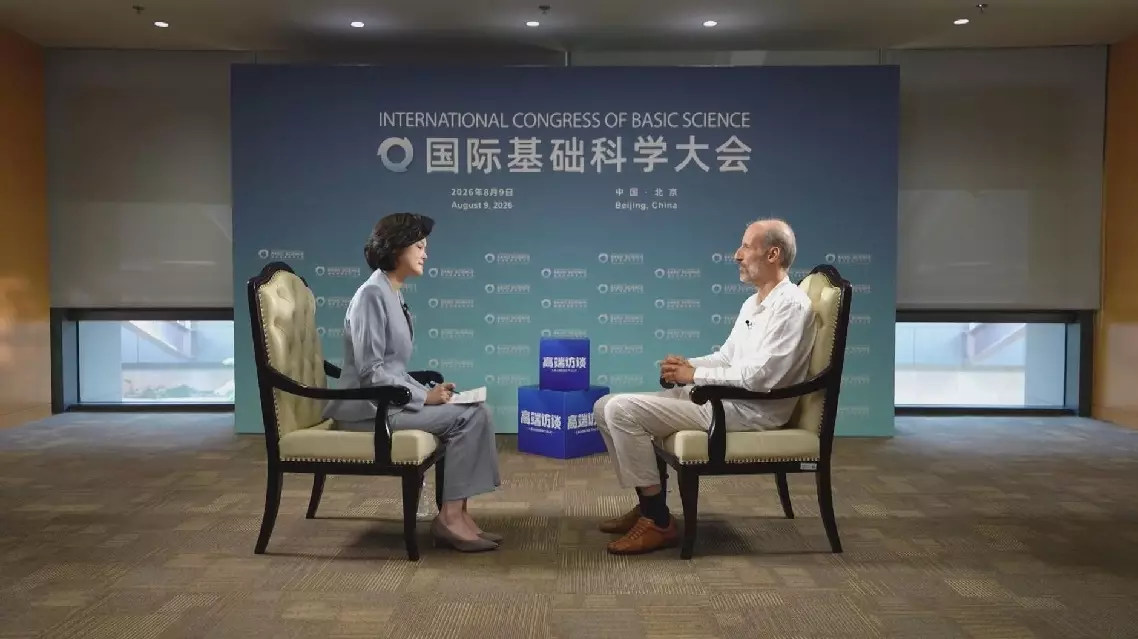
Artificial intelligence (AI) will not kill mathematics, but will reshape mathematical research, said Fields Medalist Martin Hairer.
As an international member of the Chinese Academy of Sciences, Hairer has long been cooperating with the academic community in China, during which he has witnessed China's scientific and technological development over the years.
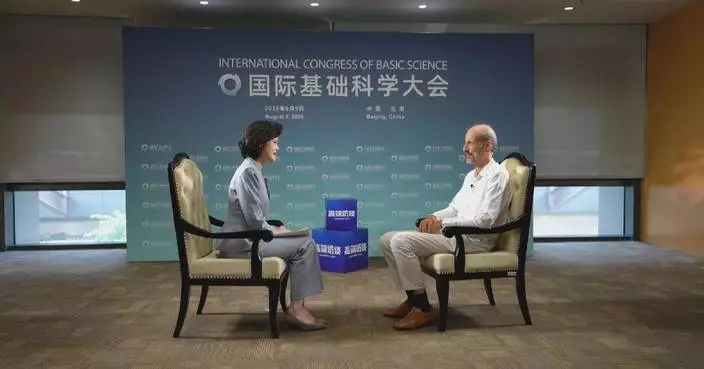
Hairer is in Beijing to attend the 13-day 2026 International Congress of Basic Science which opened on Sunday to showcase advances in mathematics, physics, information science, engineering, and other fields of basic science.
The mathematical abilities of AI have advanced tremendously, he said in a recent exclusive interview with the China Media Group (CMG).
"So in recent years we've seen like enormous advances in AI, and in particular also mathematical abilities of AI. Two years ago, AI systems were barely able to recover extremely basic mathematical results. Nowadays they're able to do kind of PhD level mathematics. So they're able to be useful actually in mathematical research, so it's becoming a very useful tool and it's clear that there are some problems or some kinds of mathematical problems that AI is very good at, and that then as a consequence will be considered uninteresting in a way by mathematicians, so in some sense by definition what is interesting for mathematicians is the things that you cannot do automatically," said Hairer.
Hairer further explained that the tasks that cannot be automated are those that have not been proven, or involve mathematical structures that have not even been discovered.
"Haven' t been proven or really even maybe involve some mathematical structure that we haven't even discovered yet or that we haven't found yet, and at least at the moment, one doesn't see that much evidence of AI really being creative in that sense, but it is creative in other sense, so it seems extremely good at taking several existing mathematical results and putting them together to get new results, if you prompt them in the right way and you guide them in the right way. So it's definitely an extremely useful tool for mathematics, and to some extent it can do some of the technicalities of mathematics very well," said the Fields medalist.
"So I think it's going to change mathematics, and it's going to move in different directions, and it's going to make some things much faster, maybe it's going to kill off some areas of mathematics because they're going to be considered uninteresting. But I don't think it's going to somehow kill mathematics, it's just going to change us and going to make us move in different directions and maybe allow us to go faster," he said.
Another Fields medalist Jacob Tsimerman argues that the mathematical capabilities of AI will completely surpass those of human mathematicians within a couple of years. However, Hairer holds a different view.
"I believe it's very good at certain things, and it's very strong technically and so yes, it might be able to come up with some arguments by putting things together in a very technical way that basically no mathematician could do, and so in that sense, yes, it would be stronger than any mathematician but that doesn't mean that it can do everything better than any mathematician," said Hairer.
AI not to kill mathematics, but to change mathematical research: Fields medalist