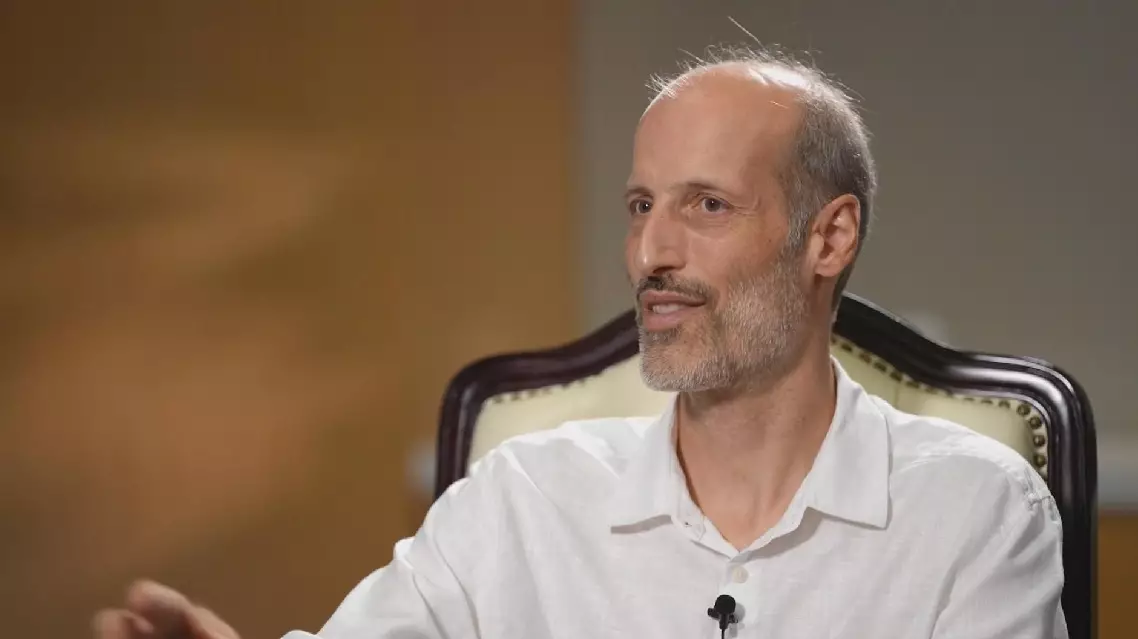
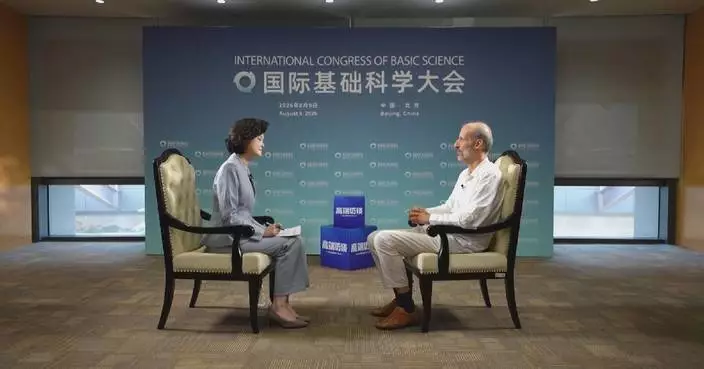
Fields Medalist Martin Hairer highlighted mathematics as a timeless foundation and shared language across disciplines, stressing its role in expressing universal truths, in an interview with China Media Group (CMG).
Hairer shared these insights on the sidelines of the 2026 International Congress of Basic Science, underway in Beijing from August 9 to 21.
Beyond its eternal truths, he stressed, mathematics provides a common framework that allows scientists across disciplines to interpret, connect, and build upon one another’s work.
"I think one significance of especially mathematics is that you really try to find universal truths, right? So there are things that really remain true forever, which is very rare nowadays, right? And so that provides you with a really, really solid foundation, like the fact that the square root of two is irrational was discovered thousands of years ago. And it is still true nowadays. So, it gives you really a basic solid foundation and gives you a language, in which we can then express and understand science and sort of build on that," said Hairer.
He further noted that the development of mathematics is driven by curiosity --- a force that has brought humanity to where it is today, even though some mathematical discoveries have yet to find direct applications.
"I guess one thing which is important to notice is maybe many areas of mathematics don't have like immediate utility or immediate applications. One reason why we do it is mostly curiosities. Humanity got where it is by having a thirst for knowledge, right? We basically just want to know. We have this curiosity," he said.
The Fields Medal, often described as the "Nobel Prize of Mathematics," is awarded every four years to up to four mathematicians under 40 for outstanding achievements.
Hairer, a professor at the EPFL (École Polytechnique Fédérale de Lausanne) and Imperial College London, won the Fields Medal in 2014 for his contributions to the theory of stochastic partial differential equations, particularly for developing a theory of regularity structures for such equations.
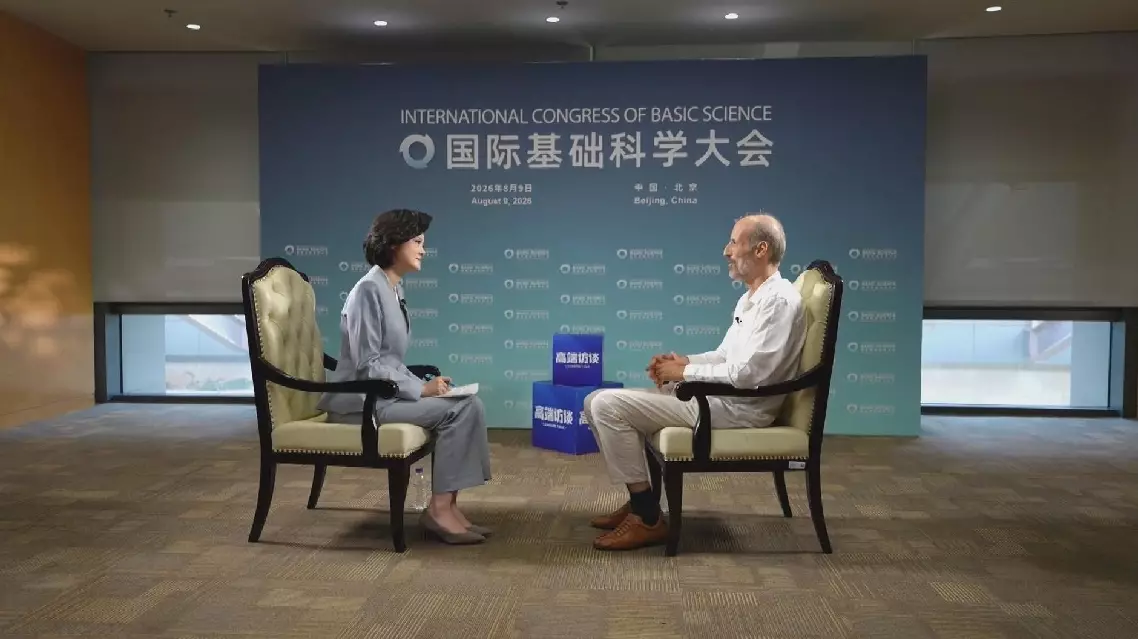
Fields medalist highlights mathematics as foundation for all sciences