Serbia-China cooperation under the Belt and Road Initiative (BRI) has significantly improved regional connectivity for the landlocked central European country and boosted its development over the past decade, a leading Serbian expert on the BRI said Monday.
The Belt and Road Initiative, proposed by Chinese President Xi Jinping in 2013, refers to building a Silk Road Economic Belt and the 21st Century Maritime Silk Road. It is aimed at building a trade and infrastructure network connecting Asia with Europe and Africa along ancient trade routes.
Bojan Lalic, director of the Belt and Road Institute in Belgrade, commented on the transformative impact of China-Serbia BRI cooperation in an interview with China Global Television Network (CGTN) on the day that marks the 10th anniversary of President Xi's major speech delivered at a symposium on BRI in Beijing.
Lalic said Serbia stands as a prime example of the BRI's global reach, highlighting the Belgrade-Budapest high-speed railway, a flagship BRI infrastructure project jointly built by China, Serbia, and Hungary, among others.
"We used to say that Serbia is the best showcase of the Belt and Road Initiative in the world because most of the activities that were mentioned in the Belt and Road Initiative in the first decade were deployed in Serbia, like, we developed the high-speed railway from Belgrade to Budapest. We constructed highways, we constructed tunnels, several bridges. We reconstructed our terminals at our post office because of e-commerce. So, that's why I think the Belt and Road Initiative as the framework for development left a very, very big mark on Serbia's development (over the) last decade," he said.
Considered a key corridor for regional connectivity, the 350-km Belgrade-Budapest rail link is designed to run at 200 km per hour on the Serbian side and 160 km per hour on the Hungarian side. It will slash travel time between the two capitals from eight hours to about three once entering full operations.
Looking beyond major infrastructure projects, Lalic pointed to strengthening business cooperation that are bringing tangible benefits to both China and Serbia, citing examples where his institute has played a key role in bringing these partnerships to fruition.
"I will give you two case studies. One case study is we've signed a contract between Belt and Road Institute [in Belgrade] and the Shandong High-Speed Company. Shandong High-Speed Company has 165 gas stations in Shandong Province, so with the one contract we covered 165 places where Serbian products can be sold [in China]. And the second thing is we negotiated an option and now we have Serbian truffles at the Xiamen Airlines on the plane. Again, one contract, hundreds of thousands or millions of passengers using products from Serbia. That's how we are trying to connect the companies between Serbia and China and to bring value to them," he said.
According to the institute director, the next frontier for China-Serbia BRI cooperation is educational and cultural exchange, which both President Xi and his Serbian counterpart Aleksandar Vucic have agreed in their talks during Vucic's state visit to China in late May.
"I will now speak about the newest initiative we are undertaking because we would like, extremely, to have more our students and more our professors in China. And also, we would like to have more professors and students from China to visit Serbia. Because we really think that when you want to do a research about Belt and Road, you must come to the field, to the place where Belt and Road is actually happening. So this is something that is most important to connect people," he said.
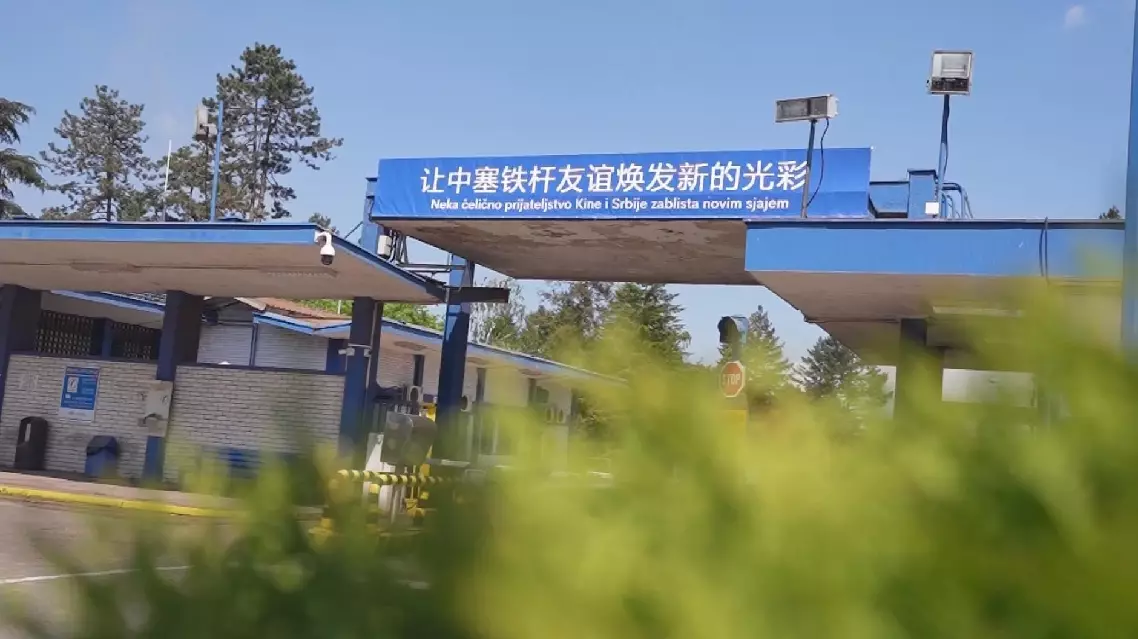
BRI cooperation with China has left 'big mark' on Serbia's development: expert