Skip to Content Facebook Feature Image

San Diego County will stop letting federal immigration agents train at local firing ranges

News

San Diego County will stop letting federal immigration agents train at local firing ranges
News

News

San Diego County will stop letting federal immigration agents train at local firing ranges

2026-08-19 07:40 Last Updated At:07:50

A Southern California county will stop letting federal immigration authorities train at a local firing range over concerns about the Trump administration's violent crackdown on immigrants.

San Diego County supervisors voted 3-2 on Tuesday to end contracts with Immigration and Customs Enforcement and Customs and Border Protection to train at a county-owned facility near the Mexican border and a Navy facility leased by the county. The agencies that conduct immigration enforcement and run customs and immigration checks on the busy U.S.-Mexico border have had contracts for years to train at the facilities.

“Federal immigration agents have harmed our communities many different ways here locally and throughout the nation,” said Monica Montgomery Steppe, one of the supervisors who voted to end the contracts. “We just don’t want to be complicit in that.”

Kelly Martinez, San Diego County's elected sheriff, said after the vote that she told ICE it no longer has access to county facilities, saying she arrived at the decision “after months of conversations and hearing community concerns surrounding the actions of ICE agents during armed confrontations in other parts of the country.”

But Martinez said CBP could continue using a county facility, setting up a showdown with the supervisors, who are also elected. The sheriff made a lengthy defense of CBP's work combating border crime and facilitating trade and travel.

“Too many people on both sides of the border would be harmed by a decision to end CBP’s use of the facility,” Martinez said. “As Sheriff, I have a duty to protect and serve everyone who lives in or enters San Diego County.”

The supervisors' vote came after residents clamored for the county of more than 3 million people on the U.S.-Mexico border to end the contracts. They said it would be a way to stop helping the Trump administration’s mass deportation campaign that has split up families and led to deadly clashes between federal agents and residents in communities from Minnesota to Maine.

Other communities including the nearby city of Escondido and others in New York and Minnesota also have debated whether to let immigration agents use their firing ranges, but opted to keep contracts intact.

Jim Desmond, a San Diego County supervisor who voted against the move, said law enforcement agencies should be working and training together and making agents travel farther to get training doesn’t accomplish anything.

“ICE has overreached and overstepped, but how do you fix that? You fix it with more training,” he said.

Rodney Scott, who heads Customs and Border Protection, said the agency relies on the county’s firing range to train 1,700 officers. Without it, he said, he’d send them elsewhere for mandatory firearms training, which will reduce local staffing and affect trade and travel across the U.S.-Mexico border.

“It is unprecedented for a local partner, such as the San Diego County Board of Supervisors, to knowingly undermine border security and put our communities at risk,” Scott said in a statement.

ICE did not return requests for comment.

In San Diego, CBP has had an agreement to use the county’s training center since 2017 and ICE has had one since 2021. Federal agents have logged more than 3,300 training hours at the center since 2024, according to a letter from supervisors who proposed ending the contracts.

ICE also has had an agreement since 2022 to use a Navy-owned firing range that the county leases on Marine Corps Air Station Miramar, the letter said.

San Diego officials who voted to end the contracts said they want to keep the trust of the region's immigrant communities and have worked hard to distinguish local police from federal immigration agents. Advocates said the Trump administration has tasked other federal agencies to help carry out immigration enforcement and with authorities wearing masks and street clothing, it is challenging to know which agency they work for.

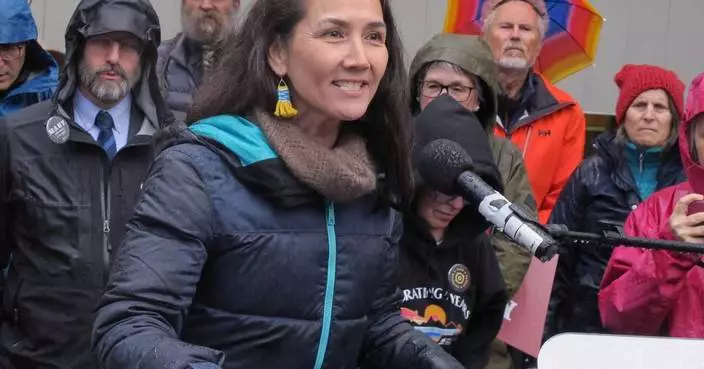
“Our community is a home, not a target,” Terra Lawson-Remer, the board's chair, said this week. She was one of two supervisors who proposed ending the contracts. “If the Trump administration wants to spend billions on this law and deportation agenda, they can use their own federal resources to carry it out.”
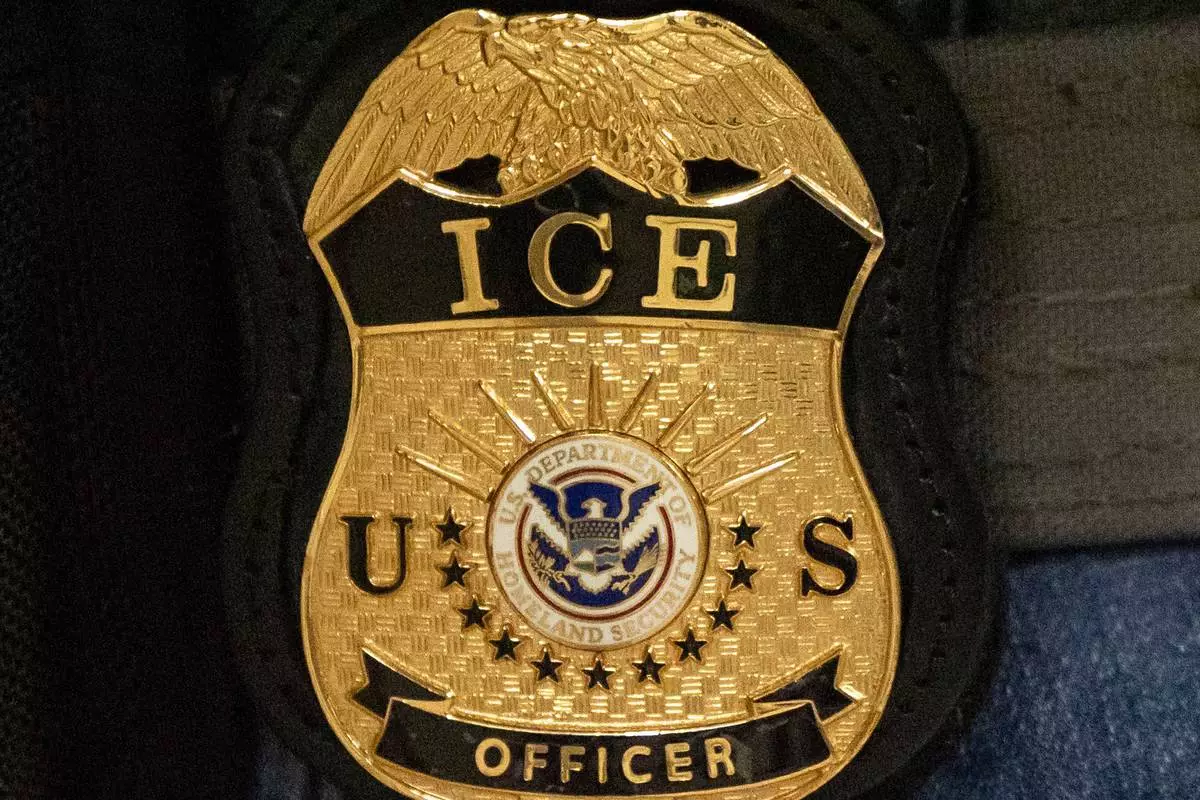
FILE - A federal agent wears an Immigration and Customs Enforcement badge in New York, June 10, 2025. (AP Photo/Yuki Iwamura, File)

FILE - A federal agent wears an Immigration and Customs Enforcement badge in New York, June 10, 2025. (AP Photo/Yuki Iwamura, File)
STARKE, Fla. (AP) — A Florida man convicted of fatally shooting his estranged wife and wounding his mother-in-law was executed Tuesday, continuing the state’s aggressive use of the death penalty in Republican Gov. Ron DeSantis ′ final term.

William Frances Silvia, 61, was pronounced dead at 6:11 p.m. after receiving a three-drug injection at Florida State Prison near Starke.

Silvia was already strapped to a gurney with an IV in his arm when the curtain to the death chamber went up at 6 p.m. He remained relatively motionless with his eyes and mouth open throughout most of the execution, and a priest sat at his feet and prayed.

Asked if he had any final words, Silvia said, "I’m sorry all this happened. It was an accident. I never meant to hurt her."

A warden shook him and shouted his name several minutes after the lethal drugs began flowing but got no response. A medic declared him dead a short time later.

Silvia is the 13th prisoner put to death this year in Florida, which has two more executions scheduled in September. The state has carried out more than half of the nation’s 23 executions so far in 2026.

Silvia was sentenced to death after being convicted of first-degree murder and attempted first-degree murder for the deadly 2006 attack on Patricia Silvia, along with her mother, Betty Woodard.

According to court records, William Frances Silvia purchased a shotgun that year and then went to Woodard’s Orlando-area home, where his wife had been living since their separation two months earlier. The family was in the middle of a cookout when Silvia arrived, and after an unsuccessful attempt to reconcile, authorities said Silvia retrieved the shotgun from his truck and shot the two women.

Pamela Wyatt, Patricia Silvia’s sister, said William Frances Silvia’s actions not only took her sister's life but changed the lives of everyone who loved her.

“Nothing that happens today can give us those stolen years. No execution can return Patricia to her children and give her the grandchildren she dreamed of knowing,” Wyatt said after the execution. “But today can be an opportunity to remember that Patricia’s life was bigger than the terrible act that ended it.”

Silvia was first sentenced to death following his 2008 trial. He was briefly granted a new penalty phase, but the Florida Supreme Court reinstated the death penalty in 2018 because Silvia had previously waived his post-conviction appeals.

A Florida state agency, the Capital Collateral Regional Counsel, provides legal representation to death row inmates. Silvia’s attorneys have argued that the agency couldn’t provide adequate legal assistance because it was already helping another death row inmate. The Florida Supreme Court rejected the appeal.

A total of 47 people were executed in the U.S. in 2025. Florida led the way with 19, a record in the state since the death penalty was reinstated in 1976.

In July, Florida executed two prisoners in one day, the first state in nearly a decade to do so.

Two more executions are planned in Florida next month. Harold Gene Lucas, 74, is scheduled to die on Sept. 1, followed by Daniel Owen Conahan Jr., 72, on Sept. 10.

Lucas was convicted of fatally shooting a 16-year-old girl who rejected his romantic advances and wounding two of her friends.

Conahan was convicted of kidnapping and strangling a man that he had paid to pose for nude photos, and authorities suspect him of similar homicides committed in the 1990s in southwest Florida.

All Florida executions are carried out via lethal injection of a sedative, a paralytic and a drug that stops the heart, according to the Department of Corrections.

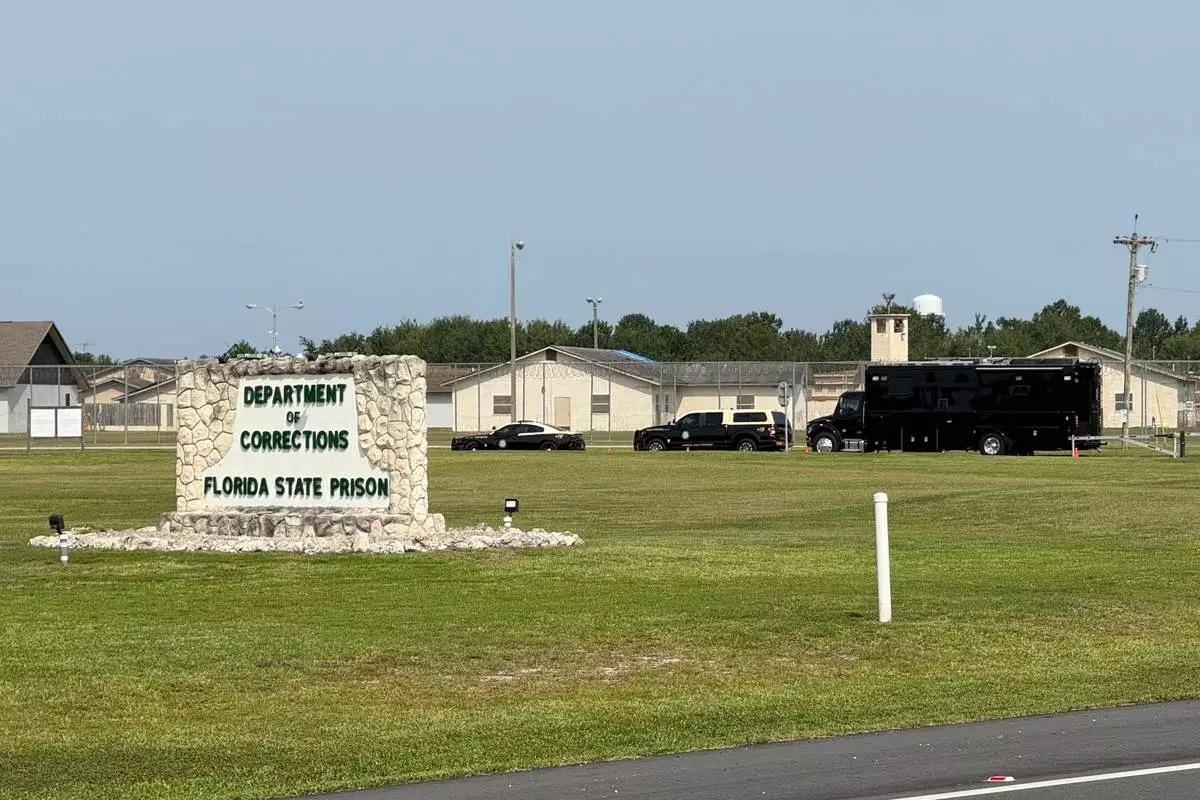
FILE - Law enforcement vehicles sit parked outside the Florida state prison in Starke, Fla., on Tuesday, July 28, 2026. (AP Photo/David Fischer, file)

FILE - Law enforcement vehicles sit parked outside the Florida state prison in Starke, Fla., on Tuesday, July 28, 2026. (AP Photo/David Fischer, file)

Recommended Articles