Journalists in Belt and Road Initiative (BRI) partner countries, who have seen first hand how the China-proposed initiative has powered development over the past decade, shared their hopes for the future of the initiative in recent interviews with China Global Television Network (CGTN).
Monday marks the 10th anniversary of the first Symposium on Advancing the Development of the Belt and Road Initiative held in China. Over the past decade, four successive national-level symposiums have established phased strategic priorities, guiding the BRI from an ambitious vision into a mature, institution-based framework for global cooperation.
Two journalists, from Pakistan and Sierra Leone, discussed the challenges facing their countries and the role the BRI can play in shaping a more sustainable future.
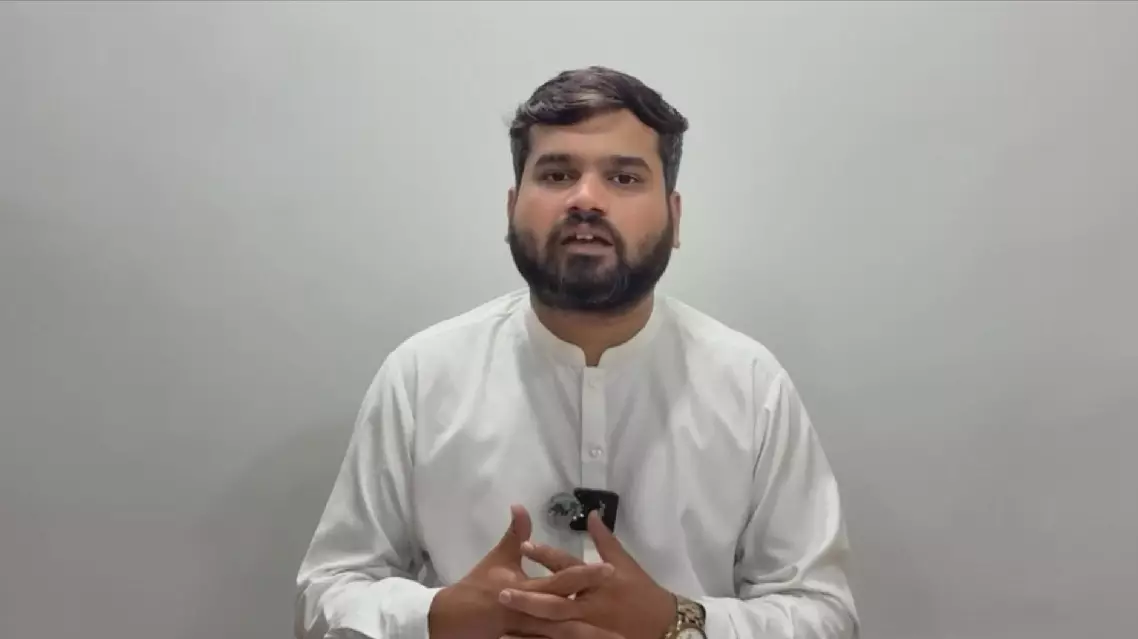
"Pakistan and China have remained strategic and economic partners for decades and Pakistan's geo-strategic position makes it a very significant player under the BRI. Pakistan and China have cooperated a lot in multiple sectors under the CPEC (China-Pakistan Economic Corridor). But in the current phase, just like other countries in the global South, Pakistan is also facing severe challenges. The environmental challenge remains the most prevalent one -- glacial outbursts, erratic monsoon patterns, rising food insecurity, floods, droughts. All of these challenges are making the economy vulnerable and prone to disasters. All of these challenges are forcing the Pakistani state and its people to rethink their development strategy and cooperate with emerging economies in the environmental sector," said Beberg Baloch, Assistant Editor with Daily Balochistan Express, a major newspaper in Pakistan.
"When we look towards China, what we see is a huge, fastest- and largest-growing hub of renewable energy. When we look at China, it is one of the countries which has diversified its energy needs, it is on the way to transitioning away from fossil fuel, it is one of the world's largest growing renewable energy hubs and, with a country like Pakistan, which is facing severe energy crises, I think China has a lot to offer. China can provide technical assistance. China can provide certain resources. China can help install solar plants in the country. Furthermore, Pakistan is in dire need of building its climate-resilient infrastructure. China's industrial capacity can help Pakistan develop that infrastructure and transition and move and progress towards a green economy," he said.
Saidu Jalloh, a journalist with A-Z Multimedia Corporation, a media company based in Sierra Leone, said that cooperation with China under the BRI framework aligns with Sierra Leone's national development plan, stressing that such partnerships are vital for the country's future economic transformation.
"Sierra Leone joined the BRI since 2018. Since then, cooperation with China has been expanded to road infrastructure, mineral resources, education and digital technology. The two countries have agreed to pursue higher-quality cooperation based on mutual benefits and sustainability that aligns with Sierra Leone's national development. The real question is not simply how much infrastructure or investment the BRI can bring into the country. The bigger question is how can we use this partnership to transform our economy and create lasting opportunities for Sierra Leoneans. However, infrastructure and connectivity remain equally important. Roads, energy, telecommunication, logistics and other infrastructure are essential for reducing the cost of doing business and connecting producers to markets," he said.
Journalists in BRI partner countries reflect on initiative's impact, future cooperation hopes