The total value of goods trade imports and exports in the Yangtze River Delta in east China reached 11.41 trillion yuan (about 1.59 trillion U.S. dollars) in the first seven months of 2026, hitting a record high, official data showed Tuesday.
This figure translates into an 18.9 percent year-on-year foreign trade value increase in the region, accounting for 37.9 percent of China's total foreign trade value in the first seven months of the year, according to Shanghai Customs.
With rising global demand for digitalization and intelligent technologies, high-tech products in the Yangtze River Delta have become a core engine driving foreign trade.
The export of integrated circuits and high-end equipment has grown rapidly, helping the foreign trade scale of east China's Jiangsu Province stay top in the region.
East China's Zhejiang Province remained first in terms of exports of future industry products such as intelligent bio-robots, with its private economy showcasing strong innovative vitality.
The foreign trade volume of Shanghai in the first seven months exceeded three trillion yuan (about 445.06 billion U.S. dollars) for the first time. Among which, its foreign trade value with Belt and Road participating countries increased by over 40 percent.
With a growth rate of 35.7 percent, Anhui Province led the foreign trade expansion in the Yangtze River Delta. Its volume and value of automobile exports both ranked first nationwide.
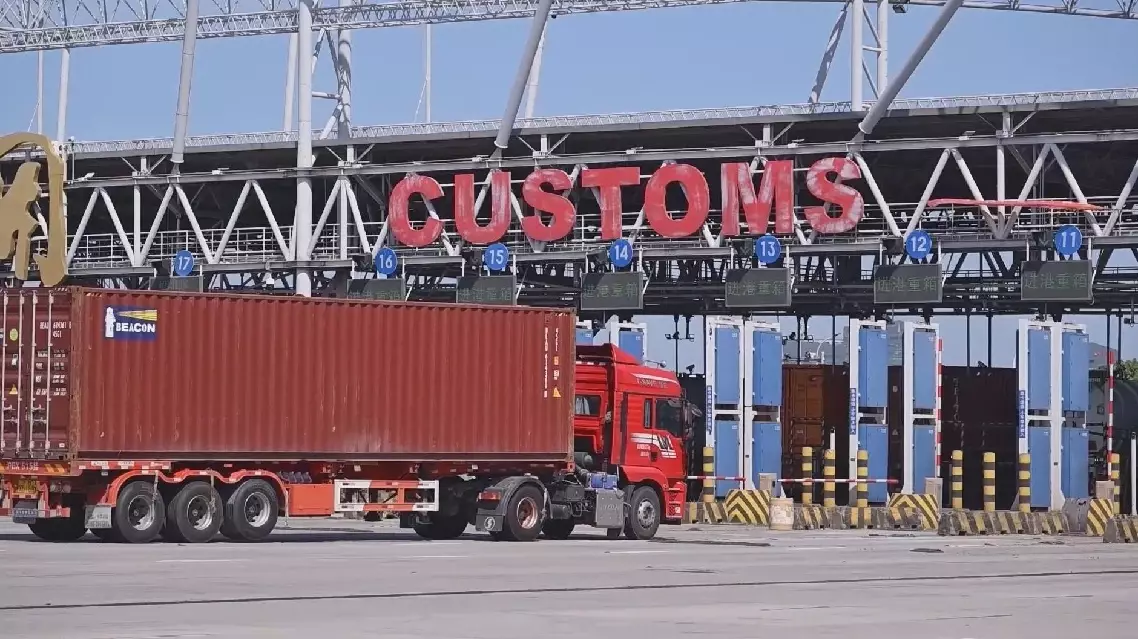
China's Yangtze River Delta reports record-high foreign trade in Jan-July period

U.S. President Donald Trump on Tuesday said there were no conversations taking place or scheduled with Iran, noting that the Hormuz Strait is open.
"There are no talks or conversations going on, or scheduled, with the Islamic Republic of Iran. The Naval Blockade remains in full force and effect. The Hormuz Strait is open and operating," Trump said in a post on Truth Social.
All water mines have been removed or detonated, said Trump.
He also posted a map on Tuesday marking the Strait of Hormuz as a "new U.S. territory," which immediately drew a sharp rebuke from Iran.
Iran's Fars News Agency dismissed the claim on social media, calling Trump's assertion that the Strait of Hormuz belongs to the United States "delusional."
"Trump's delusion about the Strait of Hormuz will either be corrected by himself or by us," Kazem Gharibabadi, Iranian deputy foreign minister for legal and international affairs, said in a post on social media platform X.
Meanwhile, Iranian Parliament Speaker Mohammad Baqer Qalibaf said on Tuesday that the Strait of Hormuz will not be opened unless the United States fulfills its commitments under the U.S.-Iran memorandum of understanding (MoU).
Qalibaf, during a session of the legislative body, listed some of the conditions under the MoU for the waterway's reopening as lifting the anti-Iran naval blockade, releasing Iranian frozen assets, removing oil sanctions, and stopping threats and military operations on all fronts.
The United States must implement all the provisions it has committed to under the MoU, otherwise the strait will not be opened, he said.
Trump says no talks or conversations going on, or scheduled, with Iran