Thousands of residents remain in temporary shelters days after a powerful earthquake struck Indonesia's Flores Island, uncertain when they can return home.
One of them is Baenah, who was at her shop when the earthquake jolted her hometown.
"When I arrived at the shop early in the morning, the earthquake suddenly struck. Everyone scrambled outside. We immediately ran up the mountain. We were all scared because of the tsunami warning. We ran up with water and a kilogram of rice and made our way to the hills," she said.
The 7.7-magnitude quake struck on August 15, with its epicenter near Mbay in Nagekeo Regency. One of the strongest to hit the area in years, it occurred at a depth of 10 kilometers, causing severe surface damage.
Hundreds of buildings collapsed, roads cracked and communication lines were cut off in several provinces.
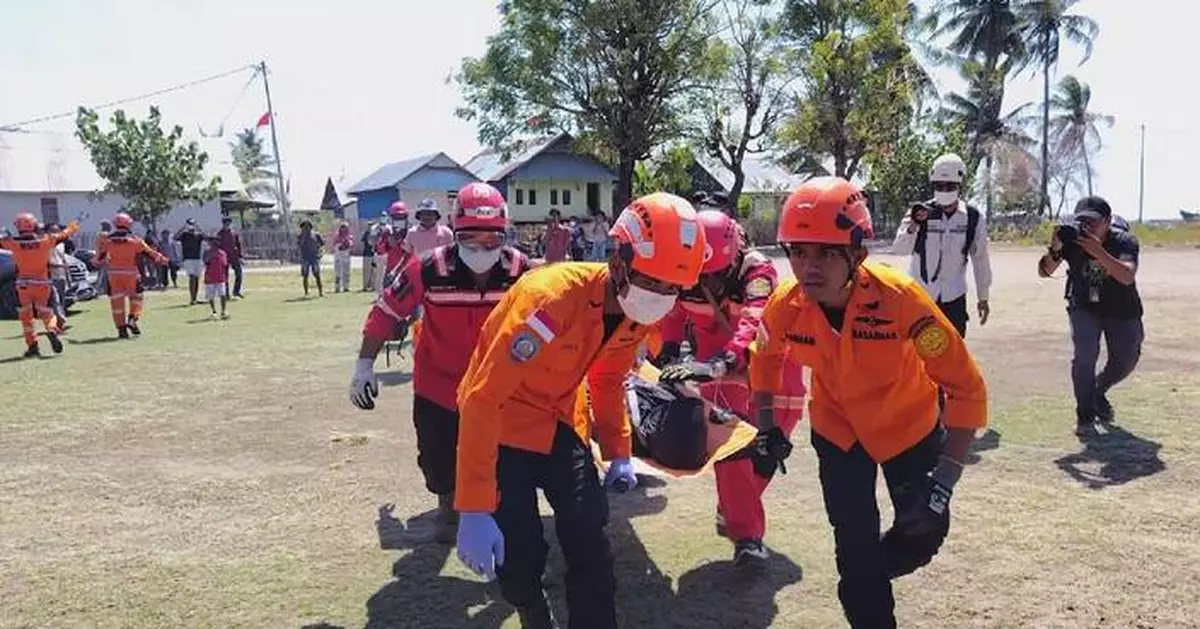
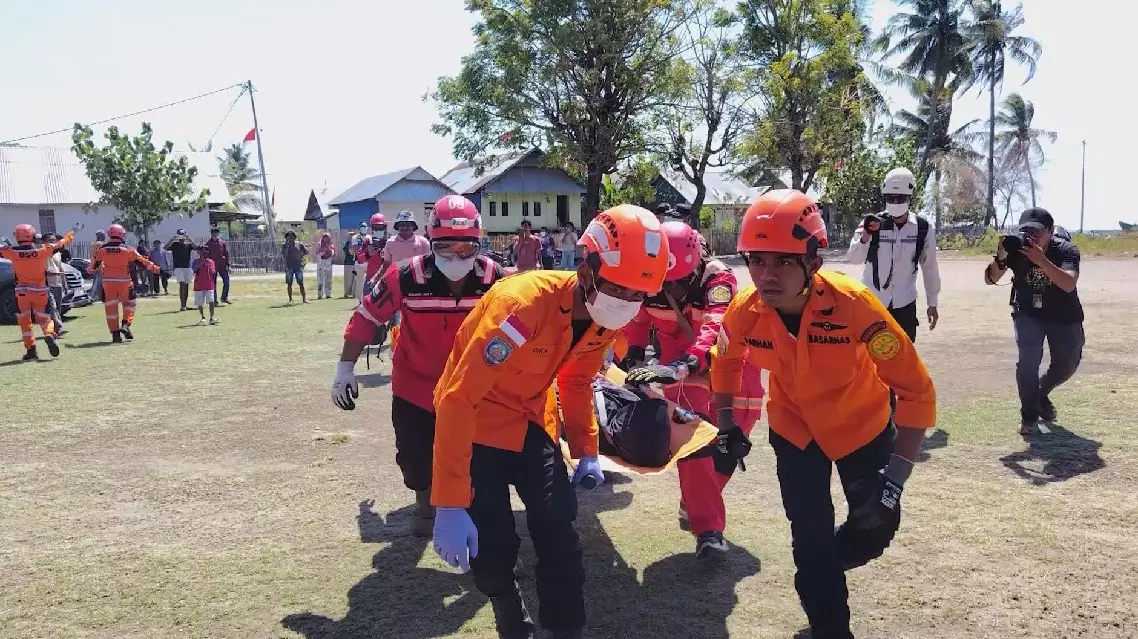
Search and rescue teams have been working around the clock to pull survivors from rubble, though their efforts have been hampered by damaged roads and difficult terrain.
"We are entering Day Four of the emergency rescue operations and so far, we do not have any data of missing persons or anyone buried under the rubble, so our focus now is moving from rescue to recovery," said Asfan Dulhasan, head of operations at Maumere Search and Rescue.
Authorities say dozens of aftershocks have rattled the region since the main quake. Some have been powerful enough to frighten residents and keep them from returning home.
At the shelters, volunteers and rescue workers have become the backbone of the relief operation, registering displaced residents, distributing food and providing basic medical assistance.
"As a rescue worker, the past few days have been very tough for all of us. We are going through a lot of mental, physical and emotional challenges, but this is the nature of our work and we will continue to do this for our fellow residents here in Flores," Dulhasan said.
Indonesia's national disaster mitigation agency has declared a 14-day emergency response. Food, water and other basic supplies are being distributed at evacuation sites, but the affected area spans multiple remote regions, making it difficult to reach every family in need.
The death toll from the earthquake has risen to 70, with 132 others injured, authorities said Tuesday.
Survivors remain in shelters days after quake in Indonesia
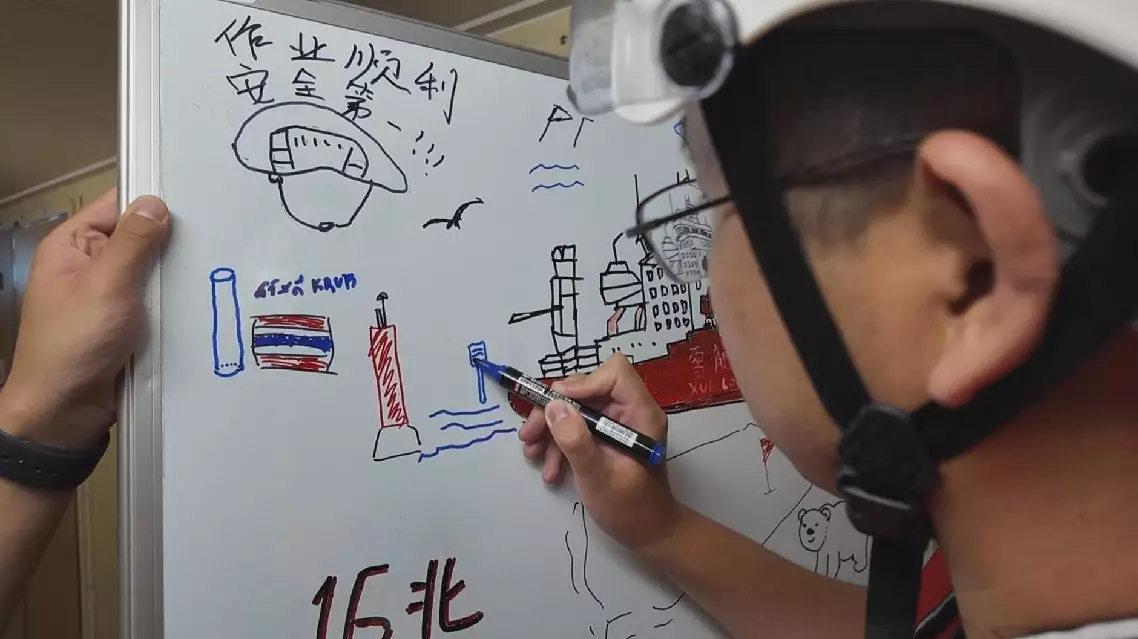
After more than three months at sea, members of China's 16th Arctic Ocean expedition have jointly created a painting that captures both the triumphs and trials of polar scientific research.
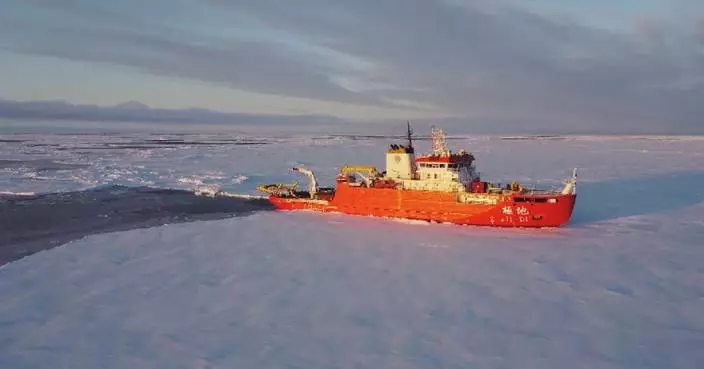
Organized by the Ministry of Natural Resources, the expedition deployed four ships, Xuelong, Xuelong 2, Jidi, and Tansuo 3, to study extreme environmental changes in the Arctic against the backdrop of accelerating global warming. On September 29, Xuelong and Xuelong 2 returned to Shanghai after completing their missions.
During the voyage, China Media Group (CMG) reporters aboard Xuelong invited nearly 100 crew members to collaborate on a canvas, sharing their experiences. The painting depicts the difficulties and challenges they faced, the honors and expectations of their research, and the images of those dedicated to science.
Before any crew member ever picked up a brush, the Arctic had already sketched the background with its extreme weather. Strong winds, torrents, and a harsh environment posed major challenges for the researchers.
"After staying outside for some five or ten minutes, our hands would already be frozen red. When we reached the trough of the waves [on a boat], it would look as if the waves were coming right over our heads," recalled Zhu Chengwei, an expedition member.
Despite the hardship, the researchers successfully tested and used domestically produced advanced ocean observation equipment in polar research -- one of their proudest moments, which they recorded on the canvas.
Qin Chuan, captain of the Xuelong ocean team, chose to paint a domestically produced monitor float.
"This is an Argo float we deployed, which automatically monitors ocean profiles. It has great significance for understanding the basic marine environment, and it's made in China," he said.
Xie Haixiang, director of the Xuelong laboratory, sketched a fundamental research equipment for the trip.
"I will draw a CTD (Conductivity, Temperature, and Depth instrument). The CTD is the most important equipment for ocean surveys, providing the most basic data and water samples," he said.
"Only by carrying equipment onto the Arctic sea ice yourself and lowering the instruments, can you get what you want. For instance, we take a little ocean water, and analyze what's in it, to understand the changes each year. Global warming needs to be understood through different dimensions," recalled researcher Zhu.
Beyond the canvas, what stands out even more striking are the moments of dedication: veteran members leading newcomers onto the ice, a group holding its ground in level-8 gales and heavy snow, and 30 people relaying to recover equipment stuck in the ice.
The most important element, beyond any record or image in the painting, is this group of expedition members who fear no hardship.
"Whenever I think of the polar spirit, countless images of those standing at the very front would flash before my eyes," Zhu said.
"What we have done today will benefit future generations. Although we are doing something that may seem very insignificant, I believe it will surely prove its worth in the future,"said Ning Wenfeng, another team member.
China's 16th Arctic expedition crews paint portrait of proud polar expedition moments, hardships