HOUSTON--(BUSINESS WIRE)--Aug 19, 2026--
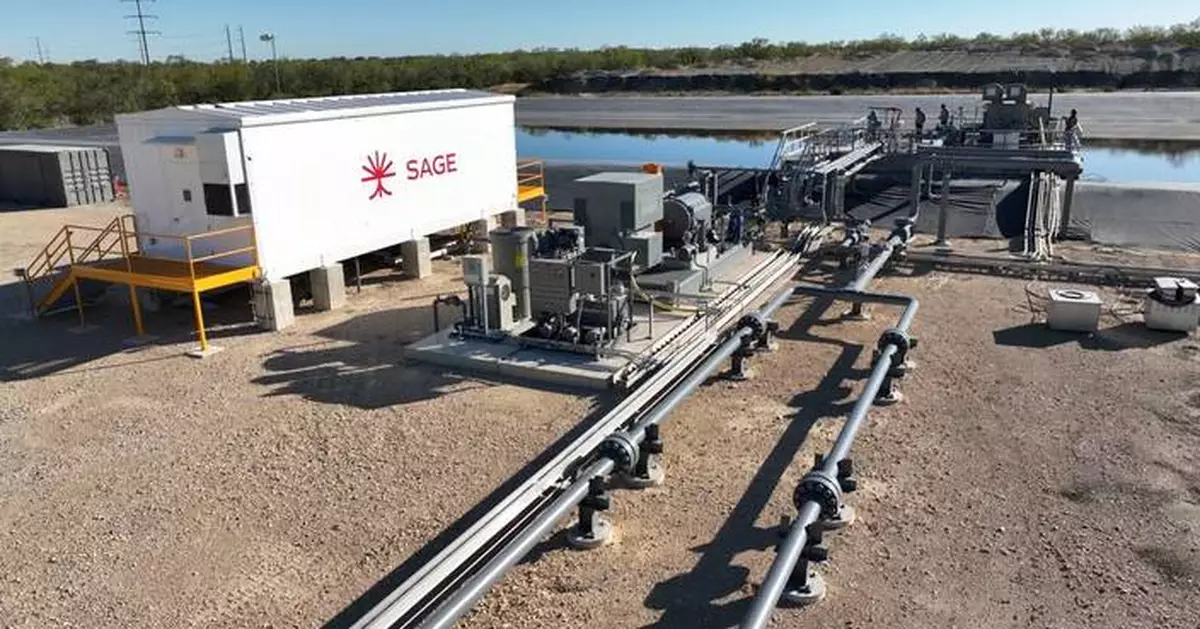
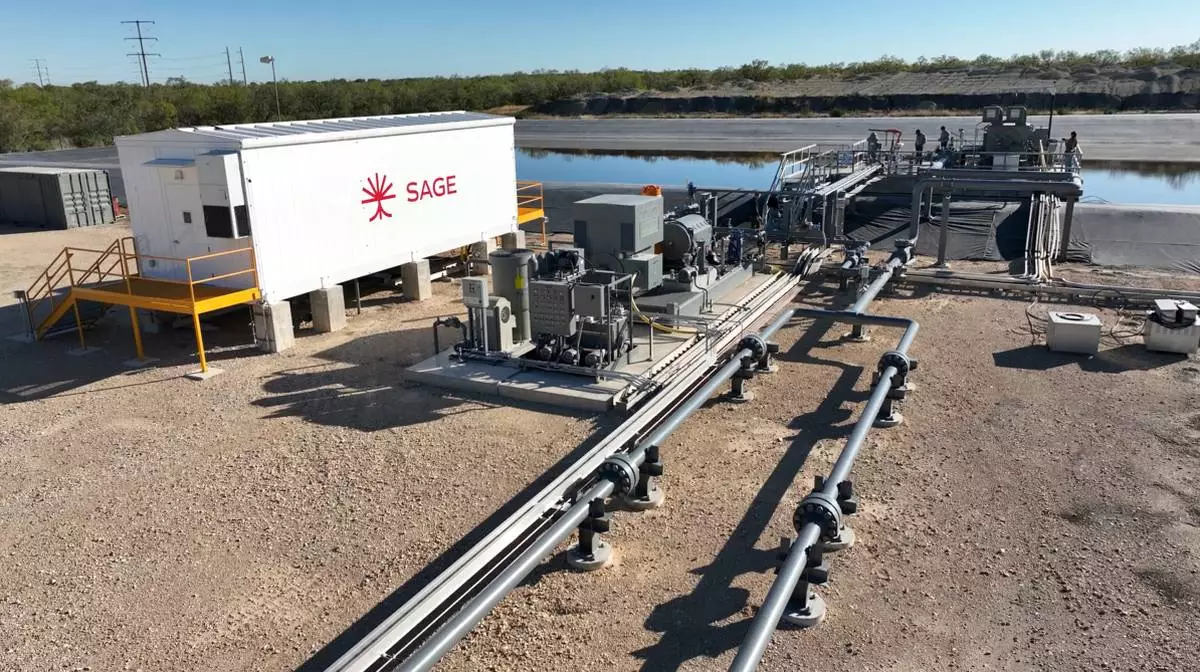
Sage Geosystems (“Sage”), a U.S.-based enhanced geothermal systems (EGS) power developer, today announced that its SMECI facility in South Texas has been placed in service. The results, which have been generated over a multi-month operating campaign, establish an important field proof point for Sage's proprietary EGS approach to deliver scalable baseload geothermal power. Since selling its first electricity in Q2 2026, the facility has been operating for over 120 days to evaluate subsurface pressure response, injection and production performance, water management, system efficiency, and reservoir behavior. The results met or exceeded Sage’s objectives and demonstrate Sage’s ability to engineer an EGS reservoir that repeatedly performs to maximize net power output.
This press release features multimedia. View the full release here: https://www.businesswire.com/news/home/20260819716532/en/
Sage is now applying the SMECI facility results to the design of future projects, including its planned geothermal development at an Ormat site in Nevada. Furthermore, Sage’s modeling tool (GeoTwin™) accurately predicted observed operating behaviors, providing additional confidence in the company’s ability to reliably design, predict and manage subsurface performance.
“Our operating campaign at the SMECI facility demonstrates that Sage’s proprietary EGS approach overcomes one of the industry’s most persistent challenges, high water losses in engineered reservoirs, while delivering the consistent performance required to scale next-generation geothermal. These results validate the core elements of our approach, significantly reduce development risk, and provide a clear path toward reliable, commercial-scale geothermal power,” said Cindy Taff, Co-Founder and CEO of Sage Geosystems.
Commercial Significance:
“Commercial geothermal isn’t just about creating a reservoir; it’s about creating one whose performance can be engineered, predicted, and consistent,” said Lev Ring, Co-Founder, President and CTO of Sage Geosystems. “That means understanding not only how a reservoir will perform, as we are doing with our GeoTwin modeling tool, but also how efficiently it can retain water and demonstrate a path to losses below 5%. Predictable reservoirs are the foundation of commercially scalable geothermal.”
Sage’s proprietary EGS approach is designed to engineer and actively manage the subsurface as a controlled energy system. By storing water under pressure and producing it in controlled cycles, Sage is able to preserve pressure, minimize water and energy losses, and generate greater net power from the reservoir. The results demonstrated at the SMECI facility validate the core elements of Sage’s proprietary EGS approach and provide the technical foundation to scale into larger, commercial power generation projects. Sage will continue operating the SMECI facility to further optimize performance while applying the results to the design and development of larger-scale geothermal power projects.
About Sage Geosystems
Sage Geosystems is a U.S.-focused enhanced geothermal systems (EGS) power developer advancing proprietary approaches designed to make geothermal energy more scalable, repeatable, and commercially competitive. Sage’s patented EGS approach uses engineered subsurface reservoirs to minimize water and energy losses, increase net power output, and enable firm, reliable, 24/7 power generation across a broad range of geologies. Headquartered in Houston, Texas, Sage is advancing commercial geothermal projects in collaboration with leading energy and technology companies and is backed by a diverse group of strategic and financial investors. Founded in 2020 by a team with deep subsurface and energy-development expertise, Sage is working to expand access to geothermal power and establish EGS as a scalable source of dependable, baseload electricity. For more information, visit www.sagegeosystems.com.
Sage Geosystems Places SMECI Facility in Service, Validating Key Elements of its Scalable EGS Approach
POMPANO BEACH, Fla. (AP) — The floating tentacled predators pulse and swirl in hypnotic patterns in the dark museum space, lit primarily by images projected on the walls and the glowing light from the saltwater tanks.
The private Jellyfish Museum in Pompano Beach, Florida, just north of Fort Lauderdale, is believed to be the first museum in the United States dedicated solely to the translucent invertebrates, and one of the few such spaces in the world, according to the city and the museum’s founders.
It was created by Alex and Yana Yanovsky, who previously developed successful aquariums in Ukraine, including their first jellyfish museum in Kyiv. The couple left those facilities behind when they fled Ukraine following the 2022 Russian invasion, operations manager Jessica Eisenbarth said.
The museum, which opened this past spring, is the couple's first aquatic attraction since immigrating to the U.S., but they'd like to expand.
“When they left Ukraine, they moved to Florida, and then they immediately wanted to share their passion here,” Eisenbarth said.
Jellyfish have survived for over 500 million years, making them older than dinosaurs and even trees. Their ancient origins are part of their allure, along with their hypnotic, pulsing movements. They have no heart or brain, and are made up primarily of water, giving them a translucent look.
Yana Yanovsky came up with the idea for the jellyfish museum after noticing how popular the jellyfish were at their other aquariums.
“Jellyfish are some of the most resilient creatures on Earth. While they lack a brain, they maintain a simple nerve net that allows them to respond to their environment,” Yana said in a statement provided by the city. “Their movement is mesmerizing, almost meditative, and they play an important role in marine ecosystems.”
Monty Graham, director of the Smithsonian Environmental Research Center, said he’s not surprised someone made an aquarium dedicated specifically to jellyfish. He credits the Monterey Bay Aquarium in California with kicking off the popularity of jellyfish exhibits at aquariums all over the world. Monterey Bay Aquarium began displaying jellyfish in temporary exhibits in 1985 and opened a permanent gallery in 1996.
“Jellyfish are cool, they’re things that people don’t get to see up close unless they’re scuba diving,” Graham said. “So here was this opportunity, in a controlled environment, very beautiful settings. It clicked all the buttons and checked all the boxes, and it was a very good, positive thing.”
The nearly 10,000-square-foot (900 square meters) Jellyfish Museum houses roughly 20 unique species of jellyfish found in Florida waters and other parts of the world. Different species can be rotated through the museum's 21 tanks. Some current occupants include Japanese sea nettles, moon jellyfish, spotted jellies and upside-down jellyfish, the last of which can be found among Florida's mangrove swamps.
The jellyfish are acquired through licensed aquaculture partners, according to the city.
The space is designed to exude calm and tranquility, general manager Iryna Pelypkanych said. It was converted from a former Wells Fargo bank branch with about $100,000 in community redevelopment grants from the city of Pompano Beach. Guides teach people about the role jellyfish play in marine ecosystems and the importance of protecting them.
“The biggest idea here is to leave people with the feeling that they know something more about the population of jellyfish,” Pelypkanych said. “Because so far, we know around 4,000 different species that can be called jellyfish.”
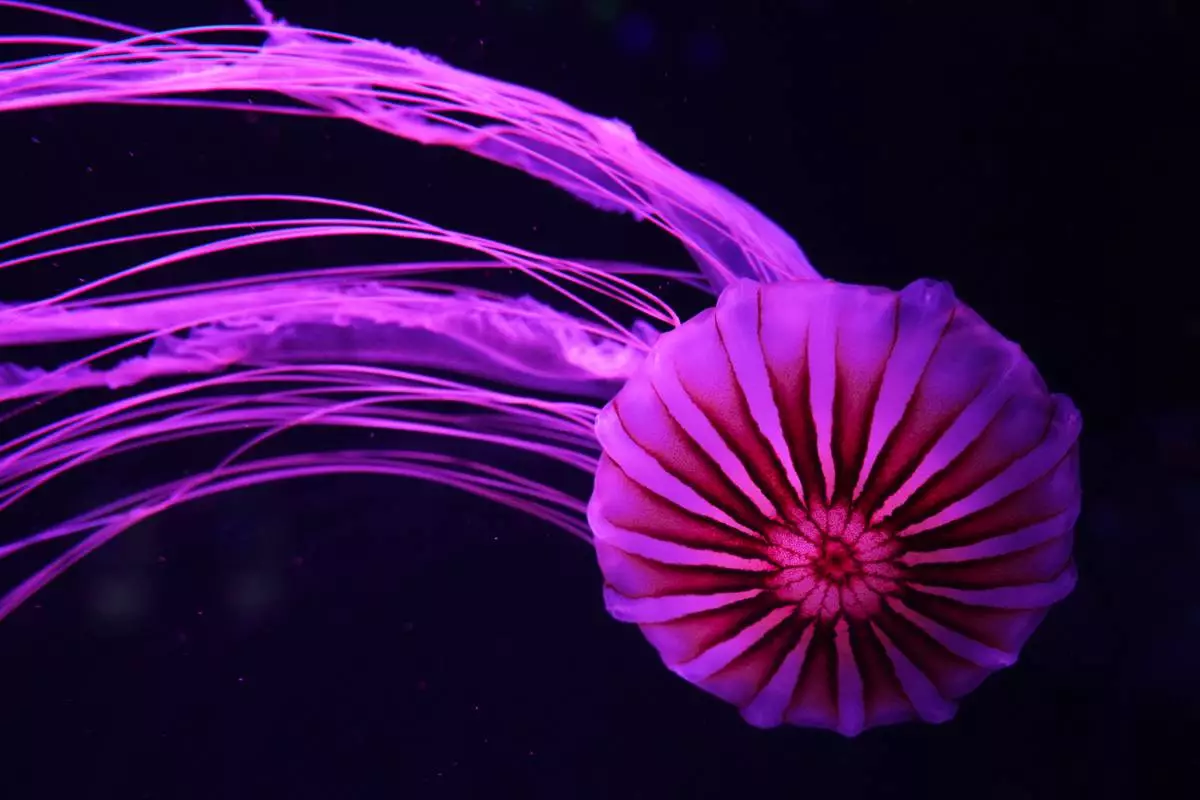
A Japanese sea nettle is displayed at the Jellyfish Museum, a facility that is home to about 20 unique species of jellyfish found in Florida and other parts of the world, Friday, Aug. 14, 2026, in Pompano Beach, Fla. (AP Photo/Lynne Sladky)
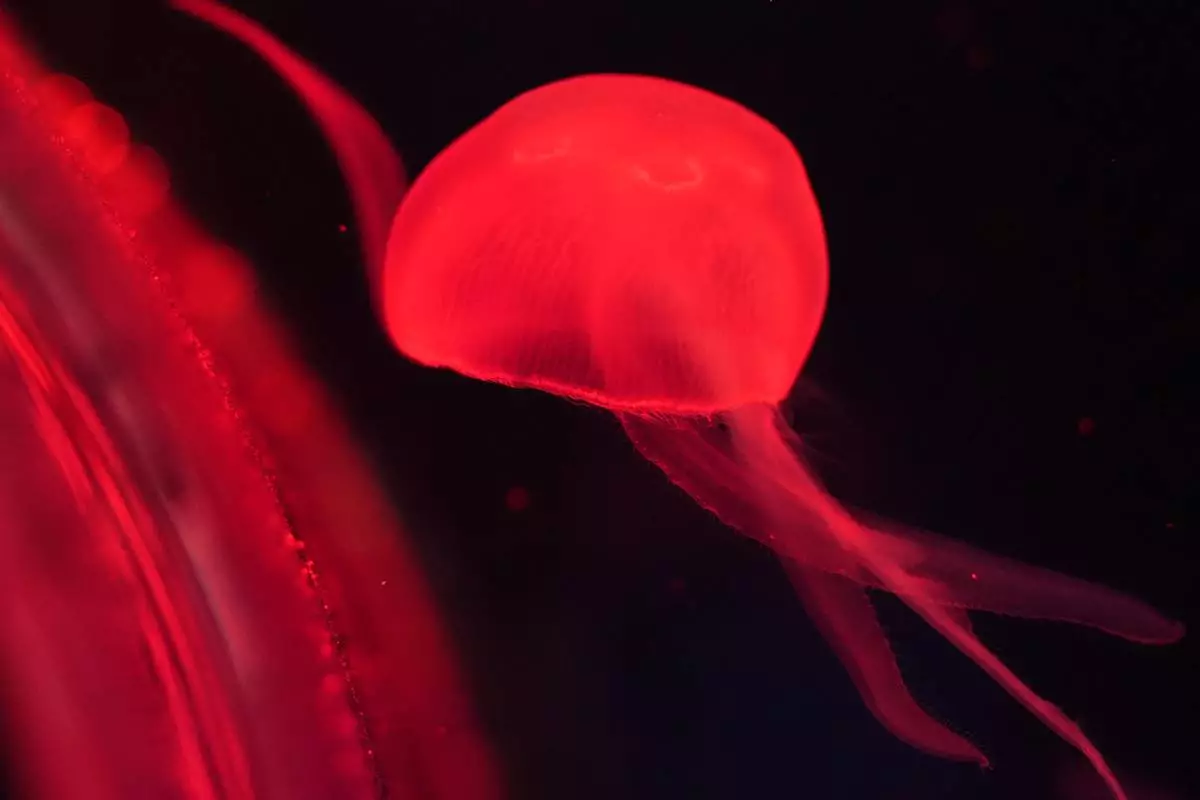
A moon jellyfish is displayed at the Jellyfish Museum, a facility that is home to about 20 unique species of jellyfish found in Florida and other parts of the world, Friday, Aug. 14, 2026, in Pompano Beach, Fla. (AP Photo/Lynne Sladky)
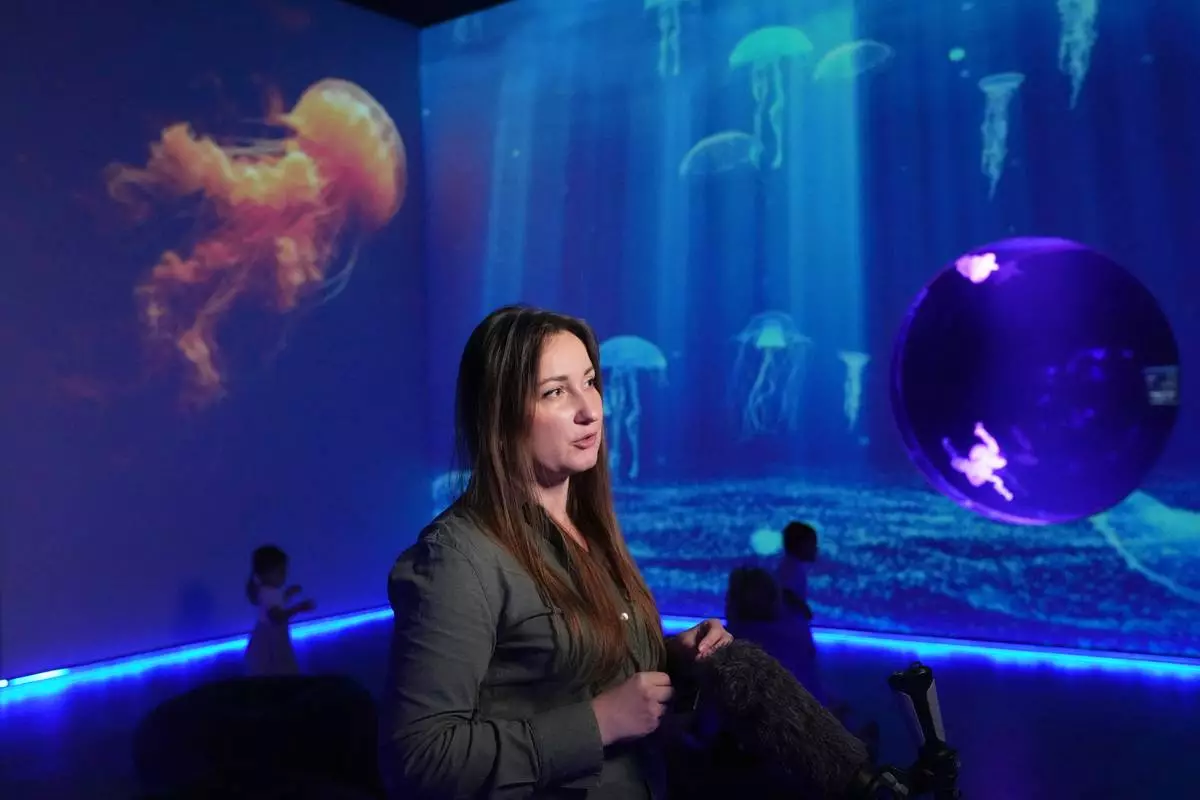
Iryna Pelypkanych, general manger of the Jellyfish Museum, its interviewed at the facility Friday, Aug. 14, 2026, in Pompano Beach, Fla. (AP Photo/Lynne Sladky)
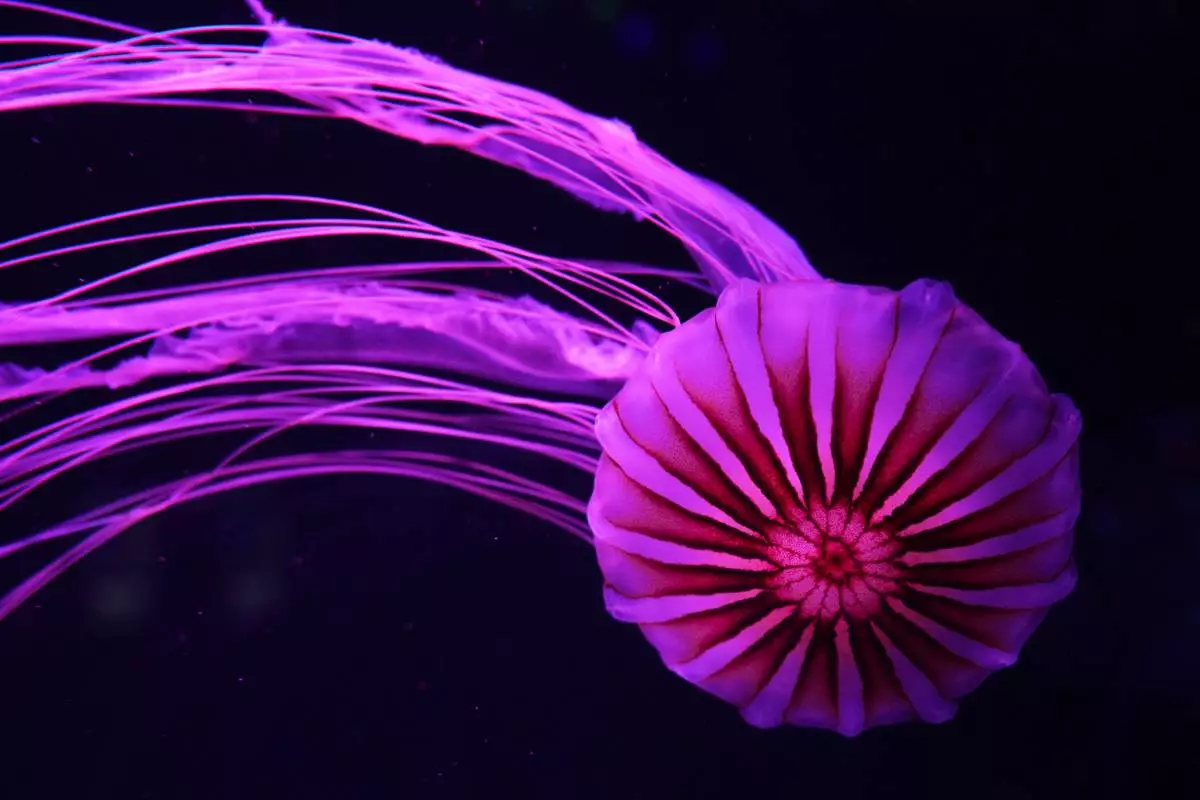
A Japanese sea nettle is displayed at the Jellyfish Museum, a facility that is home to about 20 unique species of jellyfish found in Florida and other parts of the world, Friday, Aug. 14, 2026, in Pompano Beach, Fla. (AP Photo/Lynne Sladky)
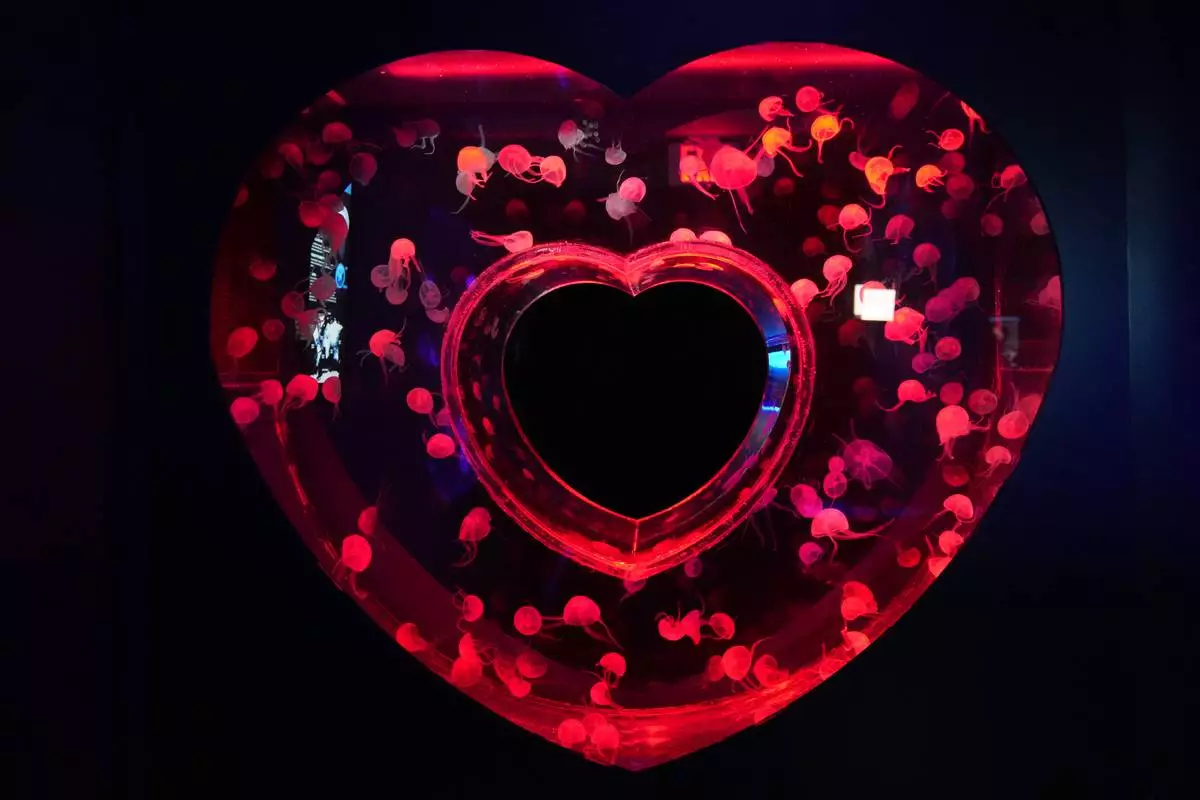
Moon jellyfish are displayed at the Jellyfish Museum, a facility that is home to about 20 unique species of jellyfish found in Florida and other parts of the world, Friday, Aug. 14, 2026, in Pompano Beach, Fla. (AP Photo/Lynne Sladky)
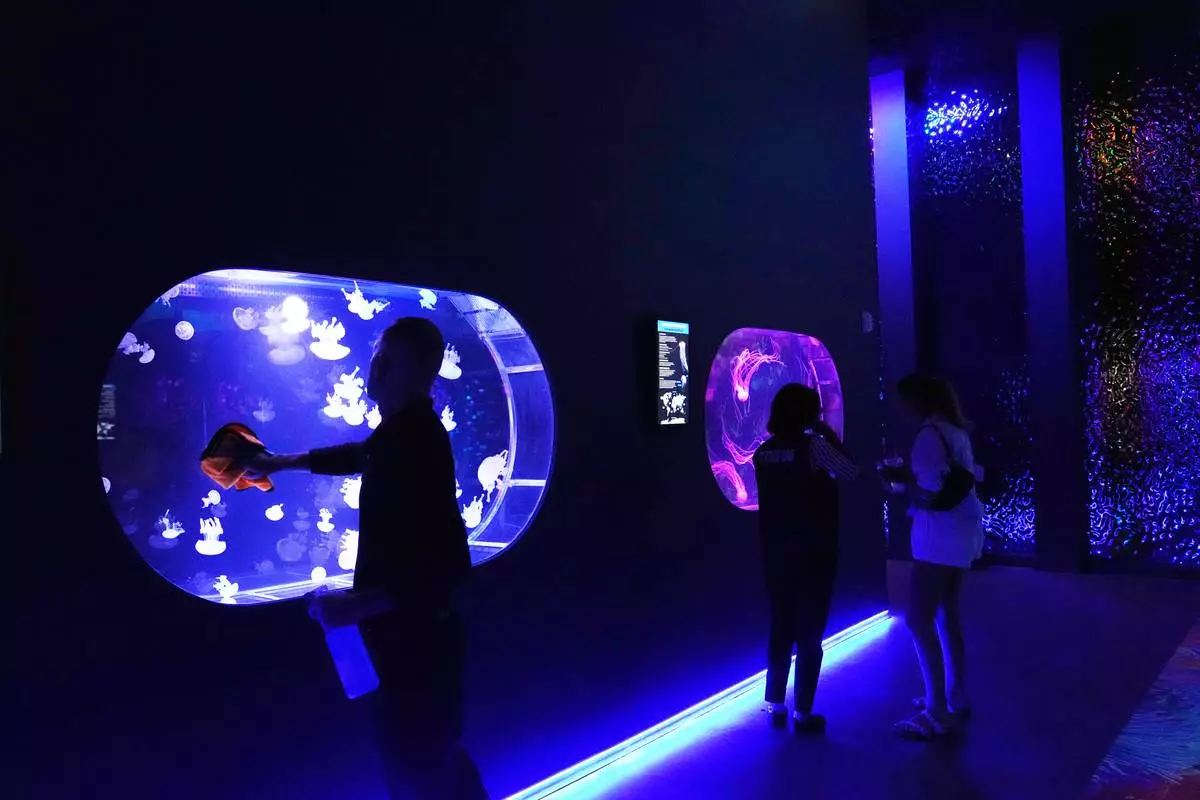
An employee cleans a display at the Jellyfish Museum, a facility that is home to about 20 unique species of jellyfish found in Florida and other parts of the world, Friday, Aug. 14, 2026, in Pompano Beach, Fla. (AP Photo/Lynne Sladky)