BUTTE, Mont.--(BUSINESS WIRE)--Aug 19, 2026--
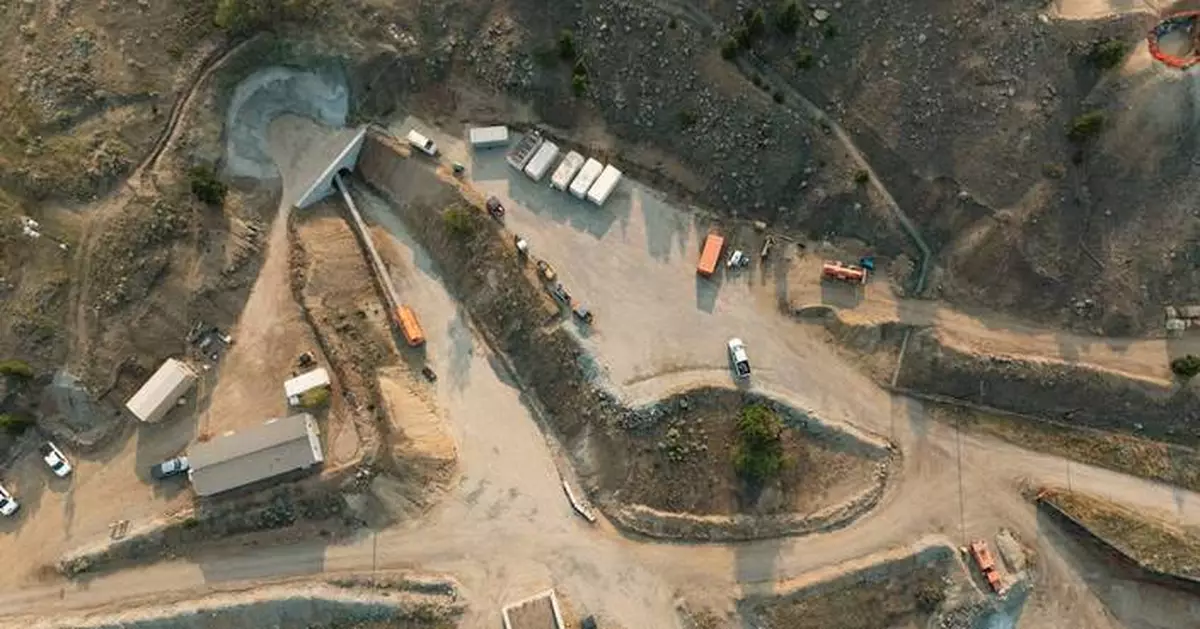
Silver Bow Mining Corp. (NYSE American: SBMT) (“Silver Bow Mining” or the “Company”) is pleased to announce that it has re-established underground access at its high-grade Rainbow Block Silver-Zinc Project (“Rainbow Block”) through completion of the rehabilitation of the historic Chief Joseph Portal. The achievement marks a significant operational milestone for the Company and represents the first underground exploration undertaken in the Butte Mining District, Montana, in approximately 35 years.
This press release features multimedia. View the full release here: https://www.businesswire.com/news/home/20260819337097/en/
The Chief Joseph Portal, which measures approximately 12 feet wide by 14 feet high, provides access to the historic Chief Joseph underground decline and workings at the eastern portion of the Company’s Rainbow Block. The commencement of the portal rehabilitation was previously disclosed on May 12, 2026, when the Company announced the signing of a contract with MES Mining, a division of Mining & Environmental Services LLC, to rehabilitate and modernize the existing portal and underground decline.
With underground access re-established, Silver Bow Mining will begin rehabilitating the Chief Joseph Decline to provide safe access to the historic underground workings and establish the infrastructure required for underground exploration.
Following rehabilitation of the decline, the Company plans to establish underground drill stations on the 200 Level to support resource definition and expansion drilling. Underground drilling is expected to provide improved drill positioning allowing more direct access to targeted mineralized structures, with the potential to reduce drill hole lengths, improve drilling efficiency, and accelerate the Company’s resource drilling program.
“Re-establishing underground access at the Rainbow Block is an important milestone in Silver Bow Mining’s strategy to systematically advance our high-grade Rainbow Block resource,” said Travis Naugle, Chairman and Chief Executive Officer. “Once underground, we will have greater exploration flexibility and improved drill access to the mineralized vein systems, accelerating the resource definition and expansion work required to support Silver Bow Mining’s next stages of exploration.”
“Completion of the Chief Joseph Portal rehabilitation is the first step in safely re-establishing underground operations at Rainbow,” said Kevin Shiell, Chief Operating Officer. “Our next priority is rehabilitation of the historic Chief Joseph Decline to provide safe, reliable access to the historic workings and establish the infrastructure required for underground exploration. From there, we plan to establish underground drill stations, providing more direct access to targeted mineralized structures, and improving the efficiency of our resource drilling program.”
Approximately 1,000 feet north of the Chief Joseph Portal, the Company has commenced surface preparation for construction of the new Rainbow Portal. Measuring 16.5 feet by 16.5 feet, this portal is intended to expand and improve underground access to the Rainbow Block. The Rainbow Portal represents a separate component of Silver Bow Mining’s longer-term underground infrastructure program and is intended to provide additional access to the underground workings as exploration and, if warranted, development activities advance.
MSHA AUTHORIZATION
The U.S. Mine Safety and Health Administration (“MSHA”) has issued Federal Mine ID No. 24-02827 to the Company under the name “Silver Bow Mine,” authorizing the Company to undertake underground activities at the Rainbow Block. With underground access re-established through the Chief Joseph Portal, rehabilitation of the underground decline will proceed in accordance with the Company’s approved exploration plans.
TECHNICAL DISCLOSURE
Qualified Person: The scientific and technical information contained in this news release has been reviewed and approved by Phillip Nickerson, PhD, CPG, Vice President of Exploration of Silver Bow Mining Corp., who is a “qualified person” within the meaning of National Instrument 43-101 – Standards of Disclosure for Mineral Projects (“NI 43-101”).
Rainbow Block Resources: Silver Bow Mining’s inferred Mineral Resource Estimate (“MRE”) is disclosed in a Technical Report Summary prepared in accordance with the requirements of Subpart 1300 of Regulation S-K titled ‘Technical Report Summary: Rainbow Block, Butte Mining District, Silver Bow County, Montana, USA’ and NI 43-101 – Standards of Disclosure for Mineral Projects Technical Report titled ‘Technical Report on the Rainbow Block Property, Butte Mining District, Silver Bow County, Montana, USA’ with an effective date of December 31, 2024, and updated February 3, 2026, prepared by Jacob Anderson, CPG, MAusIMM of Dahrouge Geological Consulting. The MRE is based on a cut-off grade of 4 ounces per ton (“opt”) silver equivalent (“AgEq”) and estimated recoveries of 90% for all metals. The metal prices used for the calculation of AgEq were as follows: silver - $25.00/oz; gold - $2,500/oz; zinc - $1.31/lb; and lead - $0.90/lb. Inferred Mineral Resources are considered too speculative geologically to have economic considerations applied that would enable them to be categorized as Mineral Reserves, and there is no certainty that the inferred Mineral Resource will be converted to an Indicated or Measured Mineral Resource category through further exploration.
ABOUT SILVER BOW MINING CORP.
Silver Bow Mining is a minerals exploration company advancing the high-grade Rainbow Block Silver-Zinc Project in Montana's historic Butte Mining District, while targeting a broader suite of U.S.-designated Critical Minerals including copper, manganese, germanium, gallium, indium, antimony, and bismuth. The Company holds approximately 4,193 acres of patented mineral claims and approximately 1,410 acres of surface lands across multiple claim blocks, including the flagship Rainbow Block, which hosts 11.48 million tons of inferred resources grading 14.8 opt AgEq (4.28 opt Ag, 0.05 opt Au, 4.59% Zn, and 1.25% Pb).
On Behalf of Silver Bow Mining Corp.,
Travis Naugle, Chairman and Chief Executive Officer
FORWARD-LOOKING STATEMENTS
This news release contains forward-looking statements within the meaning of the U.S. Securities Act of 1933, as amended, the U.S. Securities Exchange Act of 1934, as amended, and forward-looking information within the meaning of applicable Canadian securities laws. All statements, other than statements of historical fact, included in this news release that address activities, events, or developments that we expect or anticipate will or may occur in the future are forward-looking statements and forward-looking information. These forward-looking statements and forward-looking information include, but are not limited to, statements regarding the scope, timing, and objectives of the Company’s underground work at the Rainbow Block Project, including the rehabilitation of the Chief Joseph, construction of the new Rainbow Portal, construction of diamond drill stations, and planned future underground diamond drilling; the Company’s expectation that the current phase will advance resource expansion and definition; the timing of operational updates and future disclosure of drill program details; and the Company’s future exploration plans and activities at the Rainbow Block Project. When used in this news release or elsewhere, the words such as “anticipate”, “believe”, “estimate”, “expect”, “intend”, “may”, “plan”, “potential”, “project”, “target”, “will”, “could”, “should”, and similar expressions, or statements that certain actions, events, or results “may,” “could”, “would”, “should”, “might”, or “will” occur or be achieved, often, but not always, identify forward-looking statements and forward-looking information.
These statements are based on the Company’s current expectations, estimates, assumptions, and beliefs as of the date of this news release, including assumptions regarding the availability of personnel, equipment, permits, services, and financing; the accuracy of geological models and historical data; the reliability of sampling, analytical, and quality assurance/quality control procedures; continuity of mineralization; commodity prices; regulatory requirements; and general business, market, and economic conditions. These statements involve known and unknown risks, uncertainties, and other factors that may cause actual results, performance, or achievements of the Company to differ materially from those expressed or implied by such statements. Such factors include, among others, uncertainty of resource estimates, risks that exploration activities may not result in the definition of mineral resources or support further technical or economic studies; risks that drilling, sampling, metallurgical testing, or geological interpretations may not produce the results currently anticipated by management; uncertainty regarding the presence, grade, continuity, recoverability, or economic significance of Critical Minerals, including Critical Minerals such as copper, manganese, germanium, gallium, indium, antimony, and bismuth; uncertainty as to the Company’s future capital costs, operating costs, non-operating costs, and ability to raise capital on terms acceptable to the Company or at all; risks relating to the Company’s exploration activities in Butte, Montana; risks related to the Company’s mineral claims, including the validity, title, and maintenance of mineral claims and property rights; risks relating to cost increases for capital and operating costs; risks of shortages and fluctuating costs of equipment or supplies, labor, and services; risks relating to fluctuations in the price of commodities and market conditions; risks in obtaining, maintaining, or amending permits, licenses, and future permitting and regulatory approvals, including matters relating to Exploration License No. 00857 and the Company’s MSHA approvals and plans; risks of delays resulting in timelines disclosed in this news release not being met; risks relating to reliance on key personnel and third-party contractors and consultants; the risk that the Rainbow Block project may not advance beyond the exploration stage or be developed into a commercially viable mining operation; the inherently hazardous nature of mining-related activities and other operational and environmental risks inherent in mineral exploration and mining-related activities.
Additional risk factors are discussed under the headings “Forward-Looking Statements” and “Risk Factors” in the Company’s Registration Statement on Form S-1, as amended, filed with the U.S. Securities and Exchange Commission on April 24, 2026, the Company’s Canadian prospectus dated April 29, 2026, filed on SEDAR+, and in other documents filed by the Company with the U.S. Securities and Exchange Commission and Canadian securities regulatory authorities. Although the Company has attempted to identify important factors that could cause actual results to differ materially from those described in forward-looking statements and forward-looking information, there may be other factors that cause results not to be as anticipated, estimated or intended. Readers are cautioned not to place undue reliance on forward-looking statements and forward-looking information, which speak only as of the date of this news release. Except as required by applicable law, the Company undertakes no obligation to update or revise any forward-looking statements or forward-looking information, whether as a result of new information, future events or otherwise.
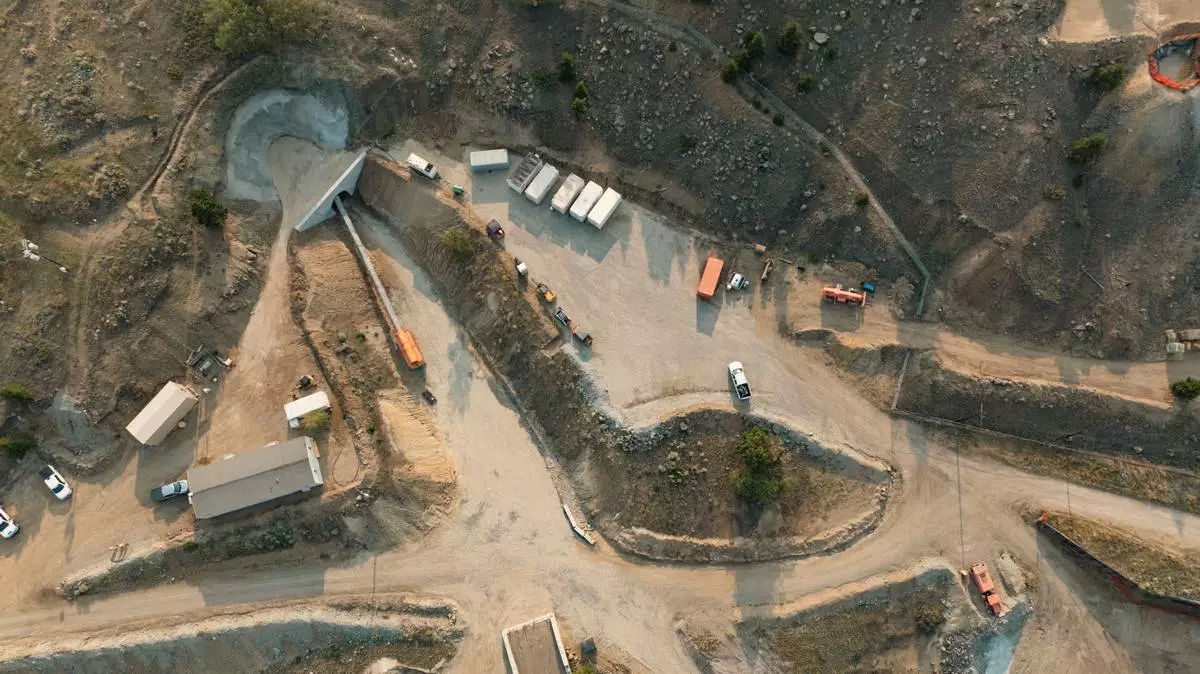
Looking down on the rehabilitated Chief Joseph Portal