Inside the core industrial zone of Franca in Sao Paulo State of Brazil, once-bustling shoemaking assembly lines now sit partially idle.
The city known as Brazil's shoe capital is absorbing the shock of newly escalated U.S. tariffs, with factory owners forced into layoffs and output cuts as orders from North America plummet.
The Office of the U.S. Trade Representative announced a 25 percent tariff on selected Brazilian products starting July 22 and added another 12.5 percent surcharge on goods from Brazil and dozens of other economies over so-called "forced labor" concerns.
For overlapping product categories such as footwear, the combined rate reaches 37.5 percent.
Franca is one of Brazil's largest footwear production bases, home to a complete industrial chain and over 2,000 shoe-related enterprises. The city's shoemaking sector is one of its three pillar industries, employing an estimated 20,000 to 30,000 workers.
Many of these businesses rely heavily on the North American market.
"This is our production line. Under normal capacity, this line would be running at full load with shoes everywhere, in every corner. But now, due to the reduction in orders caused by the high tariffs, this is one of the most important reasons, our line's workload is below normal capacity. It's almost empty here. We used to have 120 employees. Today, we've cut our workforce by 40 to 50 percent," said Toni Hajel, director of a local shoe factory.
Hajel noted that 25 to 30 percent of his factory's production capacity was previously dedicated to the North American market.
With the new U.S. tariffs disrupting the market and orders drying up, he has been left with no choice but to make the painful decisions to downsize staff and scale back production.
Graca, a worker at another Franca shoe factory, voiced the anxiety echoing across the city's shop floors.
"We are very anxious right now. We don't know what will happen next," he said.
Officials at Franca's municipal government are actively responding to the impact of the U.S. tariff measures on the local industrial chain, saying they are working to open up additional export markets.
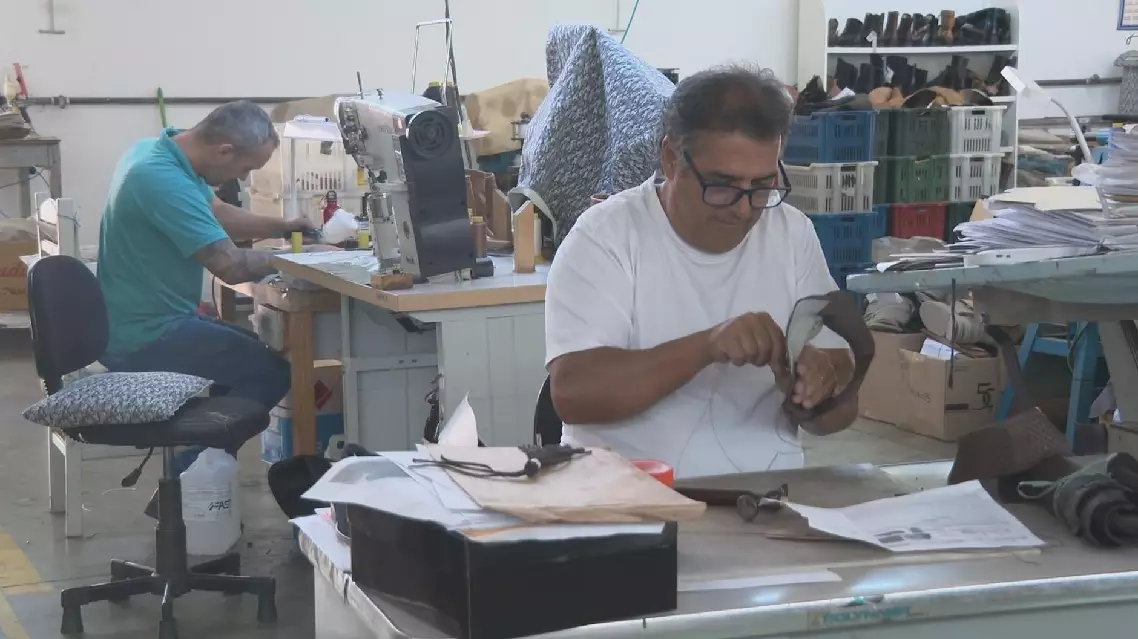
Brazil's 'shoe capital' Franca hit as US tariffs slash footwear orders