FAYETTEVILLE, Ark. (AP) — 2025 record: 2-10
New coach Ryan Silverfield arrived at Arkansas in November to coach a team that has finished with either one or zero Southeastern Conference wins in five of the last nine seasons. Almost no one is expecting the Razorbacks to make a bowl much less contend in the rugged SEC.
What the Arkansas faithful would like to see is competitiveness. The team has produced just one winning season in conference play since 2011. Silverfield is their fifth coach since that season, Bobby Petrino’s last. Even Petrino has already returned and left again, exiting in the offseason after serving as offensive coordinator then interim coach for much of 2025 when Sam Pittman was fired Sept. 25.
Given the difficulty of the schedule, a .500 season in league play would be considered an excellent accomplishment. Beating the likes of Vanderbilt, Auburn and South Carolina should be the realistic focus, not trying to upset Georgia, Texas, Texas A&M and LSU.
Another winless year in the SEC might cost jobs higher up the chain than head coach, as athletic director Hunter Yurachek is a divisive figure to some of the fan base.
The Razorbacks were granted a gift when defensive end Quincy Rhodes Jr. decided to return for his senior year. The 6-foot-6, 275-pounder recorded eight sacks and 15 1/2 tackles-for-loss, the highest totals for an Arkansas player since 2016 and 2014, respectively.
And while he’s the lone returning player on the defensive line penned in as starter, Arkansas has experience with returnees David Oke and Charlie Collins rotating in, plus Kentucky transfer Steven Soles Jr. and Virginia transfer Hunter Osborne expected to bolster the unit.
Offensively, whoever wins the quarterback job has options at wideout: Chris Marshall is a former five-star recruit who transferred from Boise State. Jamari Hawkins knows Silverfield’s system having played with him at Memphis. And CJ Brown is the leading returning wide receiver. All three caught about 30 passes at their respective schools last year.
It depends how the two-deep roster shakes out, but likely fewer than eight players in the group of 44 played for the Razorbacks last year. That isn’t totally unexpected given the coaching change combined with the Razorbacks’ lack of success, but it makes for a lot of open competition.
Quarterback KJ Jackson is likely to win the job after impressing in two late-season games last year, but as of mid-August, Silverfield hadn’t announced a starter.
The interior part of Arkansas’ offensive line appears set, but both tackle positions remain in flux. Every linebacker after No. 1 Bradley Shaw is up in the air. Miguel Mitchell and Caleb Wooden are the only returners in the secondary. .
WR Chris Marshall (transfer from Boise State), CB Joker Johnson (transfer from Tulane), LB Ja’Quavion Smith (transfer from Howard), OT Bryant Williams (transfer from Louisiana), QB AJ Hill (transfer from Memphis).
QB Taylen Green (NFL), RB Mike Washington Jr. (NFL), LB Xavian Sorey Jr. (NFL), WR O’Mega Blake (exhausted eligibility), OG Fernando Carmona (NFL).
At Utah (Sept. 12), vs. Tennessee (Oct. 10), vs. Missouri (Oct. 31).
Sign up for Top 25 poll alerts here. Visit the Top 25 here and see AP’s full college football coverage here.
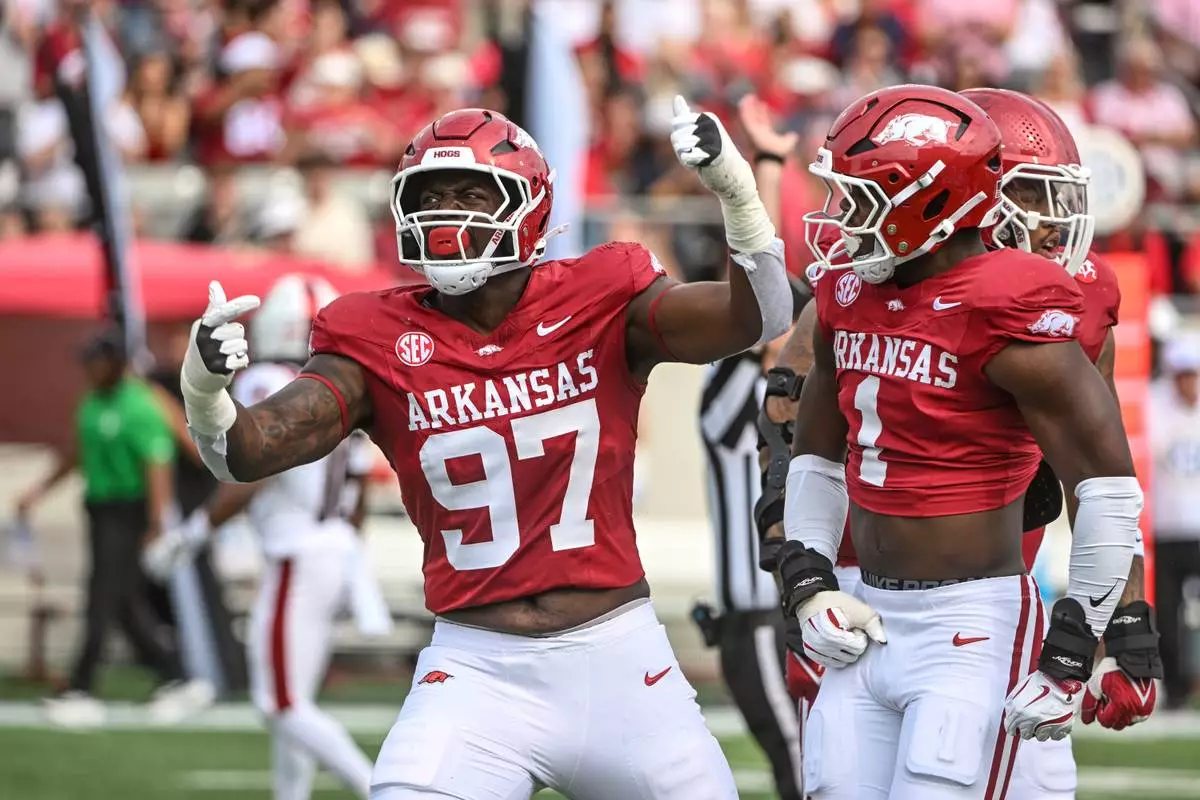
FILE - Arkansas defenders Quincy Rhodes Jr. (97) and Phillip Lee (1) celebrate after a big defensive stop against Arkansas State during an NCAA football game, Sept. 6, 2025, in Little Rock, Ark. (AP Photo/Michael Woods, File)
NEW YORK (AP) — A rise in oil prices on Thursday is sending worries about inflation and yields in the bond market higher, erasing some of the relief the U.S. Treasury Department created the day before. A drop for Walmart following its latest profit report also helped drag the U.S. stock market lower.
The S&P 500 slipped 0.2% and is on track for a fourth loss in the five days since setting its all-time high last week. The Dow Jones Industrial Average was down 305 points, or 0.6%, as of 9:35 a.m. Eastern time, and the Nasdaq composite was 0.3% lower.
The bond market remains the center of action after yields charged higher through the summer on worries about high inflation, gargantuan government debts and other factors. Treasury Secretary Scott Bessent made a move Wednesday that jolted financial markets to at least double the size of his department’s planned purchases of longer-term Treasurys from Sept. 9 through Nov. 4.
That helped push yields down after the 10-year Treasury’s yield had hit its highest level in more than a year and the 30-year yield got back to where it was in 2007, before the Great Recession sent yields toward zero worldwide. It’s a big deal because high yields slow the economy by raising interest payments for people, companies and the government and can undercut prices for stocks and other investments.
But analysts had cautioned the effect may be short lived, given how small the purchases are relative to the overall size of the Treasury market and other factors. Plus, more signals arrived quickly to push the bond market’s worries higher.
The U.S. government’s debt topped $40 trillion on Wednesday, a staggering record that arrived just months after the national debt first blew past the $39 trillion mark in April, because Washington continues to spend far more money than it brings in.
And on Thursday, the price for a barrel of Brent crude climbed 2.4% to $93.83 as uncertainty continues about when the war with Iran will allow oil tankers to freely exit the Persian Gulf again. President Donald Trump threatened Iran with “Economic Warfare and Isolation on an unprecedented scale” late Wednesday but provided few details.
That helped push the 10-year Treasury up to 4.69% from 4.65% late Wednesday. It’s almost back to its 4.71% level from late Tuesday, before the Treasury Department made its announcement.
A couple encouraging reports on the U.S. economy also helped push up longer-term Treasury yields, which move with expectations for the economy and inflation in coming years. One said fewer U.S. workers applied for unemployment benefits last week than economists expected, while another said manufacturing in the mid-Atlantic region appears to be much stronger than expected.
On Wall Street, Walmart was the heaviest weight on the S&P 500 lower and fell 7.5% even though it reported stronger profit and revenue for the latest quarter than analysts expected. Investors focused more instead on how an important underlying measure of revenue growth at its stores slowed again. Its forecast for profit in the current quarter also fell short of analysts’ expectations.
Advance Auto Parts tumbled 19.8% after the retailer reported weaker revenue for the latest quarter, even though its profit topped expectations. CEO Shane O’Kelly said that “tighter household budgets constrained spending more than we anticipated, especially during the last four weeks of the quarter.”
Helping to keep Wall Street’s losses in check was Deere, which reported stronger profit and revenue for the latest quarter than analysts expected. It rose 3.6% as the company said order trends indicate the agriculture equipment business looks set to accelerate after this year.
In stock markets abroad, indexes dipped in Europe following a stronger finish in Asia.
South Korea’s Kospi soared 5.9% for one of the world’s biggest moves after the two tech titans that dominate its market, Samsung Electronics and SK Hynix, jumped.
AP Business Writers Chan Ho-him and Michelle Chapman contributed to this report.
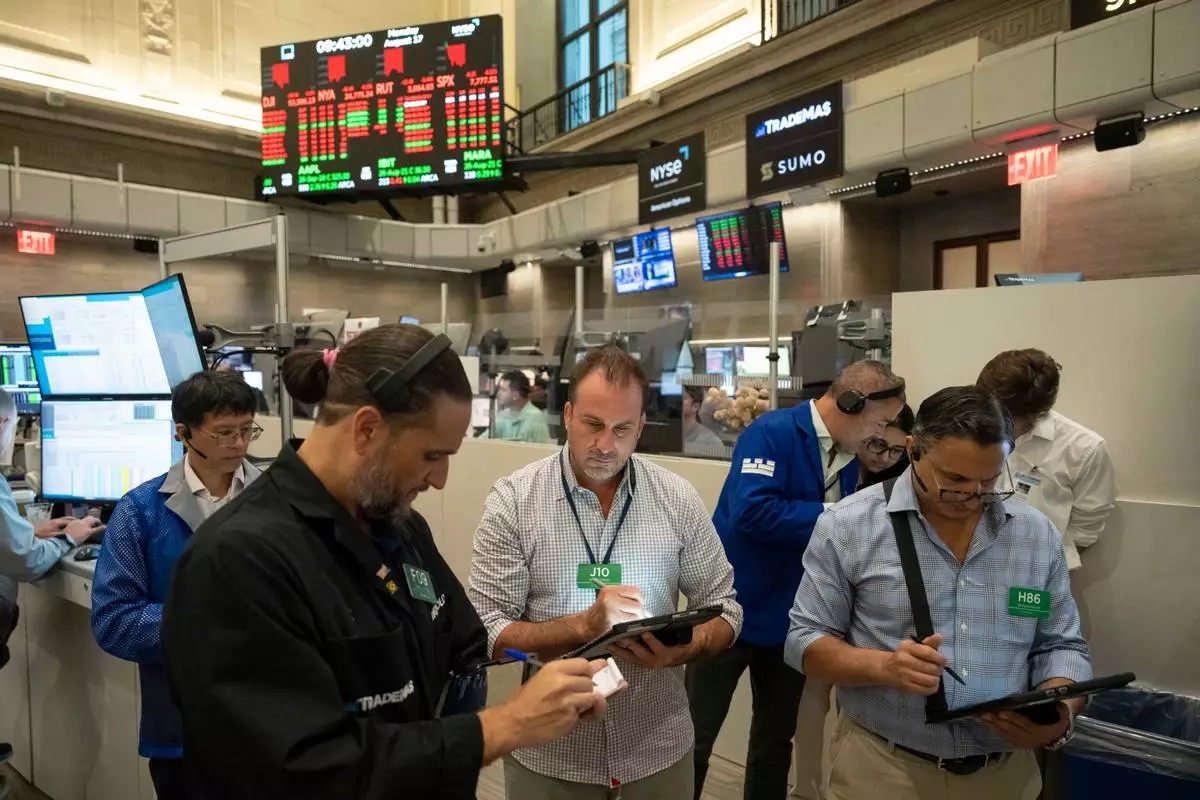
Options traders Chris Dattolo, Scott Frinzi, and Ravi Bhandari, left to right, work on the floor of the New York Stock Exchange, Monday, Aug. 17, 2026, in New York. (AP Photo/Yuki Iwamura)
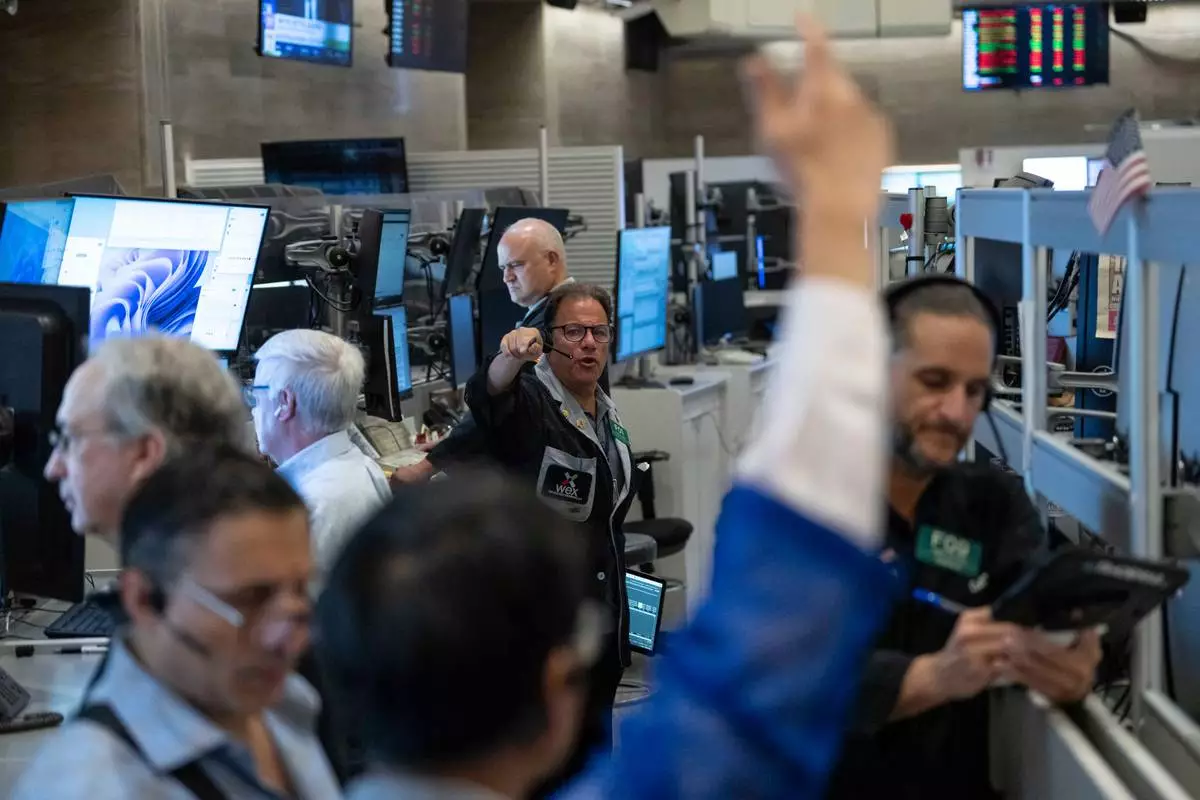
Options trader Anthony Spina works on the floor of the New York Stock Exchange, Monday, Aug. 17, 2026, in New York. (AP Photo/Yuki Iwamura)
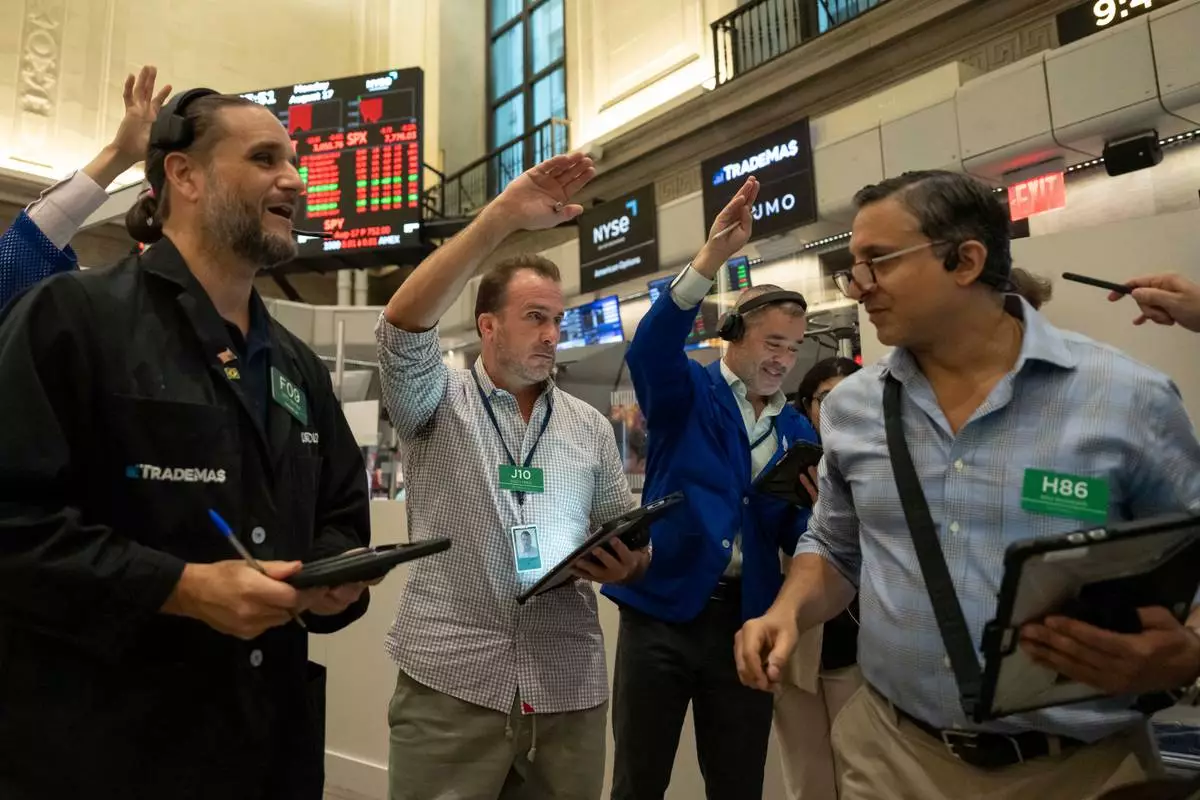
Options traders Chris Dattolo, Scott Frinzi, Justin Kanda, and Ravi Bhandari, left to right, work on the floor of the New York Stock Exchange, Monday, Aug. 17, 2026, in New York. (AP Photo/Yuki Iwamura)

People walk in front of an electronic stock board showing Japan's Nikkei index at a securities firm Thursday, Aug. 20, 2026, in Tokyo. (AP Photo/Eugene Hoshiko)
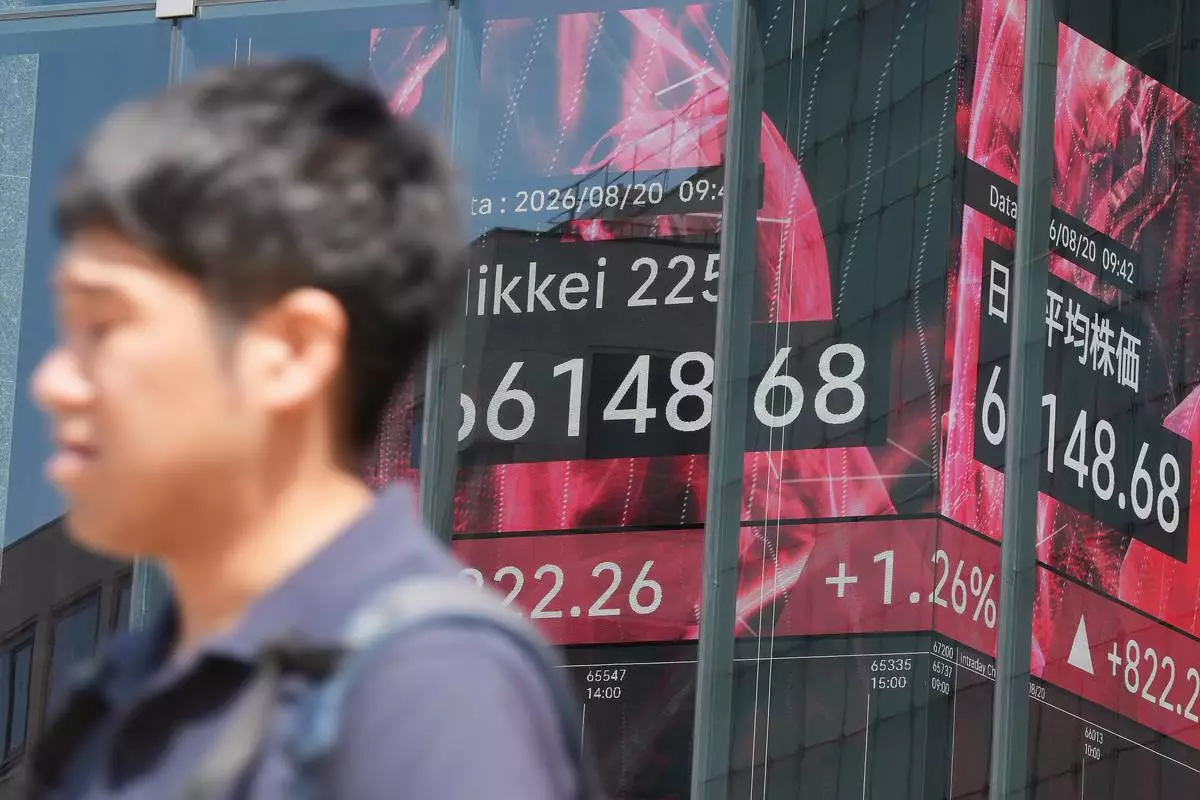
A person walks in front of an electronic stock board showing Japan's Nikkei index at a securities firm Thursday, Aug. 20, 2026, in Tokyo. (AP Photo/Eugene Hoshiko)
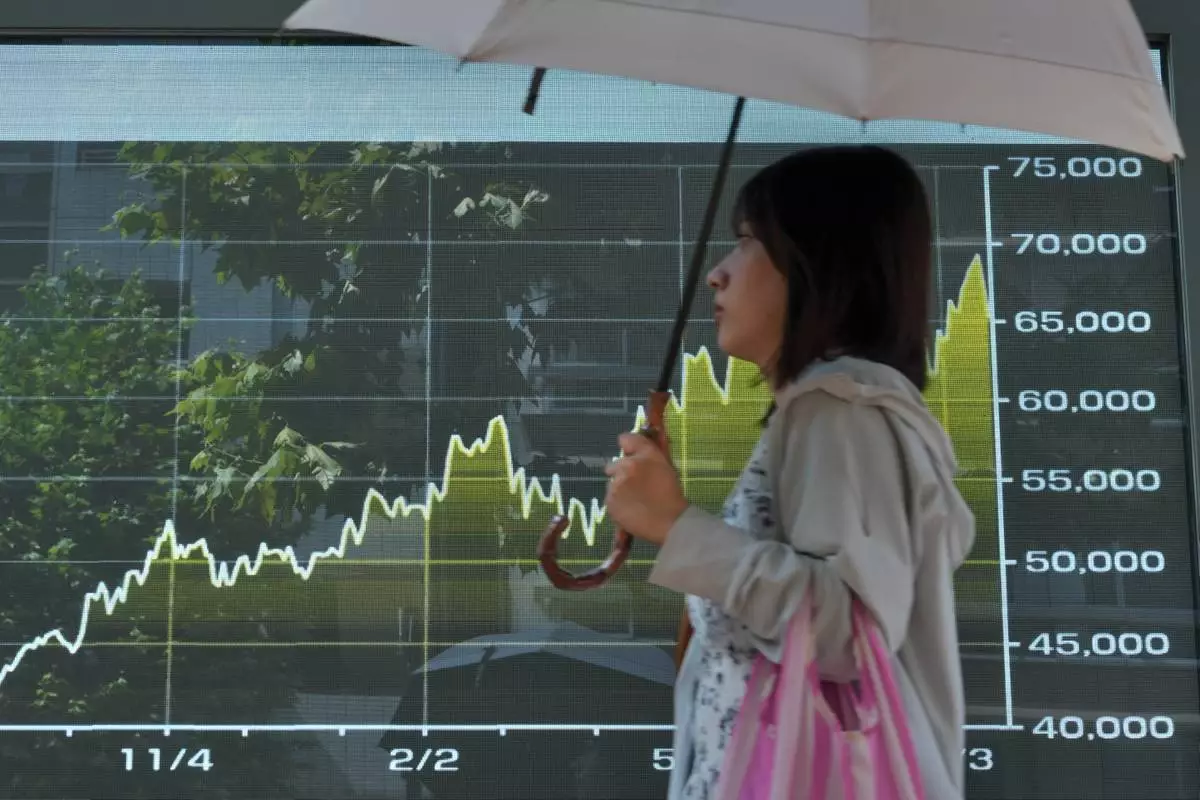
A person walks in front of an electronic stock board showing Japan's Nikkei index at a securities firm Thursday, Aug. 20, 2026, in Tokyo. (AP Photo/Eugene Hoshiko)
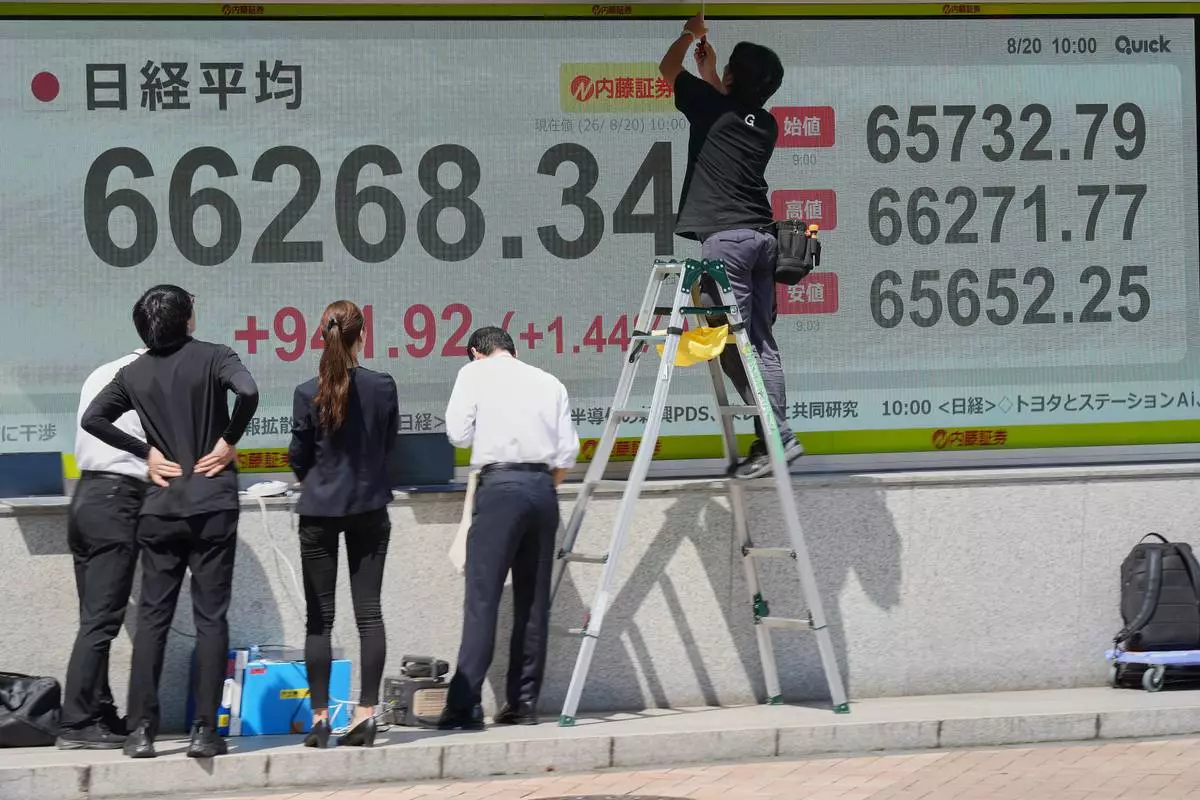
Staff arrange an electronic stock board showing Japan's Nikkei index at a securities firm Thursday, Aug. 20, 2026, in Tokyo. (AP Photo/Eugene Hoshiko)
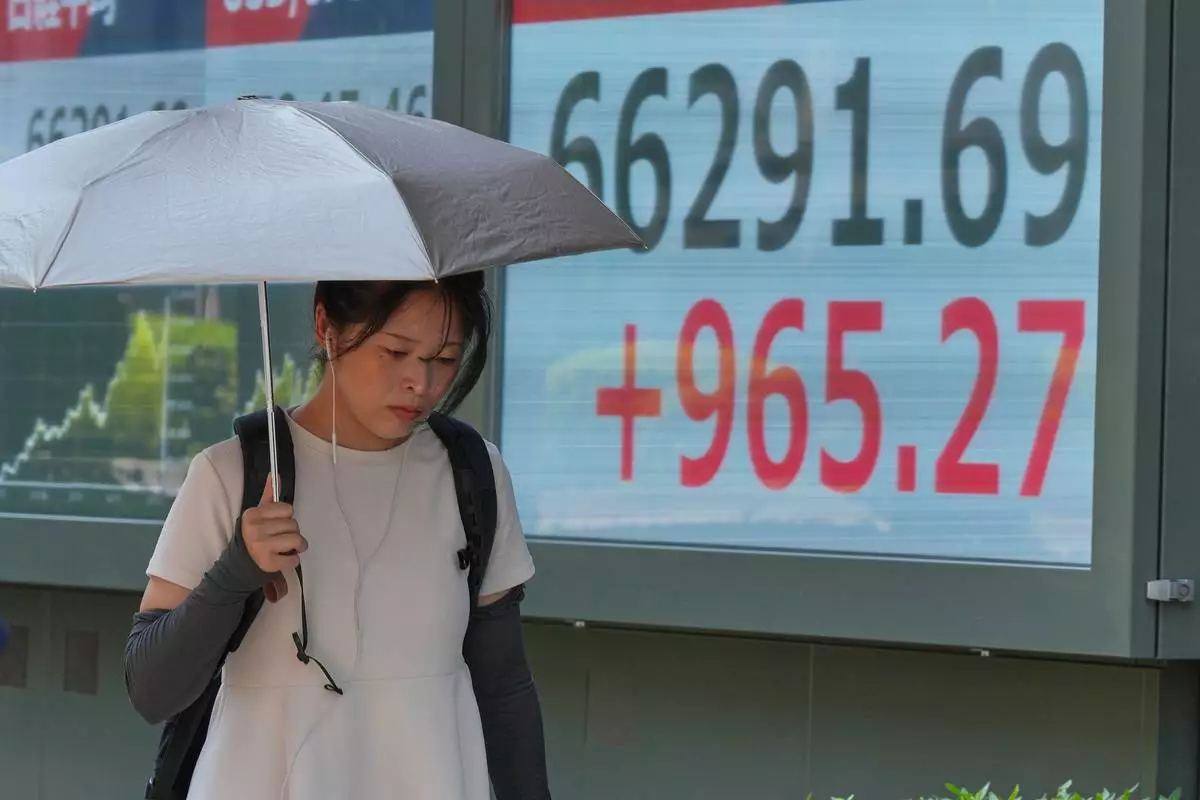
A person walks in front of an electronic stock board showing Japan's Nikkei index at a securities firm Thursday, Aug. 20, 2026, in Tokyo. (AP Photo/Eugene Hoshiko)