A prolonged heatwave and severe drought this summer have driven the Danube River to record low levels in Hungary, disrupting shipping and raising fears of significant economic damage as the autumn harvest approaches.
In the Budapest stretch, water levels have been hovering between just 8 and 18 centimeters in recent days, far below the navigable minimum fairway depth of 2.5 meters.
The situation has brought cargo traffic on the Hungarian section of the Danube to a near standstill, and international cruise ships have been unable to reach the capital.
"Freight transport on the Danube has become almost impossible. On some downstream sections, vessels can operate with minimal loads, while on the Hungarian section, most ships simply cannot pass at all. This is disrupting normal operations of freight transport and logistics chains, which is a very serious problem not just for Hungary, but for the whole of Europe," said Szalma Botond, executive vice president of the Federation of National Associations of Ship Brokers and Agents (FONASBA).
As the autumn grain harvest is just around the corner, Hungary expects to export large volumes of wheat, corn, and other agricultural products via the Danube. If cargo ships are unable to sail fully loaded -- or cannot leave port at all -- logistics costs will spike, profit margins will shrink, and the competitiveness of Hungarian farm produce on international markets will suffer severely, Botond warned.
"This should be the peak sales season for agricultural goods. But unfortunately, they'll become overstocked and unsellable. This means the planned GDP growth for this year will be taken away by the drought and the Danube shipping disruption alone," he said.
Compounding the crisis, the low water levels on the Danube have forced the Paks, Hungary's only nuclear power plant, to shut down partially for the lack of coolant source.

Danube’s record-low water levels paralyze Hungarian shipping, threaten economy
U.S. Treasury Secretary Scott Bessent said Thursday that the government's long-dated bond buyback could be more than the recently announced 4 billion U.S. dollars, sparking concerns over rising inflation and mounting pressures on the Federal Reserve.
The U.S. Treasury announced Wednesday that it would at least double the size of its buyback program for 10- to 30-year Treasury bonds, aiming to provide more liquidity support to the long end of the market and curb the unsettling surge of treasury yields.
Bessent revealed in an interview on Thursday that the size of the buyback could be more than 4 billion U.S. dollars per issue, but didn't provide a specific number, saying the figure will depend on market conditions.
U.S. Treasury yields dropped following Bessent's statement. However, for the whole day, the yield on the benchmark 10-year Treasury note rose 4 basis points to 4.69 percent, while the 30-year bond yield increased by 4 basis points to 5.24 percent.
Speaking of the national debt, which has more than doubled in a decade to surpass the 40-trillion-U.S.-dollar mark, Bessent downplayed the milestone by emphasizing long-term economic expansion.
"There's nothing magic about the 40-trillion number," he said, asserting the U.S. will grow its way out of this.
Market analysts have warned that the intervention risk fueling inflation and complicating the Fed's monetary policy work.
They predict the Treasury will fund the buyback program by issuing short-term debt, an operation of replacing issuance of longer-term debt with shorter-term bills to curb long-term bond yields.
When the Treasury relies more on short-term debt, it becomes more sensitive to changes in interest rates. Once the Fed raises interest rates, the government's interest payments will increase rapidly, further driving up the total size of the national debt.
Therefore, analysts believe the buyback program is not a good solution to market problems, as structural debt pressures have already been out of the control of the Treasury and the government.
Investors are also skeptical that the Treasury's intervention can provide a lasting market relief. If the measure proves ineffective, it could further undermine the credibility the dollar and the Treasury.
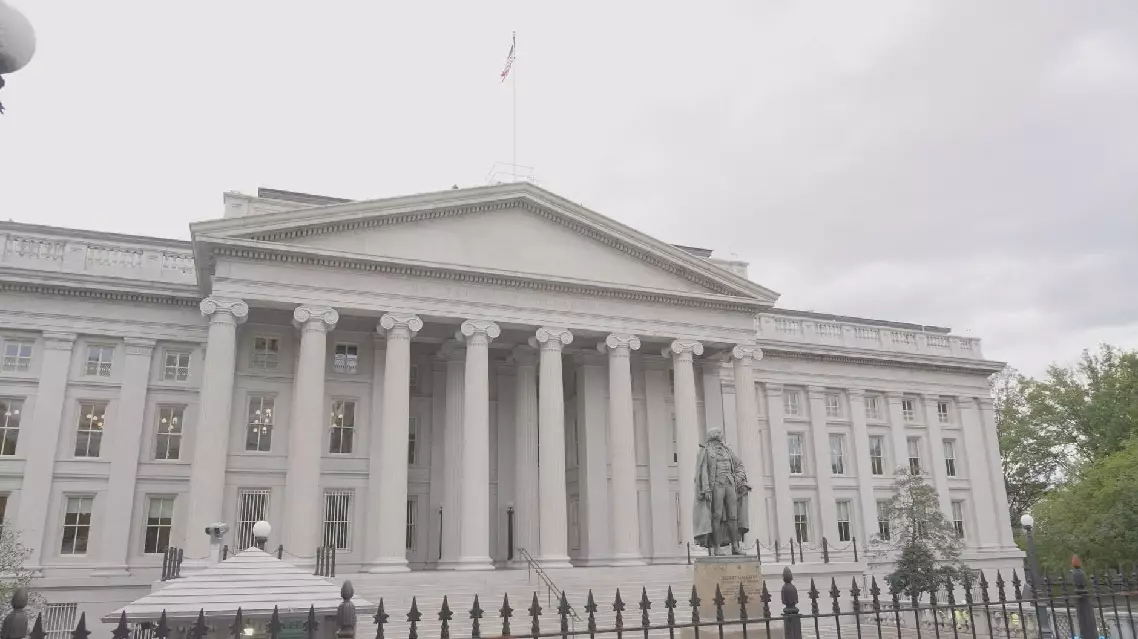
US bond buyback expansion could fuel inflation, complicate Fed’s monetary policy work: analysts