Skip to Content Facebook Feature Image

China has optimized coordinated fiscal, financial policies to boost domestic demand: finance ministry

China

China

China

China has optimized coordinated fiscal, financial policies to boost domestic demand: finance ministry

2026-08-21 11:50 Last Updated At:15:57

China's coordinated fiscal and financial policies aimed at increasing domestic demand have been optimized and improved, a finance ministry official said on Friday.

New measures include expanding the scope of interest subsidies, increasing the number of agencies, and raising the upper limit on quotas, Vice Minister of Finance Liao Min told a press conference held by the State Council Information Office.

"First, we will expand the scope of interest subsidies. Fully taking into account the actual needs of enterprises, on top of the previous fixed-asset loans, we will also include newly issued working capital loans in the interest subsidy policy for small- and medium-sized enterprises. To better align with public consumption habits, various new credit card installment consumption transactions, including car purchases and home renovation, will also be brought under the policy's coverage," said Liao.

"Second, we will increase the number of handling agencies. The number of agencies handling interest subsidies on loans to small and medium-sized enterprises and loans to service business operators will be further increased, from approximately 100 to roughly 400. Third, we will further raise the upper limit on quotas. The maximum loan amount eligible for interest subsidies for small and medium-sized enterprises will be increased from 50 million yuan to 75 million yuan, and the maximum loan amount eligible for interest subsidies for service business operators will be raised from 10 million yuan to 20 million yuan. In addition, the maximum interest subsidy for individual consumer loans eligible under the policy will be increased from the previous 3,000 yuan to 5,000 yuan, so as to better meet the investment needs of business operators and the consumption needs of consumers," Liao added.

The Ministry of Finance is working on and formulating new policies and measures, which are expected to be introduced in the second half of this year, according to Liao.

"In line with the needs of economic development, we are continuing to research and formulate new policies and measures for fiscal and financial coordination, which will be rolled out in the second half of this year. At the same time, we are strengthening overall coordination efforts and will work together with the central bank and financial regulatory authorities to promote the normalization and long-term sustainability of fiscal-financial synergy," he said.

China has optimized coordinated fiscal, financial policies to boost domestic demand: finance ministry

China has optimized coordinated fiscal, financial policies to boost domestic demand: finance ministry
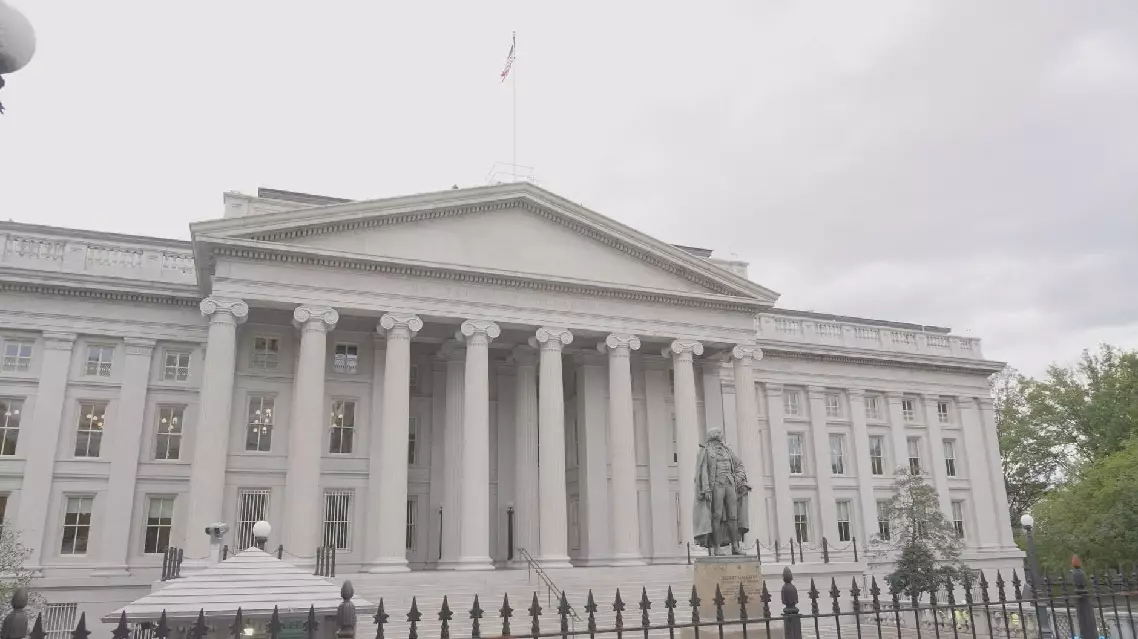
U.S. Treasury Secretary Scott Bessent said Thursday that the government's long-dated bond buyback could be more than the recently announced 4 billion U.S. dollars, sparking concerns over rising inflation and mounting pressures on the Federal Reserve.

The U.S. Treasury announced Wednesday that it would at least double the size of its buyback program for 10- to 30-year Treasury bonds, aiming to provide more liquidity support to the long end of the market and curb the unsettling surge of treasury yields.

Bessent revealed in an interview on Thursday that the size of the buyback could be more than 4 billion U.S. dollars per issue, but didn't provide a specific number, saying the figure will depend on market conditions.

U.S. Treasury yields dropped following Bessent's statement. However, for the whole day, the yield on the benchmark 10-year Treasury note rose 4 basis points to 4.69 percent, while the 30-year bond yield increased by 4 basis points to 5.24 percent.

Speaking of the national debt, which has more than doubled in a decade to surpass the 40-trillion-U.S.-dollar mark, Bessent downplayed the milestone by emphasizing long-term economic expansion.

"There's nothing magic about the 40-trillion number," he said, asserting the U.S. will grow its way out of this.

Market analysts have warned that the intervention risk fueling inflation and complicating the Fed's monetary policy work.

They predict the Treasury will fund the buyback program by issuing short-term debt, an operation of replacing issuance of longer-term debt with shorter-term bills to curb long-term bond yields.

When the Treasury relies more on short-term debt, it becomes more sensitive to changes in interest rates. Once the Fed raises interest rates, the government's interest payments will increase rapidly, further driving up the total size of the national debt.

Therefore, analysts believe the buyback program is not a good solution to market problems, as structural debt pressures have already been out of the control of the Treasury and the government.

Investors are also skeptical that the Treasury's intervention can provide a lasting market relief. If the measure proves ineffective, it could further undermine the credibility the dollar and the Treasury.

US bond buyback expansion could fuel inflation, complicate Fed’s monetary policy work: analysts

US bond buyback expansion could fuel inflation, complicate Fed’s monetary policy work: analysts

Recommended Articles