Skip to Content Facebook Feature Image

China's trade with other APEC economies reaches 18.03 trillion yuan in first 7 months

China

China

China

China's trade with other APEC economies reaches 18.03 trillion yuan in first 7 months

2026-08-21 14:24 Last Updated At:16:07

China's imports and exports with other Asia-Pacific Economic Cooperation (APEC) economies totaled 18.03 trillion yuan (about 2.68 trillion U.S. dollars) in the first seven months of this year, up 21 percent year on year, data released Thursday at the APEC Customs and Business Dialogue showed.

The Asia-Pacific economy currently accounts for more than 60 percent of the global economy, while its total trade volume is approaching half of the global total.

In the first seven months of this year, the growth rate of China's trade with other APEC economies outpaced that of China's overall trade in goods during the same period, highlighting the huge potential for regional economic cooperation.

"The small and medium sized enterprises account for 97 percent of all of the businesses in our region, so our ability to make that easier for them and to find a way to reduce the paperwork, increase the recognition of paperwork is an incredibly important piece of work for APEC to work on over the next few years," said Eduardo Pedrosa, executive director of the APEC Secretariat.

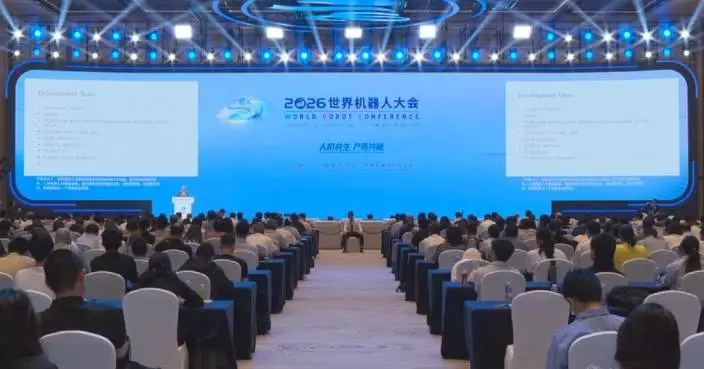
During the dialogue, the General Administration of Customs of China also held talks with the Customs and Excise Department of the Hong Kong Special Administrative Region, the Department of Customs Cooperation of the Eurasian Economic Commission, South Korea's Ministry of Food and Drug Safety and Chile's Ministry of Agriculture, among others, to deepen cooperation.

"For us, China is a very important market, especially for cherries, which are our main export to China. Therefore, we have been in constant contact with the customs authorities and the ports to facilitate the entry of our fruit. And I would like to sincerely thank the port authorities and workers for all the tremendous efforts they make to facilitate the entry of our fruit," said Miguel Canala-Echeverría, general manager of the Chilean Fruit Association.

"Shenzhen and Chile have close economic and trade ties, with three weekly routes providing direct connections to major Chilean ports. More than 40 percent of Chilean cherries imported into China enter through Shenzhen ports. Establishing inter-customs cooperation will help create new opportunities for the import and export of high-quality goods between China and Chile," said Pan Chuxiong, deputy head of Shenzhen Customs.

China's trade with other APEC economies reaches 18.03 trillion yuan in first 7 months


China's trade with other APEC economies reaches 18.03 trillion yuan in first 7 months

U.S. Treasury Secretary Scott Bessent said Thursday that the government's long-dated bond buyback could be more than the recently announced 4 billion U.S. dollars, sparking concerns over rising inflation and mounting pressures on the Federal Reserve.

The U.S. Treasury announced Wednesday that it would at least double the size of its buyback program for 10- to 30-year Treasury bonds, aiming to provide more liquidity support to the long end of the market and curb the unsettling surge of treasury yields.

Bessent revealed in an interview on Thursday that the size of the buyback could be more than 4 billion U.S. dollars per issue, but didn't provide a specific number, saying the figure will depend on market conditions.

U.S. Treasury yields dropped following Bessent's statement. However, for the whole day, the yield on the benchmark 10-year Treasury note rose 4 basis points to 4.69 percent, while the 30-year bond yield increased by 4 basis points to 5.24 percent.

Speaking of the national debt, which has more than doubled in a decade to surpass the 40-trillion-U.S.-dollar mark, Bessent downplayed the milestone by emphasizing long-term economic expansion.

"There's nothing magic about the 40-trillion number," he said, asserting the U.S. will grow its way out of this.

Market analysts have warned that the intervention risk fueling inflation and complicating the Fed's monetary policy work.

They predict the Treasury will fund the buyback program by issuing short-term debt, an operation of replacing issuance of longer-term debt with shorter-term bills to curb long-term bond yields.

When the Treasury relies more on short-term debt, it becomes more sensitive to changes in interest rates. Once the Fed raises interest rates, the government's interest payments will increase rapidly, further driving up the total size of the national debt.

Therefore, analysts believe the buyback program is not a good solution to market problems, as structural debt pressures have already been out of the control of the Treasury and the government.

Investors are also skeptical that the Treasury's intervention can provide a lasting market relief. If the measure proves ineffective, it could further undermine the credibility the dollar and the Treasury.

US bond buyback expansion could fuel inflation, complicate Fed’s monetary policy work: analysts

US bond buyback expansion could fuel inflation, complicate Fed’s monetary policy work: analysts

Recommended Articles