Record high U.S. national debt is driving up borrowing costs, eroding consumer purchasing power and hurting global bondholders, economist Liu Baocheng said.
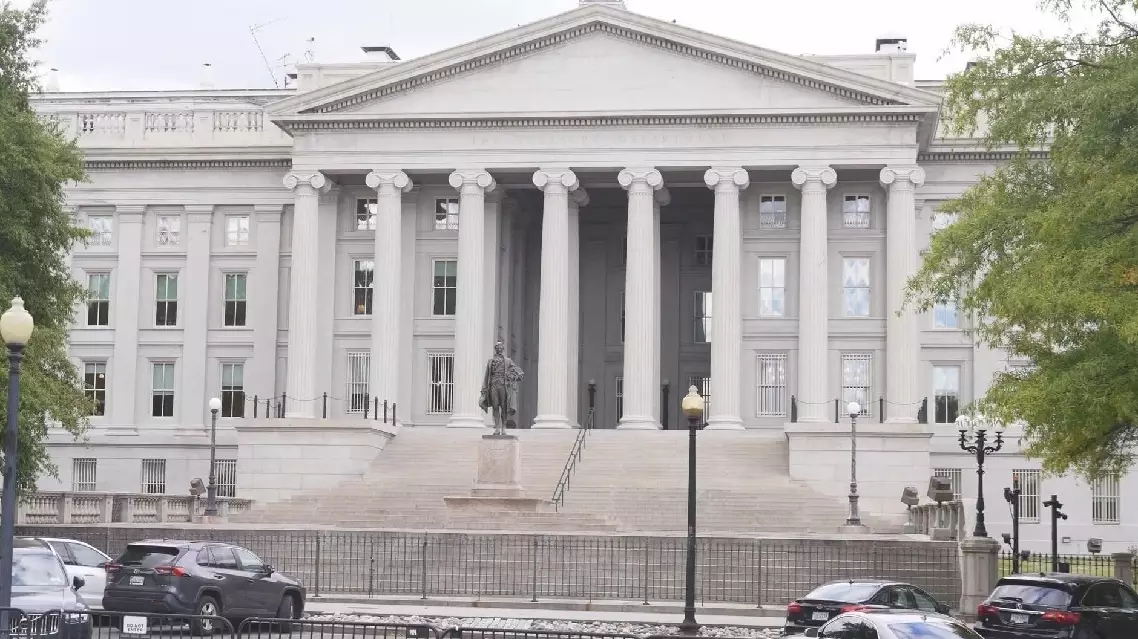
The U.S. federal government on Tuesday saw its total public debt topping 40 trillion U.S. dollars, according to a Treasury Department report issued on Wednesday.
In an interview with CGTN, Liu, dean of the Center for International Business Ethics at the University of International Business and Economics, said rising debt will push up interest rates, triggering a debt interest feedback loop.
"This is really a warning sign, because it really creates a sort of a spiral effect. It's like a household managing their finance. When they have a larger deficit, they have to buy more. So this is a signal that can really alert more of the global investors, because now when the long term yields are really on the rise and those existing holders of those bonds may feel quite a loss in the real market value. And domestically, the real value of the U.S. dollar may also eat in some of the real purchase power of those domestic consumers," Liu said.
In the long run, Liu believes the investors are likely to rearrange their bonds portfolio to replace the lazy bonds or off-the-run bonds with more accurate ones.
"The issue is that when they really manage all of this, things could really run off the limit, and that's also creates more pressure on the value of the U.S. dollar. And also, it gives more of the stress to existing holders of those bonds for fear of losing their values," he said.
Record US debt pressures global investors, erodes consumer purchasing power: expert
Displaced farming families are returning to their homeland in Gaza City, restoring fields and growing food again, though challenges like poor farming conditions and lack of supplies remain.
In parts of Gaza, farmland damaged during Israel's war on the enclave is slowly coming back to life.
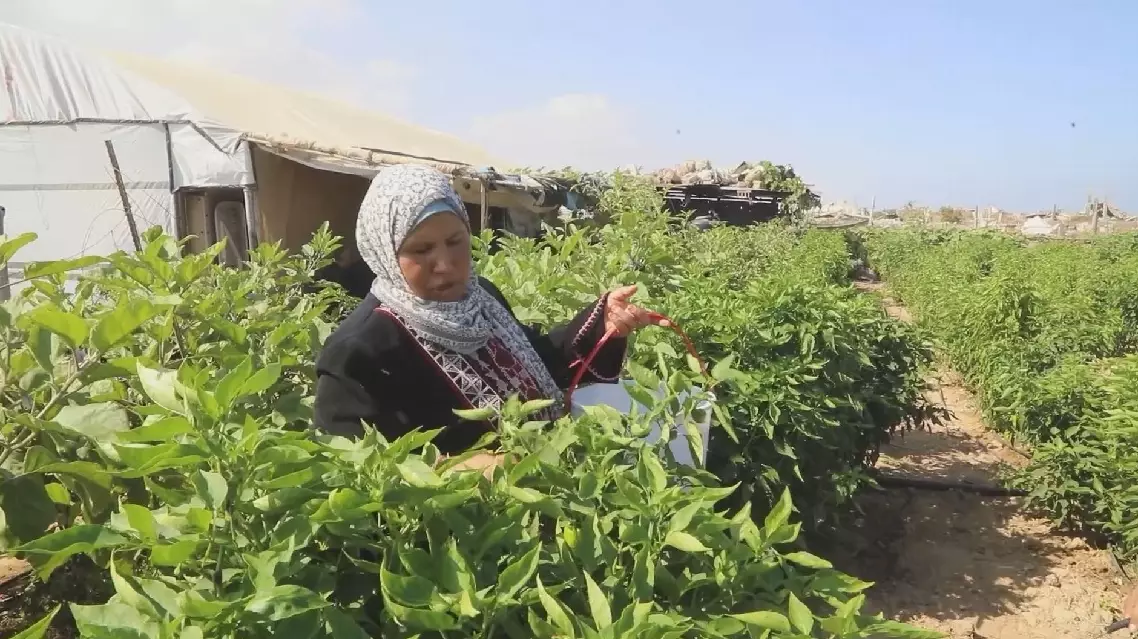
Fresh vegetables are being harvested again from farmland in Gaza City's Al-Zaitoun neighborhood.
For the Al-Dahdouh family, these crops mark the return of their land to life.
The challenges have been immense. Nearly three years of war have left much of Gaza's farmland damaged or bulldozed, making the return to farming a difficult task for families trying to start again.
"When we returned after being displaced, the land was covered with piles of rubble and debris and was difficult to access. Everyone in the family worked together to rehabilitate it for farming. Thankfully, we were finally able to cultivate it again," said Wajiha Al-Dahdouh, a Palestinian farmer.
Rebuilding livelihoods and restoring a sense of normal life remains difficult after the three years of war, repeated displacement and the loss of income for many families.
"We can't afford to hire workers to help us with farming because of the high costs. We also face serious difficulties securing water for irrigation and pesticides. It has been a huge burden on us," said Iman Al-Dahdouh, another Palestinian farmer.
The Al-Dahdouh family is among around 350 farming families supported by United Nations Development Program (UNDP) with Relief Housing Units and farming assistance.
Around 1,100 families are expected to benefit in total.
"For the last three years, it has been total destruction, and people have had to leave their homelands. The families have been displaced multiple times to various locations in the midland south area of the Gaza Strip. What you see here now is life returning to the neighborhood, and UNDP supports these families through providing dignified shelters and housing solutions through what we call relief housing units," said Margunn Indreboe Alshaikh, deputy special representative of UNDP Palestine.
The initiative is part of UNDP's Neighbourhood Approach, combining housing with basic services and livelihood support.
Displaced farmers arrive back in Gaza amid challenges