A senior United Nations organization official called for more investment in land protection, noting that nearly 40 percent of the world's land has already degraded, while droughts have increased in frequency by nearly 30 percent over the past two decades.
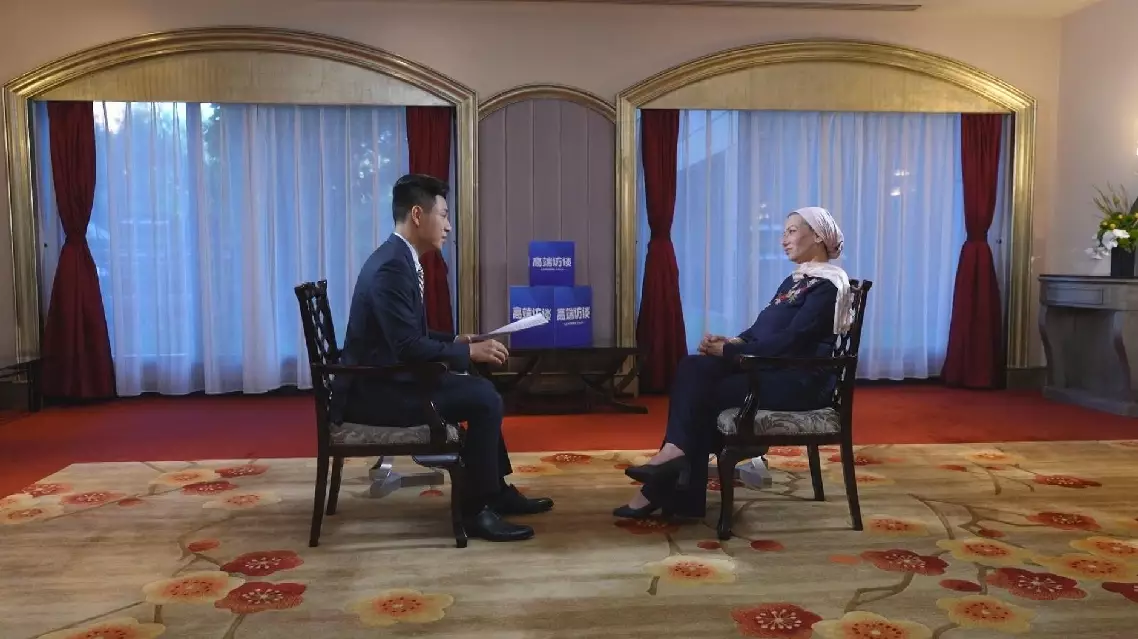
Yasmine Fouad, executive secretary of the United Nations Convention to Combat Desertification (UNCCD), has highlighted the correlation between land degradation and security in an exclusive interview with China Media Group in July during her first visit to China.
Fouad, also the UN Under-Secretary-General, quoted the UNCCD report in February on the concerning state of land in the world. She pointed out the serious consequences of land degradation
"There is a direct relation between land degradation, drought and security. When drought happens, people leave their land, and leaving their land, they could move inside the same country where there will be conflict over the natural resources, or they would migrate outside and that would be an issue to other countries. So there is illegal migration, there is displacement, there is human mobility. So first of all, investing in land degradation and drought is a way that you're investing in peace, stability and security," she said.
The 17th session of the Conference of the Parties (COP17) to the UNCCD officially commenced on Monday in Mongolia's Ulaanbaatar. Fouad said the conference would present a profitable model to get private firms involved in drought resilience.
"The second thing that would be most effective in that discussion is to deal with the drought resilience and that would be part of COP17, and that we will present a model where the private sector can invest to mitigate the impact of drought and win and get revenue," she said.
The Executive Secretary has called restoring and protecting land the "smartest investment" in peace and prosperity. Stressing that the economic return from combating land degradation is real, she noted that greater private-sector participation is needed in land protection and restoration efforts.
UN official urges more land protection amid rising risks
Displaced farming families are returning to their homeland in Gaza City, restoring fields and growing food again, though challenges like poor farming conditions and lack of supplies remain.
In parts of Gaza, farmland damaged during Israel's war on the enclave is slowly coming back to life.
Fresh vegetables are being harvested again from farmland in Gaza City's Al-Zaitoun neighborhood.
For the Al-Dahdouh family, these crops mark the return of their land to life.
The challenges have been immense. Nearly three years of war have left much of Gaza's farmland damaged or bulldozed, making the return to farming a difficult task for families trying to start again.
"When we returned after being displaced, the land was covered with piles of rubble and debris and was difficult to access. Everyone in the family worked together to rehabilitate it for farming. Thankfully, we were finally able to cultivate it again," said Wajiha Al-Dahdouh, a Palestinian farmer.
Rebuilding livelihoods and restoring a sense of normal life remains difficult after the three years of war, repeated displacement and the loss of income for many families.
"We can't afford to hire workers to help us with farming because of the high costs. We also face serious difficulties securing water for irrigation and pesticides. It has been a huge burden on us," said Iman Al-Dahdouh, another Palestinian farmer.
The Al-Dahdouh family is among around 350 farming families supported by United Nations Development Program (UNDP) with Relief Housing Units and farming assistance.
Around 1,100 families are expected to benefit in total.
"For the last three years, it has been total destruction, and people have had to leave their homelands. The families have been displaced multiple times to various locations in the midland south area of the Gaza Strip. What you see here now is life returning to the neighborhood, and UNDP supports these families through providing dignified shelters and housing solutions through what we call relief housing units," said Margunn Indreboe Alshaikh, deputy special representative of UNDP Palestine.
The initiative is part of UNDP's Neighbourhood Approach, combining housing with basic services and livelihood support.
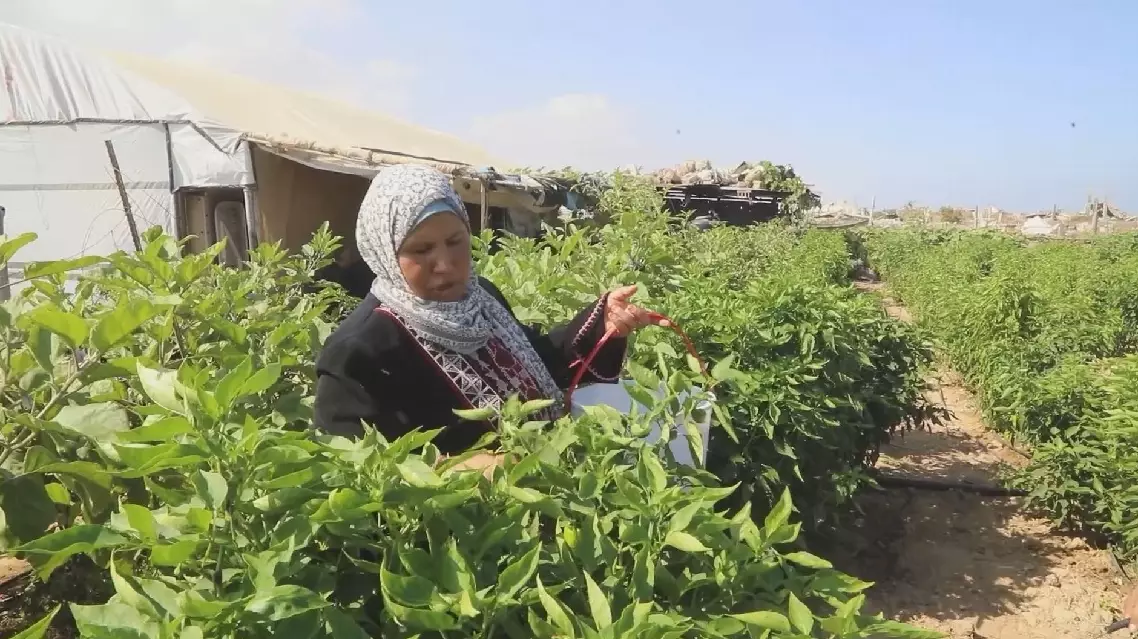
Displaced farmers arrive back in Gaza amid challenges