The first overhead contact wire along the entire Chengdu-Chongqing central line high-speed railway in southwestern China was successfully installed on Friday, marking the entry of the line's "four electrifications" project into a critical phase.
The "four electrifications" refer to communication, train control and signaling systems, railway power supply and distribution systems for stations and facilities, and traction power supply systems.
The overhead contact wire is a key component of the railway's traction power supply system, delivering electricity directly to trains. According to the construction plan, a total of 742 route-kilometers of overhead contact wire will be installed along the entire line, including 483 route-kilometers in the Sichuan section and 259 route-kilometers in the Chongqing section.
The Chengdu-Chongqing central line high-speed railway is an important part of China's eight vertical lines and eight horizontal lines high-speed railway grid, specifically along the Yangtze River corridor.
The main line stretches 292 kilometers and is designed for a top speed of 350 kilometers per hour.
Upon completion, the railway will further improve the high-speed rail network in the Chengdu-Chongqing region, facilitate travel for residents along the route, and better serve the development of the Chengdu-Chongqing dual-city economic circle.
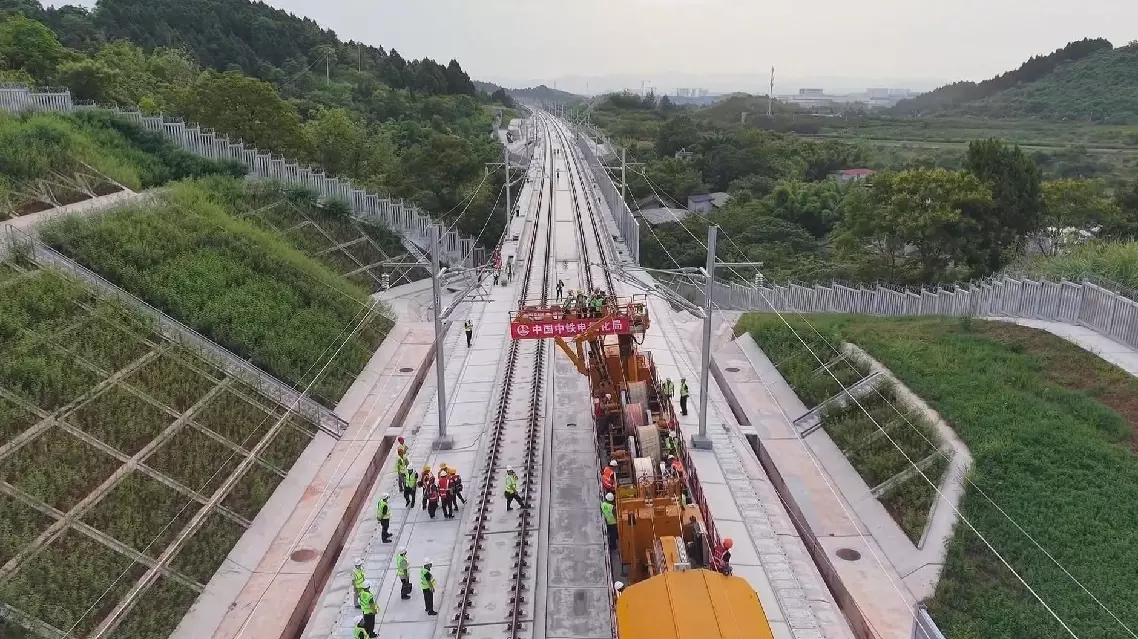
First overhead contact wire installed on Chengdu-Chongqing central line high-speed railway
Displaced farming families are returning to their homeland in Gaza City, restoring fields and growing food again, though challenges like poor farming conditions and lack of supplies remain.
In parts of Gaza, farmland damaged during Israel's war on the enclave is slowly coming back to life.
Fresh vegetables are being harvested again from farmland in Gaza City's Al-Zaitoun neighborhood.
For the Al-Dahdouh family, these crops mark the return of their land to life.
The challenges have been immense. Nearly three years of war have left much of Gaza's farmland damaged or bulldozed, making the return to farming a difficult task for families trying to start again.
"When we returned after being displaced, the land was covered with piles of rubble and debris and was difficult to access. Everyone in the family worked together to rehabilitate it for farming. Thankfully, we were finally able to cultivate it again," said Wajiha Al-Dahdouh, a Palestinian farmer.
Rebuilding livelihoods and restoring a sense of normal life remains difficult after the three years of war, repeated displacement and the loss of income for many families.
"We can't afford to hire workers to help us with farming because of the high costs. We also face serious difficulties securing water for irrigation and pesticides. It has been a huge burden on us," said Iman Al-Dahdouh, another Palestinian farmer.
The Al-Dahdouh family is among around 350 farming families supported by United Nations Development Program (UNDP) with Relief Housing Units and farming assistance.
Around 1,100 families are expected to benefit in total.
"For the last three years, it has been total destruction, and people have had to leave their homelands. The families have been displaced multiple times to various locations in the midland south area of the Gaza Strip. What you see here now is life returning to the neighborhood, and UNDP supports these families through providing dignified shelters and housing solutions through what we call relief housing units," said Margunn Indreboe Alshaikh, deputy special representative of UNDP Palestine.
The initiative is part of UNDP's Neighbourhood Approach, combining housing with basic services and livelihood support.
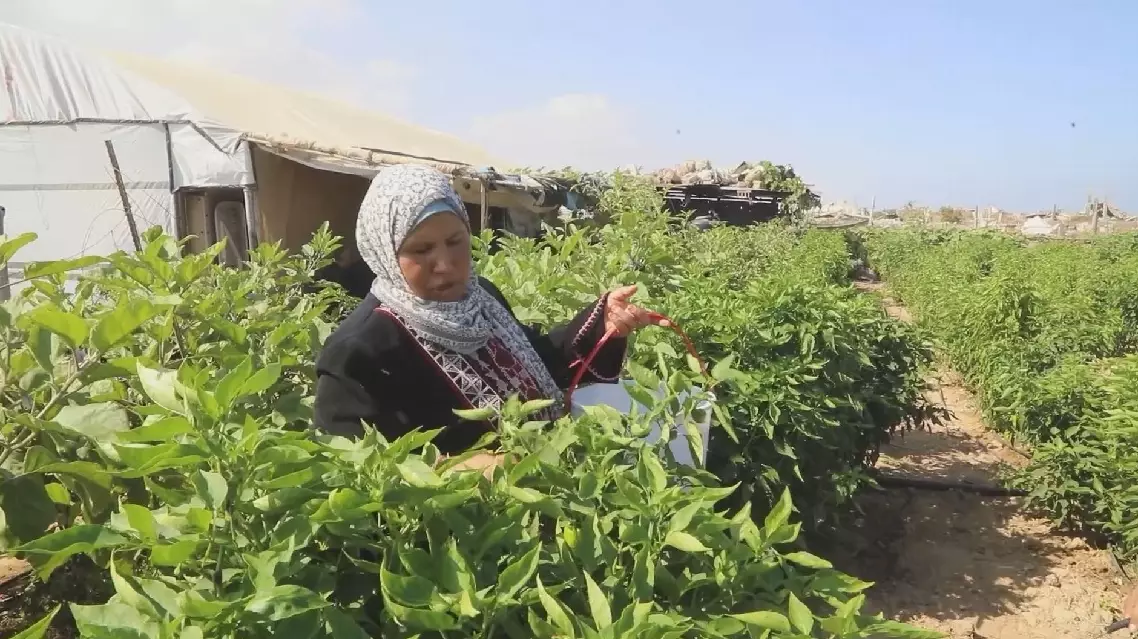
Displaced farmers arrive back in Gaza amid challenges