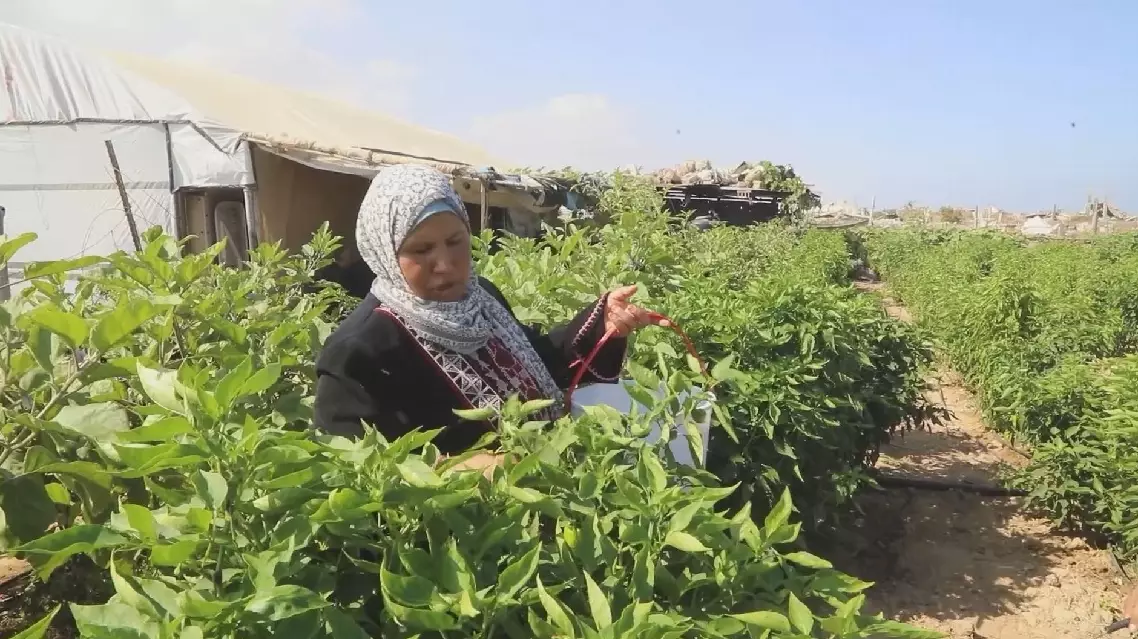
An American teacher who contributed to China's desert-control efforts in 1999 has expressed astonishment at the remarkable transformation of the Mu Us Desert, where lush forests and modern infrastructure have replaced the barren sands he once remembered.
Ronald Sakolsky, a former American high school history teacher, arrived in Luoyang, central China's Henan Province, as an exchange program teacher in 1999.
"And I was connected to 1.4 billion back in 1999. Because China accepted me. My school accepted me. My students accepted me. The teachers that I taught with accepted me. And I just felt part of the Chinese family," Sakolsky said.
During his time in Luoyang, Sakolsky came across a televised news segment featuring Yin Yuzhen, a Chinese desert-control pioneer. At the time, Yin and her husband had planted about 2,000 hectares of trees on the edge of the desert. Deeply moved by her dedication, Sakolsky resolved to help.
Beginning in October 1999, Sakolsky sent emails to multiple institutions across the U.S. in the hope of soliciting donations, before he eventually raised 5,000 U.S. dollars.
That year, the annual per capita disposable income of urban residents in China stood at 5,854 yuan (about 860 U.S. dollars). For Yin, the 5,000 U.S. dollars was a staggering amount.
Over the years, with strong government support and the efforts of local desert-control pioneers, the swathe of green has expanded to cover more than 4,600 hectares of once-barren land near Yin's home, with over 8 million trees planted.
Now 69, Sakolsky will return to China later this month, traveling from Beijing to Luoyang and finally to the Mu Us Desert. He looks forward to reuniting with Yin, giving her a big hug and planting another tree beside her, where shifting sands have given way to a forest roughly 50,000 trees strong.
"First of all, I've seen pictures of the forest. I cannot believe what it looks like. I've never imagined that this was going to be. I saw a picture of a pagoda, a big building in the middle of the forest. There were no buildings back then. It was all desert sand. That's all there was. Now there are roads, and trees, and buildings," said Sakolsky.
His experience in China also followed him back to his classroom in the United States, where his firsthand stories helped bring China and its history closer to his students. For Sakolsky, the lesson extends far beyond the classroom.
"I could make it real because I was there. So I was there, so they listen. They would then ask me questions all about China. Let me just say to the Chinese people that you're family. And if you focus, I say it again, on similarities rather than differences, the whole world can live in peace," he said.
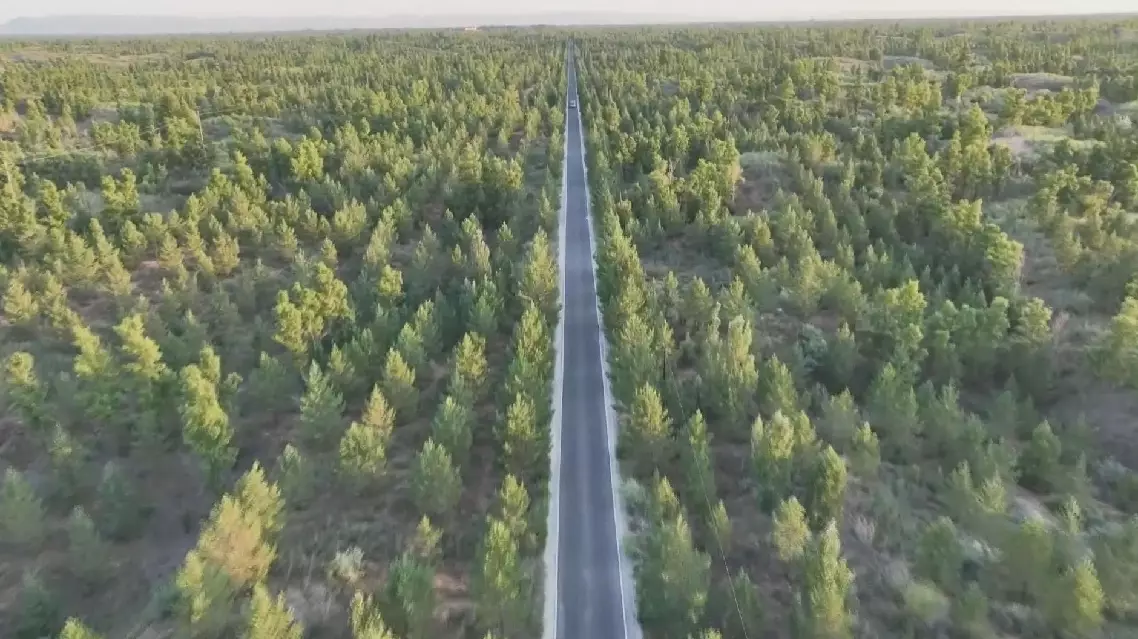
American teacher marvels at China’s desert turned forest