Chinese animated film "All Wishes Come True" has captivated numerous audiences at home and abroad with its profound Eastern aesthetics, offering a stunning glimpse into the timeless charm of traditional Chinese culture.
Rooted in the classic Taoist tale of the Eight Immortals crossing the sea, the film departs from tradition. Rather than depicting all-powerful deities, it envisions them as ordinary mortals before their ascension. In the reimagined Penglai fairyland, celestial beings are assigned temples, ranked by incense offerings, and evaluated by KPIs.
The narrative ignites when the mortal world faces impending catastrophe. Lyu Dongbin journeys to Penglai, where eight unlikely companions are united by a scheme to impersonate immortals and infiltrate a treasure vault.
Far from their celebrated folklore counterparts, these protagonists are portrayed with imperfections. Yet, confronted by chaos and innocent lives in peril, they gradually elevate justice over self-interest, ultimately saving the populace and earning their immortality.
This innovative, subversive narrative, blended with authentic traditional cultural elements and humorous storytelling, has struck a deep chord with domestic audiences and aroused growing global interest in traditional Chinese culture.
As of Saturday evening, the film grossed over 1.7 billion yuan (about 252.85 million U.S. dollars) and hit the silver screens in Australia and New Zealand.
"The movie really makes me want to go to China more, it looks really interesting," said a viewer in New Zealand.
Visually, rather than simply stacking traditional cultural symbols, the production team delved into traditional folk customs and ancient documents to perfectly blend Eastern aesthetics with modern life.
"Our aesthetic design is deeply rooted in traditional Chinese culture. We referenced a wide range of cultural relics, including a Penglai landscape-themed bonsais in museum. The textures of Penglai in the film are designed to be mild and lustrous, presenting a delicate jade-like texture," said Cao Linlin, the film's producer.
The animated feature presents Chinese ethos and values embedded in its narrative to global viewers through a fresh artistic lens. Mou Zhengyang, the film’s director and screenwriter, believes that true immortality in this story comes not from supernatural power, but from inner transformation, personal growth and the awakening of responsibility.
"One principle we consistently uphold is the need to preserve the fundamental roots and core strengths of these stories. We must preserve those timeless elements that have endured for a thousand years and remain etched in people's memories," said Mou.
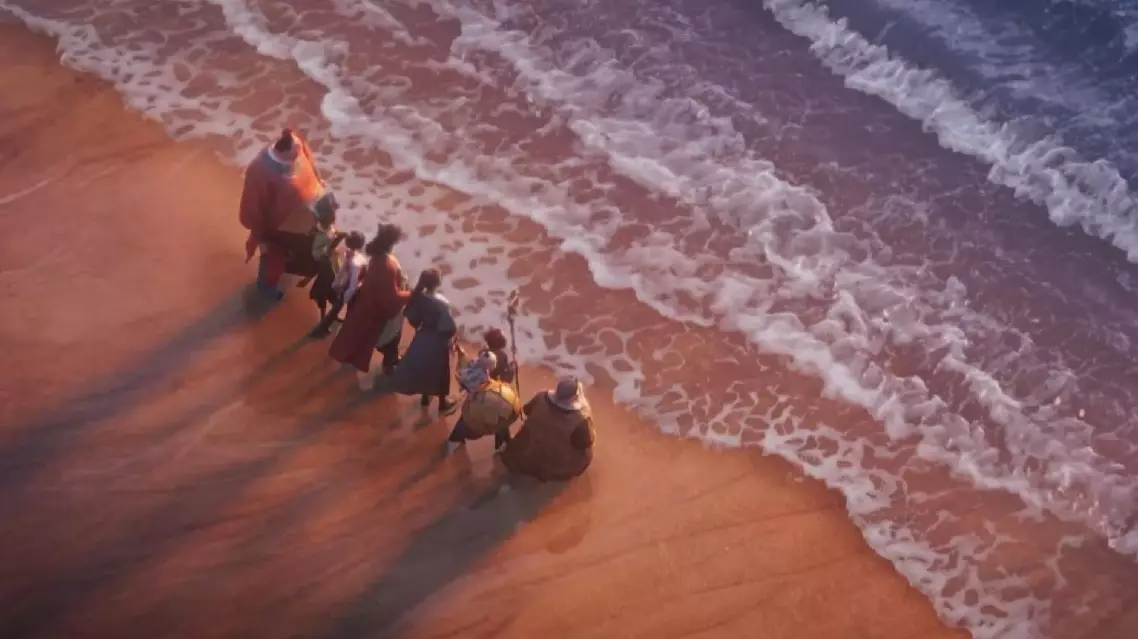
Animated comedy "All Wishes Come True" wins wide audiences with stunning Chinese aesthetic