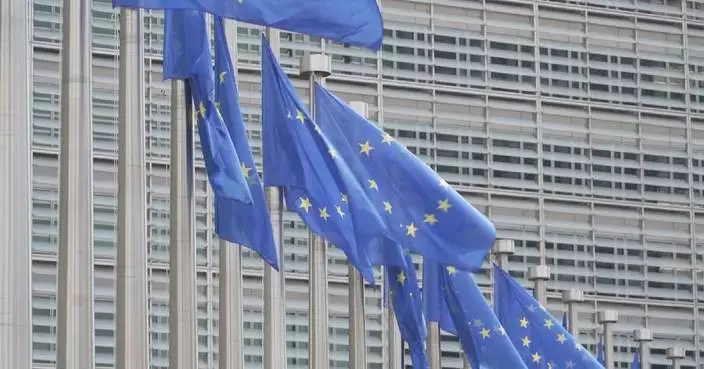
A summer of record heat waves and persistent drought has devastated Europe's agricultural sector, slashed crop yields, disrupted wine production and strained water resources, with economic losses estimated at around 180 billion euros, accounting for roughly 1 percent of the European Union's GDP.
The drought has disrupted daily life for millions of Europeans living along major rivers.
Poland's Vistula River, the country's longest waterway, dropped to a record low of just 19 centimeters in mid-July in Warsaw, far below the normal level of around 230 centimeters. The exposed riverbed has alarmed local residents.
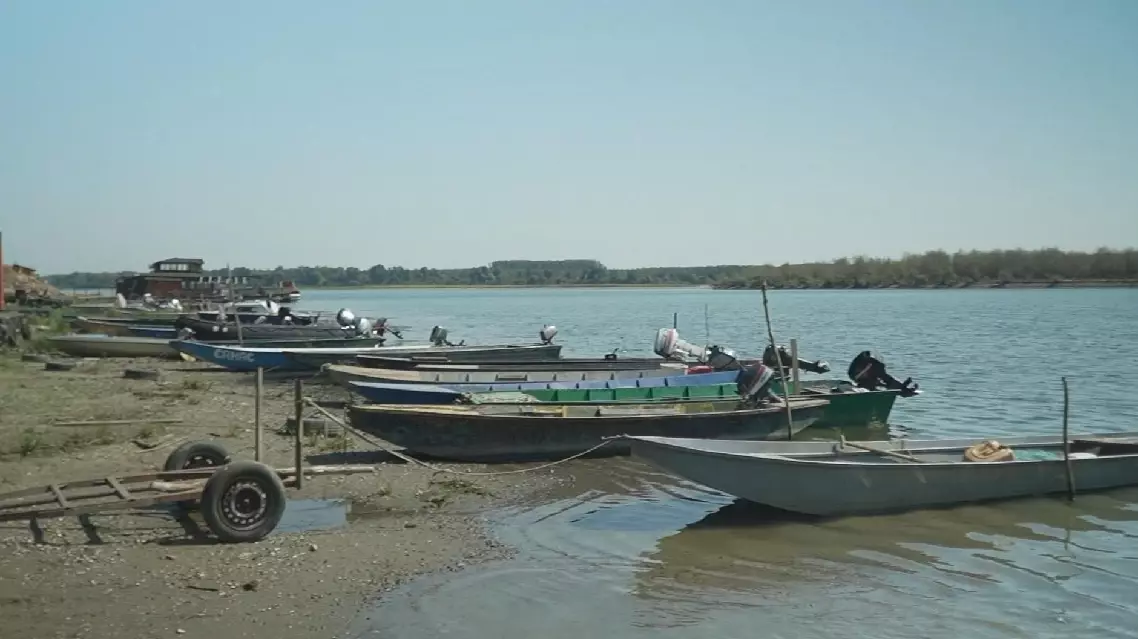
Along the Serbian section of the Danube, rising water temperatures have lowered dissolved oxygen levels, threatening fish and other aquatic life.
"This year is unusual. The water level is very low and there's not much water. So the catch has been poor. Lately, I've occasionally caught a pike-perch or two, about one kilogram, one and a half kilograms at most. That's about it," said a fisherman from Novi Sad.
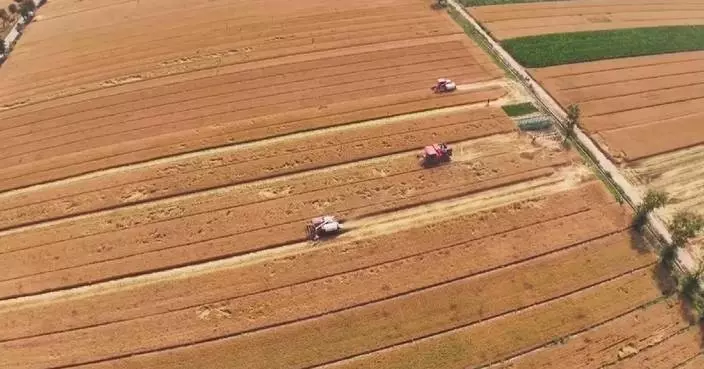
Across the continent, crop losses are mounting as heat waves batter the farming sector. In Germany, grain output is expected to fall 7 percent year on year, with farmers unable to irrigate for weeks in some regions. Slovakia faces a 17-percent drop in grain production, while Serbia's corn harvest is forecast to bring yields 30 to 40 percent below normal. France could see corn production fall 35 percent, and dairy cows are producing less milk due to heat stress.
In the United Kingdom, dried-up pastures have forced many livestock farmers to tap into winter feed reserves months ahead of schedule.
"We can't make any more silage because there's nothing growing. So you're using your winter fodder already as like many farmers. And there's a lot of farmers, a lot of dairy farmers that are feeding a lot of silage now. But if it rained today, it would be six, seven or eight weeks before the grass would recover," said Mathew Roberts, a British sheep and cattle farmer.
Europe's wine industry is also reeling. Grape ripening has come one to two weeks early in France, with yields at some wineries expected to drop by 25 to 30 percent or more. Bankruptcies in the French wine sector are up sharply. Spanish growers have introduced night harvesting to protect quality, but warn that traditional vineyards may need to relocate within decades if heat persists.
Across Europe, the power sector accounts for about 33 percent of total water consumption, followed by agriculture (21 percent), public water use (21 percent) and industry (14 percent), according to the European Environment Agency. According to the European Commission, 30 percent of the population and 20 percent of land already face water scarcity.
To address the crisis, the European Union adopted a Water Resilience Strategy in June 2025, aiming to enhance the continent's capacity to cope with water crises through conservation, treatment and management. The EU has set a target to improve overall water efficiency by 10 percent by 2030, with a "water conservation first" principle to reduce waste and promote the use of recycled water in agriculture, industry and public supply. The European Investment Bank has committed 15 billion euros to support the strategy.
Experts have called on the EU to increase the dedicated budget for water resources and make water resilience a priority in future multi-annual financial planning.
Extreme heat, drought take heavy toll on European agriculture, water supplies
Extreme heat, drought take heavy toll on European agriculture, water supplies