More than two years into effect, the China-Ecuador free trade agreement (FTA) has significantly enhanced bilateral trade, slashing tariffs to boost Ecuadorian agricultural exports -- such as shrimp and bananas -- while expanding China's industrial footprint in the region.
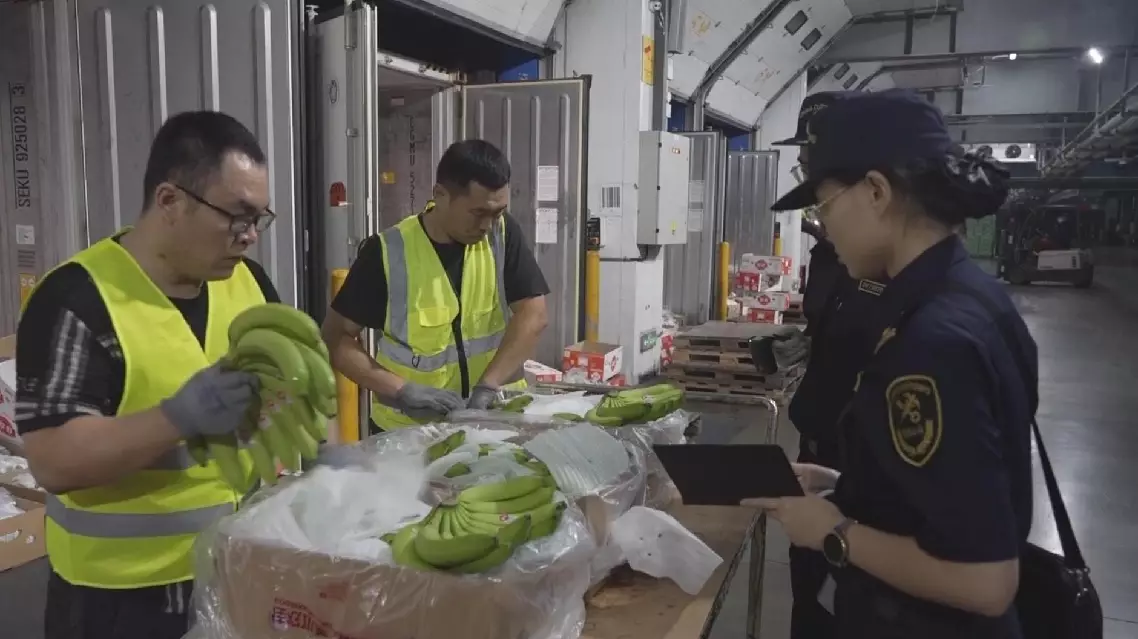
At the Dayaowan Port in northeast China's Liaoning Province, growing volumes of Ecuadorian products are entering the Chinese market under the agreement between the two nations.
Recently, around 750 tonnes of bananas from Ecuador have arrived at the port. After an efficient customs clearance process, they'll be sent to markets in Beijing, Tianjin and across northeast China.
"We've introduced a series of measures to make customs clearance more efficient. We've set up designated areas for centralized inspections. And if the required clearance procedures are completed in advance, the goods can be picked up directly at the terminal," said Zhao Fengqi, director of the comprehensive business department with the Dayaowan Customs Office.
Speed matters more than ever as trade volumes continue to grow. More and more Ecuadorian products have been reaching Chinese consumers since the China-Ecuador FTA took effect on May 1, 2024.
Under the agreement, tariffs on around 90 percent of traded goods will be gradually eliminated, covering many of the two countries' major exports.
"In the two years since the FTA took effect, we've handled more than 1.03 billion yuan (153 million U.S. dollars) worth of Ecuadorian bananas. And they have yielded tariff savings of more than 23 million yuan (3.4 million U.S. dollars)," Zhao said.
Behind these numbers are real gains for businesses in Dalian and beyond.
"This is a real benefit. As more Ecuadorian bananas and shrimp enter the Chinese market, we've seen growing demand for storage, ripening and distribution services, which has brought more business to our company," said Gao Yugang, deputy general manager of Dalian Port Yidu Cold Chain Co.
China and Ecuador have highly complementary economies from high-quality agricultural products to energy, technology and access to major markets. Despite their differences in size, both sides share a commitment to development and to mutually beneficial cooperation.
"Free trade agreement makes both China and Ecuador closer together. Of course, their tariffs have been going down and will keep going down, which makes more active trade. This is a friendly relationship, and it has been friendly and respectful since the beginning. So, I think It's a win-win situation both for Ecuador and for China," said Hector Villagran Cepeda, former commercial counselor of Ecuador in Beijing.
China-Ecuador free trade deal gives fresh impetus to bilateral trade
Chinese stock markets dropped on Monday, as AI and tech stocks continued to see-saw, according to China Global Television Network (CGTN) market analyst Timothy Pope.
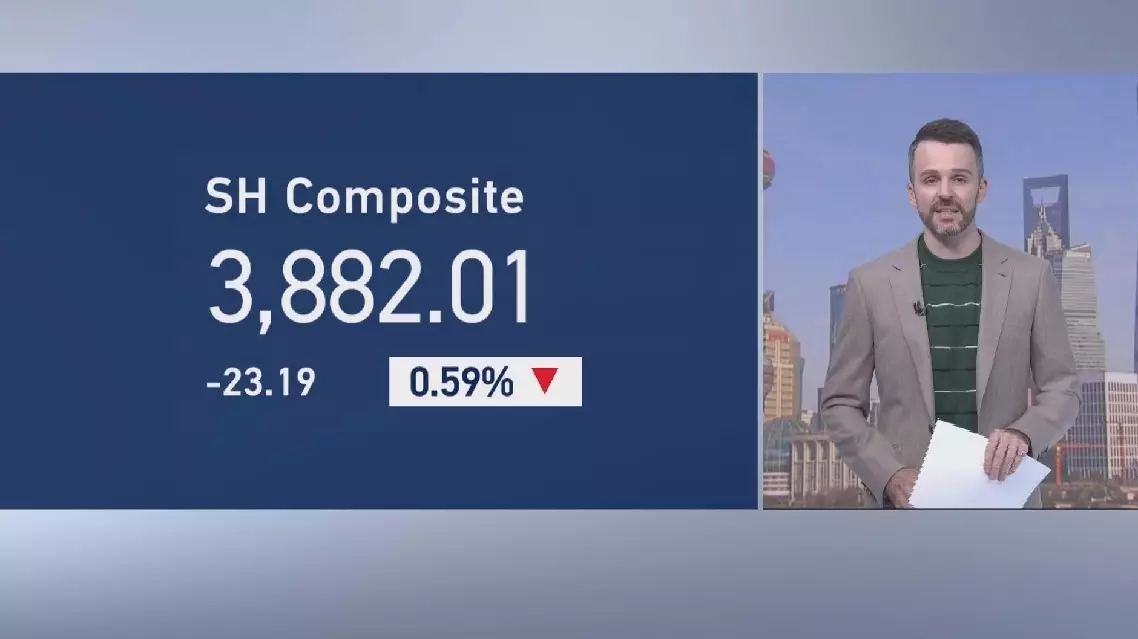
The benchmark Shanghai Composite Index closed down 0.59 percent at 3,882.01 points, with the Shenzhen Component Index, which has more exposure to the tech sector, closing 2.13 percent lower at 13,794.29 points.
Trading volumes on the two indices rose with around 2.01 trillion yuan (about 296.28 billion U.S. dollars) traded on Monday, up from 1.88 trillion yuan (about 280 billion U.S. dollars) last Friday.
Traditional sectors such as precious metals, coal mining, and insurance led the gains, while bio-tech stocks were among the top decliners.
The ChiNext Index, tracking China's Nasdaq-style board of growth enterprises, lost 3.21 percent to close at 3,431.89 points on Monday.
The STAR Composite Index, which tracks the performance of stocks on China's sci-tech innovation board, closed 3.10 percent lower on Monday at 1,896.16 points.
"The A-share markets seem locked in this cycle of rally and rout for those growth stocks, particularly in the AI and adjacent sectors. Today was very much on the rout side so, while the Shanghai Composite Index was down 0.6 percent, we saw the Shenzhen Component down more than 2 percent, the ChiNext board was down 3.2 percent and the STAR 50 down 3.1 percent. Those last three are more exposed to the tech rally than the Shanghai Composite. The big losers as I said were AI hardware companies - Shenzhen Gongjin Electronics was down 10 percent, Zhongji Innolight fell more than 7 percent. But they weren't alone because the other big winning sector of the last few weeks - biotech - was in retreat today as well. Investors were rotating into gold and coal stocks as well, and agricultural stocks extended the food security trade rally that we saw at the end of last week. There were a number of stocks across those sectors, all of those were hitting the upper limits of trade today," said Pope.
Pope said the rest of the week will be dominated by earnings reports from some of China’s biggest companies.
"The rest of the week is going to be mostly about earnings. The end-of-August filing deadline is fast approaching. Friday will be a really big day on the earnings calendar. We've got BYD, PetroChina, Shenhua Energy and a lot of big banks as well. Earnings that we are going to see for ICBC, China Merchants Bank and others will give us an insight into how much pressure the big banks are under with their margins. BYD is also going to be an interesting one in light of the government's anti-involution campaign and its efforts to avert a bit of a race to the bottom in the EV sector. And before we get there, there are Nvidia results in the US on Wednesday which will doubtless impact every stock in the AI space," he said.
Chinese stock markets start week lower on AI volatility: analyst