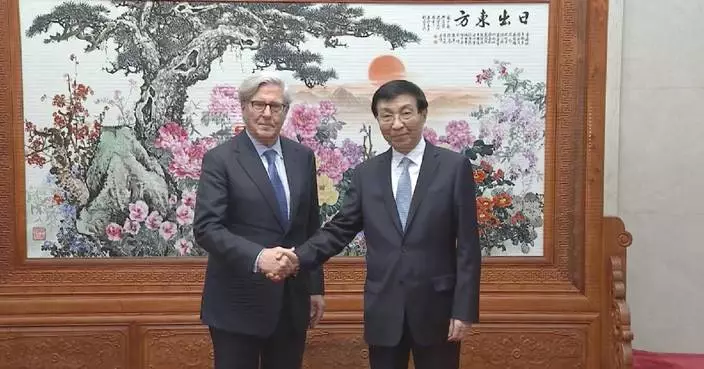
The Shanghai Cooperation Organization (SCO) has forged a unique model for security through dialogue and mutual respect among different nations, rather than military might, a senior Russian lawmaker said ahead of the organization's upcoming summit.
The 2026 SCO Leaders' Summit, scheduled for August 31 to September 1 in the Kyrgyz capital, Bishkek, will mark the 25th anniversary of the establishment of the SCO as a regional cooperation platform that has grown in strength and global influence.
In an interview with China Global Television Network (CGTN), Alexey Chepa, first deputy chairman of the State Duma Committee on International Affairs, reflected on the organization's evolution and its growing role in Eurasian cooperation.
"What makes the SCO unique is that it allows very different countries to work together in building a stable and comprehensive security space through dialogue and cooperation, rather than through military build-up. This approach has been made possible solely by the member states' respect for each other's unique characteristics and their mutual commitment to non-interference in each other's internal affairs," Chepa said.
Founded in 2001 to address regional security concerns, the SCO has since evolved into a broad-based organization transcending its original security focus to encompass economic cooperation, connectivity, digital development, and cultural exchanges. The group has expanded to comprise 10 member states, two observer countries, and 15 dialogue partners.
Looking ahead, Chepa expressed confidence in the organization's continued growth and its deepening role in regional cooperation.
"I believe the SCO will soon become a full-fledged coordination center for aligning the national strategies of its member states. This will further deepen trade and economic cooperation among them," he said.

SCO offers path to secure future via dialogue, cooperation: Russian lawmaker
Chinese stock markets dropped on Monday, as AI and tech stocks continued to see-saw, according to China Global Television Network (CGTN) market analyst Timothy Pope.
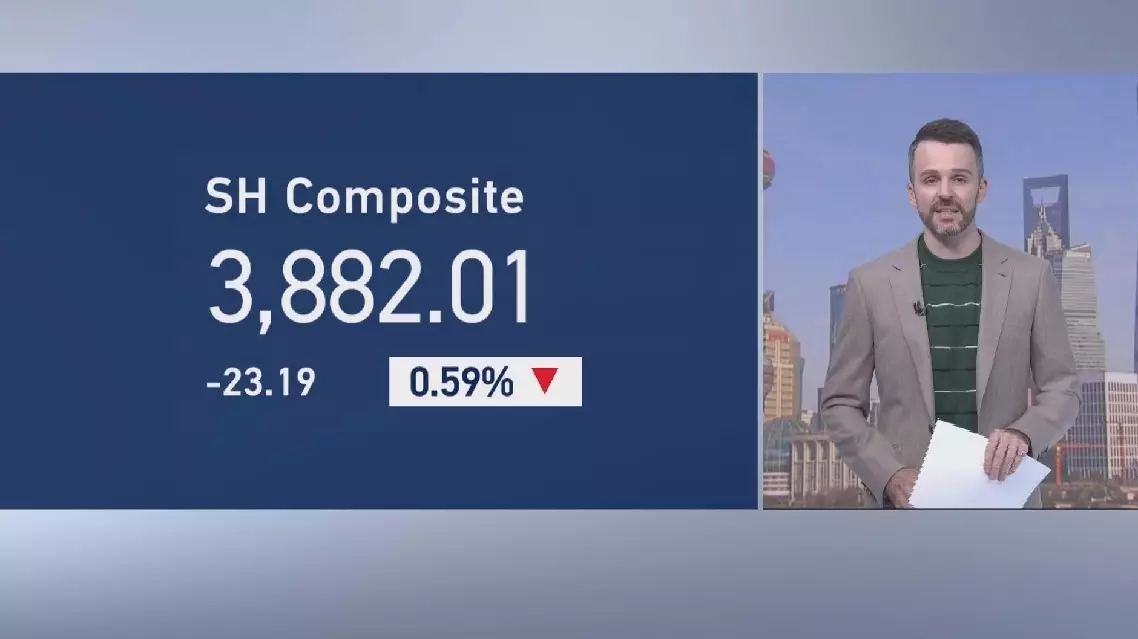
The benchmark Shanghai Composite Index closed down 0.59 percent at 3,882.01 points, with the Shenzhen Component Index, which has more exposure to the tech sector, closing 2.13 percent lower at 13,794.29 points.
Trading volumes on the two indices rose with around 2.01 trillion yuan (about 296.28 billion U.S. dollars) traded on Monday, up from 1.88 trillion yuan (about 280 billion U.S. dollars) last Friday.
Traditional sectors such as precious metals, coal mining, and insurance led the gains, while bio-tech stocks were among the top decliners.
The ChiNext Index, tracking China's Nasdaq-style board of growth enterprises, lost 3.21 percent to close at 3,431.89 points on Monday.
The STAR Composite Index, which tracks the performance of stocks on China's sci-tech innovation board, closed 3.10 percent lower on Monday at 1,896.16 points.
"The A-share markets seem locked in this cycle of rally and rout for those growth stocks, particularly in the AI and adjacent sectors. Today was very much on the rout side so, while the Shanghai Composite Index was down 0.6 percent, we saw the Shenzhen Component down more than 2 percent, the ChiNext board was down 3.2 percent and the STAR 50 down 3.1 percent. Those last three are more exposed to the tech rally than the Shanghai Composite. The big losers as I said were AI hardware companies - Shenzhen Gongjin Electronics was down 10 percent, Zhongji Innolight fell more than 7 percent. But they weren't alone because the other big winning sector of the last few weeks - biotech - was in retreat today as well. Investors were rotating into gold and coal stocks as well, and agricultural stocks extended the food security trade rally that we saw at the end of last week. There were a number of stocks across those sectors, all of those were hitting the upper limits of trade today," said Pope.
Pope said the rest of the week will be dominated by earnings reports from some of China’s biggest companies.
"The rest of the week is going to be mostly about earnings. The end-of-August filing deadline is fast approaching. Friday will be a really big day on the earnings calendar. We've got BYD, PetroChina, Shenhua Energy and a lot of big banks as well. Earnings that we are going to see for ICBC, China Merchants Bank and others will give us an insight into how much pressure the big banks are under with their margins. BYD is also going to be an interesting one in light of the government's anti-involution campaign and its efforts to avert a bit of a race to the bottom in the EV sector. And before we get there, there are Nvidia results in the US on Wednesday which will doubtless impact every stock in the AI space," he said.
Chinese stock markets start week lower on AI volatility: analyst