COLOMBO, Sri Lanka (AP) — Sonal Dinusha led a rearguard revival with the lower order once again in the second cricket test against India, scoring a half-century and helping Sri Lanka build a lead of 116 runs at lunch on the last day.
Sri Lanka resumed its second innings Thursday with a narrow lead, four wickets in hand and needing to bat for time in the hopes of salvaging a draw. Dinusha and No. 8 Keshara Nuwantha added 100 runs during the first session to increase their partnership to 111 runs off 242 deliveries. At lunch, Dinusha was not out on 55 and Nuwantha was unbeaten on 46.
They had spent close to three hours at the pitch together, a crucial factor given the time lost to rain and more rain predicted on Day 5.
Dinusha posted 103 in the first innings, batting mostly with the tailenders, but it wasn't enough for Sri Lanka to avoid the follow on. He also had innings of 100 and 84 in the first test match in Galle, where India won by 165 runs.
Left-arm spinner Manav Suthar had figures of 2-98 for India, while Siraj, Krishna, Jain, Jadeja took one each.
India had put itself in a potentially winning position by stumps on Wednesday after restricting Sri Lanka in its second innings after enforcing the follow on. India batted first after winning the toss and scored a massive 503-9 declared, then bowled Sri Lanka out for 290.
On Day 4, Sri Lanka reached 229-6 to lead by only 16 runs when rain brought an early close to play. Pasindu Sooriyabandara and Kamindu Mendis scored half-centuries.
See AP’s full cricket coverage here

ndia's Ravindra Jadeja, left, celebrates after assuming he dismisses Sri Lanka's Keshara Nuwantha, before the third umpire overturns the decision day five of the second cricket test match between Sri Lanka and India in Colombo, Sri Lanka, Thursday, Aug. 27, 2026. (AP Photo/Eranga Jayawardena)

Sri Lanka's Sonal Dinusha celebrates his fifty runs during day five of the second cricket test match between Sri Lanka and India in Colombo, Sri Lanka, Thursday, Aug. 27, 2026. (AP Photo/Eranga Jayawardena)
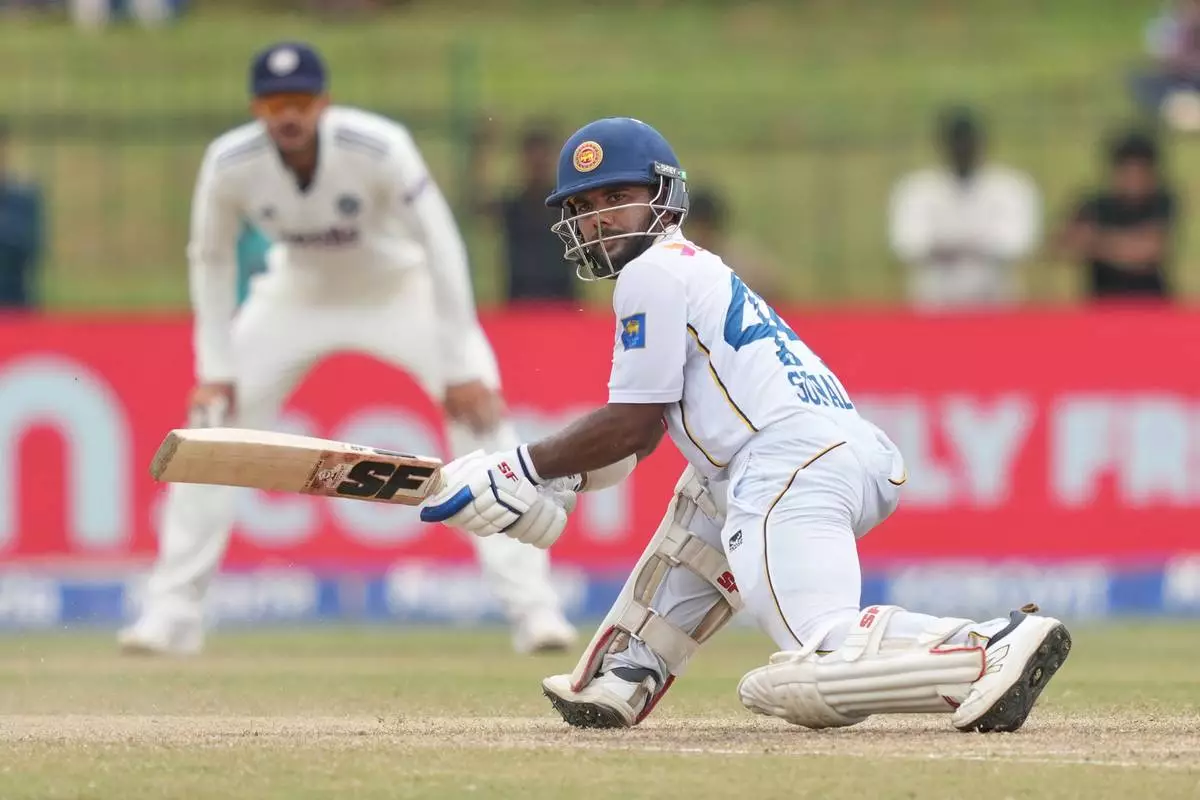
Sri Lanka's Sonal Dinusha plays a shot during day five of the second cricket test match between Sri Lanka and India in Colombo, Sri Lanka, Thursday, Aug. 27, 2026. (AP Photo/Eranga Jayawardena)
DEVIGHAT, Nepal (AP) — Rescue teams searched on Thursday for hundreds of missing people along the Nepal-China border after a catastrophic and deadly torrent of floods and mud swept through several communities a day earlier following a glacier collapse.
The disaster left 168 people dead and more than 1,300 missing, including foreigners and pilgrims, and displaced hundreds of people across the Himalayan region.
Videos of the tragedy showed the flood swallowing people as they tried to escape, and destroying buildings and bridges. On Thursday, drone footage from Nepal showed the scale of the destruction.
The region’s steep valleys are economic lifelines and travel corridors, but are precarious when disaster strikes. Images showed what appeared to be the second floors of buildings in Nuwakot slathered in mud after the torrent rushed by. Debris hung from tree branches and wires, vehicles were buried and some stunned survivors were caked in mud. The floods halted travel in some areas.
There was little time for anyone to flee.
“When I reached Dhunge bazaar, in half an hour, the flood came and damaged all the market. People were preparing to go to the office then,” resident Shoyam Rajbhandari said. “How many people are missing or dead, we don’t know.”
The Himalayan mountain range spans several countries in South Asia and has many of the world’s highest peaks and remaining glaciers.
The steep slopes and the lush valleys below the Himalayan mountain range are especially vulnerable to flooding and landslides, and extreme weather events. Melting glaciers have become more common because of warming because of human-caused climate change.
Researchers in Kathmandu found earlier this year that glaciers across the Hindu Kush Himalaya region are melting faster, with ice loss rates doubling since 2000.
The disaster has left at least 165 dead and 826 people missing in Nepal, and three dead and 558 missing in Tibet, authorities said.
Nepalese officials said that dozens of bridges were destroyed and nearly 40 kilometers (25 miles) of roads were damaged, complicating search efforts.
The Nepalese army has rescued more than 100 people from flood-affected areas through helicopter operations on Thursday morning, army spokesperson Brig. Gen. Raja Ram Basnet said.
At least eight foreign nationals were airlifted to the country’s capital, Kathmandu, he said, adding that army teams also evacuated people trapped inside facilities linked to the Trishuli hydropower project.
Rescuers found bodies about 100 kilometers (60 miles) downstream from the disaster zone in Chitwan district. Dozens of injured people have been transported to Kathmandu for advanced medical care.
Bishal Kumar Bhandari, chairman of the Nepal Red Cross Society, said they have shifted focus from rescue to large-scale relief operations in the flood-hit districts. He said that around 1,200 people were displaced from at least three villages.
In Tibet, a mudslide that struck near the land border crossing of Gyirong Port on Wednesday left mud in the surrounding areas more than 1½ meters (5 feet) deep on average, with some road sections exceeding 2 meters (6 feet), Chinese state broadcaster CCTV reported. Roads leading to the port were all damaged, while secondary collapses or landslides might occur as rain continued in the area, it added.
CCTV said that a barrier lake has also been discovered in the direction of the port, posing challenges to the rescue operation. Chinese authorities deployed a large military transport aircraft to send a team to the region, it said.
While electricity supply and communication resumed in the central urban areas in Gyirong town, those linked to the port were cut off, it said.
Officials in Nepal had earlier said hundreds of foreigners were reported missing, including Indian nationals on pilgrimage to Mount Kailash in Tibet, a sacred site for Hindus.
Australia’s Foreign Minister Penny Wong told reporters Thursday at least 34 Australians on pilgrimages and hiking tours were missing.
Malaysia’s Foreign Ministry on Thursday said 55 Malaysians in Kathmandu are now unreachable, with severe disruptions to infrastructure hampering efforts to contact them.
New Zealand's foreign ministry said Thursday that five of the country's nationals were believed to be in the area and their whereabouts were unclear.
The U.S. Geological Survey first reported a magnitude 4.4 earthquake early Wednesday, about 66 kilometers (41 miles) north of Kathmandu, near the border.
The USGS later updated its analysis to say the seismic event it measured was a magnitude 5.2 glacier collapse that sent debris flowing downstream with catastrophic impact on communities. It said its determination was based on data from nearby seismic stations, long period seismic waves and satellite imagery, and that no earthquake had occurred.
Climate experts at the Kathmandu-based International Centre for Integrated Mountain Development said an avalanche from a glacier likely caused Wednesday’s flash flood.
“Hydrological observations indicate the exceptional speed and magnitude of the flood wave,” they said in an emailed statement, noting that water levels at one point on the Trishuli river rose by as much as 9 meters (27 feet) over half an hour.
The Lhende Khola River, a tributary of the Bhotekoshi, had maximum flooding, they said.
The disaster in Nepal and Tibet is not a one-off. The increasingly unstable Himalayan ice system threatens communities, infrastructure and water supplies across one of the world’s most densely populated regions.
The region saw similar flash floods in August 2025, when a glacial lake in Tibet overflowed because of high temperatures. Nine people were killed, and critical infrastructure, including a bridge connecting Nepal and China, was damaged.
Shristi Kafle reported from Kathmandu, Nepal. Kanis Leung in Hong Kong, Aijaz Hussain in Srinagar, India, Rod McGuirk in Melbourne, Australia, Eileen Ng in Kuala Lumpur, Malaysia, and Charlotte Graham-McLay in Wellington, New Zealand, contributed to this report.
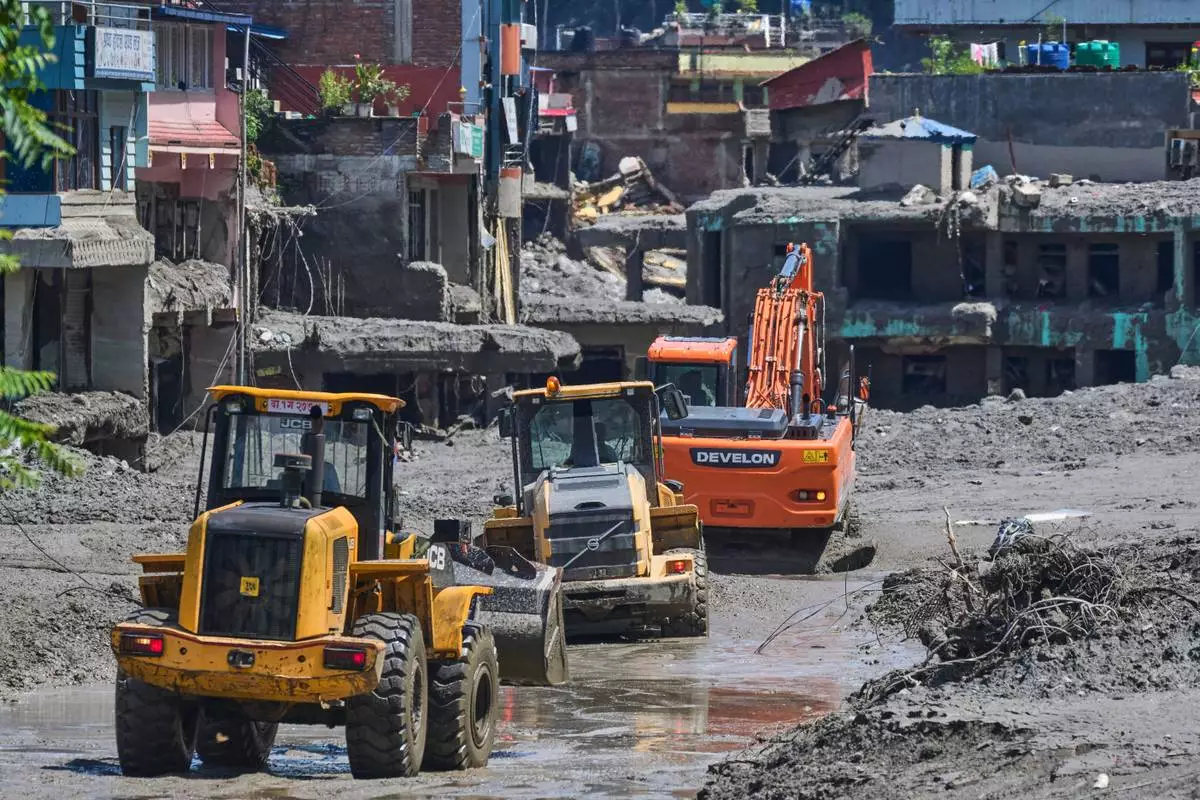
Earthmovers clear the debris of flash flooding in Nepal's Nuwakot district, Thursday, Aug. 27, 2026. (AP Photo/Niranjan Shrestha)

A girl cries as she waits for news of relatives missing after flash floods in Bidur, Nepal's Nuwakot district, Thursday, Aug. 27, 2026. (AP Photo/Niranjan Shrestha)

A two-wheeler lies in the aftermath of flash floods in Devighat in the Nuwakot district in Nepal, Thursday, Aug 27, 2026. (AP Photo/Niranjan Shrestha)
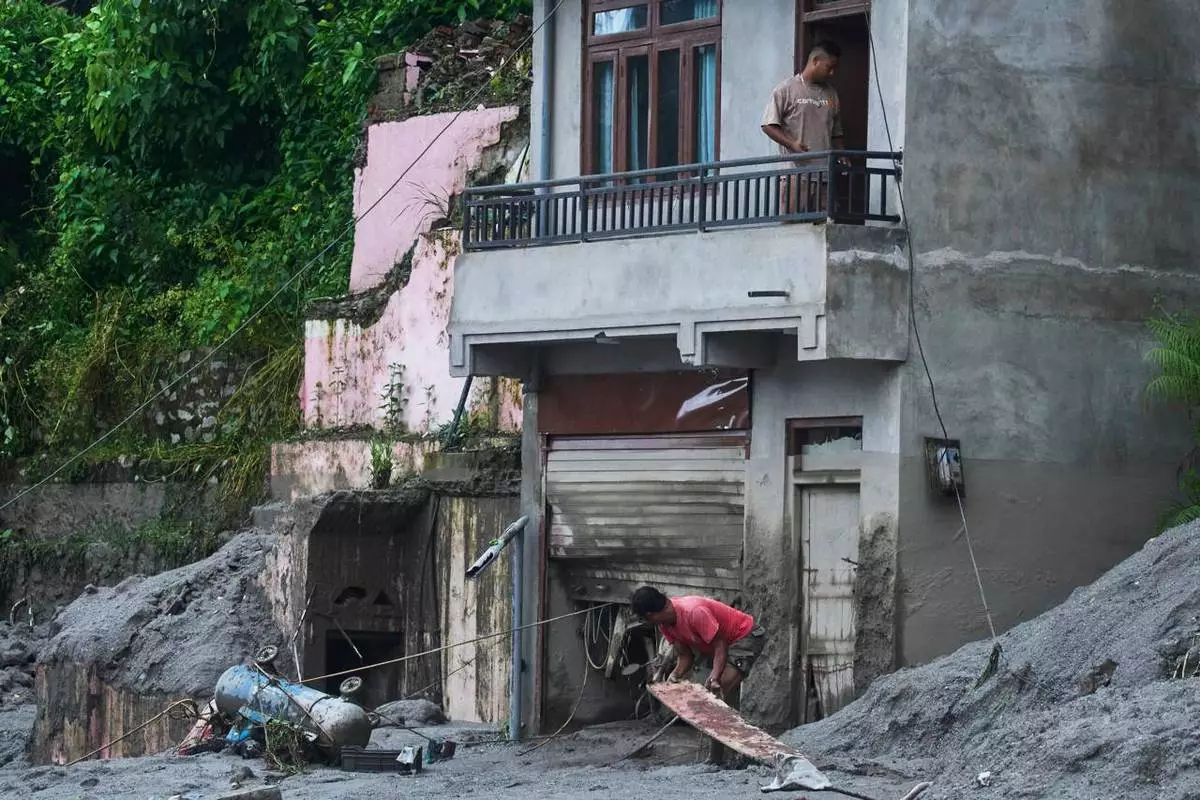
People amid damage in the aftermath of flash floods in Devighat in the Nuwakot district in Nepal, Thursday, Aug 27, 2026. (AP Photo/Niranjan Shrestha)
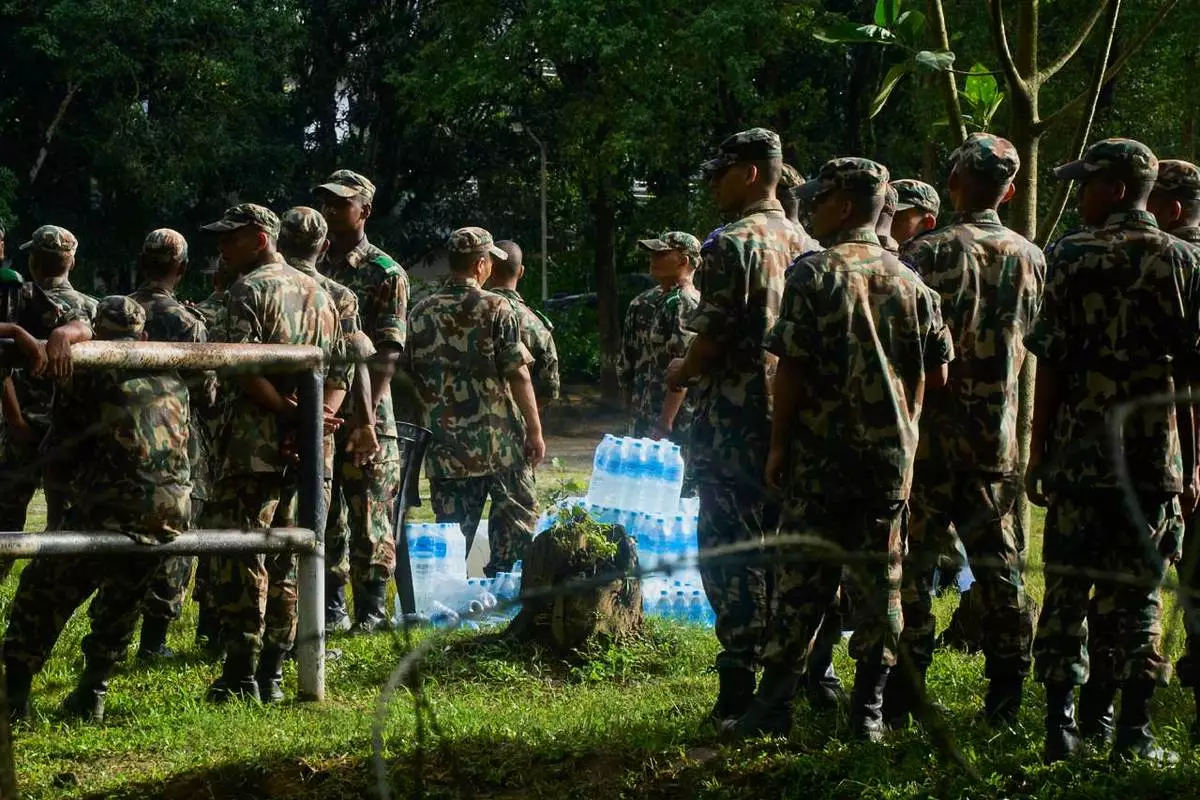
Nepalese army soldiers stand in the aftermath of flash floods in Devighat in the Nuwakot district in Nepal, Thursday, Aug 27, 2026. (AP Photo/Niranjan Shrestha)
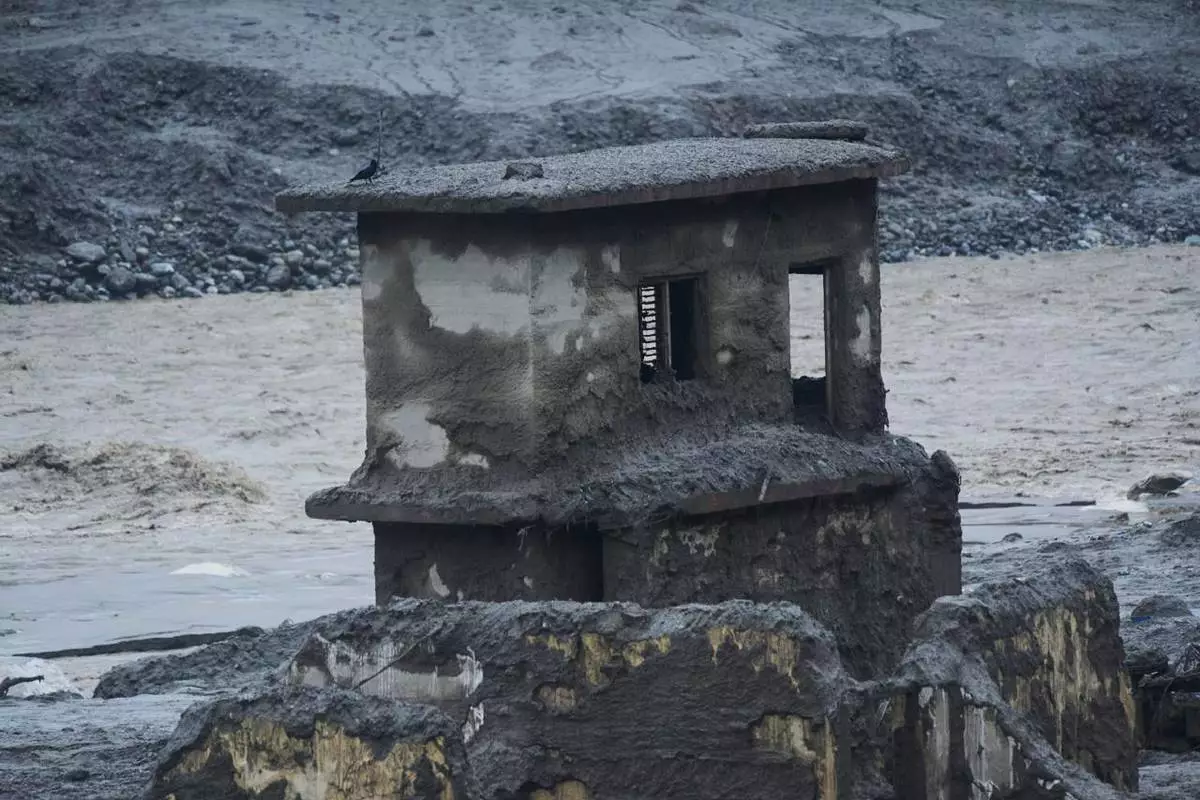
Damage in the aftermath of flash floods in Devighat in the Nuwakot district in Nepal, Thursday, Aug 27, 2026. (AP Photo/Niranjan Shrestha)
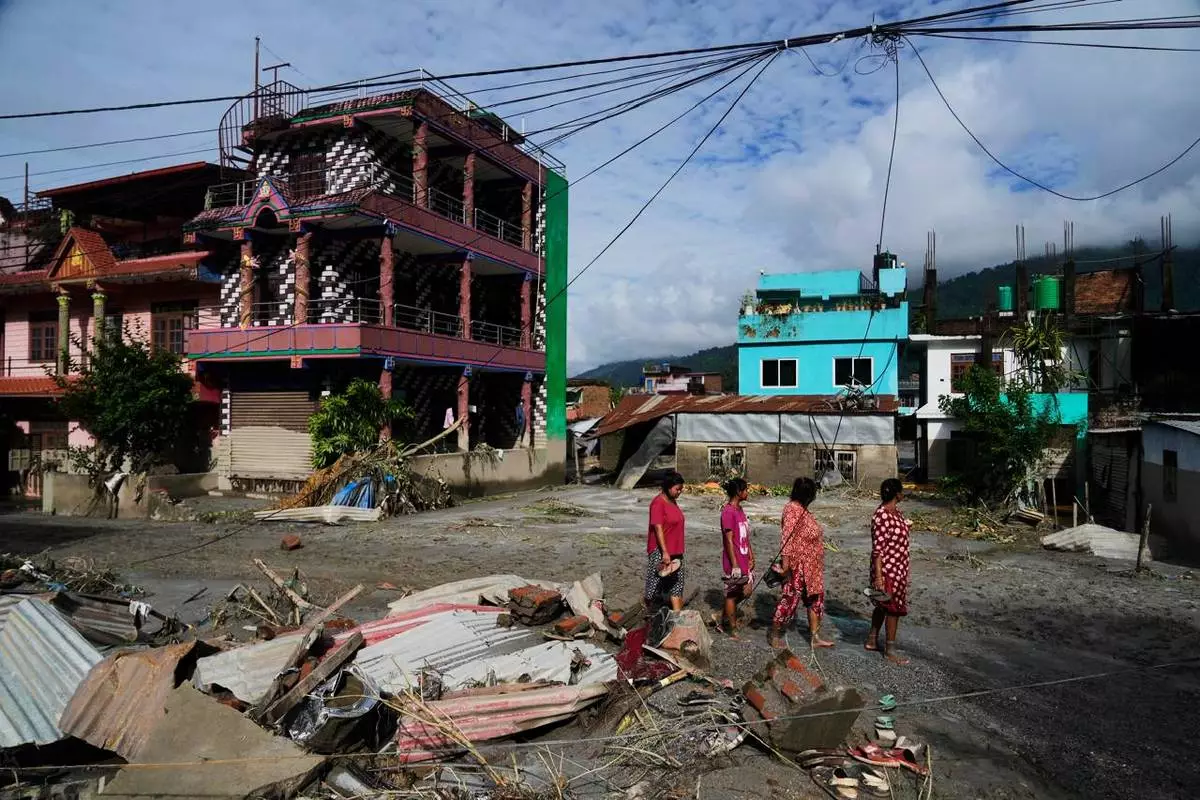
People walk past damage in the aftermath of flash floods in Devighat in the Nuwakot district in Nepal, Thursday, Aug 27, 2026. (AP Photo/Niranjan Shrestha)
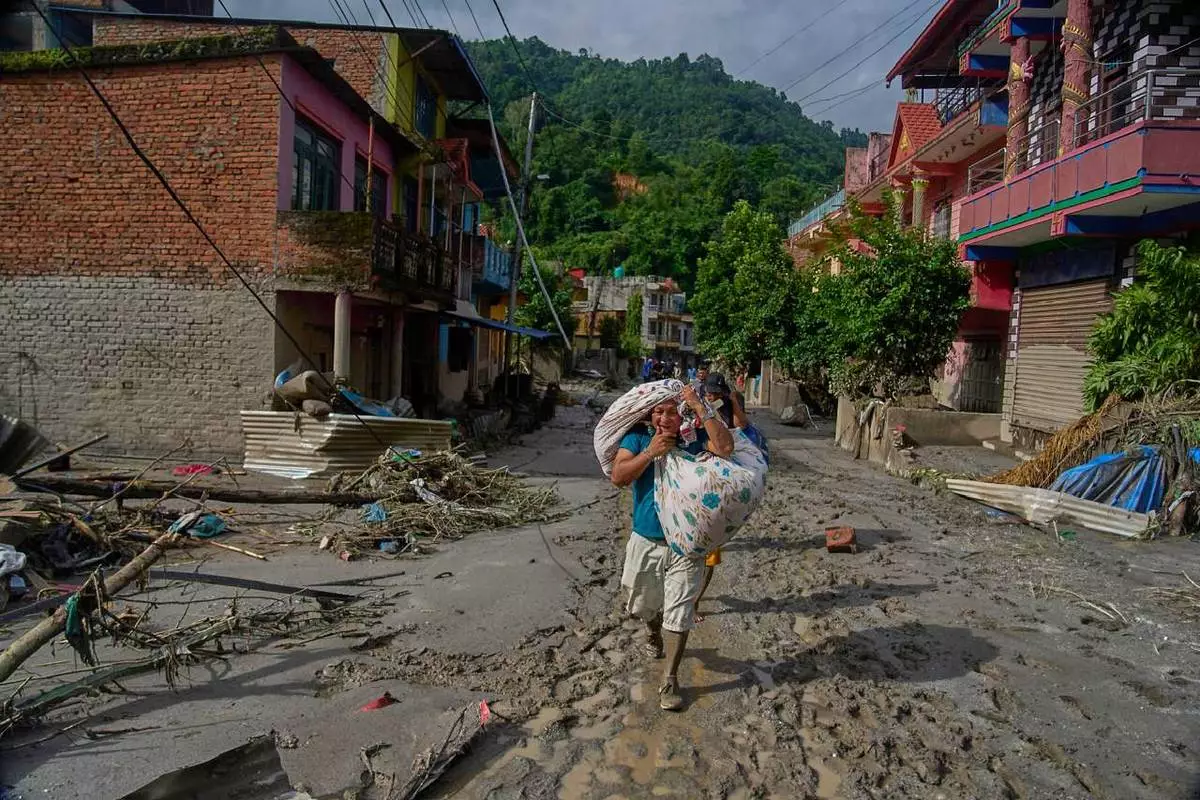
Residents carry their belongings as they walk to safer areas in the aftermath of flash floods in Devighat, in Nepal's Nuwakot district, Thursday, Aug. 27, 2026. (AP Photo/Niranjan Shrestha)
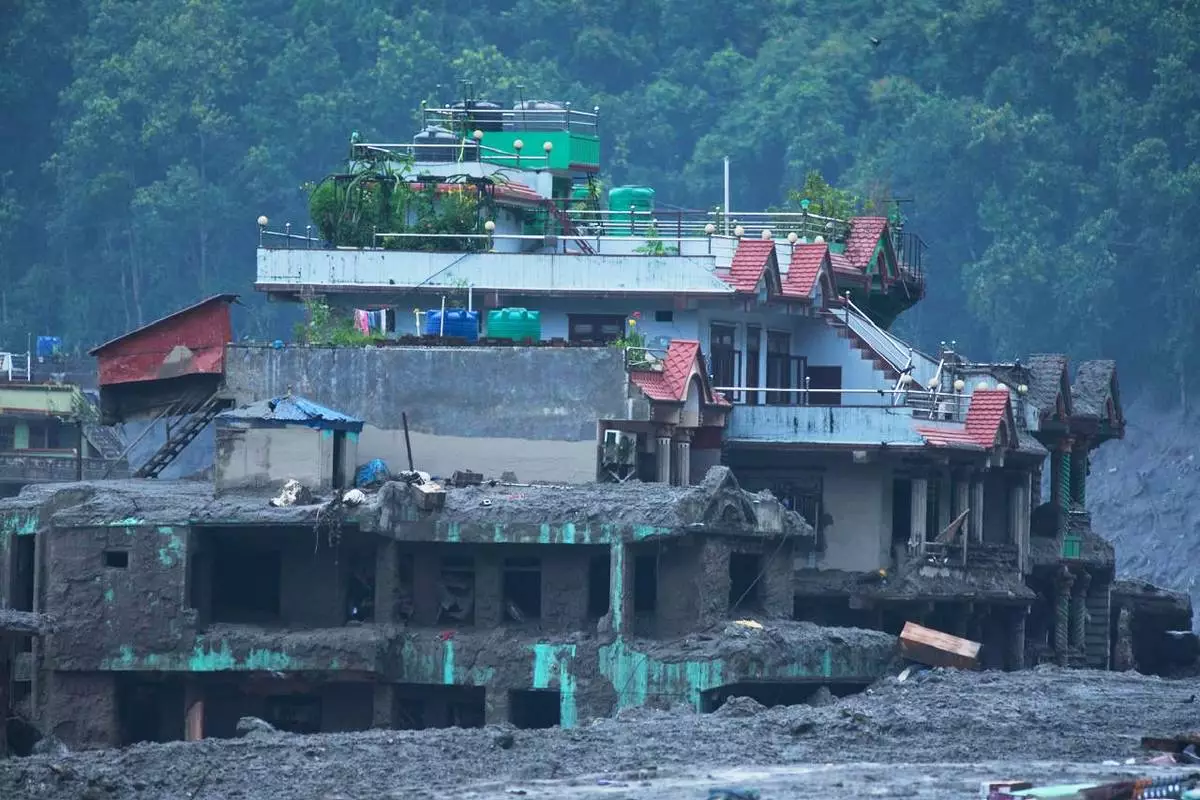
Damage in the aftermath of flash floods in Devighat in the Nuwakot district in Nepal, Thursday, Aug 27, 2026. (AP Photo/Niranjan Shrestha)
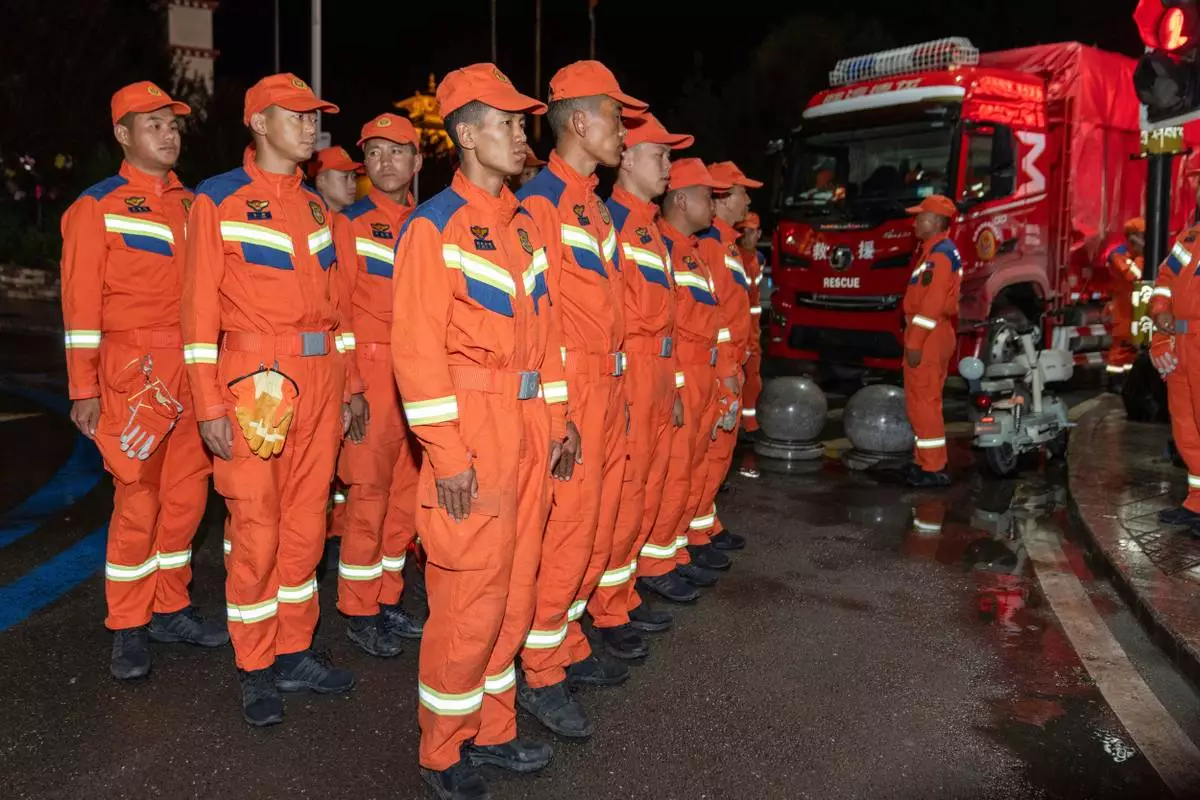
In this photo released by Xinhua News Agency, rescuers prepare before heading to the mudslide-stricken area near Gyirong Port in Gyirong County, southwestern China's Tibet Autonomous Region early Thursday, Aug. 27, 2026. (Tenzing Nima Qadhup/Xinhua via AP)
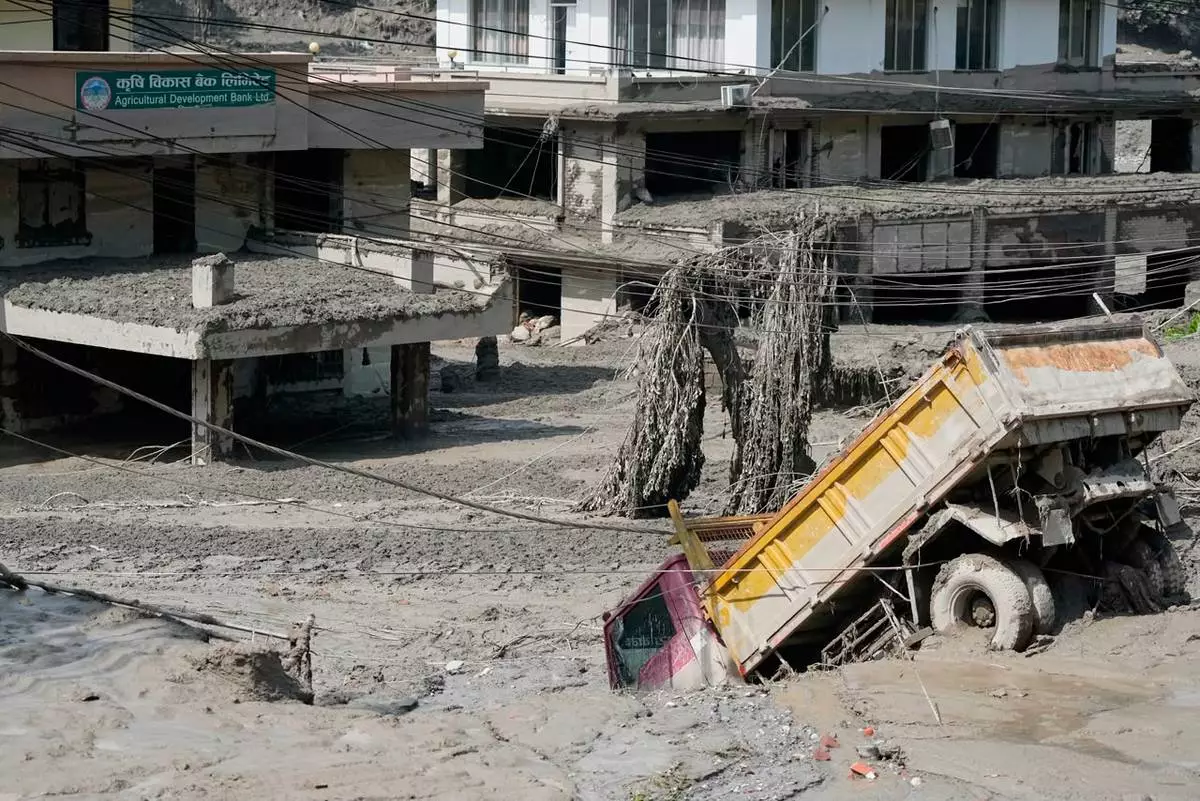
Damaged houses and vehicles are seen in the aftermath of flash floods along the Trishuli River in Nepal's Nuwakot district, Wednesday, Aug. 26, 2026. (AP Photo/Niranjan Shrestha)
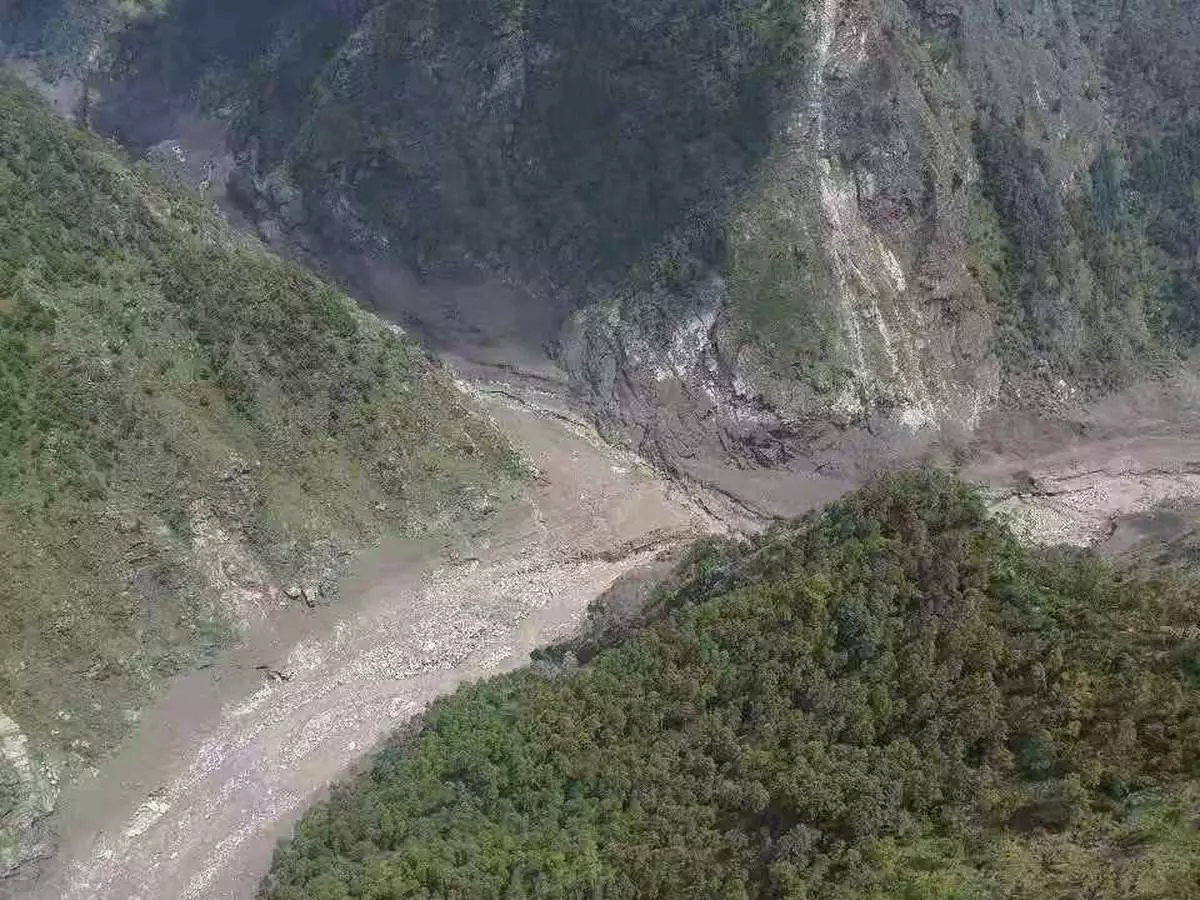
This photo released by Xinhua News Agency, shows a mudslide-hit area near Gyirong Port in southwestern China's Tibetan Autonomous Region on Wednesday, Aug. 26, 2026. (Xinhua via AP)
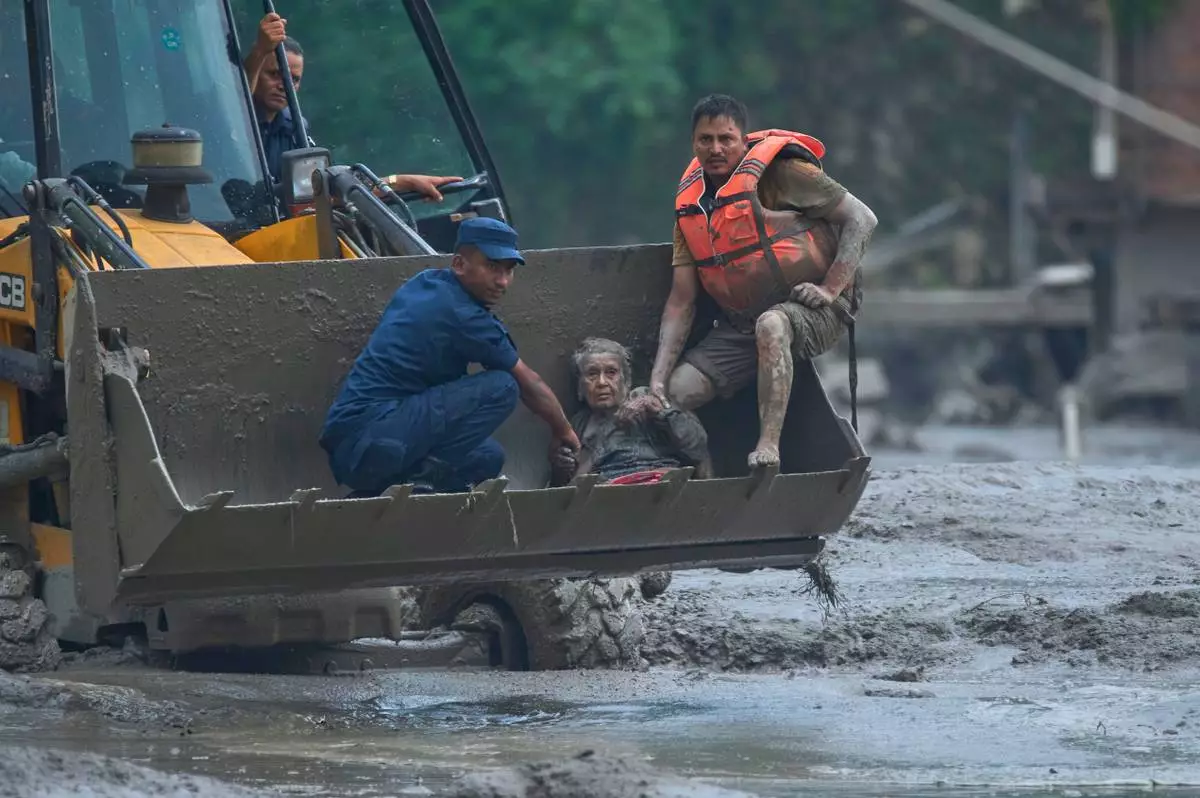
Rescuers use an earthmover to carry a victim of flash flooding to safety along the Trishuli River in Nepal's Nuwakot district, Wednesday, Aug. 26, 2026. (AP Photo/Niranjan Shrestha)
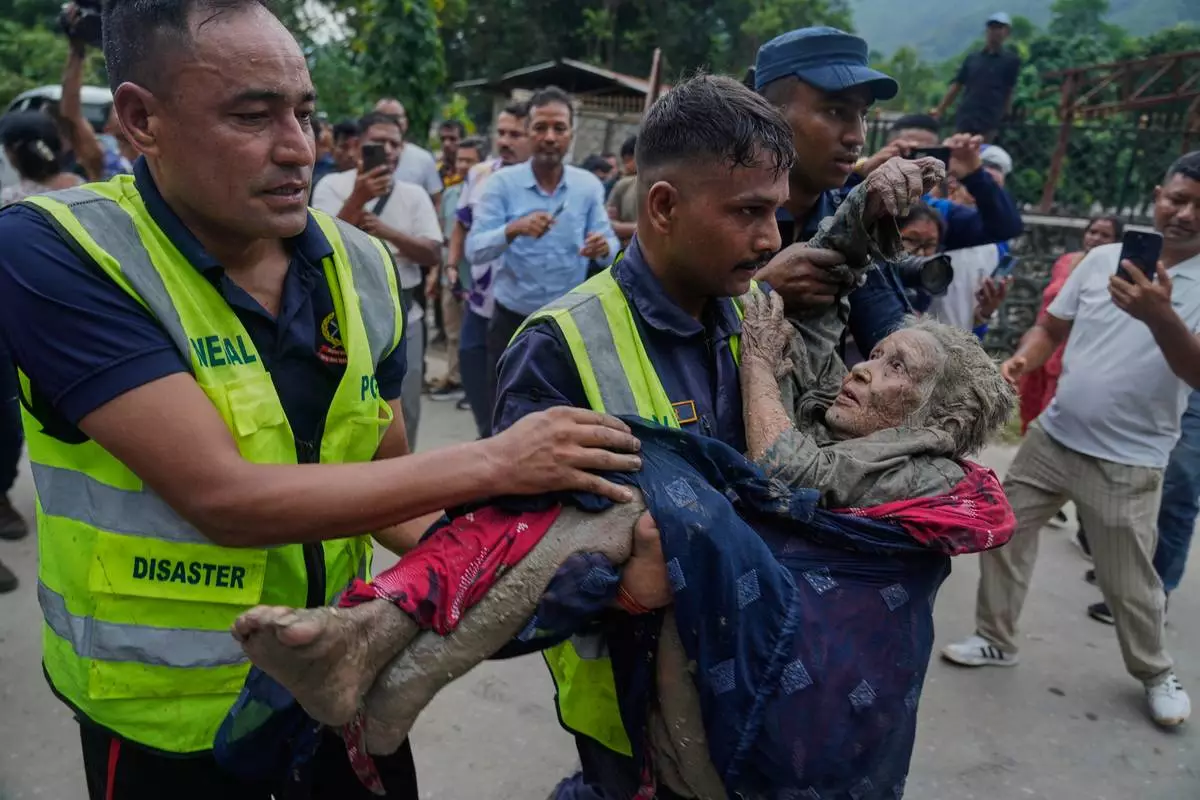
Rescuers carry a victim of flash flooding to safety along the Trishuli River in Nepal's Nuwakot district, Wednesday, Aug. 26, 2026. (AP Photo/Niranjan Shrestha)