SEOUL, South Korea--(BUSINESS WIRE)--Aug 27, 2026--
Samsung Display will showcase the gaming performance advantages of QD-OLED through collaborations with global game companies at gamescom 2026, the world’s largest gaming exhibition. The company also announced plans to begin mass production of 24.5-inch QD-OLED panels optimized for eSports and FPS games by the end of this year, underscoring its technology leadership in the gaming monitor market.
This press release features multimedia. View the full release here: https://www.businesswire.com/news/home/20260827640374/en/
Highly anticipated titles from CAPCOM, KRAFTON and CD PROJEKT RED take the stage at gamescom with QD-OLED displays
Samsung Display announced on August 27 that it will partner with global game companies including CAPCOM, KRAFTON, and CD PROJEKT RED at gamescom 2026, taking place in Cologne, Germany, from August 26 to 30. New and flagship titles from each company will be showcased on gaming monitors featuring Samsung Display’s QD-OLED panels, demonstrating the outstanding picture quality of QD-OLED to gamers from around the world.
At CAPCOM’s booth, visitors can get hands-on experience with ‘Onimusha: Way of the Sword,’ a new title marking the return of the Onimusha franchise after more than 20 years, as well as ‘Dragon’s Dogma 2: Dark Arisen,’ an expansion for action RPG ‘Dragon’s Dogma 2.’ Other playable titles include ‘PRAGMATA,’ ‘Street Fighter 6’ and ‘Mega Man: Dual Override.’ A total of 90 QD-OLED gaming monitors, including the EVNIA ‘32MN8900,’ GIGABYTE ‘MO32U24,’ and MSI ‘MAG 321UP QD-OLED X24,’ will be used for hands-on gameplay.
KRAFTON will showcase three of its five upcoming titles featured at this year’s gamescom on 85 Alienware QD-OLED gaming monitors, including the ‘AW2725Q (4K),’ ‘AW3225QF (4K),’ and ‘AW2726DM (QHD).’ Visitors will have an opportunity to preview the multi-team tactical arena game ‘Project ZETA,’ the two-player cooperative adventure ‘Age Twisters’ and the action RPG ‘TARAE: The Unbound’ ahead of their official release. A video introducing QD-OLED Penta Tandem™, Samsung Display’s premium technology brand for its five-layer stacked QD-OLED structure, will also be shown at the KRAFTON booth.
At the CD PROJEKT RED booth, a trailer for ‘Songs of the Past,’ the third expansion pack for ‘The Witcher 3: Wild Hunt,’ will be shown on eight QD-OLED TVs. Visitors can also watch gameplay demonstrations on three monitors equipped with QD-OLED displays. Samsung Display will authentically showcase the immersive dark fantasy world of ‘The Witcher’ through QD-OLED’s high contrast ratio based on true blacks and rich color reproduction.
With games spanning a wide range of genres, from action RPGs and FPS titles to adventure games, visitors can experience firsthand the differentiated gaming performance of QD-OLED across genres. With response times of approximately 0.03ms, QD-OLED displays deliver sharp, dynamic visuals, while true blacks enabled by their self-emissive technology and the high color purity and wide color gamut of quantum dots bring out everything from fine details in dark scenes to vibrant colors, maximizing gaming immersion and enjoyment.
QD-OLED expands to 24.5-inch displays, a key size for eSports and FPS gaming, with mass production set to begin by year-end
Samsung Display announced at gamescom 2026 that it plans to begin mass production of 24.5-inch FHD QD-OLED panels by the end of this year, targeting the FPS and eSports markets. As several global PC manufacturers unveiled plans at the event to launch new products featuring Samsung Display’s 24.5-inch QD-OLED displays, Samsung Display will begin supplying 24.5-inch FHD QD-OLED displays in response to customer demand.
The 24.5-inch format is widely used in the FPS and eSports markets, as its compact screen size allows players to quickly take in the entire display – an important advantage in games where split-second decisions and precise control matter. It has become a preferred choice among competitive gamers and is emerging as a key segment of the gaming monitor market.
Samsung Display plans to further strengthen QD-OLED’s proven technological leadership in the market by responding promptly to customer demand, including for 24.5-inch displays. According to market research firm Omdia, Samsung Display shipped approximately 2.5 million QD-OLED panels for monitors last year, accounting for nearly 75% of the overall self-emissive monitor panel market.
“Gaming is one of the areas where consumers can most directly experience a display’s fast response times and picture quality,” said Brad Jung, Vice President and Head of the Large Display Marketing Team at Samsung Display. “Through a wide range of gaming content, we will showcase the unique gaming experience offered by QD-OLED displays and further strengthen our leadership in the premium gaming market by expanding our product lineup to include the 24.5-inch segment.”
About Samsung Display
Samsung Display Co., Ltd. is an industry leader in providing cutting-edge display solutions around the world. The company diversifies its display markets to not only smartphones, TVs, laptops, and monitors but also smartwatches, VR, game consoles and automotive applications. Furthermore, it has close partnerships with a variety of global manufacturers.
Headquartered in South Korea, with a range of large-scale facilities, Samsung Display has production plants in Vietnam, China, and India, and operates sales offices in six countries worldwide. Known for its innovation, Samsung Display is leading the display market, enabling the world’s first mass-production of OLED and QD-OLED, endeavoring to develop next-generation technology, such as slidable, rollable, and stretchable panels to provide extraordinary experiences and endless possibilities for consumers.
Samsung Display has been prioritizing environmental and social values in the entire process of product manufacturing. The company will further evolve into a sustainable organization dedicated to environmentally sound products that contribute to the betterment of humanity.
For more information, visit www.samsungdisplay.com or http://global.samsungdisplay.com.

Visitors experiencing PRAGMATA on gaming monitors featuring Samsung Display’s QD-OLED at the CAPCOM booth during gamescom 2026
DEVIGHAT, Nepal (AP) — Rescue teams searched on Thursday for hundreds of missing people along the Nepal-China border after a catastrophic and deadly torrent of floods and mud swept through several communities a day earlier following a glacier collapse.
The disaster left at least 168 people dead and more than 1,300 missing, including foreigners and pilgrims, and displaced hundreds of people across the Himalayan region.
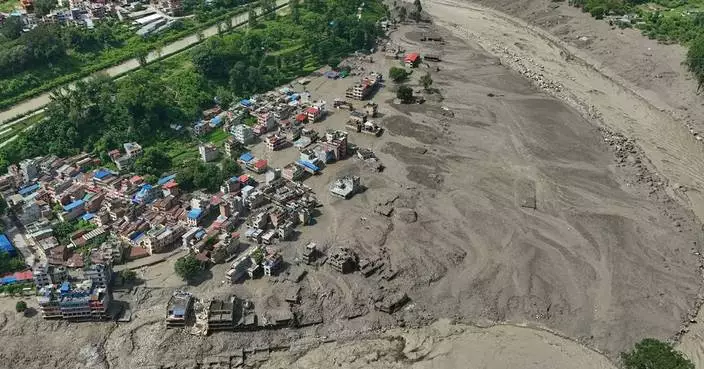
Videos of the tragedy showed the flood swallowing up people as they tried to escape, and destroying buildings and bridges. On Thursday, drone footage from Nepal showed the scale of the destruction.
The region’s steep valleys are economic lifelines and travel corridors, but are precarious when disaster strikes. Images showed what appeared to be the second floors of buildings in Nuwakot slathered in mud after the torrent rushed by. Debris hung from tree branches and wires, vehicles were buried and some stunned survivors were caked in mud. The floods halted travel in some areas.
There was little time for anyone to flee.
The village of Soley in Nuwakot, with about 25 homes, was virtually wiped out, said Nirajan Paudyal, a Kathmandu-based journalist whose parents and other relatives live there. Desperate for information, he traveled to the area on Thursday for news of his family.
"There is no update till now. I fear there won’t be any update,” Paudyal said.
The Himalayan mountain range spans several countries in South Asia and has many of the world’s highest peaks and remaining glaciers.
The steep slopes and the lush valleys below the Himalayan mountain range are especially vulnerable to flooding and landslides, and extreme weather events. Melting glaciers have become more common because of warming because of human-caused climate change.
Researchers in Kathmandu found earlier this year that glaciers across the Hindu Kush Himalaya region are melting faster, with ice loss rates doubling since 2000.
The disaster has left at least 165 dead and 826 people missing in Nepal, and three dead and 558 missing in Tibet, authorities said.
Nepalese officials said that dozens of bridges were destroyed and nearly 40 kilometers (25 miles) of roads were damaged, complicating search efforts.
The Nepalese army has rescued more than 100 people from flood-affected areas through helicopter operations on Thursday morning, army spokesperson Brig. Gen. Raja Ram Basnet said.
At least eight foreign nationals were airlifted to the country’s capital, Kathmandu, he said, adding that army teams also evacuated people trapped inside facilities linked to the Trishuli hydropower project.
Rescuers found bodies hundreds of kilometers downstream from the disaster zone in Chitwan district. Dozens of injured people have been transported to Kathmandu for advanced medical care.
Bishal Kumar Bhandari, chairman of the Nepal Red Cross Society, said they have shifted focus from rescue to large-scale relief operations in the flood-hit districts. He said that around 1,200 people were displaced from at least three villages.
In Tibet, a mudslide that struck near the land border crossing of Gyirong Port on Wednesday left mud in the surrounding areas more than 1½ meters (5 feet) deep on average, with some road sections exceeding 2 meters (6 feet), Chinese state broadcaster CCTV reported. Roads leading to the port were all damaged, while secondary collapses or landslides might occur as rain continued in the area, it added.
CCTV said that a barrier lake has also been discovered in the direction of the port, posing challenges to the rescue operation. Chinese authorities deployed a large military transport aircraft to send a team to the region, it said.
While electricity supply and communication resumed in the central urban areas in Gyirong town, those linked to the port were cut off, it said.
According to Nepal’s Tourism Board, 517 of the missing people in the country were foreigners and 178 of them were from India. It wasn't immediately clear how many missing Indian nationals were on a pilgrimage to Mount Kailash in Tibet, a sacred site for Hindus.
More than 60 of those unaccounted for in Nepal were from the U.S. and the rest were from 30 other countries, ranging from Ukraine and the U.K to South Africa and Japan, the Tourism Board said.
Indian spiritual guru and the head of the Isha Foundation, Sadhguru Jaggi Vasudev, said on X that 77 people from one of his pilgrimage groups to the Mount Kailash were caught in the flash floods at the immigration office at the Nepal-China border.
A visibly emotional Sadhguru said in a video that the group included foreign nationals from various countries. He said that there was no official information on the whereabouts of those who were at the immigration office, including 22 U.S. nationals.
“Looking at the scale of destruction, it looks bad. The same building where we were for the immigration just a week ago, that entire building is washed away,” Sadhguru said.
In addition, China’s Ministry of Foreign Affairs spokesperson Lin Jian said that nearly 100 Chinese citizens were missing on the Nepal side. He said that according to preliminary information, 260 of those missing in Tibet were foreigners.
The U.S. Geological Survey first reported a magnitude 4.4 earthquake early Wednesday, about 66 kilometers (41 miles) north of Kathmandu, near the border.
The USGS later updated its analysis to say the seismic event it measured was a magnitude 5.2 glacier collapse that sent debris flowing downstream with catastrophic impact on communities. It said its determination was based on data from nearby seismic stations, long period seismic waves and satellite imagery, and that no earthquake had occurred.
Climate experts at the Kathmandu-based International Centre for Integrated Mountain Development said an avalanche from a glacier likely caused Wednesday’s flash flood.
“Hydrological observations indicate the exceptional speed and magnitude of the flood wave,” they said in an emailed statement, noting that water levels at one point on the Trishuli river rose by as much as 9 meters (27 feet) over half an hour.
The Lhende Khola River, a tributary of the Bhotekoshi, had maximum flooding, they said.
The disaster in Nepal and Tibet is not a one-off. The increasingly unstable Himalayan ice system threatens communities, infrastructure and water supplies across one of the world’s most densely populated regions.
The region saw similar flash floods in August 2025, when a glacial lake in Tibet overflowed because of high temperatures. Nine people were killed, and critical infrastructure, including a bridge connecting Nepal and China, was damaged.
Shristi Kafle reported from Kathmandu, Nepal. Upendra Mansingh in Nuwakot District, Nepal, Kanis Leung in Hong Kong, Aijaz Hussain in Srinagar, India, Rod McGuirk in Melbourne, Australia, Eileen Ng in Kuala Lumpur, Malaysia, and Charlotte Graham-McLay in Wellington, New Zealand, contributed to this report.
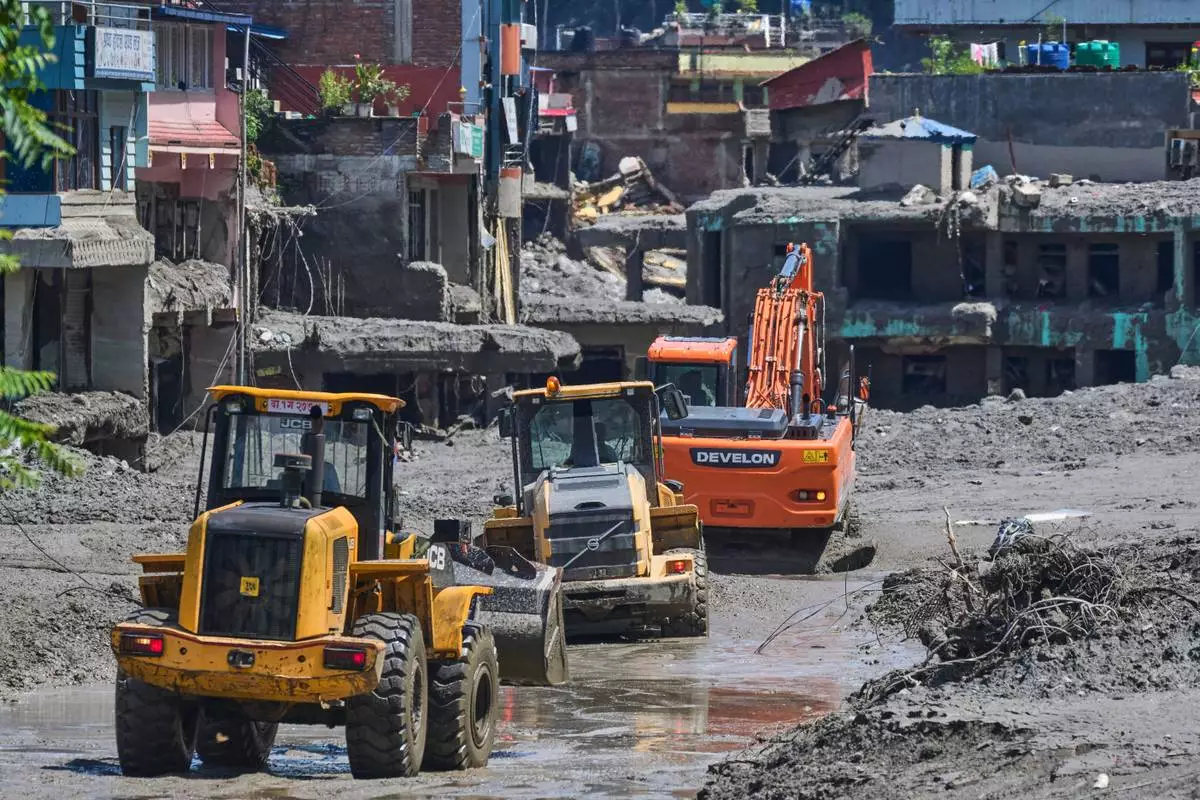
Earthmovers clear the debris of flash flooding in Nepal's Nuwakot district, Thursday, Aug. 27, 2026. (AP Photo/Niranjan Shrestha)

A girl cries as she waits for news of relatives missing after flash floods in Bidur, Nepal's Nuwakot district, Thursday, Aug. 27, 2026. (AP Photo/Niranjan Shrestha)

A two-wheeler lies in the aftermath of flash floods in Devighat in the Nuwakot district in Nepal, Thursday, Aug 27, 2026. (AP Photo/Niranjan Shrestha)
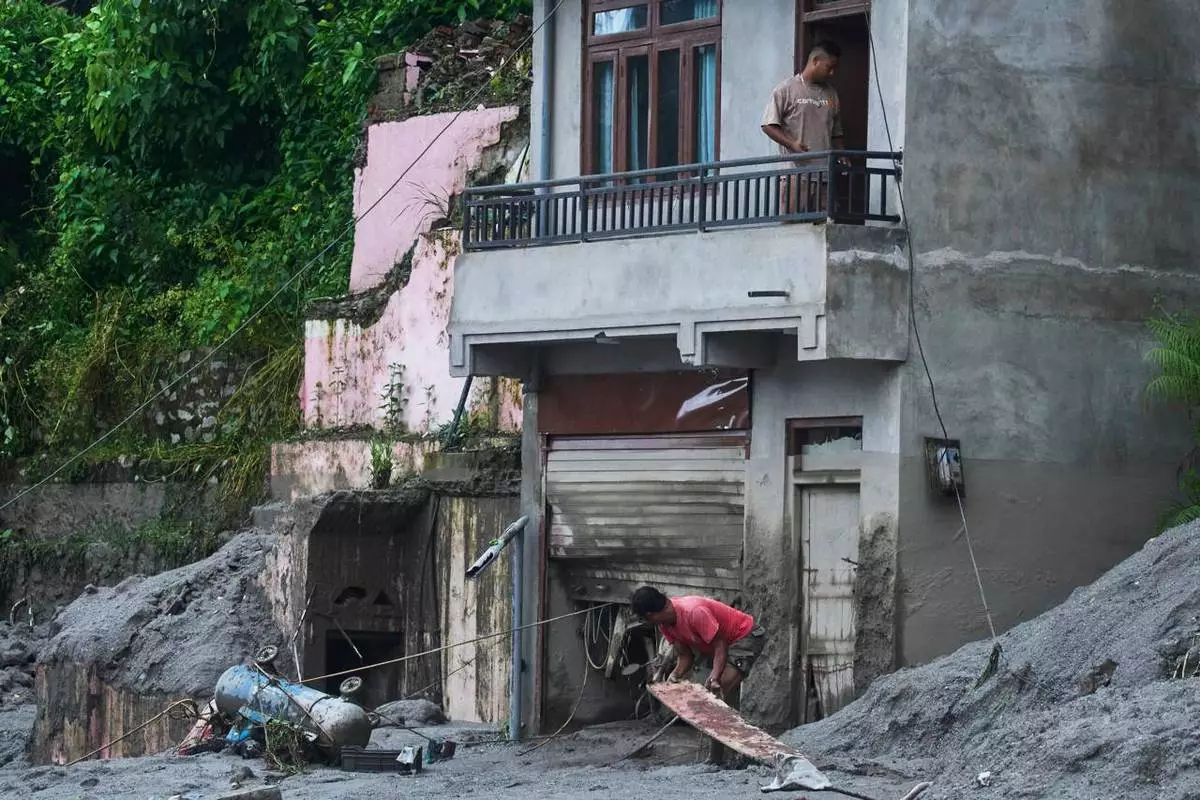
People amid damage in the aftermath of flash floods in Devighat in the Nuwakot district in Nepal, Thursday, Aug 27, 2026. (AP Photo/Niranjan Shrestha)

Nepalese army soldiers stand in the aftermath of flash floods in Devighat in the Nuwakot district in Nepal, Thursday, Aug 27, 2026. (AP Photo/Niranjan Shrestha)
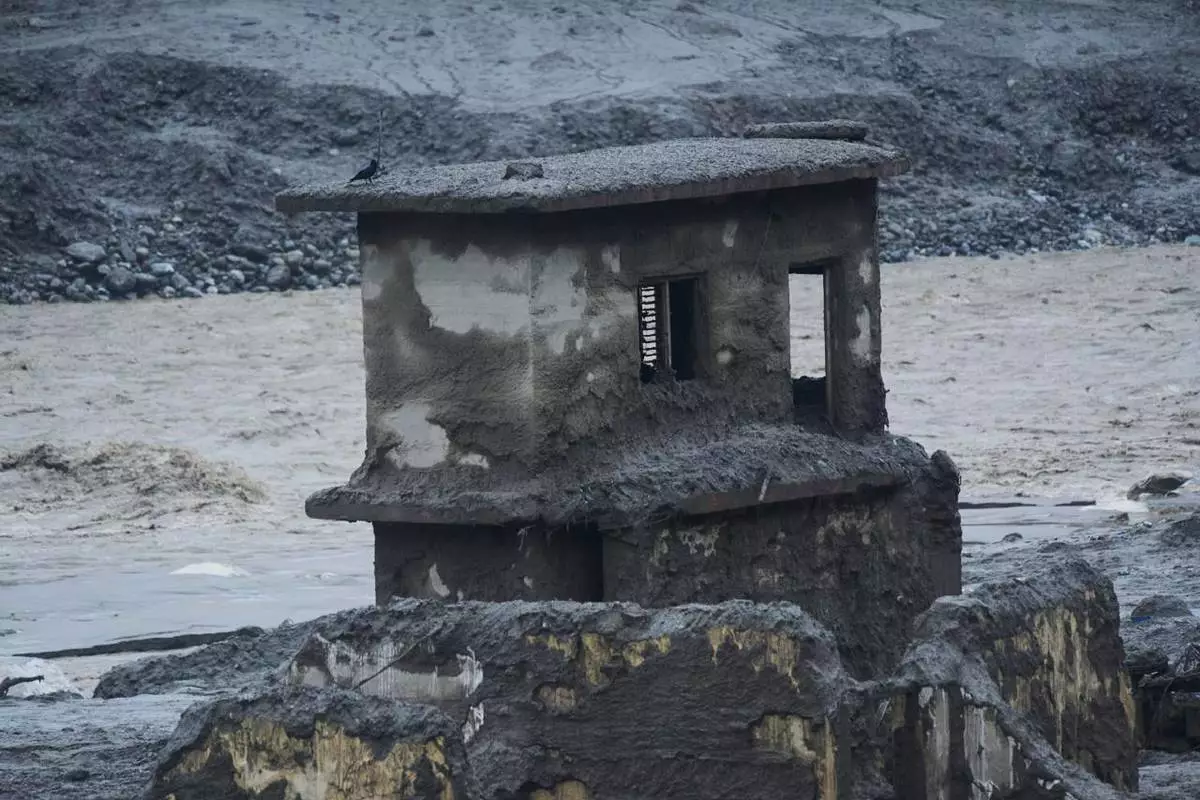
Damage in the aftermath of flash floods in Devighat in the Nuwakot district in Nepal, Thursday, Aug 27, 2026. (AP Photo/Niranjan Shrestha)
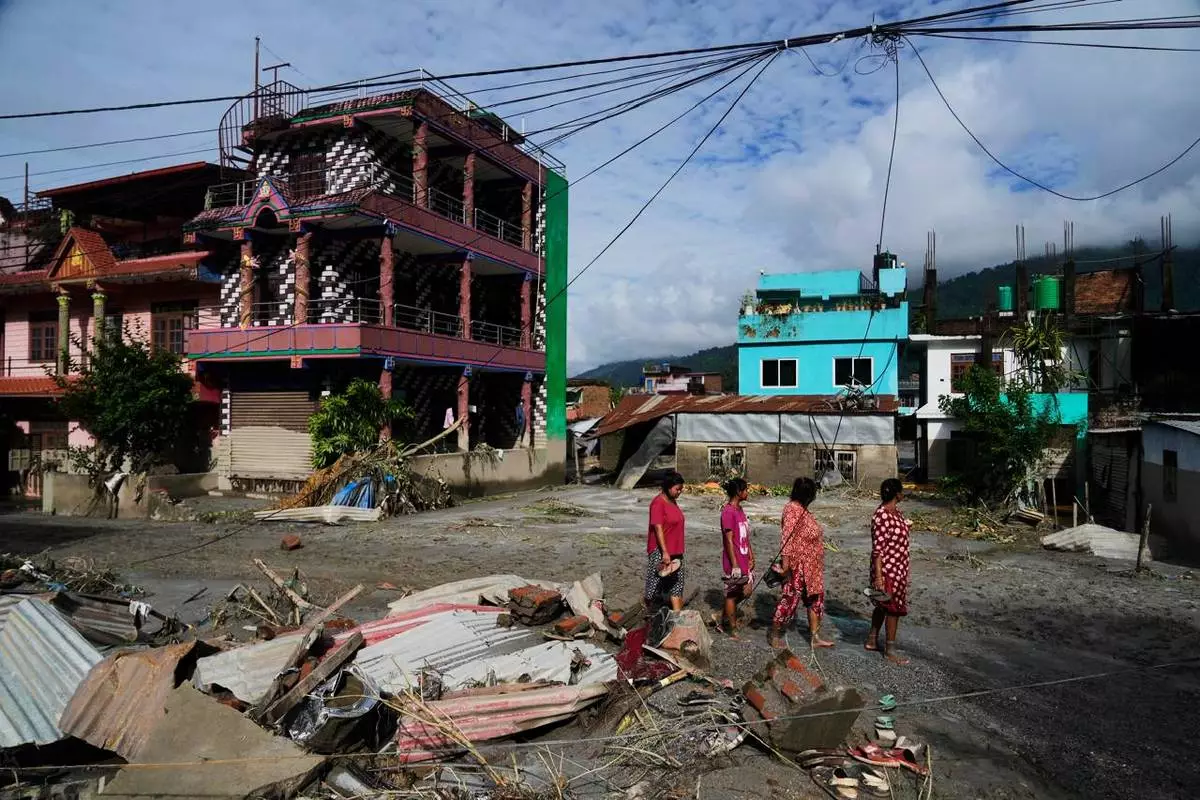
People walk past damage in the aftermath of flash floods in Devighat in the Nuwakot district in Nepal, Thursday, Aug 27, 2026. (AP Photo/Niranjan Shrestha)
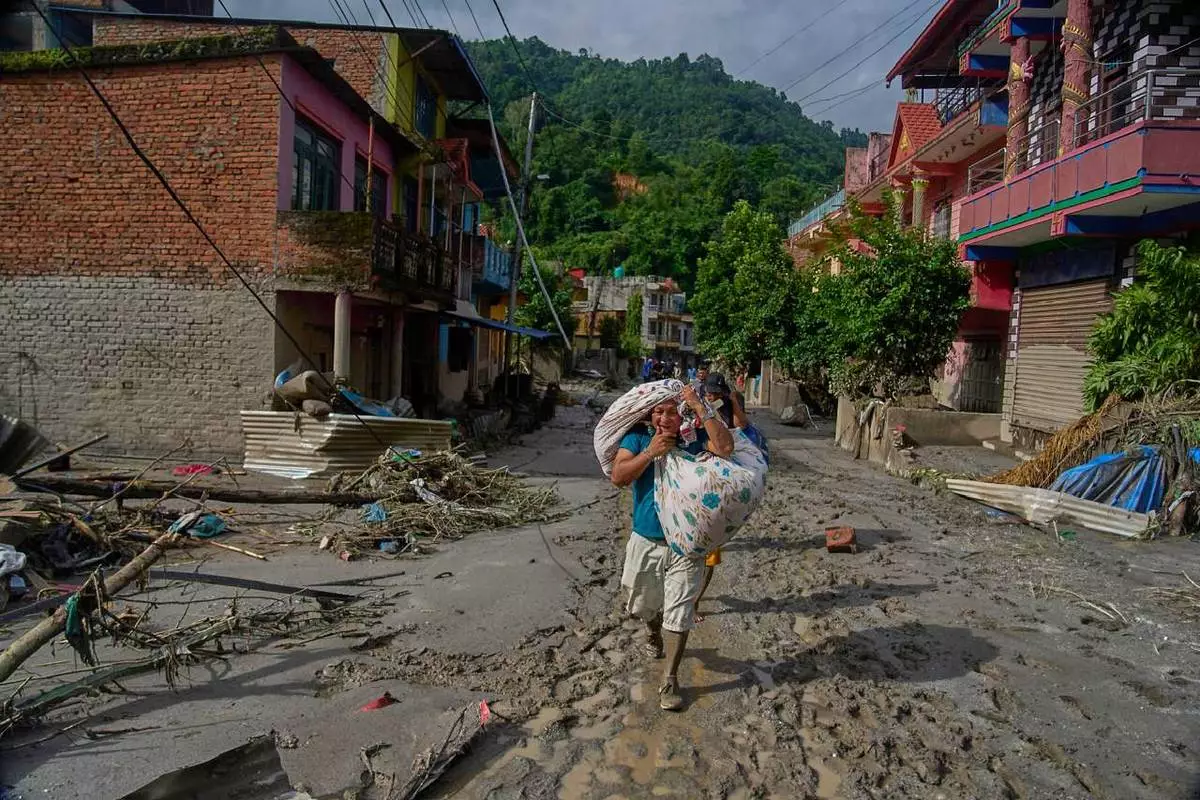
Residents carry their belongings as they walk to safer areas in the aftermath of flash floods in Devighat, in Nepal's Nuwakot district, Thursday, Aug. 27, 2026. (AP Photo/Niranjan Shrestha)
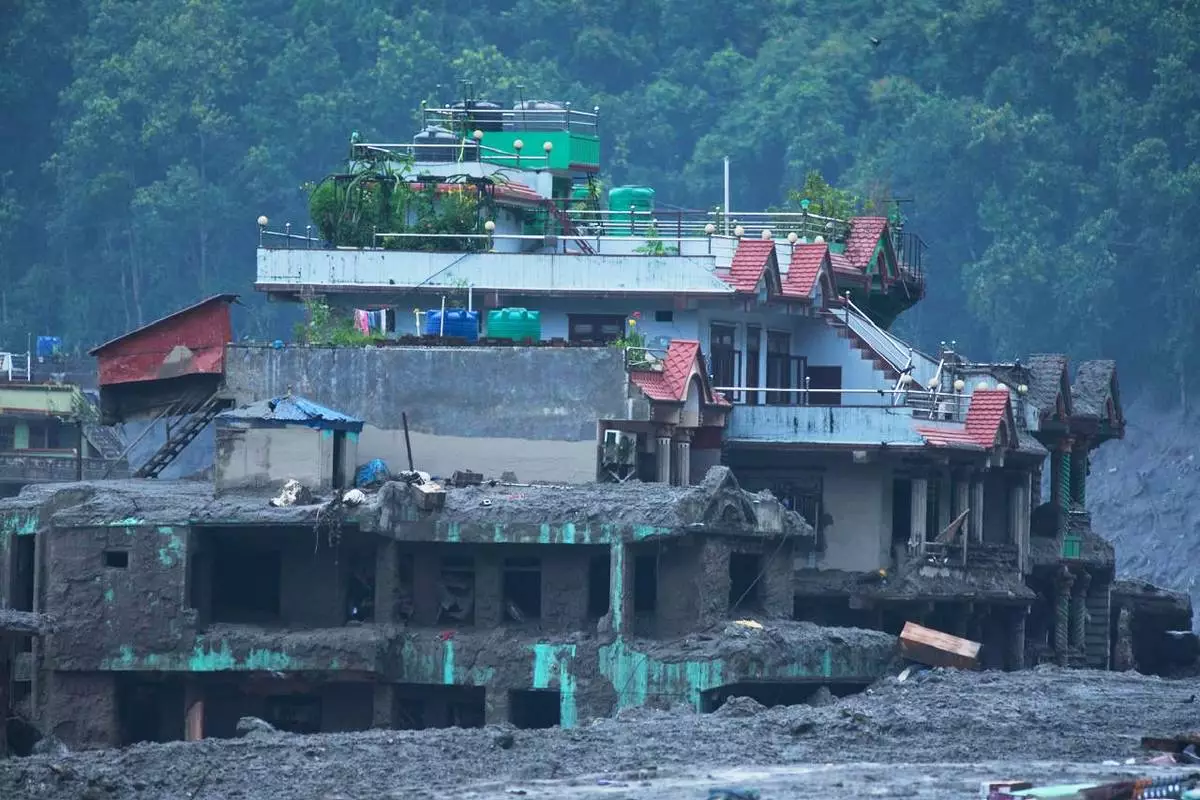
Damage in the aftermath of flash floods in Devighat in the Nuwakot district in Nepal, Thursday, Aug 27, 2026. (AP Photo/Niranjan Shrestha)
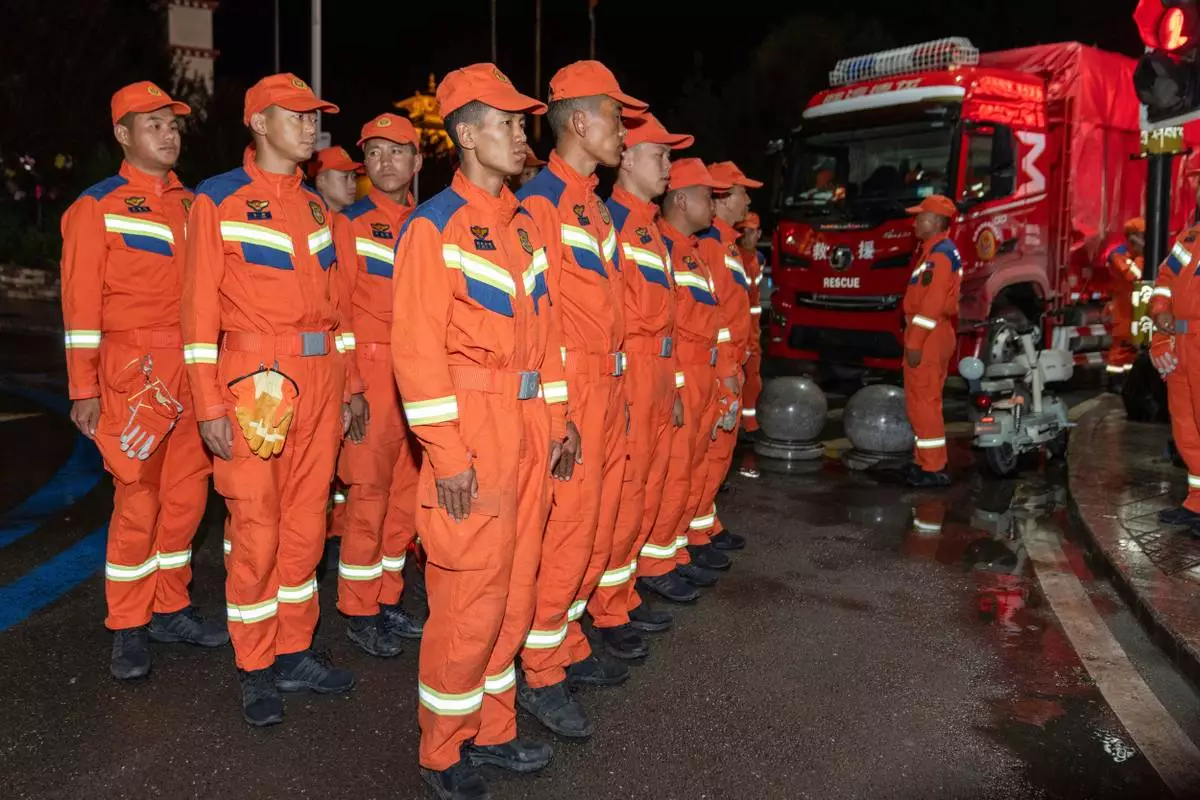
In this photo released by Xinhua News Agency, rescuers prepare before heading to the mudslide-stricken area near Gyirong Port in Gyirong County, southwestern China's Tibet Autonomous Region early Thursday, Aug. 27, 2026. (Tenzing Nima Qadhup/Xinhua via AP)
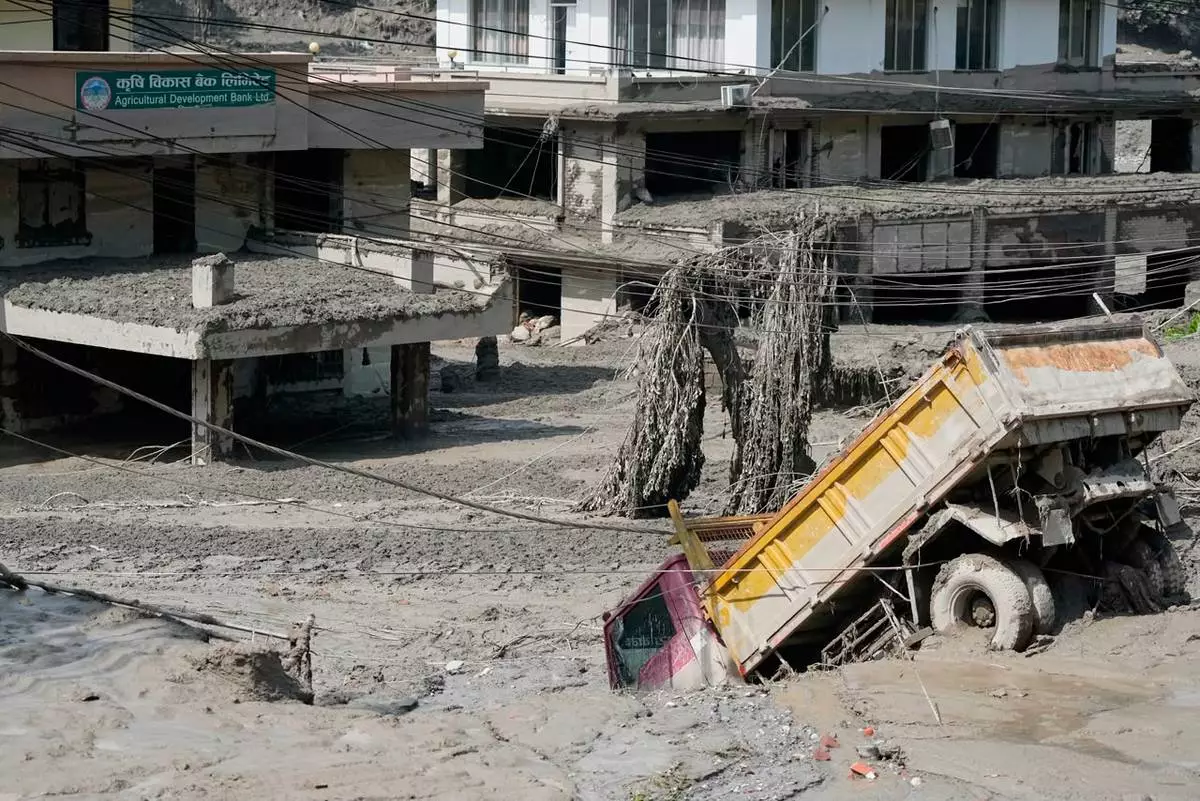
Damaged houses and vehicles are seen in the aftermath of flash floods along the Trishuli River in Nepal's Nuwakot district, Wednesday, Aug. 26, 2026. (AP Photo/Niranjan Shrestha)
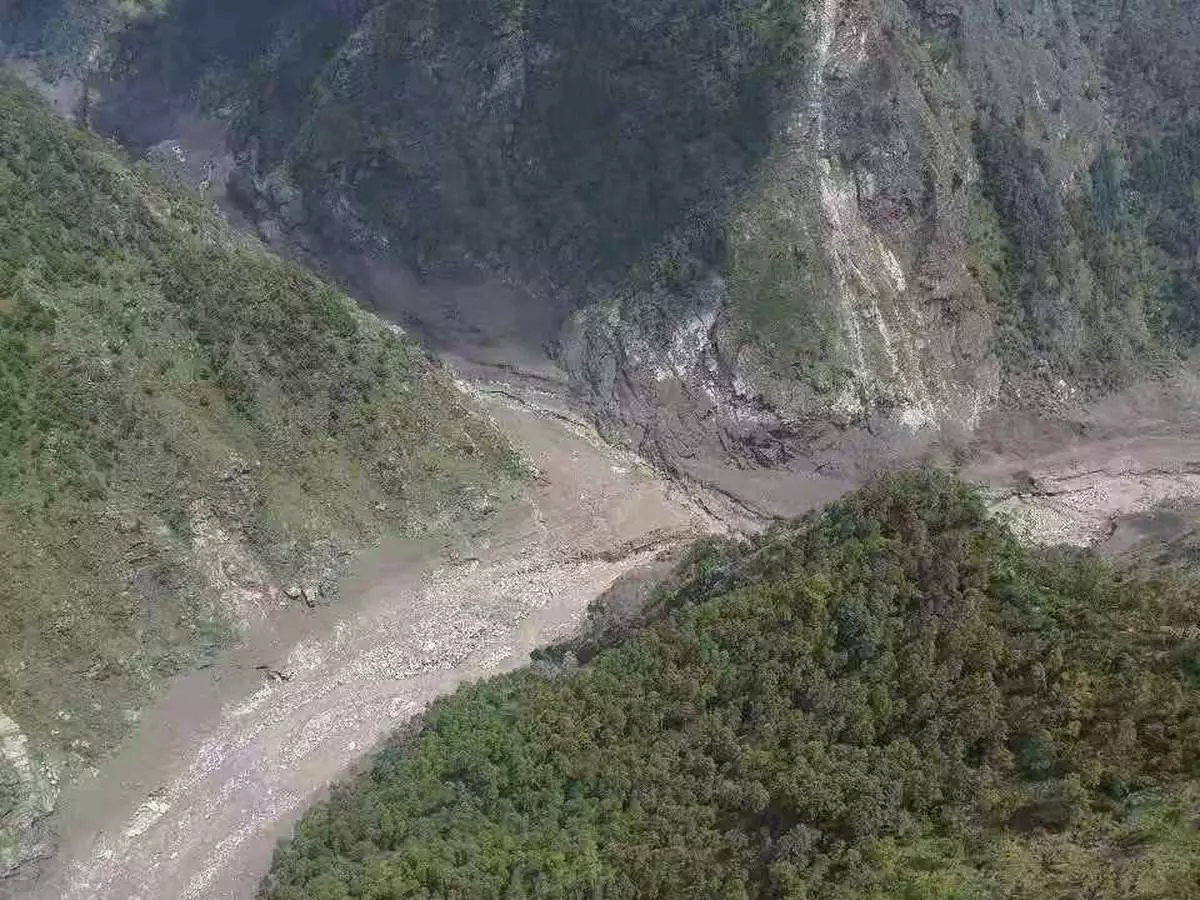
This photo released by Xinhua News Agency, shows a mudslide-hit area near Gyirong Port in southwestern China's Tibetan Autonomous Region on Wednesday, Aug. 26, 2026. (Xinhua via AP)
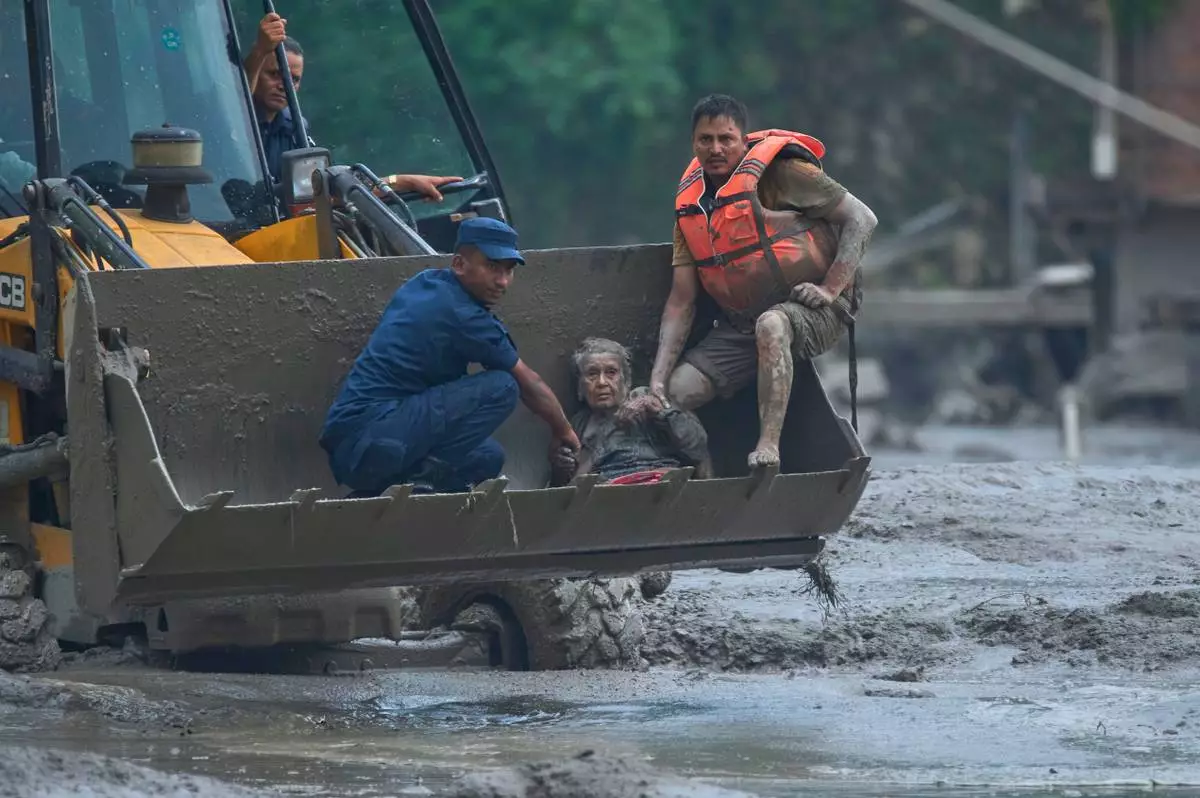
Rescuers use an earthmover to carry a victim of flash flooding to safety along the Trishuli River in Nepal's Nuwakot district, Wednesday, Aug. 26, 2026. (AP Photo/Niranjan Shrestha)

Rescuers carry a victim of flash flooding to safety along the Trishuli River in Nepal's Nuwakot district, Wednesday, Aug. 26, 2026. (AP Photo/Niranjan Shrestha)