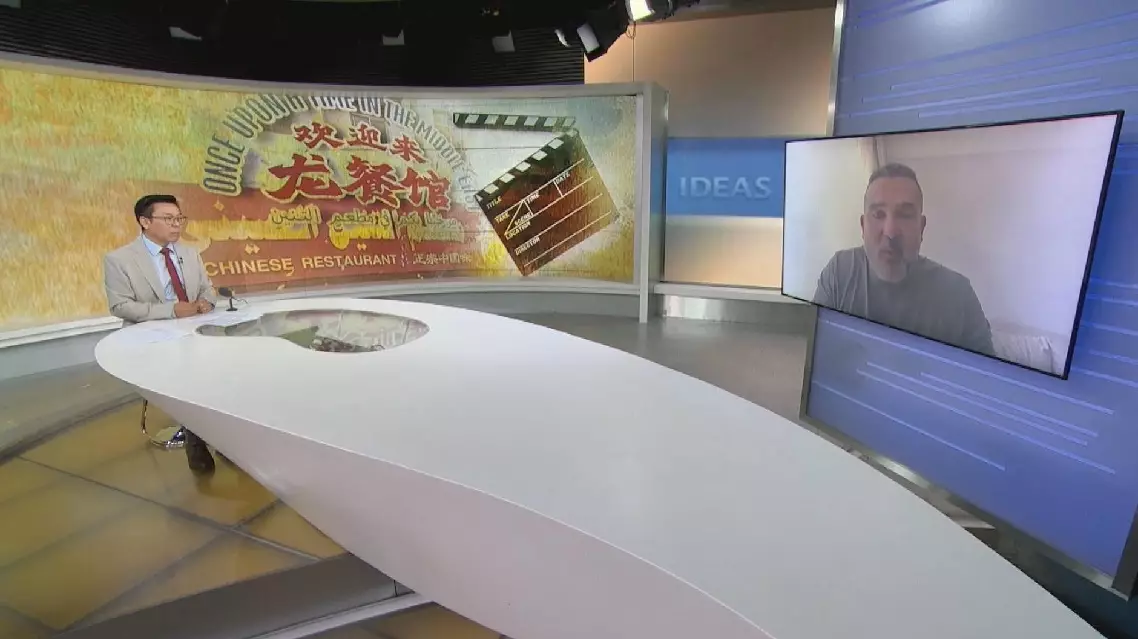
Egyptian actor Ahmed Sobhy, who stars in the Chinese anti-war film "Once Upon a Time in the Middle East," has expressed his gratitude to Chinese supporters and called for more cultural exchanges between China and Egypt.
The film follows a Chinese man working as a chef at a Chinese restaurant in the Middle East in the 2000s when war breaks out. It has grossed more than 1.68 billion yuan (around 249 million U.S. dollars) in China including pre-sales since its release on August 11.
Sobhy plays Zayd, a restaurant owner in the film. The movie’s message -- shared humanity, people-to-people connection, and the importance of peace, resonates deeply with Sobhy.
"I think the movie showed that even in the darkest time of war, human connections and simple moments like sharing a warm meal, bring us back to our humanity. Food isn't just about survival. It's a universal language of hope and comfort that bridges culture regardless of background. But above all of this, the most powerful message, I think of this film for me is peace. A reminder of how essential peace is for every human being," he said during an online interview with China Global Television Network (CGTN).
As the film became a hit, his character gained wider recognition among Chinese audiences, who affectionately nicknamed him "Lao Zha."
He has also started a social media account to interact with Chinese fans, saying their warmth gives him unbelievable motivation.
"Right before the movie came out, I was going through a very tough phase. I was feeling burned out and really down about my work. Then the film was released. And I received love, support and recognition (from Chinese fans) like never before, I swear to God. I can't even describe the joy I felt. It truly felt like I was down on the ground. And the love came out of nowhere to pick me up. That's why interacting with Chinese fans directly on social media, is my way of saying thank you," he said.
Sobhy said his experience in the film showed how cinema can serve as a bridge for closer Egypt-China cultural exchange, and called for more such exchanges between the two peoples.
"I want really Chinese people to come and see our culture and I want the Egyptian people to go and (experience) the Chinese culture. You have very beautiful and amazing places, cultural places," he said.
Egyptian actor praises support of Chinese fans, calls for more cultural exchanges