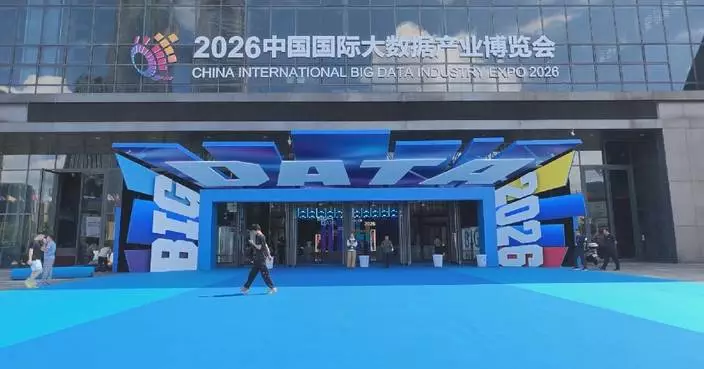
China's national initiative to develop computing power networks will create a great opportunity for private investment, said industry insiders.
China's computing power networks are expected to receive 4 trillion yuan (about 595.2 billion U.S. dollars) in new direct investment during the 15th Five-Year Plan period (2026-2030), according to the country's top economic planner.
As computing power development relies mainly on enterprise investment, such development will create enormous room for private investment, said the National Development and Reform Commission
"It is initiated by the government, which at least sends a signal that it is a definite arena, so private capital is willing to enter this field despite its high technical barriers," said Liu Yi, senior vice president of the Isoftstone Information Technology.
Chinese internet giants are racing to build AI computing centers. Tencent's Q2 capital expenditure hit 52.8 billion yuan, up 176 percent year on year, largely going to data centers, GPU servers, and AI clusters. Industry experts say flagship AI models are now being upgraded monthly, or even weekly, highlighting the breakneck pace of China's AI race.
"Back in the second half of last year, people were generally hoping to iterate on models every three months. Now, a new model is being released every four to six weeks, and that in itself poses a considerable challenge in terms of computing power," said Feng Wen, head of open platform of the MiniMax.
"Participating in the construction of the national 'Six Networks' initiative is also an opportunity for enterprises," said Liu Feng, general manager of the Smart Industries Group under the Tencent.
China is mulling massive investment in a "Six Networks" initiative as the country works to expand domestic demand and stabilize economic growth.
These six networks comprise water networks, new-type power grids, computing power networks, next-generation communication networks, urban underground pipeline networks and logistics networks. "I think we should not have the mindset of short-term gains or the monetization of resources. Instead, we should have the mindset of promoting the long-term progress and the closed-loop development of the industry. We should build and plan these resources with the ultimate goal in mind," said Sun Chuqian, head of strategic development with Qinneng Technology.
"Throughout the entire 15th Five-Year Plan period, for intelligence computing centers, whether they are token factories, medium-sized or ultra-large-scale facilities, or even gigawatt-level ones, there will be a period of rapid growth," said Zhang Chen, deputy general manager of the Market Development Division under the China Power Engineering Consulting Group.
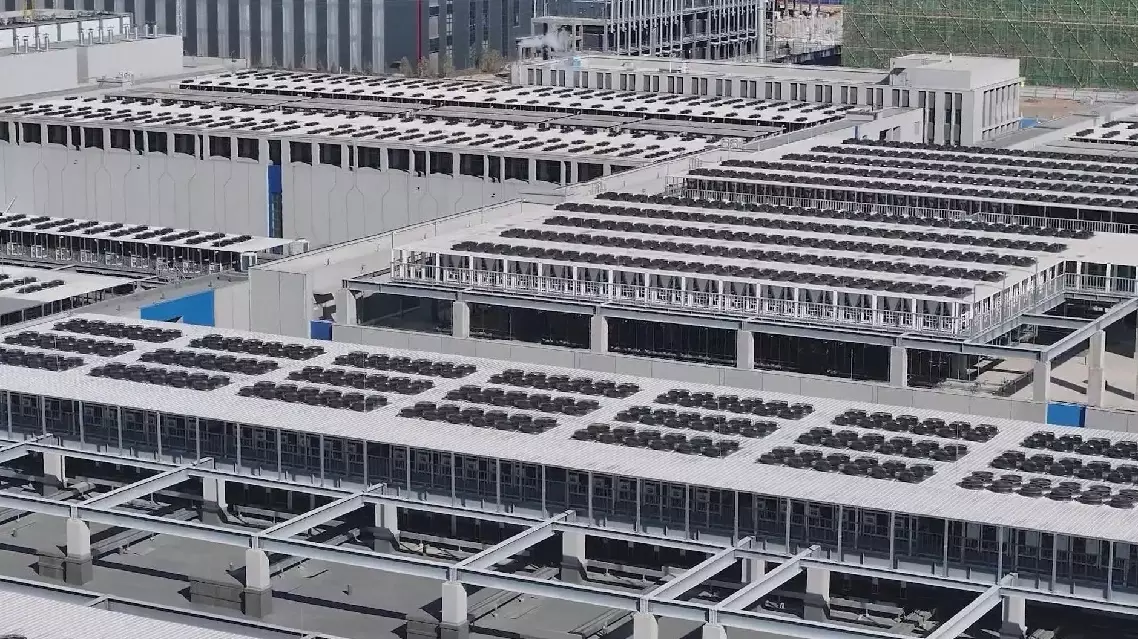
China's massive computing power building to create opportunity for private investment