The Chinese fighters and participating troops bound for the China-Egypt "Eagles of Civilization" joint exercise have all arrived at an Egyptian air base after an intercontinental deployment. The formation flew for nearly nine hours. It covered more than 6,000 kilometers and crossed four countries on two continents.
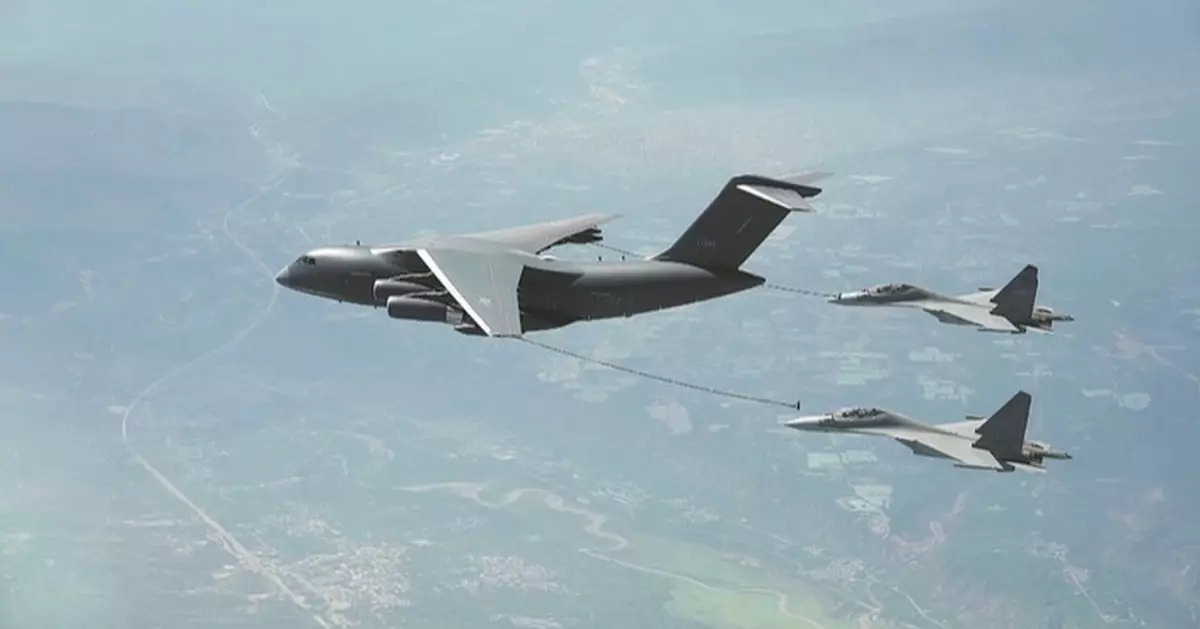
En route, a Y-20U tanker refueled the J-16s in midair. Aviation enthusiasts at Karachi Airport in Pakistan captured the formation on camera. The footage shows at least six J-16s, plus support aircraft such as the Y-20 and KJ-500.
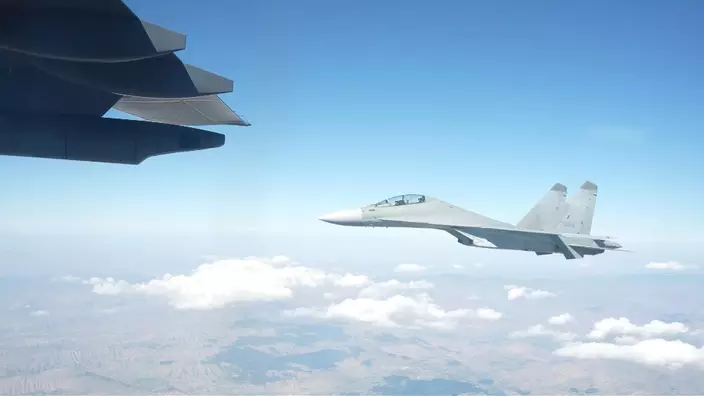
The ferry stretched more than 6,000 kilometers, with Y-20U tankers refueling J-16s along the way.
The exercise will run for nearly a month. In that window, China and Egypt will jointly train in air combat coordination, counter-air operations, combat search and rescue, and force employment, among other subjects.
Put this operation in the context of China-Egypt military cooperation, and it carries weight beyond a routine joint exercise.
CCTV reported that what traveled to Egypt this time was a complete Chinese air force aerial combat system. The KJ-500 provides situational awareness and command and control, the Y-9LG conducts electronic suppression, and the Y-20U tanker safeguards endurance. With multiple aircraft types operating in concert, the system can run independently without relying on ground facilities.
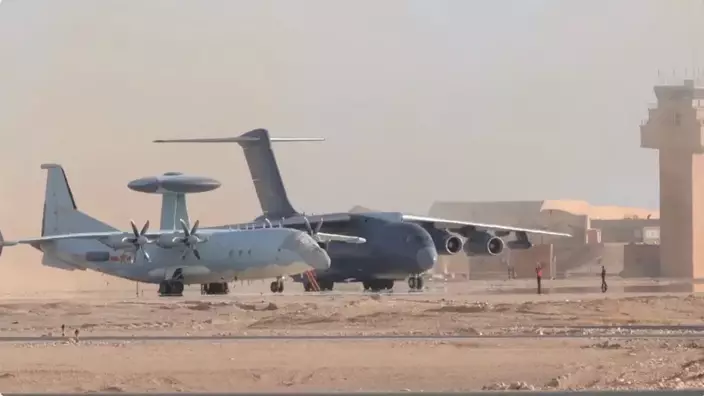
The KJ-500 and Y-20 arrived in Egypt together, putting a complete aerial combat system on display.
Early warning aircraft, tankers, and electronic warfare aircraft moved intercontinentally alongside the fighters. They were ready to enter training the moment they landed. That is a long-range demonstration of a complete operational loop.
Middle East Media Take Notice
This feature is now a focus of outside attention. Multiple mainstream Middle Eastern media outlets, including Qatar's Al Jazeera and The Times of Israel, have reported on the exercise, and their reactions are notably mixed. Israel is uneasy. Arab media, by contrast, call the PLA formation more advanced than what the US military used to strike Iran.
What draws attention is not the figure of six J-16s itself. It is the projection and independent combat capability behind that number.
By fighter count alone, six is not many. Add early warning aircraft, tankers, and electronic warfare planes, and the formation becomes a complete aerial combat unit with all its vital organs in place. It can strike, see, jam, and replenish. Whatever goes missing, it fills the gap on its own.
The J-16 and Its Support Chain
The J-16 is the PLA Air Force's mainstay 4.5-generation heavy multirole fighter. It brings strong air combat and ground strike capability, an active phased array radar, and the ability to carry a wide range of advanced air-to-air and precision-guided air-to-ground weapons.
In recent years, the J-16 has ranked among the main aircraft types the PLA Air Force sends on routine forward deployments and open-ocean training.
The intercontinental trek to Egypt raises the stakes. The deployment serves as another combat-oriented test of the J-16's long-range ferry capability and its aerial refueling coordination.
The fighter does not fly alone. The KJ-500, the Y-9LG, the Y-20U tanker and other platforms travel with it, forming a complete support chain that can see, jam and replenish. The payoff: the entire formation keeps operating independently, even far from home soil.
For a long time, US air superiority in the Middle East has rested on a vast network of bases and carrier platforms. The pillar underneath is a forward base system cultivated over decades.
What the Chinese Air Force displayed this time is a different path. By integrating 4.5-generation fighters, early warning aircraft, electronic jamming aircraft and advanced air-to-air missiles, it fielded a highly integrated aerial system that delivers rapid projection and independent combat.
The system's degree of self-sufficiency gives it fairly complete combat capability in long-distance combat scenarios. Even measured against the base-network model, it holds distinctive strengths of its own.
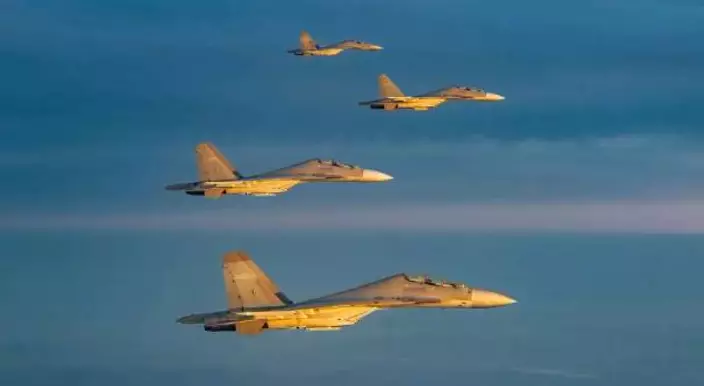
J-16 formation in flight. The exercise is a combat-oriented test of the type's long-range ferry and independent combat capabilities.
From Slogan to Reality
The signal from this operation is unmistakable. The Chinese Air Force is turning long-range power projection from concept into reality.
Early warning aircraft, tankers, and electronic warfare planes crossed continents alongside the fighters and could go straight into exercises on landing. Once that pipeline runs end to end, Chinese Air Force formations will only multiply across Africa, the Middle East, and farther afield.
For China, the operation is a step toward deeper military exchanges with friendly countries. It is also concrete practice in building strategic projection and overseas operational capability amid an increasingly complex international security environment.
Viewed through the lens of China-Egypt relations, the exercise fits a broader pattern. Egypt is an important country in the Middle East and one of China's major partners in the Arab world. The two sides have cooperated closely in politics, economics, and trade, and military exchanges are advancing steadily.
The "Eagles of Civilization" exercise centered on combat-realistic subjects such as air combat coordination and air superiority operations. It deepened mutual trust and interoperability between the two militaries and opened a platform for dialogue on regional security.
For Egypt, training with the Chinese Air Force builds air combat skill and the ability to answer security challenges, one reason many Arab media outlets view the drill positively.
Worth noting: the China-Egypt training strictly follows international practice and relevant agreements. Its purpose is mutual learning and closer cooperation. It targets no third party and will not upset the existing regional security landscape.
Zoom out further, and the Chinese Air Force's transcontinental operation reads as a snapshot of the country's military development entering a new stage.
In recent years, large platforms such as the Y-20 series transport aircraft, aerial refueling planes, and early warning aircraft have entered service and matured. The Chinese Air Force's long-range projection and support capabilities have climbed markedly. From joint exercises to diversified missions, its "going global" stride grows steadier and reaches farther.
That growth rests on advancing equipment, solid training, and steadily deepening openness and exchanges with the world. Transcontinental ferry flights, aerial refueling, jumping into exercises the moment wheels touch down: these scenes once played out mostly in the air forces of major powers. Now they appear more and more often in Chinese drills, backed by an increasingly mature support system and training apparatus.
Two Models, One Clear Trend
Which of the two models comes out on top? Any verdict now would be premature.
The US military's traditional advantages, anchored in its network of bases and aircraft carrier platforms, remain obvious. The Chinese Air Force, by contrast, is exploring a new path built on system integration and rapid projection.
But one thing is already clear. The Chinese Air Force is turning "going global" from a slogan into a reality that is being advanced every day.
The Art of Stopping War
** 博客文章文責自負,不代表本公司立場 **
On September 30, the US military formally completed its handover ceremony with the Government of Iraq. The moment closes the book on more than 20 years of large-scale American troop deployment. Among the photos circulated by various parties, one image drew plenty of attention: a United States Marine Corps special operations operator dressed in PLA Type 07 desert camouflage.
A Farewell Photo That Raised Eyebrows
The kit reads all-American at first glance. The weapon in his hands is a US-made M4A1 carbine. The patch on his arm is the insignia of US special forces. The helmet and night-vision device are standard issue too. The lone exception is the camouflage uniform, a full Chinese-style set.
Put that combination together and the contrast is striking. It has also raised questions about where exactly this uniform came from.
Public information suggests the photo was taken around 2022. The soldier in the frame belongs to Marine Corps Forces Special Operations Command (MARSOC).
His face is pixelated, but the square patch on his right arm is easy to make out. It carries a cross star and a red dagger on a blue background, the unit's identifying insignia. On his head sits a FAST tactical helmet, a lightweight type that is a common configuration across US special operations units.
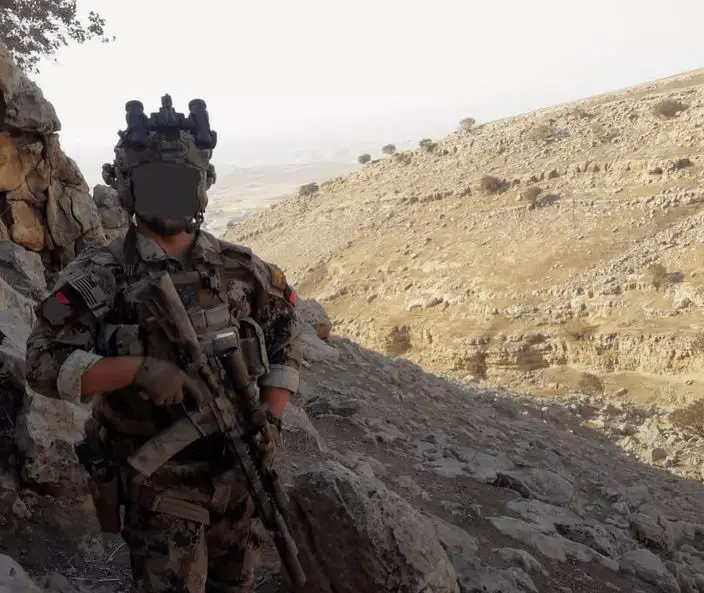
US commando wears Chinese-style desert camo on mountain mission.
The photo's backdrop is the mountainous terrain of northern Iraq. Judging roughly from the scene, a US special operations team was leading Iraqi counterterrorism forces or Kurdish fighters on clearance missions. The target zone: areas where remnants of extremist organizations were still active.
This playbook, US advisers leading the way while local fighters take point, was common in counterterrorism operations after 2014. The scene in the photo fits that background.
Tracing the Uniform to Iraq's Golden Division
So where did this camouflage uniform actually come from? That question demands an answer. According to analysis by a US website, the Iraqi special operations forces cooperating with US troops at the time included a 1st Special Operations Brigade, commonly known as the Golden Division.
This unit has worn the Chinese-style camouflage for years. The supplier is a company in the Chinese Mainland, and the uniforms were specially customized.
The cut differs from the version the PLA issues to its own troops. It leans closer to US military uniform styling, favoring a frog suit design with tactical insert-style elbow pads and angled sleeve pockets. Those details show the buyer communicated with the manufacturer and modified the original, rather than simply copying it.
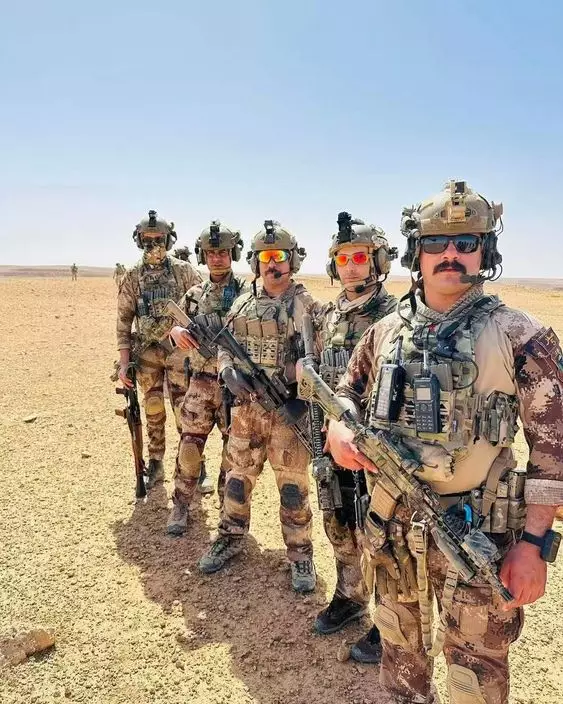
Iraq's Golden Division switches to improved Chinese desert camo.
In other words, the Iraqi military and the US military alike most likely bought these civilian-version uniforms from Chinese private enterprises through e-commerce channels.
The reason: the PLA's own Type 07 desert camouflage is strictly controlled military materiel. It is never sold externally, and genuine versions are very hard to buy through open channels even in the Chinese Mainland.
That makes the camouflage in these photos, in essence, the same category as the replica products military fans use for cosplay. The only difference: this gear comes closer to actual combat use in cut, fabric and workmanship.
The Golden Division's own origins also need explaining. It is a force the US military trained and armed single-handedly after 2014, with the chief mission of encircling and suppressing extremist organizations. Its combat effectiveness ranks among the best in the Iraqi government forces, but its logistics support has always been quite weak.
Extremist organizations were already rampaging through Iraq and Syria. Frontline units burned through equipment at extraordinary speed, and supplies such as camouflage uniforms were desperately scarce. The US military's formal foreign military sales and aid pipeline, spanning bidding, approval, production, factory delivery and transportation, routinely took at least a year, far too slow to meet an urgent need.
Faced with high-intensity combat consumption, local Iraqi armed forces and US military advisory units turned to commercial channels. They placed custom orders directly with private factories in China's Zhejiang, Jiangsu and Shandong, among other places. Goods could reach the front line within weeks, making this the lowest-cost and fastest-responding supply option on the battlefield.
China's Light-Industry Edge and a Growing Market
China's complete light-industry system is the foundation that makes orders like these possible. The catalog runs deep, from tactical vests, gloves, knee pads and helmet covers to every kind of textile camouflage uniform. Production cycles are short, and prices often run at just a fraction of comparable US equipment.
Once an order is placed, Chinese manufacturers routinely finish production within a week or two and ship it to the Middle East by international express. For frontline buyers, that means speed, low prices and modifications on demand. Add it all up, and there is almost no reason not to buy.
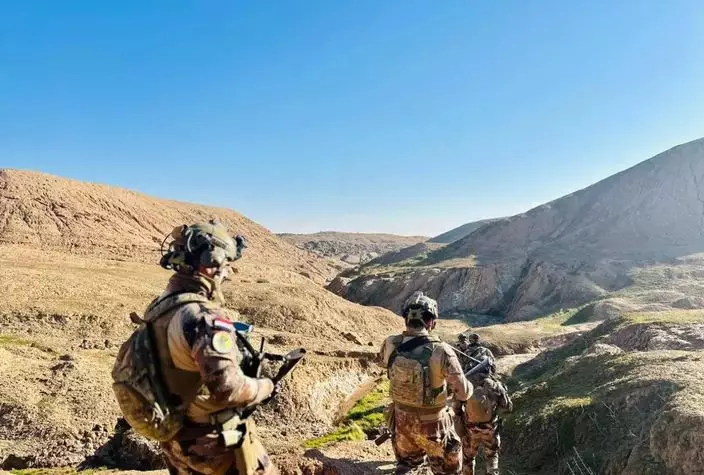
Desert camo pattern matches Middle East arid terrain for concealment.
This one Iraqi special forces unit was not an outlier. Syrian government forces, Kurdish armed groups and defense units across many Middle Eastern countries all bought replica Type 07 desert camouflage uniforms and matching gear from Chinese private enterprises. Together they built a market that was anything but small.
Interestingly, the Type 07 desert pattern itself is a carefully worked design. The segmentation and transitions of its color blocks suit arid, rain-scarce terrain, and the pattern fits the Middle East's sandy, rocky, yellow-earth environment remarkably well. Its camouflage effect is hardly poor; in fact, it sits closer to the local landscape than some of the US military's own uniforms.
That was enough to tempt some US troops into borrowing a set to wear. In the field, after all, staying hidden matters more than dressing neatly.
US special forces mixing in other countries' gear is hardly rare. Unlike ordinary units and their strict requirements, Tier 1 and Tier 2 US special forces hold a high degree of autonomy in equipment selection and can buy what a mission demands. Paying out of pocket to add kit and mixing products from different countries are both common, and that in itself is pragmatism at work.
Wearing camouflage available on the local market lets them blend into the environment and trims logistical headaches. It also saves the time and paperwork of transferring supplies from the homeland.
Why Chinese Camouflage Wins the Field
So why Chinese camouflage, of all things? The reason, in truth, is that China's supply chain has already burrowed into every corner of the globe.
In the niche arena of tactical gear, Chinese private enterprises hold their own against the official suppliers of the U.S. and European militaries. In some general-purpose and consumable equipment, they even carry an edge.
This camouflage has earned recognition from Iraq, Syria and some U.S. troops. To a degree, that endorsement itself attests to the pattern's practicality and design level.
Consider the journey. A uniform originally designed for the environment of China's Western Theater Command performs well in the Middle East, and that crossover shows from one angle how much experience China has accumulated in military uniform design and garment manufacturing.
Uniform design must weigh terrain, climate, light and a host of other factors. The ability to adapt across regions is itself a mark of design caliber.
As for the old days, when military enthusiasts could only envy U.S. military equipment? Those days are slowly changing.