China's Global Governance Initiative (GGI), proposed by President Xi Jinping one year ago, has won recognition and support from nearly 160 countries and international organizations, as it provides China's practical solutions for global peace and development.
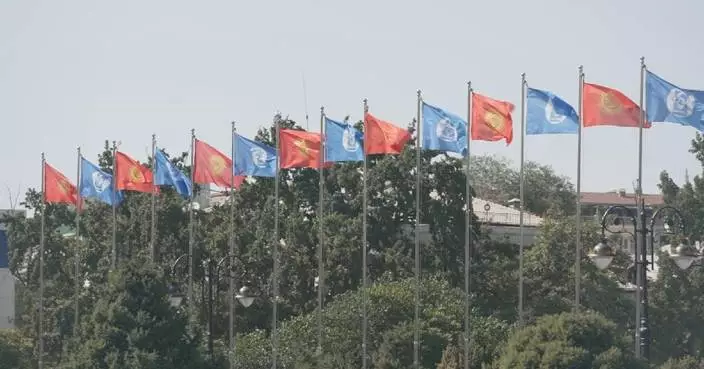
The GGI was proposed by President Xi at the Shanghai Cooperation Organization (SCO) Tianjin Summit one year ago, offering a Chinese approach to the pressing question of what kind of global governance system should be built and how global governance should be reformed and improved.
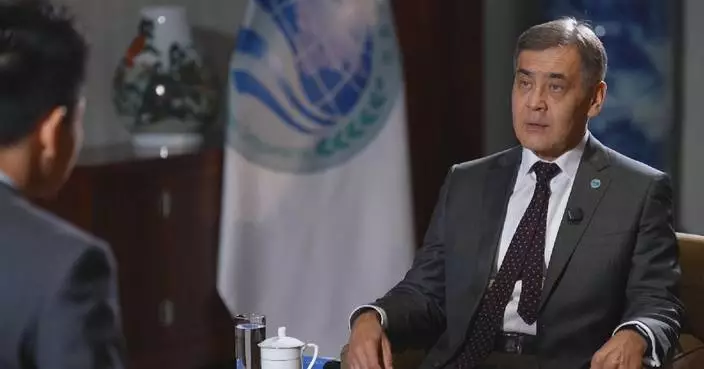
SCO Secretary-General Nurlan Yermekbayev described the GGI as highly significant, far-reaching and timely, while noting that its principles, values and goals closely align with those of the SCO and the Shanghai Spirit.
"I believe that the Global Governance Initiative proposed by his excellency President Xi Jinping of the People's Republic of China is highly significant, immensely far-reaching and exceptionally timely. For us, it is both noteworthy and important that the initiative was first proposed at the 'SCO Plus' Meeting during the SCO Tianjin Summit (in 2025). The principles, values and goals of the Global Governance Initiative closely align in many respects with those of the SCO and the Shanghai Spirit," Yermekbayev said.
Since its launch, the GGI has received support and positive responses from nearly 160 countries and international organizations. The "Friends of Global Governance Group" has also been established in New York, Geneva and Vienna, with more than 60 countries participating, helping turn the initiative from a Chinese proposal into broader international practice.
"In reality, I see these activities of the Chinese president and China as trying to create, again, a group of countries, or to connect again leaders, to speak about real development, peace, new possibilities, new areas of cooperation; to avoid, maybe, the other type of politics in this moment, which are looking more for conflicts, more confrontation, and these kinds of things. So I think it's very helpful," Slovak President Peter Pellegrini said during his state visit to China in July.
Faced with the serious challenge posed by the law of the jungle to the international rule of law, China has taken the lead in practicing genuine multilateralism. From establishing the China-UN Peace and Development Fund to provide strong support for major UN agendas, to participating in 29 UN peacekeeping operations, China has firmly defended the authority and status of the United Nations and always stood on the side of fairness and justice.
China has also sought to strengthen the representation and voice of the Global South by promoting the expansion of BRICS and the growth of the Shanghai Cooperation Organization, supporting the African Union's accession to the G20, and helping establish platforms such as the Asian Infrastructure Investment Bank, the Silk Road Fund and the New Development Bank.
In the field of poverty reduction, China has worked to improve global governance by implementing zero-tariff treatment for 53 African countries with which it has diplomatic relations and jointly launching the Global Partnership for Poverty Alleviation and Development with nine international organizations and more than 50 countries.
"In a time where the international order and multilateralism is under pressure, it's the main job of the President of the General Assembly to defend the Charter and all the three principles -- peace and security, sustainable development, and human rights. And I called for a cross-regional alliance to stand up for multilateralism. And therefore, I came here to China, one of not only the founding members of the United Nations, but one of the strongest supporters of multilateralism," said Annalena Baerbock, president of the 80th Session of the United Nations General Assembly.
To address gaps in emerging areas such as artificial intelligence, the deep sea and the polar regions, China has worked with other countries to develop relevant rules and frameworks.
On AI, China proposed the "Global Artificial Intelligence Governance Initiative" in 2023 and initiated the establishment of the World Artificial Intelligence Cooperation Organization to promote multilateral cooperation and open sharing.
In ecological protection, China announced its 2035 Nationally Determined Contribution (NDC) targets and established the Kunming Biodiversity Fund, while also actively participating in global climate and ecological governance.
"The Global Governance Initiative, upholding the concept of a shared future, respects both historical realities and contemporary needs, providing new ideas and pathways for reforming and improving the global governance system. President Xi Jinping has successively proposed four major global initiatives, offering strategic guidance for building a community with a shared future for humanity from four dimensions: development, security, civilization, and governance, demonstrating China's responsibility as a major power," said Chen Bo, president of the China Institute of International Studies.
China's Global Governance Initiative wins international recognition