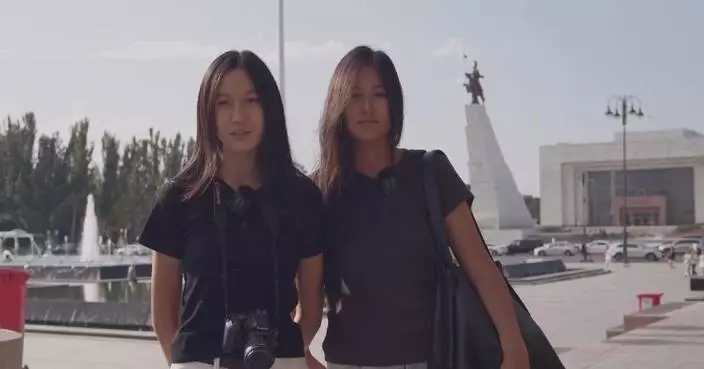
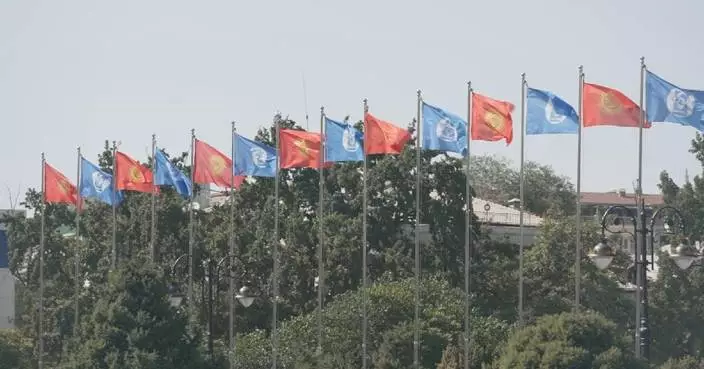
Across Bishkek, signs of the long-standing ties between China and Kyrgyzstan are visible in the city’s streets, landmarks and everyday life, as the Kyrgyz capital prepares to welcome Chinese President Xi Jinping.
Starting August 30, Xi will attend the 2026 Shanghai Cooperation Organization Summit in Bishkek and pay a state visit to Kyrgyzstan at the invitation of President Sadyr Japarov.
An important trade hub along the ancient Silk Road, Bishkek witnessed centuries of cultural and economic exchanges between China and the West.
Covering an area roughly the size of 10 soccer fields, Bishkek's Osh Bazaar is packed with stalls selling everything from produce and spices to naan bread, a staple that has long been part of the food culture of both northwest China and Central Asia.
Elsewhere in the city, a street bears the name of late Chinese leader Deng Xiaoping. The name dates back to 1996, when Kyrgyzstan was undergoing a crucial period of economic transition. Then-Bishkek mayor Boris Silayev proposed naming the street after Deng in the hope that Kyrgyzstan could draw inspiration from China's reform and opening-up and pursue a development path suited to its own conditions.
Roads offer a vivid symbol of the millennia-long exchanges between China and Kyrgyzstan -- from the ancient Silk Road to the modern-day Belt and Road Initiative, and from the China-Kyrgyzstan-Uzbekistan railway to Bishkek's municipal road network renovation projects undertaken by Chinese companies. These links have not only brought the two countries closer together, but also fostered mutual understanding and learning between their peoples.
An exhibition recently held in Bishkek has attracted widespread attention. Jointly organized by the Tianjin Museum, the Inner Mongolia Museum of China, and the National Historical Museum of the Kyrgyz Republic, it gathered more than 150 exhibits showcasing millennia-long cultural exchanges between China and Kyrgyzstan along the Silk Road.
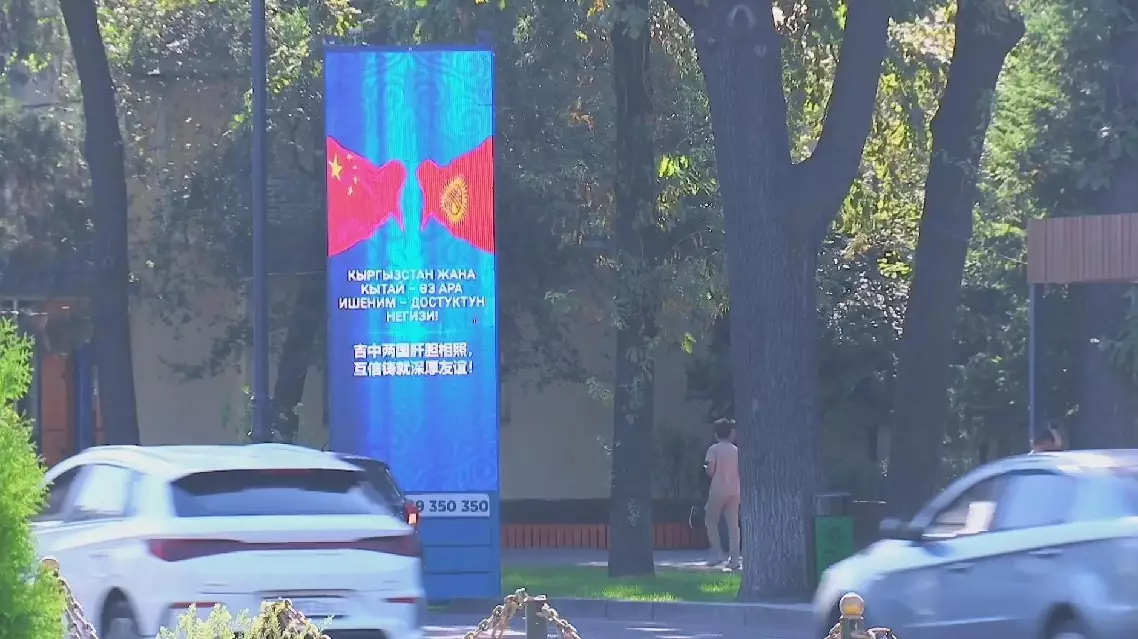
Exploration of Bishkek: signs of China-Kyrgyzstan ties traceable across city
As Kyrgyzstan's capital city of Bishkek prepares to host the 2026 Shanghai Cooperation Organization (SCO) Summit, a Kyrgyz student studying in China shares her hopes for greater unity and more opportunities arising from closer cooperation among member states of the SCO.
Under the theme "25 Years of the SCO: Together Towards Sustainable Peace, Development, and Prosperity," the summit will take place from August 31 to September 1, bringing together leaders from more than 20 countries in the Kyrgyz capital.
Adel, a Kyrgyz student of international relations at the Tsinghua University in Beijing, said she has witnessed the deepening friendship between China and Kyrgyzstan firsthand from learning Chinese and making Chinese friends to celebrating traditional Chinese festivals.
"As a Kyrgyz girl living and studying in China, I have personally witnessed the growing friendship between our two nations. When I first arrived in China, I could barely speak Chinese and knew about Chinese culture through some videos online or books. So throughout my studies here, my Chinese got better, I started to be friends with more Chinese people and immerse myself in more Chinese cultural events, such as making zongzi (sticky rice dumplings), celebrating the Mid-Autumn Festival and the Chinese New Year, and at every event I was warmly welcomed and felt the kindness and generous hospitality of Chinese people," she said.
"In response, I love sharing Kyrgyz tradition with my Chinese friends. For example, our nomadic heritage, and our delicious cuisine. I often tell them how similar our values are, for example, respect for elders, love for nature, and the importance of community," she added.
Adel pointed to new travel policies and growing people-to-people exchanges as making a real difference.
"Recently, Kyrgyz citizens were granted ten days visa-free transit through China, as well as visa-free travel to the beautiful island -- Hainan. This is a real, noticeable improvement," said the student.
"I also see more and more young Kyrgyz people turning their eyes towards China. They're learning Chinese, winning government scholarships and coming here to study," she added.
She highlighted two signature projects, the Bishkek waste-to-energy plant and the China-Kyrgyzstan-Uzbekistan railway, as symbols of green growth and closer trade ties.
"Trade between our countries is flourishing. Two major projects stand out. One is the Bishkek waste-to-energy plant, (which) is the largest waste-to-energy plant in the whole Central Asia. It's showing China's commitment to a greener, safer planet. The other is the China-Kyrgyz-Uzbek railway. Though it's still under construction, it promises faster and better trade across our region," she said.
Looking ahead to the 2026 SCO summit in her hometown of Bishkek, Adel said she is optimistic about the future.
"I hope that this SCO 2026 summit in Kyrgyzstan will serve as a powerful symbol of unity, proving that even countries with different languages and cultures can work hand in hand for a shared progress," said Adel.
"My greatest hope is that the agreements signed during this summit will bring more opportunities for students like me, such as scholarships, exchange programs, internship opportunities, summer camps, more green technologies for our cities, mutual respect between our nations, and lastly, I hope it will inspire more people from our member states to see themselves as global citizens building bridges between our nations," she said.

Kyrgyz student hopes SCO Summit builds stronger ties among nations