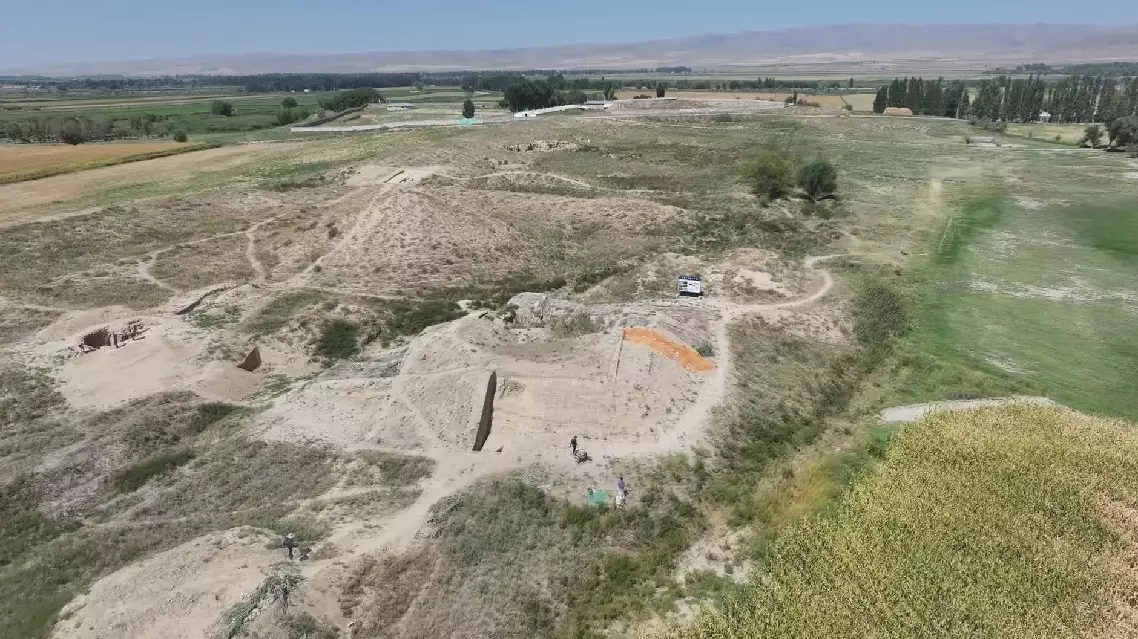
A China-Kyrgyzstan joint archaeological team has recently uncovered evidence of the two countries' shared history along the ancient Silk Road through excavations at the Krasnaya Rechka site in Kyrgyzstan.
Excavations at the site have yielded a batch of valuable cultural relics dating to around the 10th century AD, shedding light on how different cultures blended along the ancient Silk Road. "Our archaeological work officially started in Kyrgyzstan in 2018. Based on our preliminary research, the Chu river valley is a key area where many archaeological sites are distributed. The cities of Suyab, New City (Krasnaya Rechka site) and Talas, frequently mentioned in Chinese literature, are all related to the Chu river valley in Kyrgyzstan. Therefore, we selected the New City site for our archaeological work," said Shao Jing, deputy director of the Shaanxi Provincial Institute of Archaeology.
The Krasnaya Rechka site, located in Kyrgyzstan's Chui Region and covering an area of approximately 20 square kilometers, is known as New City as recorded in medieval Chinese and foreign documents.
After five years of systematic excavations, the joint archaeological team has made significant discoveries at important locations, such as Buddhist temples and city walls.
Among the findings were a batch of valuable artifacts from around the 10th century AD, which highlight the blending of diverse cultures along the ancient Silk Road. The discoveries provide important physical evidence for studying the interaction and integration among oasis civilization, steppe civilization and Central Plains civilization.
During the medieval period, Sogdian merchants traveled through the Chui Region to reach the East, while the Tang Dynasty (618-907) established the ancient city of Suyab, spreading advanced Central Plains technology and culture deep into Central Asia.
The joint excavations have also further fostered inter-civilization mutual learning and strengthened the deep-rooted friendship between the two countries. "In recent years, we have brought relatively mature technologies, methods and theories from China to Kyrgyzstan, including archaeology methods for settlement sites, city site excavation techniques, advanced surveying and mapping technologies, as well as remote sensing technologies. These methods and technologies have facilitated the presentation of some very important archaeological findings at the New City site. We have also demonstrated the crucial interconnectedness of the Silk Road from its origin to its course with archaeological evidence," said Shao.
Chinese, Kyrgyz archaeologists uncover shared history along ancient Silk Road
A frontline rescue worker voiced shock at the devastation after a massive mudslide struck Gyirong Port on the border with Nepal in southwest China’s Xizang Autonomous Region last Wednesday.
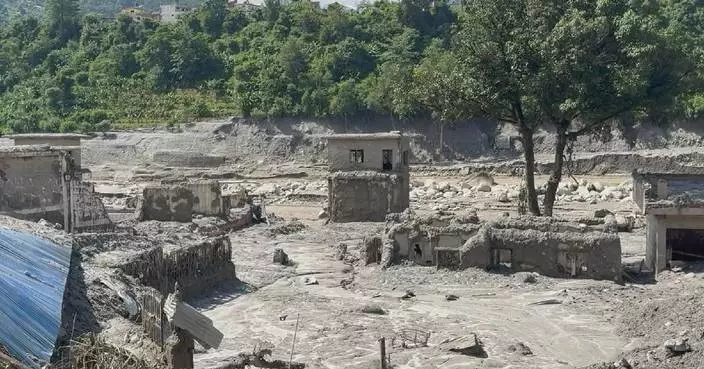
The deadly mudslide, triggered by an ice-rock avalanche in Nepal, hit the border port of Gyirong in southwest China's Xizang Autonomous Region, killing 16 and leaving 546 missing, according to local authorities.
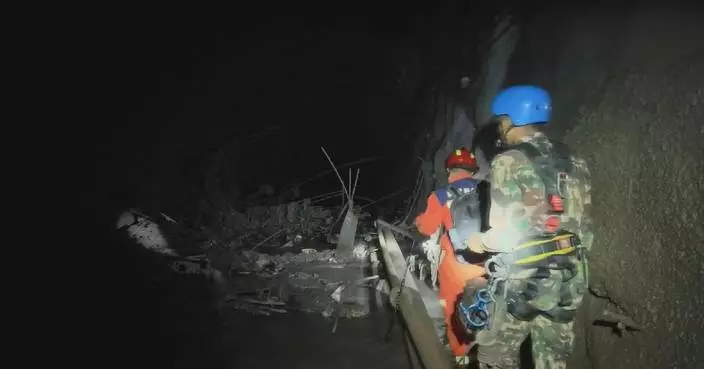
With a critical road section leading to the port completely destroyed in the mudslide, frontline rescue teams were forced to navigate the perilous landscape on foot.
Guo Xiqing, captain of a rescue squad from the China Search and Rescue Team, led a 20-member unit into the core disaster area two days after the disaster.
"Upon arriving here, we found the situation to be incredibly dangerous and truly shocking. The mudslide has left behind towering slopes, and those areas are entirely covered with loose, shifting rocks. As you can see right here, the terrain is extremely steep and swampy. The moment we step in, we sink knee-deep into the mud, making it very difficult to move forward," said Guo.
Satellite imagery from the Ministry of Water Resources' disaster reduction center shows that buildings at Gyirong Port are now buried under mud averaging more than 1.5 meters deep, with some areas exceeding two meters.
This has severely hampered the rescue operations of Guo and his team. Compounding the challenges are highly unstable barrier lakes formed upstream of the port, which are at a high risk of catastrophic breaches due to continuous rainfall.
During the initial days of the rescue, overflowing lakes forced their operations to halt multiple times.
"We received an urgent order from the command center yesterday (Aug. 28) to immediately evacuate due to a potential dam breach upstream. We promptly withdrew to a safe area and took protective measures. It started to rain at night, so we found a gorge to take shelter, pitched our camp, and spent the night there. Today, we continued our search operations," said Guo.
To mitigate these secondary risks, a surveillance team led by Hu Bo from China Anneng utilized advanced technology, including slope radar and drones, to monitor the barrier lakes and the rescue site in real time.
However, deploying these devices has proven to be a daunting logistical challenge.
"It was impossible to transport our equipment to the rescue site by vehicle. We had to carry everything in by hand. Furthermore, the gorges are frequently shrouded in clouds and fog, which obstructs our drones, limits remote control ranges, and blocks signals, posing a significant challenge to our operations," said Hu.
Continuous rainfall has also caused the Gyirong Tsangpo River to swell, with water speeds surging to 6 to 7 meters per second and depths reaching about 1.5 meters.
Faced with these perilous hydrological and geological conditions, rescuers abandoned plans to reach Gyirong Port via rubber boats, shifting their focus instead to repair the damaged sections of the G216 National Highway leading to the port.
However, the fierce currents and a severe shortage of massive boulders have made the operation highly challenging.
"The main difficulty is that the mudslide has significantly raised the water level across the entire riverbed, and the current is extremely fast. The original roadbed has been completely washed away. Aerial footage shows that multiple sections of the road are now entirely submerged by the rushing water. Another major issue is that, given the swift currents, we are severely short of the large boulders needed to clear the passage, making it extremely difficult to reinforce the foundation," said Zhou Gang, a rescue commander from China Anneng, which dispatched 60 professional operators and 28 sets of engineering equipment to reopen the road.
Despite the daunting conditions and constant emergency alerts, Zhou emphasized that their utmost priority is to open the rescue passage as soon as possible to secure a lifeline for those trapped.
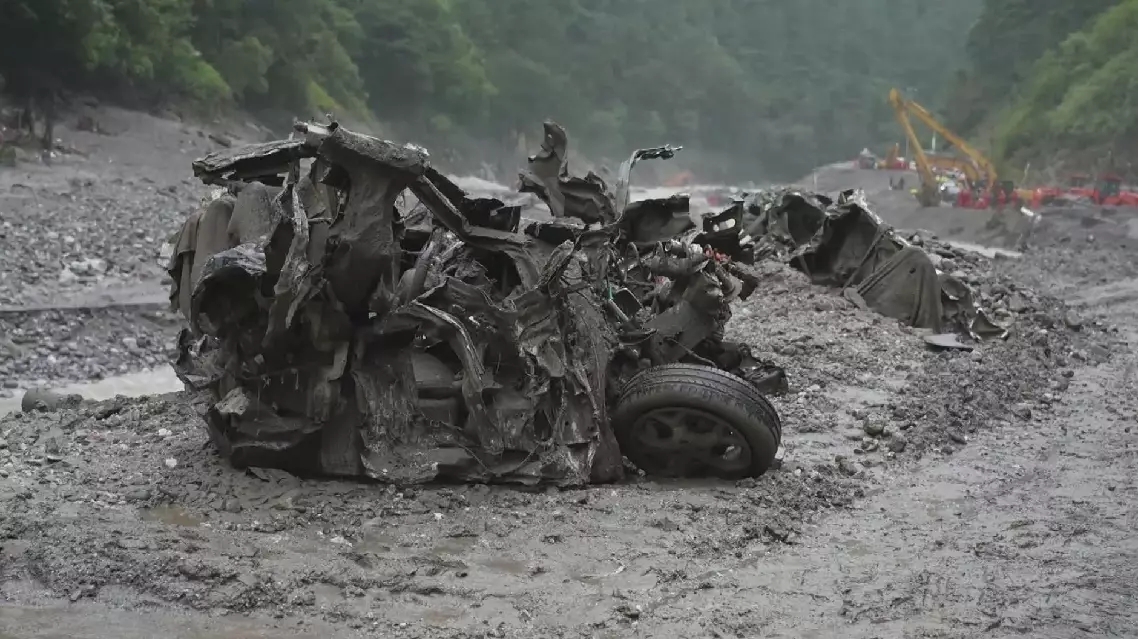
Frontline rescuers confront devastating scenes at mudslide site in Xizang