Many Afghan survivors still bear scars of war After the chaotic U.S. military withdrawal from Afghanistan in 2021.
On August 30, 2021, the U.S. and allied forces hurriedly withdrew from Afghanistan, ending a 20-year war that had devastated the country. Since 2023, the interim Afghan government has designated August 31 as the "Departure Day," a somber reminder of the human toll of the conflict.
Mohammad, a survivor in Logar Province, lost his entire family in a U.S. aerial attack, and he now bears wounds that time has not healed. He has no photographs or mementos of his loved ones.
In an interview with the China Central Television (CCTV) on Sunday, Mohammad sat quietly with his head bowed, recounting the moment his life was shattered.
"Look at this area. The bombs were dropped right here. There used to be four or five houses, but now they're completely destroyed and unusable. No matter whether we come here or not, the memory of my family always comes to mind. Even when I wake up in the middle of the night, I can't forget," said Mohammad.
The peaceful and stable life that Muhammad had once known came to an abrupt end in 2011. One day, at 04:00 in the early morning, the U.S. forces dropped a bomb on his family's home. As the house was reduced to rubble, all of Muhammad's family members lost their lives in their sleep. Only he survived, as he was away studying at the time.
"My father, mother, three sisters, and a brother -- all were students at the time. I wasn't there during the attack. I was studying in Kabul," said Mohammad.
Throughout the interview, Muhammad kept his head down, immersed in deep sorrow. He told us that he might never be able to move on from the day of the attack for the rest of his life.
"When I just came back, I was very worried. I kept asking myself: who had died? I didn't expect that all my family members had already gone. When I arrived, they didn't take me home," said Mohammad.
Mohammad's neighbor, Abdul Bari, who watched the interview quietly, confirmed the tragedy.
"They are innocent civilians. They don't belong to any organization or group, yet they were killed by the Americans," he said.
Bari said the plight of Mohammad's family was no accident. During the U.S. military presence in Afghanistan, there was a lack of basic respect for the local people, especially those from rural areas, and their lives were completely disregarded. Locals were afraid to leave their homes out of fear of the U.S. troops.
"People couldn't go anywhere, especially at night. Sometimes, even during the day, they were afraid to leave their houses because the U.S. forces would harass or raid the civilians," said Bari.
The destruction extended beyond lives to property. Mohammad recalled that his family's entire belongings were annihilated in the airstrike. He had to borrow money from relatives to start rebuilding his home. Yet, the U.S. military has never apologized or offered compensation, as if nothing had happened.
"The two decades of U.S. presence in Afghanistan only brought harm. They never apologized, and they never paid us anything," said Mohammad.
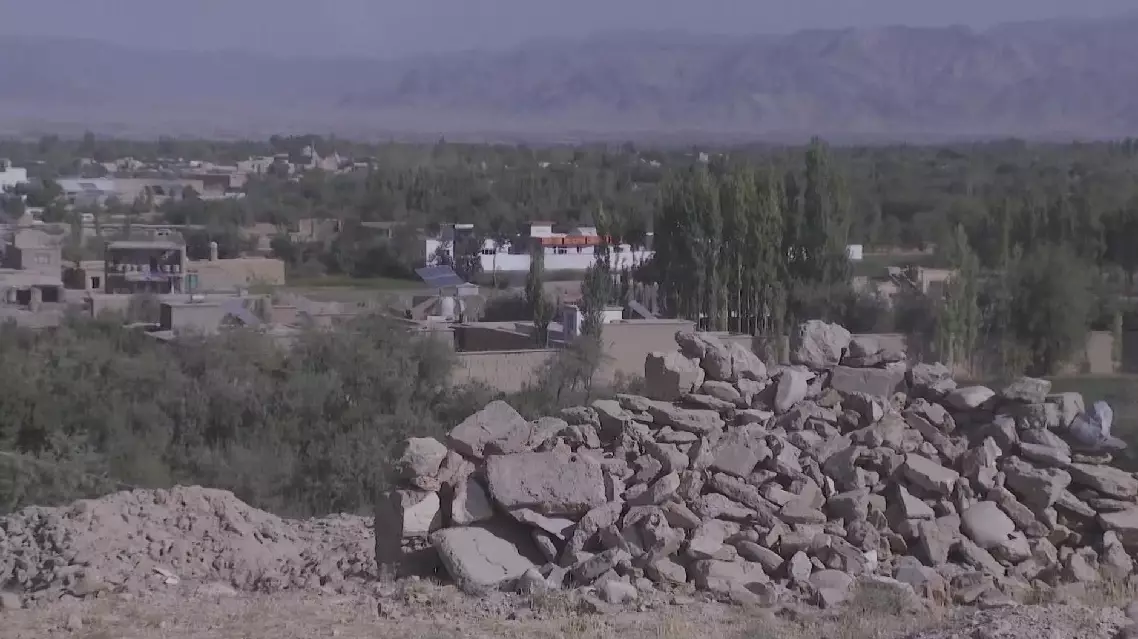
Afghan survivors still suffer from war trauma five years after US military withdrawal