MUSCAT, Oman--(BUSINESS WIRE)--Sep 2, 2026--
Across Oman, Orascom Development and its Sultanate platform, Muriya, are moving forward. While parts of the region grow cautious, Muriya has paused nothing, building and delivering across all three destinations: Hawana Salalah, Jebel Sifah and As Sodah Island.
This press release features multimedia. View the full release here: https://www.businesswire.com/news/home/20260902781576/en/
The same steadiness runs through everything Samih Sawiris and Orascom have built, from El Gouna to Andermatt to Mamula Island: identifying extraordinary places and developing them for the long term.
“Oman has everything we look for as a long-term developer: stability, natural beauty, and a clear direction for its future. Our continued investment across all three destinations reflects that conviction — we build for decades, and Oman is a country we intend to grow with in all circumstances.” — Naguib S. Sawiris, Chairman of Orascom Development
At Hawana Salalah, Amazi’s first phase is close to 80% complete, on track for handover in Q1 2027, with Lubana Islands in the pipeline. At Jebel Sifah, new phases are advancing, and across both destinations Muriya plans around 1,000 additional hotel rooms within three to five years. In total, Muriya, the Orascom Development and OMRAN partnership, has invested more than US$750 million in Oman.
The most ambitious step is As Sodah Island, a private-island destination off Dhofar. More than US$25 million has been invested in infrastructure and construction, with US$65 million or more anticipated, taking total investment beyond US$90 million. Backed by shareholder capital and institutional support rather than off-plan sales, construction is progressing.
“We have not paused a single project in Oman. We are long-term believers in this country, and our continued investment across Salalah, Sifah and As Sodah reflects real confidence in its future. Orascom investing in Oman currently is good for the country.” — Eng. Ashraf Nessim, CEO, Muriya Tourism Development
Under Oman Vision 2040, tourism anchors economic diversification, and investment attracts visitors, creates jobs and draws capital into the Sultanate. When a developer of Orascom’s standing keeps building, the market takes note.
About Muriya
Muriya is a leading integrated tourism real estate developer in Oman, a partnership between Orascom Development and OMRAN. Its destinations include Hawana Salalah, Jebel Sifah and As Sodah Island.
* Source: AETOSWire

Moving Forward in Oman: Orascom, Samih Sawiris and Muriya Keep Building (Photo: AETOSWire)
KATHMANDU, Nepal (AP) — Tourists previously reported missing in Nepal have made contact with authorities, officials said Wednesday, as families of locals still unaccounted for after last week's catastrophic floods held symbolic funerals for their loved ones.
Nepal’s Foreign Ministry said 324 foreign nationals have been rescued, while another 590 from 39 countries remain missing following the Aug. 26 floods that killed at least 1,118 people and left more than 3,900 missing.
Australian Prime Minister Anthony Albanese said Wednesday that the number of Australians missing in the disaster had fallen from 43 to 38 after five were confirmed safe overnight.
“Amidst all of this tragedy, we are seeing some positive news. Today, another five Australians have been confirmed safe,” Albanese told reporters in Palau, where he is attending a regional summit.
“We hope, of course, for positive news further, and we’re doing everything we can to work with authorities,” Albanese added.
Sunil Sharma, a spokesperson for the Nepal Tourism Board, said at least five other tourists who were previously reported missing had contacted authorities by email or telephone in recent days.
It is thought the disaster happened when a glacial collapse in the Himalayas sent rock, ice and meltwater into valleys below, triggering powerful floods downstream. The surge entered rivers flowing through Tibet and Nepal, causing them to rise rapidly. Floodwaters swept away homes, buildings, roads and bridges, carrying mud and rocks downstream.
Some families in Nuwakot, one of Nepal's worst-affected districts, have held symbolic funerals for relatives still missing, hoping to free their souls after they were presumed dead.
In Hindu tradition, cremation is an important final rite, and for some families, performing the ceremony even without the bodies of their loved ones provides a sense of spiritual release.
Mukunda Rijal said his cousins and their daughters had not been found, prompting the family to perform a symbolic funeral for them.
Along the banks of the Trishuli River, a priest placed straw effigies representing the missing family members and covered them with small piles of wood before setting them alight. The symbolic funeral pyres were surrounded by offerings to Hindu deities as relatives gathered to perform the final rites.
Authorities in Nepal have also been burying recovered bodies in temporary graves until they can be identified. They are preserving DNA samples, photographing distinguishing facial features and recording other identifying details to help match the remains with missing people and eventually return them to their families.
On the Chinese side, rescue crews completed a makeshift road to the disaster site at Gyirong Port on the Nepal border, state broadcaster CCTV reported on Wednesday.
Crews have been clearing access for heavy machinery to be used in the search at the border crossing complex, which was washed away by the floods. The road leading to the crossing was destroyed and buried under water, mud and rocks.
China has officially reported 16 deaths and 546 people missing as of Sunday.
Some flood survivors are fleeing the devastation to seek shelter in Nepal's capital, Kathmandu.
Around 400 survivors, mostly from the town of Timure, about 110 kilometers (65 miles) west of Kathmandu, have been staying at the Yellow Gumba monastery. The shelter is being organized by locals and relatives, with relief supplies donated by individuals and charity organizations.
Riya Tamang, 21, who fled with her 10-month-old baby as the floodwaters approached, is among those taking shelter at the monastery. She lost her grandparents in the disaster.
“I was the last one to leave the house. It was so difficult to escape,” she said.
Her husband, who works as a cook in Gyirong town on the Chinese side of the border, also survived, and the couple now stays in touch through video calls.
Associated Press journalists Yasin Dar in Nuwakot, Nepal, Rod McGuirk in Melbourne and Huizhong Wu in Bangkok contributed to this report.
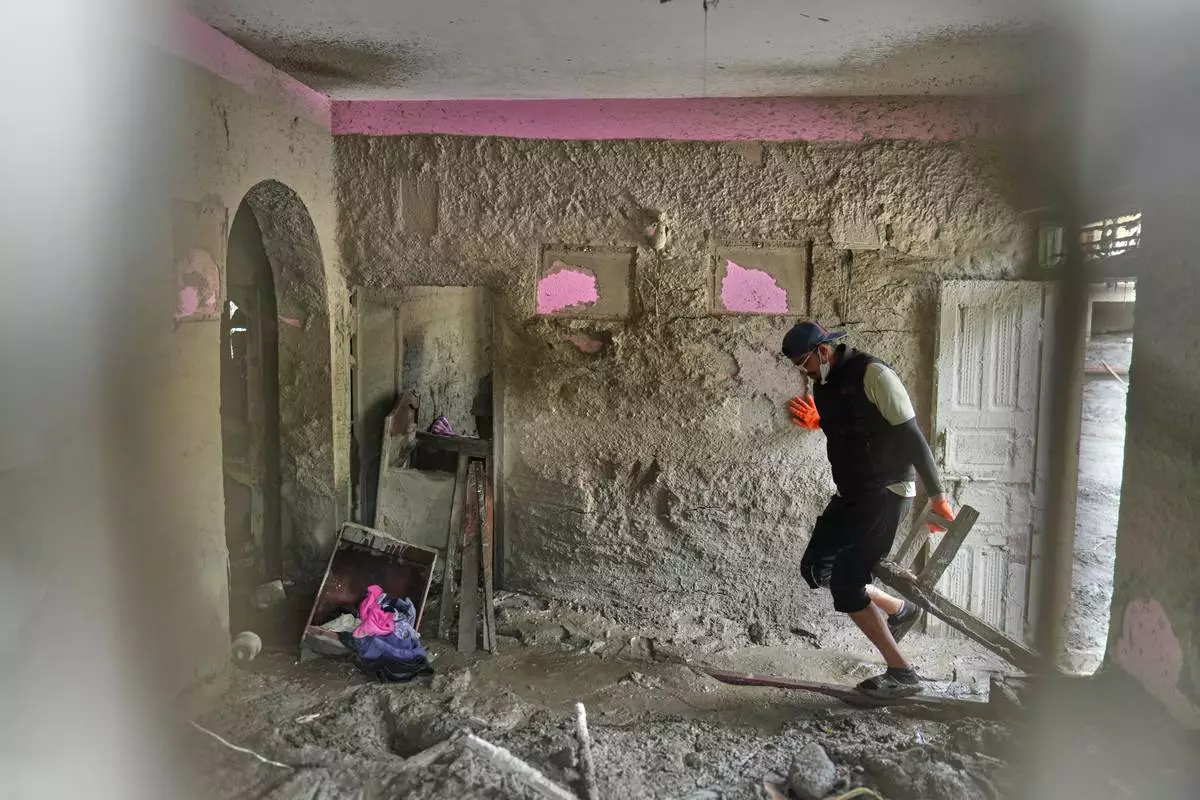
A resident salvages usable material from his house damaged by flash flooding at 1 Number Pul, in Nepal's Nuwakot district, Tuesday, Sept. 1, 2026. (AP Photo/Rajesh Kumar Singh)
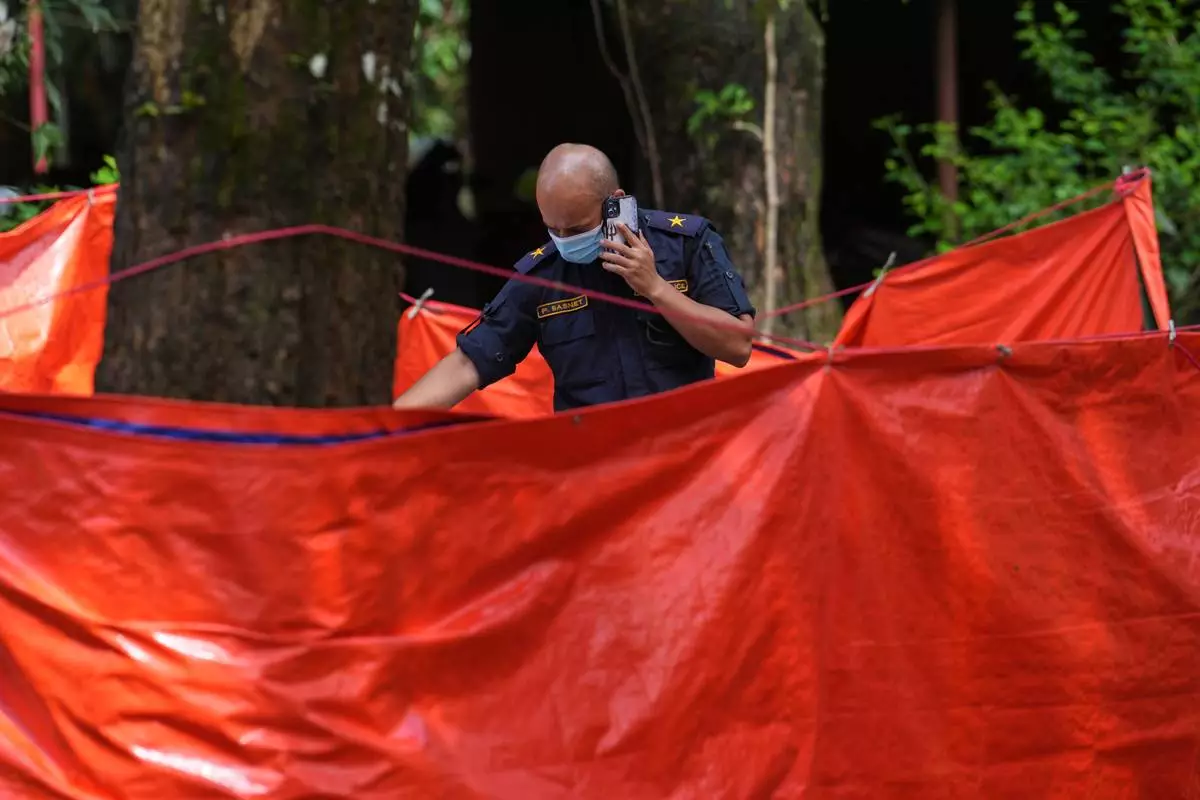
A Nepalese military officer counts bodies recovered in the aftermath of flash floods in Nepal's Nuwakot district, Wednesday, Sept. 2, 2026. (AP Photo/Rajesh Kumar Singh)
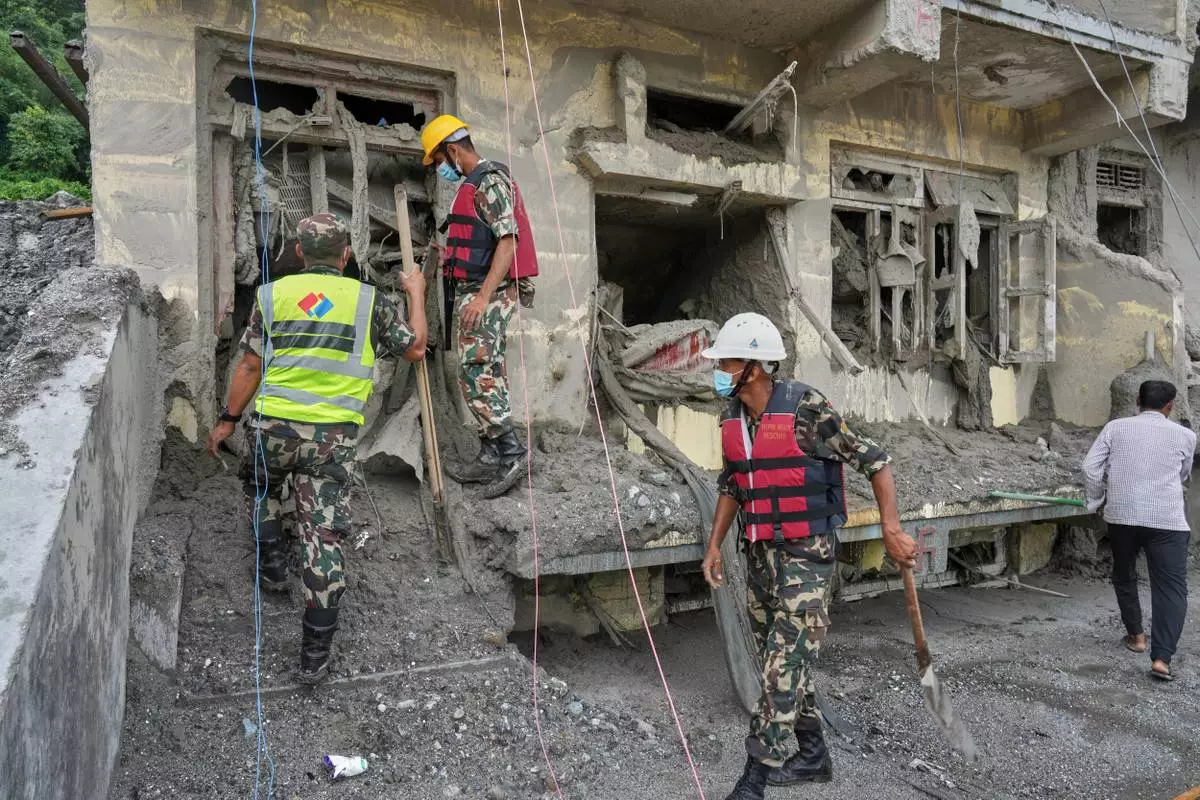
Rescuers inspect a residential building damaged in the aftermath of the flash floods in Nepal's Nuwakot district, Wednesday, Sept. 2, 2026. (AP Photo/Rajesh Kumar Singh)
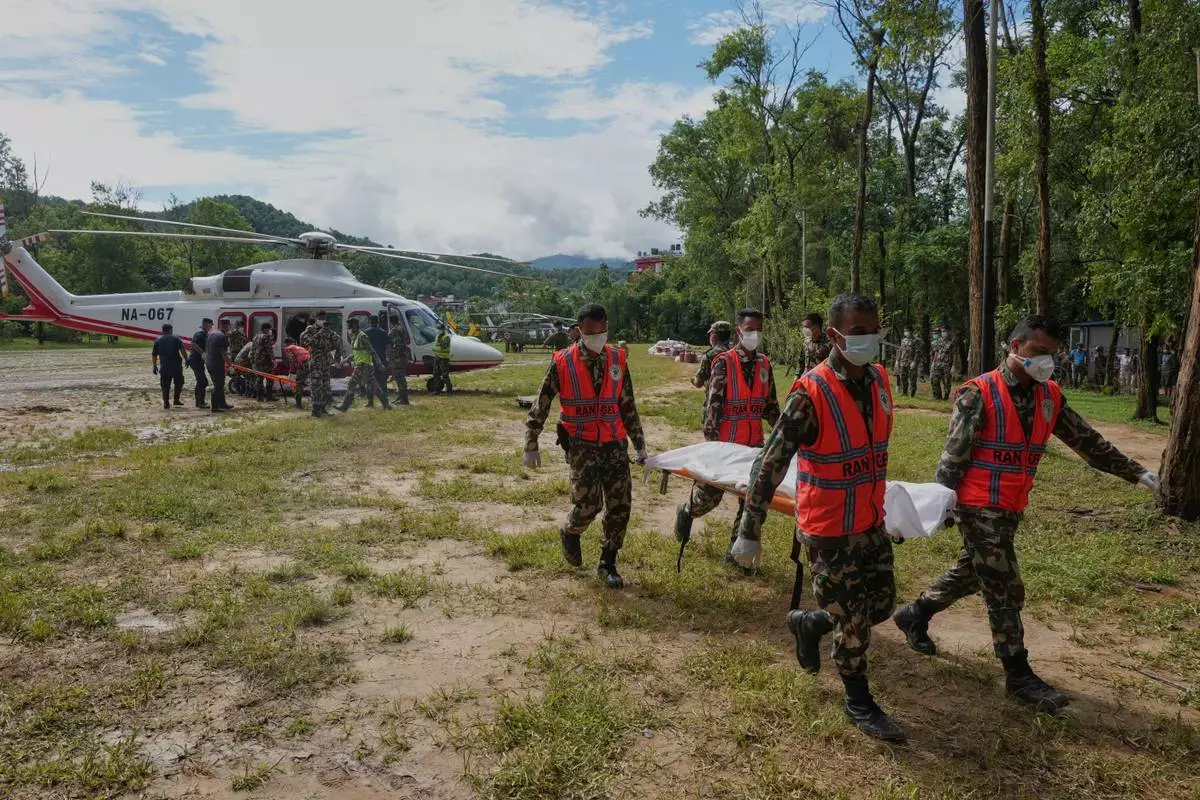
Nepal's army personnel carry a victim from the flash floods in a body bag at a helipad in an army camp in Nuwakot district, Nepal, Wednesday, Sept. 2, 2026. (AP Photo/Rajesh Kumar Singh)
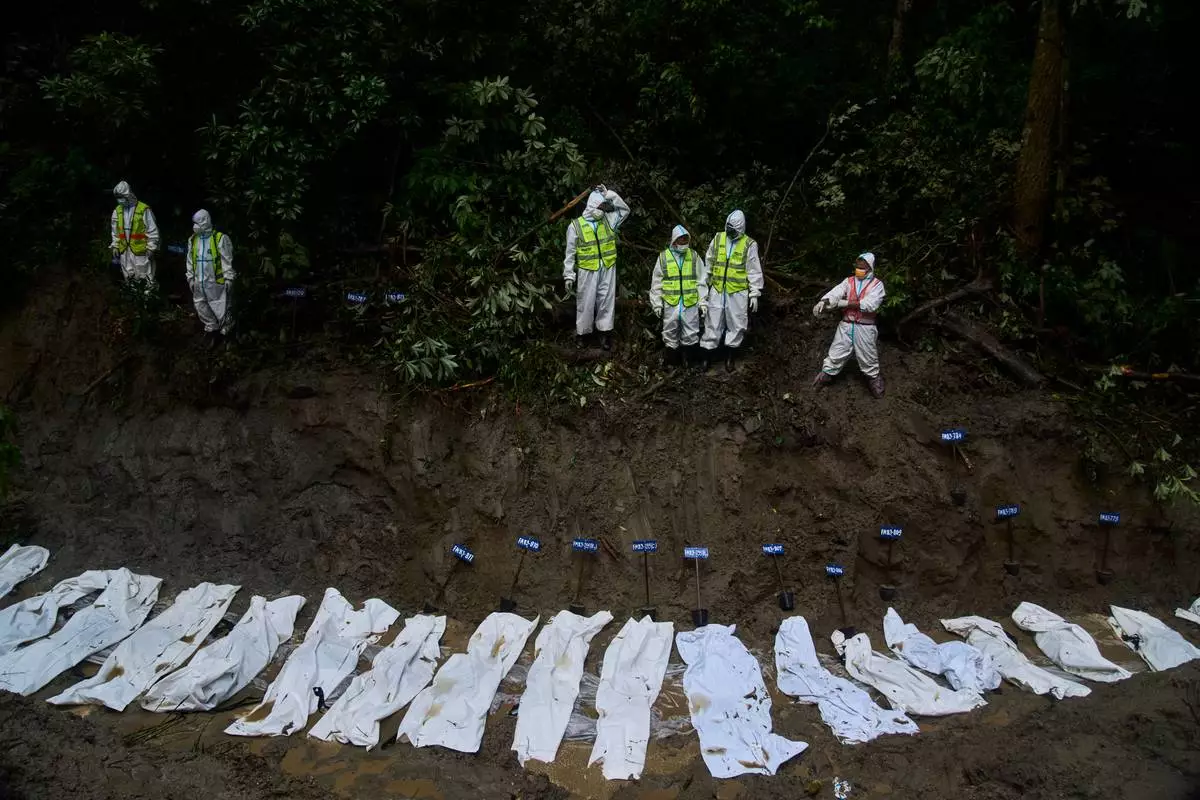
Nepal police personnel prepare the bodies of flash flood victims for a mass burial in Kathmandu, Nepal, Tuesday, Sept. 1, 2026. (AP Photo/Niranjan Shrestha)